


Hand Hammered Copper Pan
These hand hammered copper pan pieces bring tactile warmth to any kitchen, offering solid metal construction shaped by historical hearth use.
Hand Hammered Copper Pan
A hand hammered copper pan represents a category of antique kitchenware spanning preserving vessels, cream setting pans, and cooking pots. Buyers searching this phrase seek functional culinary metalwork from the Georgian and Victorian eras, alongside later Arts and Crafts examples.
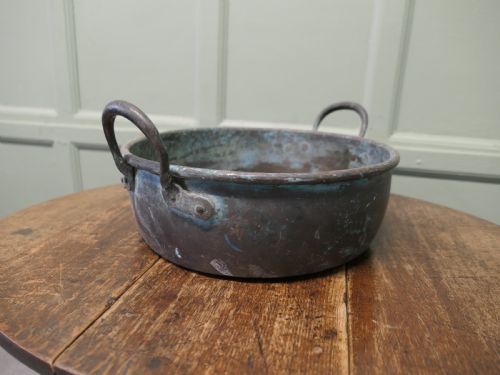
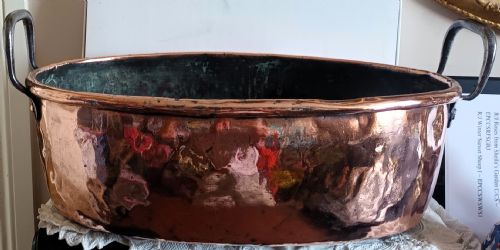
The versions most frequently met on this page include large nineteenth-century preserving vessels and English cream setting pans. These items originate from domestic kitchen and dairy environments, showing heavy-duty construction intended for active preparation rather than mere display.
How they were made
Maker operations relied heavily on sheet copper shaped through manual hammering, often combined with iron, brass, or wrought iron handles. Artisans formed these vessels by beating the metal over stakes to achieve the required depth and rigidity.
Internal surfaces frequently received a protective tin lining to prevent chemical reaction with foodstuffs, while handles were attached using sturdy rivets. The resulting items combine malleable copper bodies with rigid support metals designed to endure daily hearth temperatures.
Listings feature items spanning the 1800s, Georgian, Victorian, and Arts and Crafts periods, constructed from copper, brass, iron, and tin.
What varies in quality
Quality rests in the heft of the metal and the regularity of the manual hammer marks across the surface. Heavier gauge copper indicates a vessel built for serious culinary service rather than lighter decorative equivalents.
The integrity of historical handle attachments and the preservation of original form separate ordinary kitchen utensils from superior examples. Pieces retaining their structural robustness without excessive thinning display the highest standard of period metalwork.
The Hand Hammered Copper Pan Glossary
- Preserving pan
- A wide, open vessel designed for boiling fruit and sugar mixtures, typically featuring a rounded base for even heat distribution. These large containers allowed steam to escape efficiently during prolonged simmering.
- Cream setting pan
- A shallow vessel utilised in dairies to let cream rise to the milk surface for skimming. These pieces reflect specific nineteenth-century agricultural kitchen practices.
- Riveted
- A method of joining metal plates where a metal pin is passed through aligned holes and hammered flat at the ends. This technique secures handles firmly to heavy copper bodies.
- Wrought iron
- Iron that has been heated and worked with tools, known for its fibrous texture and high resistance to shock. It frequently forms the sturdy handles on large cooking vessels.
Hand Hammered Copper Pan: Frequently Asked Questions
How were these copper pans used?
These vessels served demanding roles in historical kitchens, from preserving fruit harvests to setting cream in dairies. Their thick metal walls distributed heat evenly across open hearths.
Larger cooking pots handled bulk food preparation, while specialised basins managed specific dairy and breakfast tasks. Their heavy construction allowed them to withstand constant thermal expansion.
Can I still cook with them?
Using these items for modern cooking depends entirely on the condition of the internal surface lining. Many historical pans require professional re-tinning before touching food safely.
Most collectors prefer to display them as kitchen metalware rather than subjecting fragile historical linings to daily stovetop heat. Assessing the interior metal state is essential prior to any culinary use.
How do I date a copper pan?
Dating relies on observing construction clues, handle materials, and overall form matching Georgian or Victorian manufacturing standards. Rivet styles and hammer mark patterns shift noticeably between eighteenth-century pieces and later nineteenth-century equivalents.
Stylistic shifts toward Arts and Crafts designs introduce simpler geometric lines around the early twentieth century. Comparing handle joints and metal thickness provides a reliable chronological timeline.
Are brass and iron parts original?
Handles and reinforcement bands frequently combine brass, iron, or wrought iron with the main copper body. These mixed metals served functional purposes for lifting heavy, hot contents safely.
Original attachments show consistent oxidation and wear matching the main vessel age. Secure rivets without modern replacement screws indicate period authenticity.