


Copper Jam Bowl
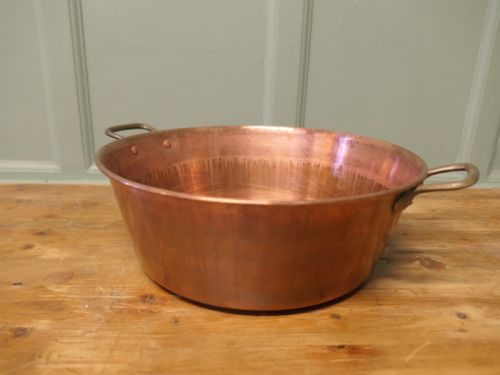
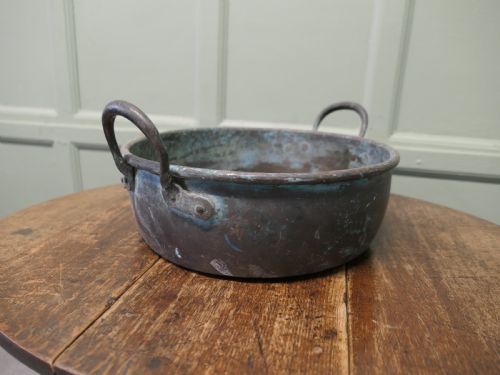
These copper jam bowl examples are heavy domestic vessels designed for open-pan preserve making, bringing functional hearth warmth to a modern kitchen.
Copper Jam Bowl
A copper jam bowl is a utilitarian kitchen vessel designed for fruit preservation and confectionary work over an open hearth or stove. Buyers seeking this phrase encounter robust cookware originating from the Georgian and Victorian eras, alongside rustic farmhouse pieces.
The objects listed here take the form of heavy preserving pans, preserve pans, and cream setting pans. Most examples date from the nineteenth century, with notable George III pieces representing the earlier Georgian style of cookware.
Vessels on this page frequently feature large capacities and sturdy iron or brass handles for lifting heavy loads of boiling fruit. Domestic kitchenware from this tradition combines plain utility with the deep warmth characteristic of hand-beaten metal.
How they were made
These pans utilise heavy-gauge copper sheets hammered and formed into deep basins capable of conducting heat evenly across the base and sides. Metalworking techniques from the Georgian and Victorian periods relied on skilled manual hammering to shape the thick metal walls.
Iron and brass attachments, including secure handles and rims, are fastened to the main copper body using traditional riveting methods. The resulting construction provides the durability required for daily kitchen service over open fires and stoves.
Several pans feature double handles designed for two people to carry heavy boiling jam safely across the stone floor of a Victorian kitchen.
What varies in quality
Quality in these kitchen vessels rests on the thickness of the metal sheet and the integrity of the original construction. Heavier gauge copper provides superior heat distribution and structural rigidity compared to lighter domestic alternatives.
The refinement of the surface work and the substantial nature of the handles distinguish standard utilitarian pieces from finer workshop examples. Superior items display careful hammer work and well-balanced proportions that survive centuries of kitchen use.
The Copper Jam Bowl Glossary
- Preserving pan
- A wide, open metal basin designed specifically for boiling fruit and sugar mixtures. The shallow depth encourages rapid evaporation during jam making.
- Cream setting pan
- A specialised kitchen vessel used in dairy work to allow cream to rise to the surface of milk. These pieces share the wide, shallow proportions typical of nineteenth-century utilitarian copperware.
- George III
- The period of British history spanning from 1760 to 1820, associated with early craftsmanship seen in the oldest pans on this page. Pieces from this era display classic Georgian proportions.
- Victorian Country
- A style descriptor for robust domestic objects made during the reign of Queen Victoria for everyday use in rural homes. This category emphasises practical utility over decorative finish.
Copper Jam Bowl: Frequently Asked Questions
How were copper jam bowls used?
These vessels were placed directly over an open fire or stove to boil large quantities of fruit and sugar. The wide opening allowed steam to escape quickly while the metal conducted heat evenly to prevent burning.
Cooks utilised the sturdy handles to lift the heavy pans when transferring hot preserves into storage jars. Their robust construction ensured they could withstand decades of rigorous hearth use.
How do I date an antique copper pan?
Dating relies on observing construction details, such as the style of the riveted handles and the thickness of the metal sheet. Georgian pieces often display different handle attachments compared to later Victorian kitchenware.
Makers and periods can sometimes be inferred from the overall form and the specific type of metalworking technique employed. Comparing pieces against documented examples helps confirm their era of origin.
Can I still cook with antique copper pans?
Many buyers choose to use these heavy vessels for traditional jam making and stovetop cooking today. The thick copper provides the precise thermal control valued by modern cooks and confectioners.
Owners should check the interior surface condition and ensure proper cleaning before preparing food in antique cookware. Regular maintenance preserves both the appearance and the utility of the metal.
How should I clean a copper preserve pan?
Cleaning involves using traditional metal polishes or a mixture of salt and acid to remove oxidation and restore the bright finish. Gentle washing with warm soapy water removes everyday dust and kitchen residue.
Avoiding harsh abrasives protects the historic surface texture of the hand-beaten metal. Proper care maintains the warm reddish hue characteristic of aged copper.