


Victorian Copper Plaque
These victorian copper plaque pieces bring striking metalwork to a wall, offering rich texture and historical depth to any room.
Victorian Copper Plaque
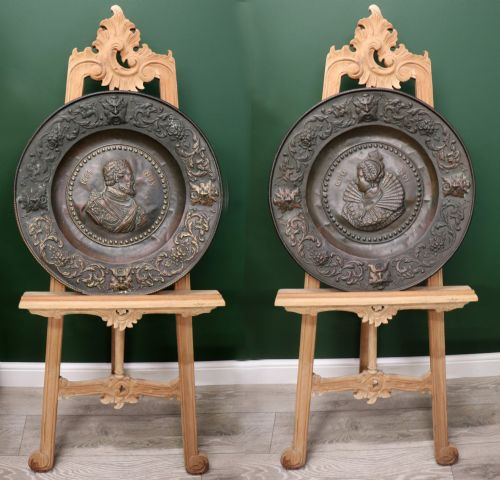
A victorian copper plaque encompasses wall art, wall chargers, wall reliefs, and decorative dishes made during the nineteenth century and the early decades of the twentieth century. These pieces serve primarily as decorative wall panels, often featuring portraits, historical figures, or traditional motifs.
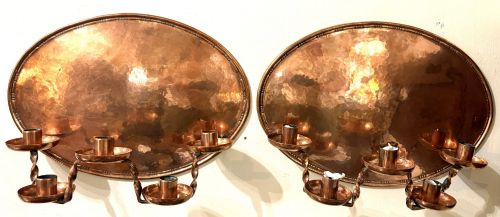
Buyers will encounter varied forms on this page, ranging from heavy repoussé chargers to wall sconces and commemorative jubilee plaques. The selection includes items created in distinct regional traditions such as Indo-Persian, Kashmiri, and Arts and Crafts styles.
Origins span British workshops alongside continental European and Indian Raj period productions. Pieces utilise copper predominantly, frequently paired with brass, silver plate, or enamel elements to enrich the visual surface.
Distinctions in quality and execution
The standard of a victorian copper plaque rests upon the crispness of the hand-worked relief and the depth of the repoussé modelling. Pieces with finely chased details and deliberate hammer marks demonstrate superior craftsmanship compared to simpler pressed metal items.
The integration of secondary materials, such as well-fired Limoges enamel or careful silver plating, elevates certain examples. Maker attribution and the complexity of figural subjects, such as historical portraits or mythological scenes, also distinguish finer works.
Diana the Huntress appears frozen mid-chase in copper, reminding modern viewers that classical mythology makes an unexpectedly vigorous wall companion.
Gustav Grohe·Samson
The Victorian Copper Plaque Glossary
- Repoussé
- A metalworking technique where the artisan hammers the metal from the reverse side to form a raised design on the front. This method creates tactile depth on wall chargers and plaques.
- Wall Charger
- A large decorative plate intended for display on a wall rather than use at a table. These items often feature elaborate figural or floral scenes.
- Arts and Crafts
- A design movement valuing manual skill and traditional craftsmanship over mass production. Pieces from this style often display visible hammer marks and naturalistic motifs.
- Limoges Enamel
- Coloured glass fused to a metal base through firing, associated with the French city of Limoges. Such plaques show smooth, glossy pictorial surfaces.
Victorian Copper Plaque: Frequently Asked Questions
How do I hang a heavy copper plaque safely?
Most heavier chargers and plaques require secure wall fixings, such as appropriate wall plugs and screws matched to the weight of the metal and any wooden backing. Using sturdy picture wire attached to designated hanging loops ensures the piece remains balanced.
Avoid relying on standard picture hooks for larger repoussé shields or heavy wall panels. Inspect the back of the plaque to ensure existing mounting brackets are stable before installation.
What is the difference between a plaque and a charger?
While both hang on walls, chargers are typically larger and circular, originating from decorative plate forms. Plaques can take various geometric shapes, including oval or rectangular panels designed specifically as flat wall art.
Chargers often feature wide decorative rims surrounding a central boss or scene. Plaques frequently concentrate the relief work across the entire surface area without a traditional plate brim.
How should I clean antique copper wall art?
Dusting gently with a dry, soft cloth is usually sufficient to maintain the surface of vintage copper. Avoid aggressive metal polishes that strip away patination and historical character accumulated over decades.
Enamelled or silver-plated sections require particular care to prevent damage to the secondary materials. Professional guidance may be useful if deeper cleaning becomes necessary.
How do I identify Arts and Crafts copper pieces?
Arts and Crafts copper often displays honest handmade qualities, including distinct hammer blows and textured surfaces. These items tend to favour stylised floral motifs, geometric patterns, or simple utility over ornate historical revivals.
Many examples date around the turn of the twentieth century and reflect the ethos of guilds and regional artisan schools. Examining the construction reveals individual hand-working rather than industrial stamping.