
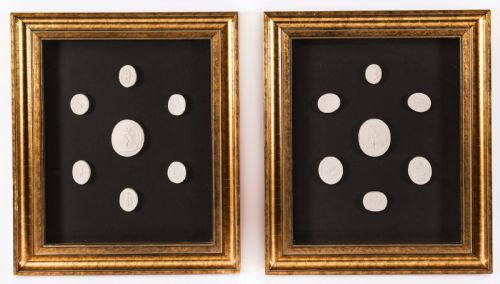


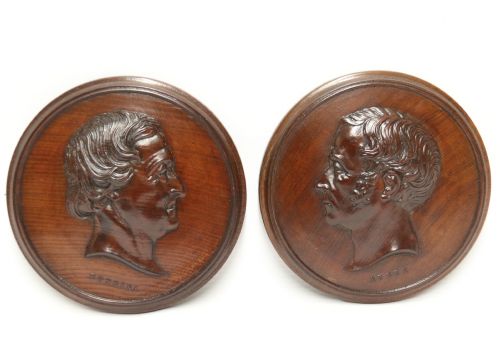


Pair Relief Medallions
Pair relief medallions bring classical portraiture into domestic spaces through miniature sculptural profiles framed for display.
Pair Relief Medallions
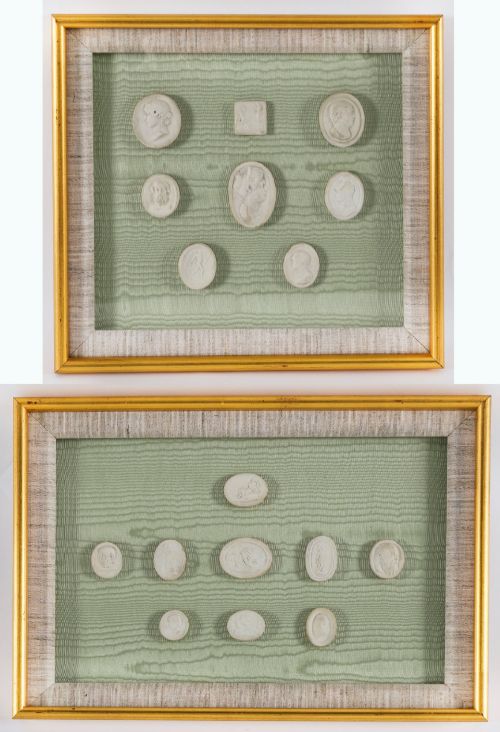
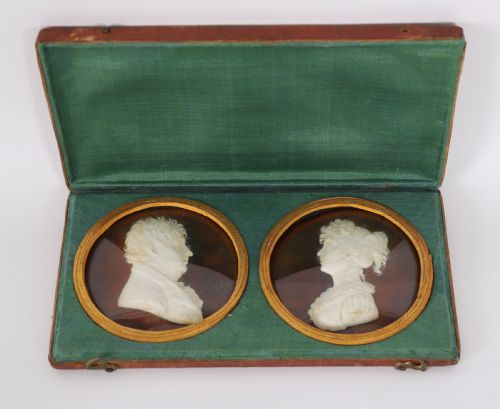
When you search for pair relief medallions, you encounter framed sculptural counterparts depicting historical figures, classical emperors, and literary icons. These objects originate predominantly from the nineteenth century, reflecting a sustained fascination with classical antiquity and the Grand Tour.
The pairings often present complementary subjects, such as Napoleon and Marie-Louise Bonaparte, or classical Roman emperors. They manifest as wall plaques, framed intaglios, and circular roundels designed to hang in pairs rather than isolation.
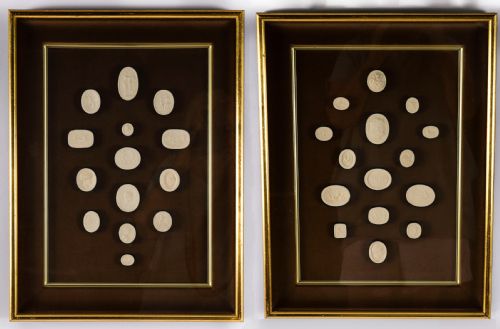
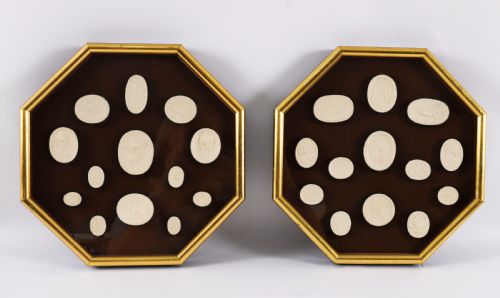
You are most likely to meet plaster intaglios, carved mahogany roundels, and cast metal profiles housed in period frames of giltwood or turned mahogany. Their forms range from octagonal Italian frames to deep box frames that protect the delicate surfaces within.
How they were made
The makers of these pieces employed a variety of traditional casting and carving techniques depending on the chosen medium. Plaster and wax were moulded for Grand Tour souvenirs, while marble and mahogany received direct hand-carving by skilled artisans.
Metal versions utilised casting in iron, lead, or copper, frequently supplemented by a bronzed finish to simulate more costly materials. Frames were constructed from timber such as mahogany or carved wood finished with a layer of giltwood.
Listings feature eighteenth and nineteenth-century pieces, spanning Neoclassical, Renaissance Revival, and French Empire styles in materials including glass, plaster, velvet, and mahogany.
What varies in quality
The quality of the surrounding frame holds equal importance, as original giltwood or turned mahogany housings complete the composition. Pieces featuring named makers or distinguished historical subjects generally exhibit superior craftsmanship throughout both the plaque and the mount.
Giovanni Liberotti·Gustav Grohe
The Pair Relief Medallions Glossary
- Intaglio
- A design carved into the surface so that the impression sits below the plane. These are frequently found in plaster or wax within Grand Tour souvenir frames.
- Bas-relief
- Sculptural relief in which the projection from the background is slight. This technique allows for delicate profile portraits of Roman emperors and literary figures.
- Grand Tour
- A traditional trip of Europe undertaken by upper-class European young men of sufficient means. Souvenirs from these journeys included framed plaster and wax intaglios.
- Roundel
- A circular panel or plaque used for decorative purposes. They appear in copper, cast iron, and wood across nineteenth-century examples.
- Giltwood
- Wood that has been treated with gold leaf or a gold-coloured finish. This material is common in the frames housing classical portrait reliefs.
Pair Relief Medallions: Frequently Asked Questions
How were they used historically?
Owners displayed these matching plaques on walls in libraries, studies, and drawing rooms to signal classical learning and cultural refinement. Many served as personal souvenirs brought back from European travels.
The paired format allowed for balanced decorative arrangements, often featuring complementary historical or literary figures side by side.
How should I hang them?
Hang the pair at eye level with adequate spacing to let the individual frames and profiles command attention. Ensure the wall fixings are secure, as materials like cast iron and framed plaster carry notable weight.
Keep them away from direct sunlight and damp environments to protect delicate wax, plaster, and antique wooden frames.
How do I identify nineteenth-century pieces?
Look closely at the framing methods, the backing materials, and the style of the carving or casting. Nineteenth-century examples frequently utilise turned mahogany, deep box frames, or traditional giltwood mouldings.
The choice of subjects, such as Napoleon, classical Roman emperors, or literary icons, typically reflects the revival styles popular during that era.