

Victorian Conference Table
A victorian conference table provides a grand surface for meetings, dining, and large gatherings, built from solid timbers during the nineteenth century.

Victorian Conference Table
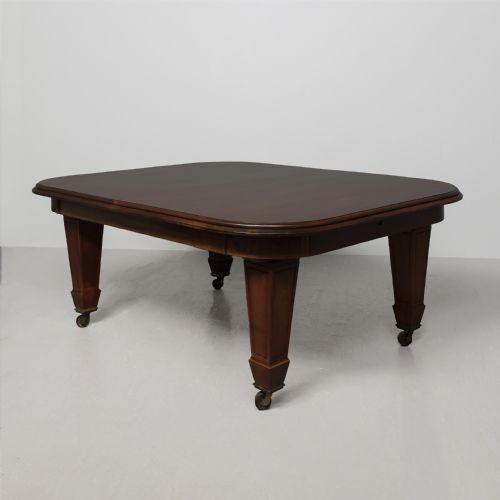
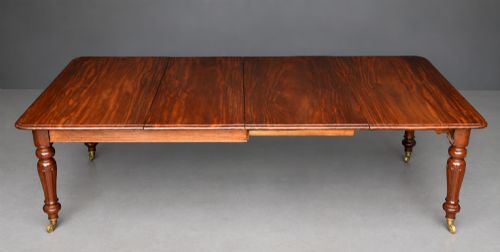
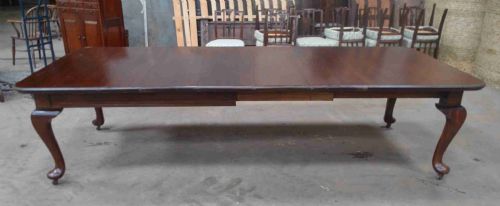
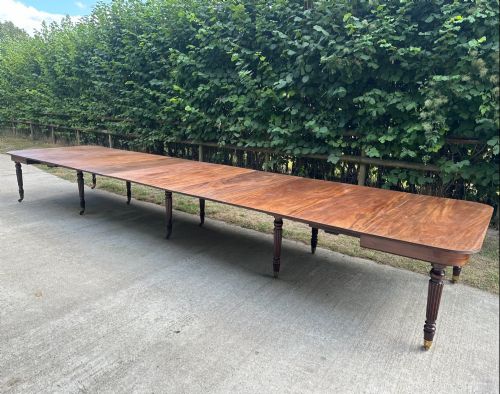
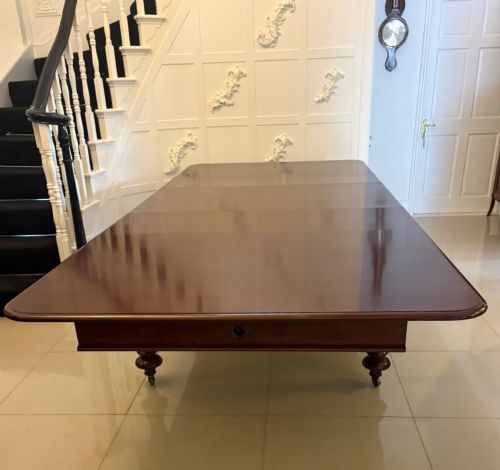
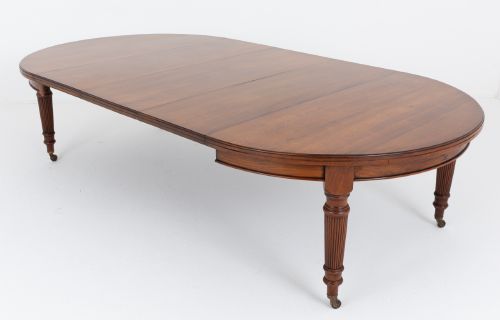
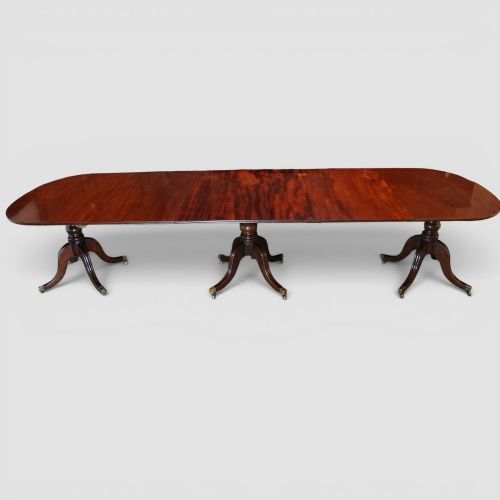
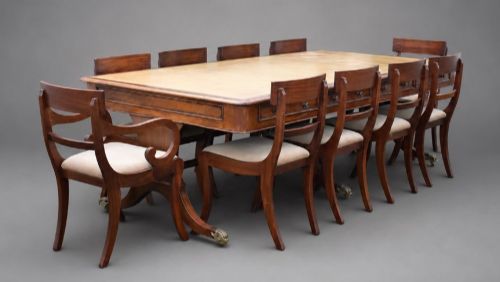
A victorian conference table is typically encountered as a large extending dining table or boardroom table designed to seat ten to twenty-six people. These large pieces serve commercial or domestic spaces requiring substantial seating capacity and imposing length.
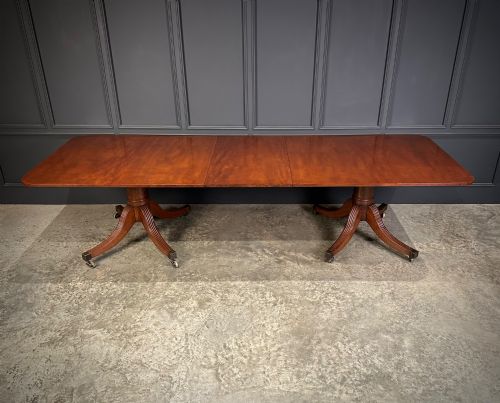
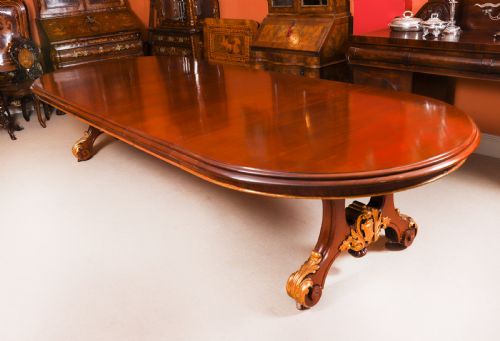
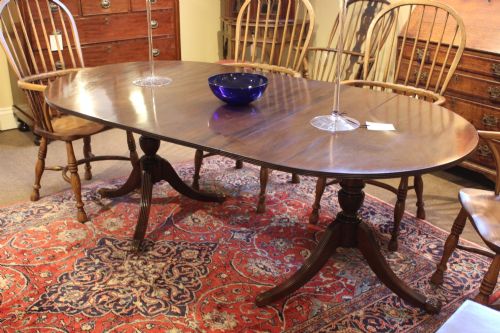
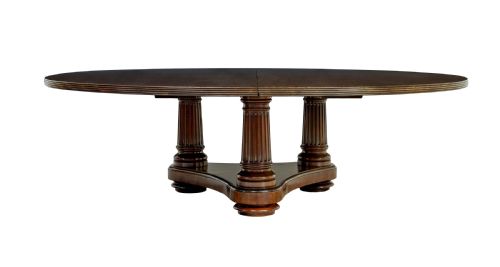
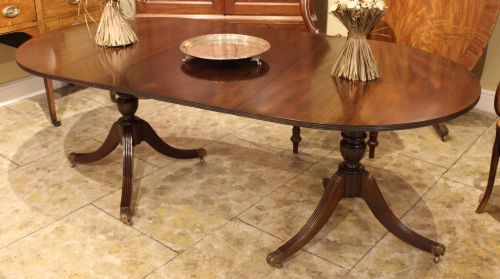
The selection spans 19th-century periods, incorporating Victorian, William IV, and Regency styles alongside revival designs. Forms include twin pedestal, triple pedestal, and split base configurations often fitted with original leaves for adjustment.
Materials and construction
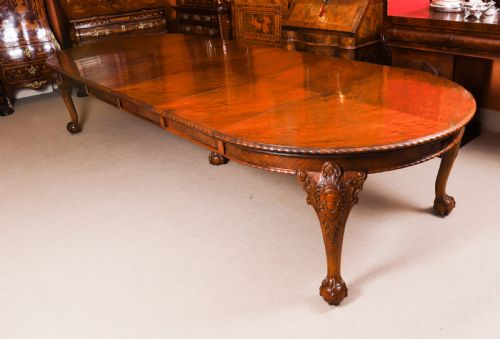
Makers utilised dense timbers such as mahogany, walnut, and oak to construct these large tables. Flame mahogany, figured mahogany, and burr walnut appear frequently on top surfaces to provide decorative grain patterns.
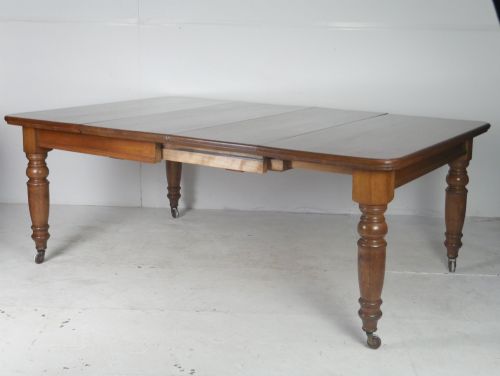
Tables incorporate mechanical extending systems, wind-out mechanisms, and brass fittings to support multiple leaves. Pedestals often stand upon carved claw and ball feet or heavy pillars.
Some tables stretch so long they require an extra set of fold-out wooden legs hidden beneath to stop guests sagging into the soup.
Quality differences
Quality rests in the selection of figured or flame timber veneers and the precision of the extending mechanism. Tables by documented cabinet makers demonstrate superior carving on the legs and pillars.
Proportion and scale dictate the upper tier of the range, particularly imperial lengths with multiple original leaves and balanced pedestals that maintain stability when fully extended.
Gillows·Wylie and Lochead·Maple and Co
The Victorian Conference Table Glossary
- Extending table
- A table designed with a mechanism to separate and accept extra leaves. This allows the surface length to increase or decrease depending on seating needs.
- Pedestal
- A central supporting column beneath the table top, often duplicated in twin or triple arrangements on longer examples. They distribute weight evenly across the base.
- Wind-out mechanism
- A mechanical screw system operated by a handle to open the table frame smoothly. It simplifies the insertion of additional leaves.
- D-end
- A table end shaped in a semicircle resembling the letter D, often used in modular dining sets. These sections detach to form console tables or smaller configurations.
Victorian Conference Table: Frequently Asked Questions
How do I extend a table?
Many tables utilise a metal screw mechanism operated with a winding handle. Turning the handle separates the two main sections to allow the insertion of loose leaves.
Once the leaves rest in place, the mechanism winds back together to secure the boards tightly. Older examples rely on pull-apart frames supported by additional pull-out legs.
What rooms suit these tables?
These large pieces require substantial floor space to allow chairs to pull out comfortably on all sides. Boardrooms, large dining rooms, and open-plan offices accommodate their proportions.
Sizing needs careful measurement of the room length, accounting for the table both closed and fully extended with all leaves inserted.
How do I care for the surface?
Polished timber surfaces require regular dusting with a soft, dry cloth to prevent grit accumulation. Avoid placing hot items directly onto the wood to protect the polish.
Applying a quality beeswax periodically maintains the sheen and nourishes the timber. Keep tables away from direct sunlight and severe temperature fluctuations to prevent splitting.
How do I identify the period?
Stylistic clues such as carved claw and ball feet, heavy turned pedestals, or brass castors point toward specific decades. William IV and early Victorian examples often display robust flame mahogany and deep mouldings.
Later Victorian and revival pieces introduce walnut or oak with distinct carving details. Construction methods underneath, including screw types and jointing, also confirm the age.