

Victorian Condiment Set
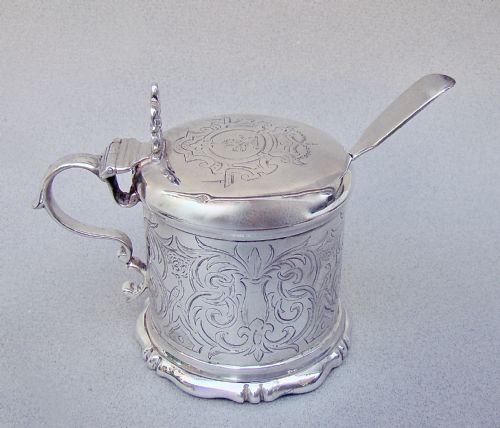
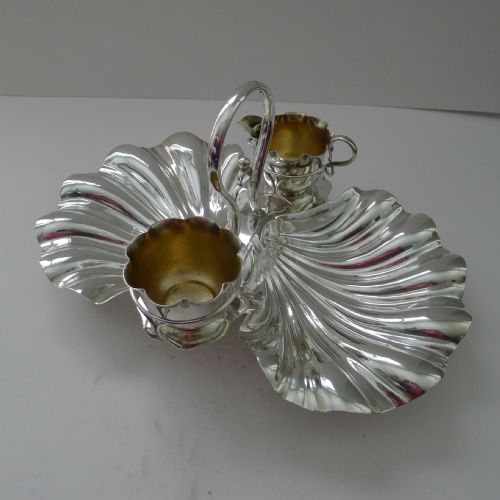
A victorian condiment set brings form and polish to the dining table through matched cruets, salts and mustard pots.
Victorian Condiment Set
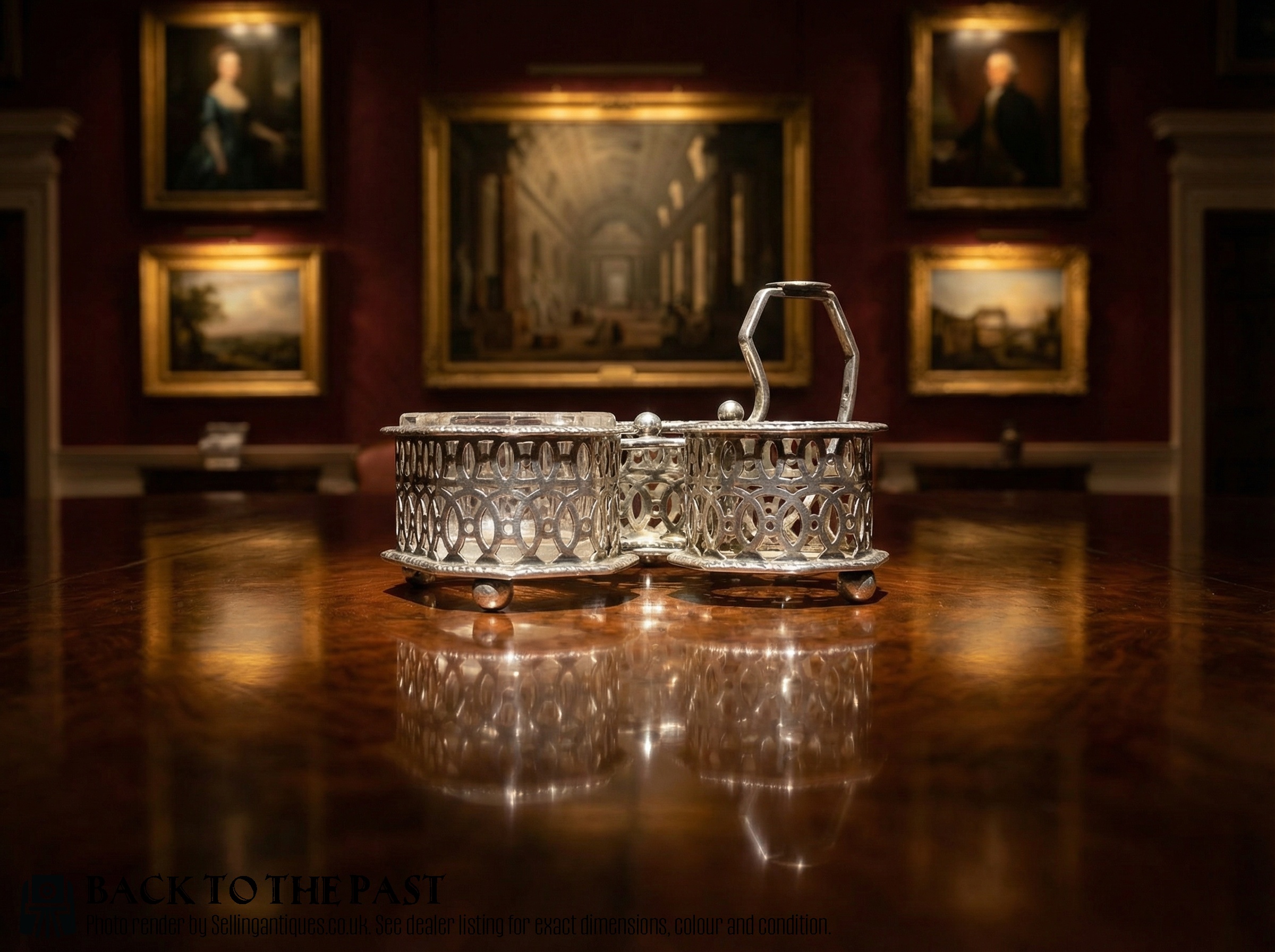
A victorian condiment set organises table seasoning using coordinated vessels like salt cellars, pepper pots and mustard pots. These assemblies range from single boxed pairs of salts to multi-bottle cruet frames holding oil, vinegar and sauces.
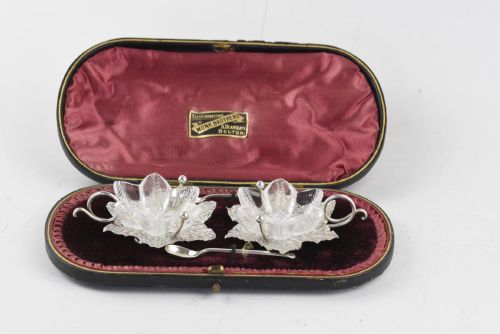
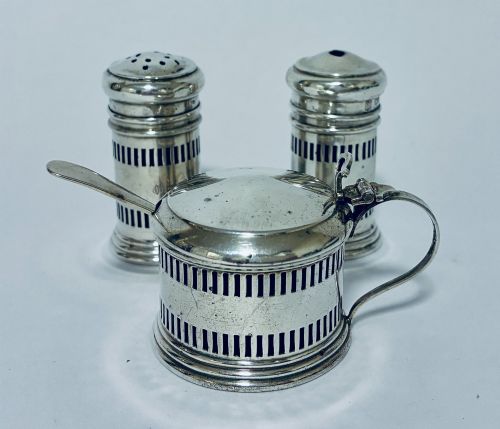
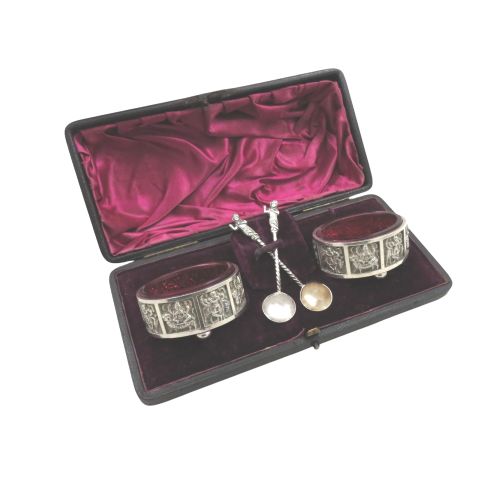
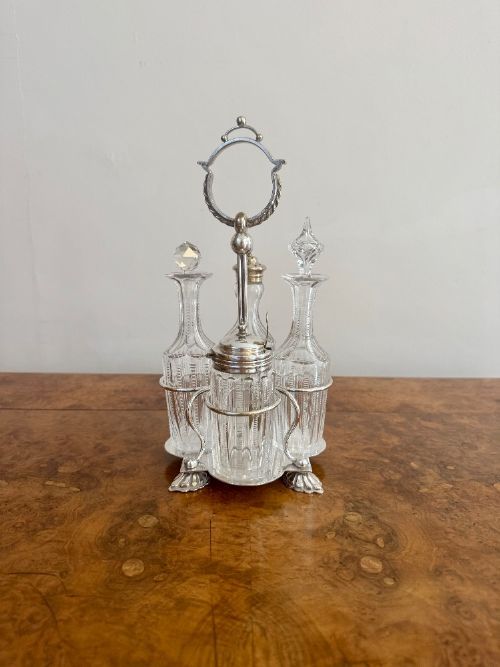
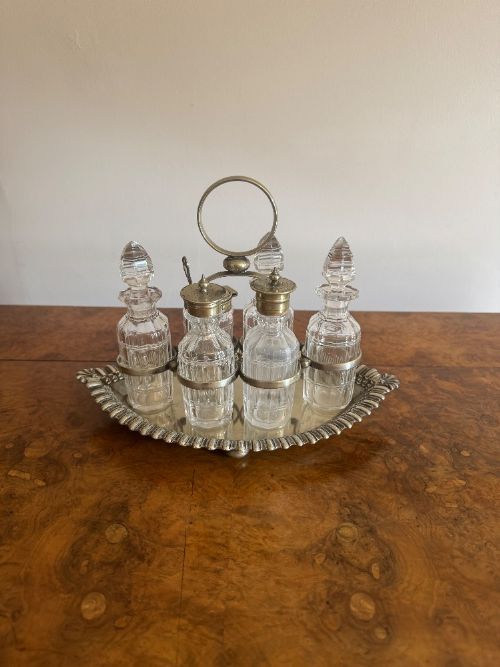
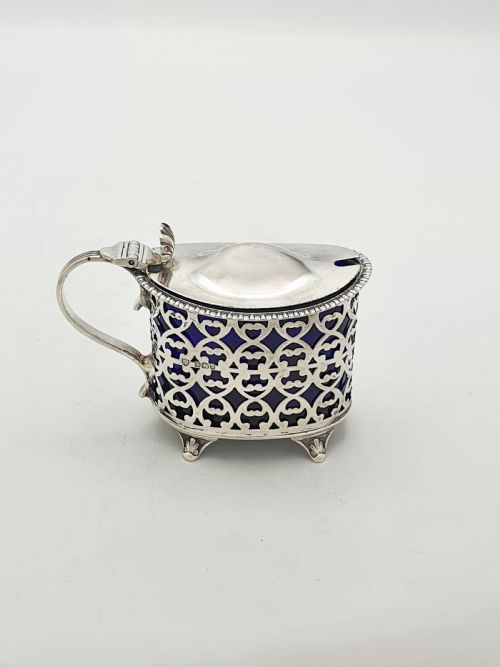
The version most commonly met on this page is the silver plated or sterling silver cruet frame holding cut glass bottles alongside specialised spoons. Boxed sets containing open salt cellars with glass liners also appear frequently across the Victorian and Edwardian periods.
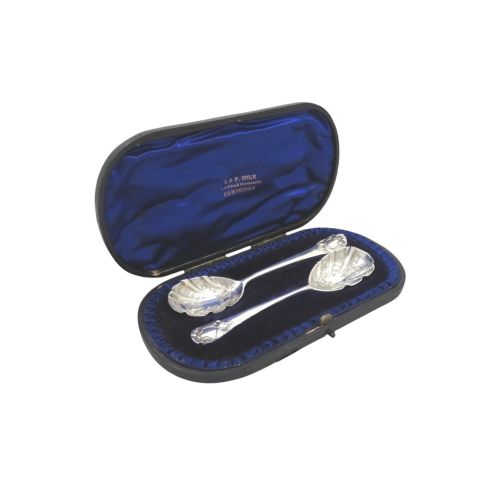
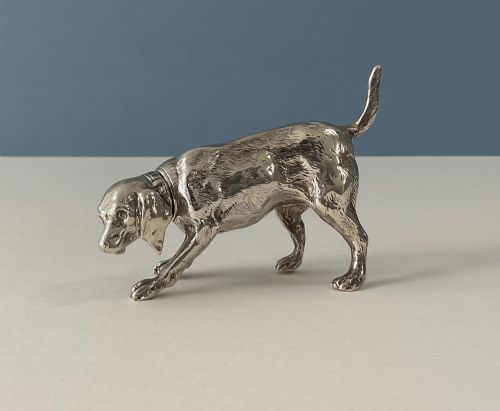
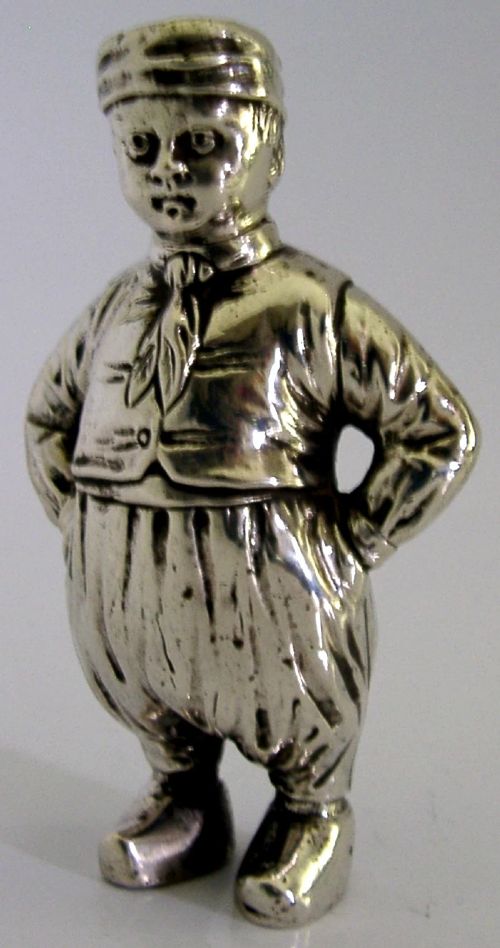
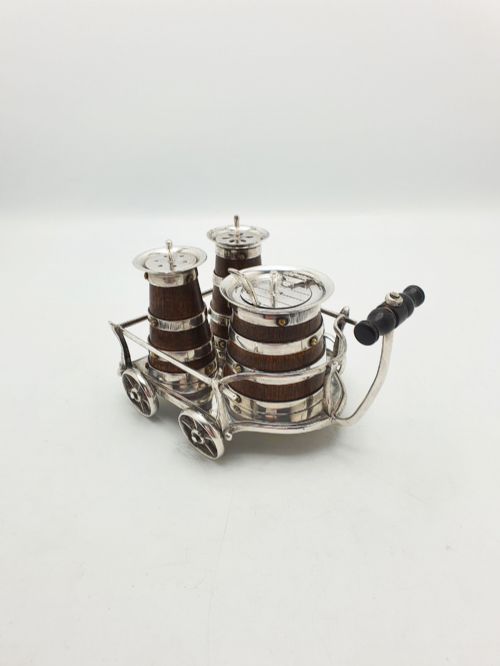
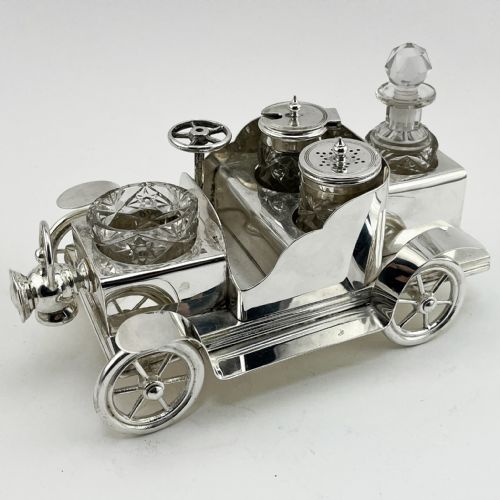
Makers designed these pieces for formal dining, creating specialised items such as jam preserves, strawberry sets and novelty animal peppers shaped as dogs or birds. Materials span solid silver, silver plate, treen, oak and walnut combined with clear, cobalt or cranberry glass.
How they were made
Silversmiths shaped sterling silver and silver plate through piercing, casting and repousse work to form ornate cruet frames and mustard pots. Glass components involved blowing and deep cutting to create faceted bottles and liners.
Woodworkers turned walnut, oak and treen into tiered spice towers, barrels and sauce holders fitted with wirework stands. Makers secured cobalt and cranberry glass inserts inside open salts to hold wet condiments safely.
Fitted presentation boxes utilised velvet and leather linings to house matched sets of salts, spoons and condiment pots securely.
Listings feature sterling silver, silver plate, cut glass, velvet, glass, leather and cobalt glass across Victorian and Edwardian periods.
What varies in quality
The division between standard production and superior work rests on the weight of the metal, the crispness of pierced decoration and the depth of glass cutting. Hand-chased detailing on novelty pieces and marked sterling silver components indicate higher craftsmanship than basic silver plate.
Completeness dictates utility and desirability, as matched original bottles, intact glass liners and original presentation boxes elevate a victorian condiment set. The presence of matching spoons bearing the same hallmarks confirms a unified original assembly.
Charles and George Fox·Daniel Arter·Mappin Brothers·Walker and Hall·John Grinsell and Son·Asprey
The Victorian Condiment Set Glossary
- Cruet set
- A fitted stand holding glass bottles and pots for oils, vinegars, and sauces at the dining table. These frames often feature silver plate or sterling silver mounts.
- Salt cellar
- An open vessel or small bowl used to hold loose table salt before the invention of the spring-loaded shaker. They frequently incorporate cobalt or cranberry glass liners.
- Pepperette
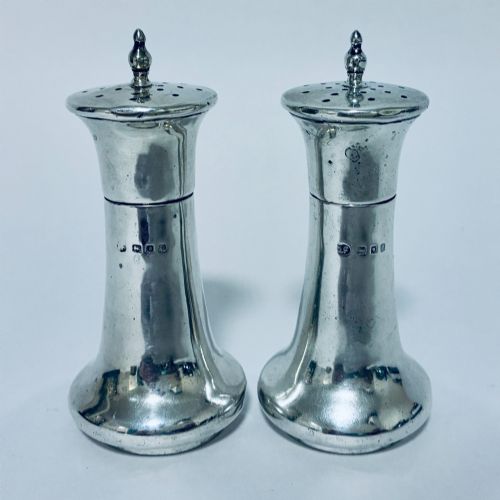
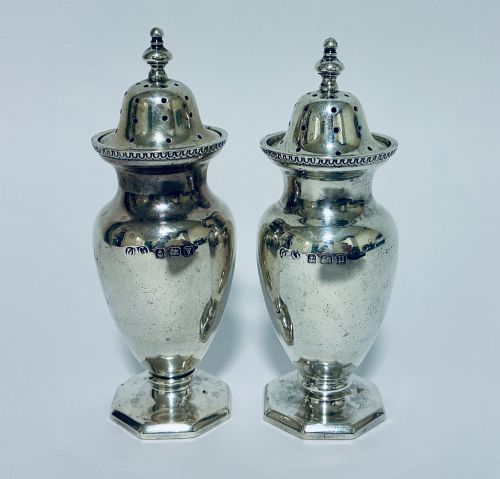
- A small shaker or pot designed specifically for dispensing ground pepper. They appear in standard cylindrical forms as well as novelty shapes.
- Treen
- Small handmade wooden household objects turned on a lathe. Examples include spice towers and miniature containers.
- Piercing
- A decorative technique where metal is cut through in geometric or floral patterns. This work lightens the appearance of mustard pots and cruet stands.
Victorian Condiment Set: Frequently Asked Questions
What is a cruet set?
A cruet set is a table assembly designed to hold multiple seasoning bottles, mustard pots and salt cellars in one dedicated frame. These collections kept oils, vinegars and sauces organised during formal meals.
Most examples utilise silver plate or sterling silver frames fitted with cut glass bottles and matched spoons for serving.
How do you use salt cellars?
Salt cellars are open bowls that hold dry salt for guests to pinch or spoon onto their plates. They require small salt spoons rather than modern shakers.
Coloured glass liners protect the silver bodies from corrosion caused by salt, making them practical for everyday dining.
How do you clean silver plate?
Silver plate requires gentle cleaning with a specialised non-abrasive silver polish to preserve the underlying base metal. Harsh scrubbing wears away the thin silver layer over time.
Glass liners and bottles should be removed and washed separately in warm soapy water before reassembly.