
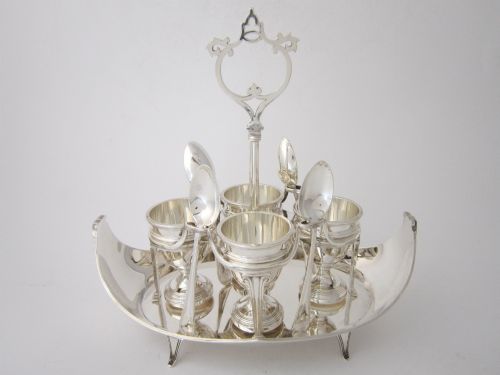
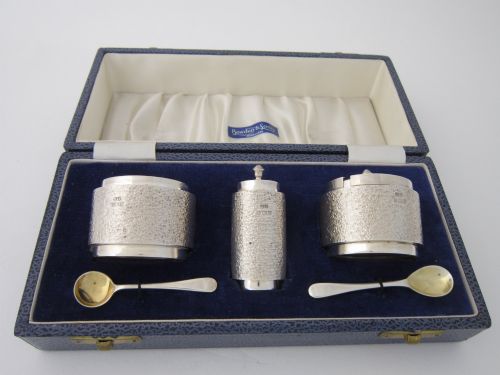


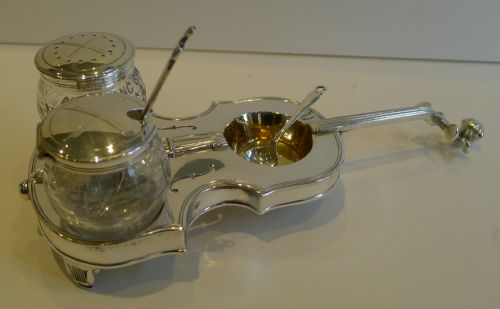

English Silver Cruet Set
An English silver cruet set brings both order and a touch of formal ceremony to the dining table.
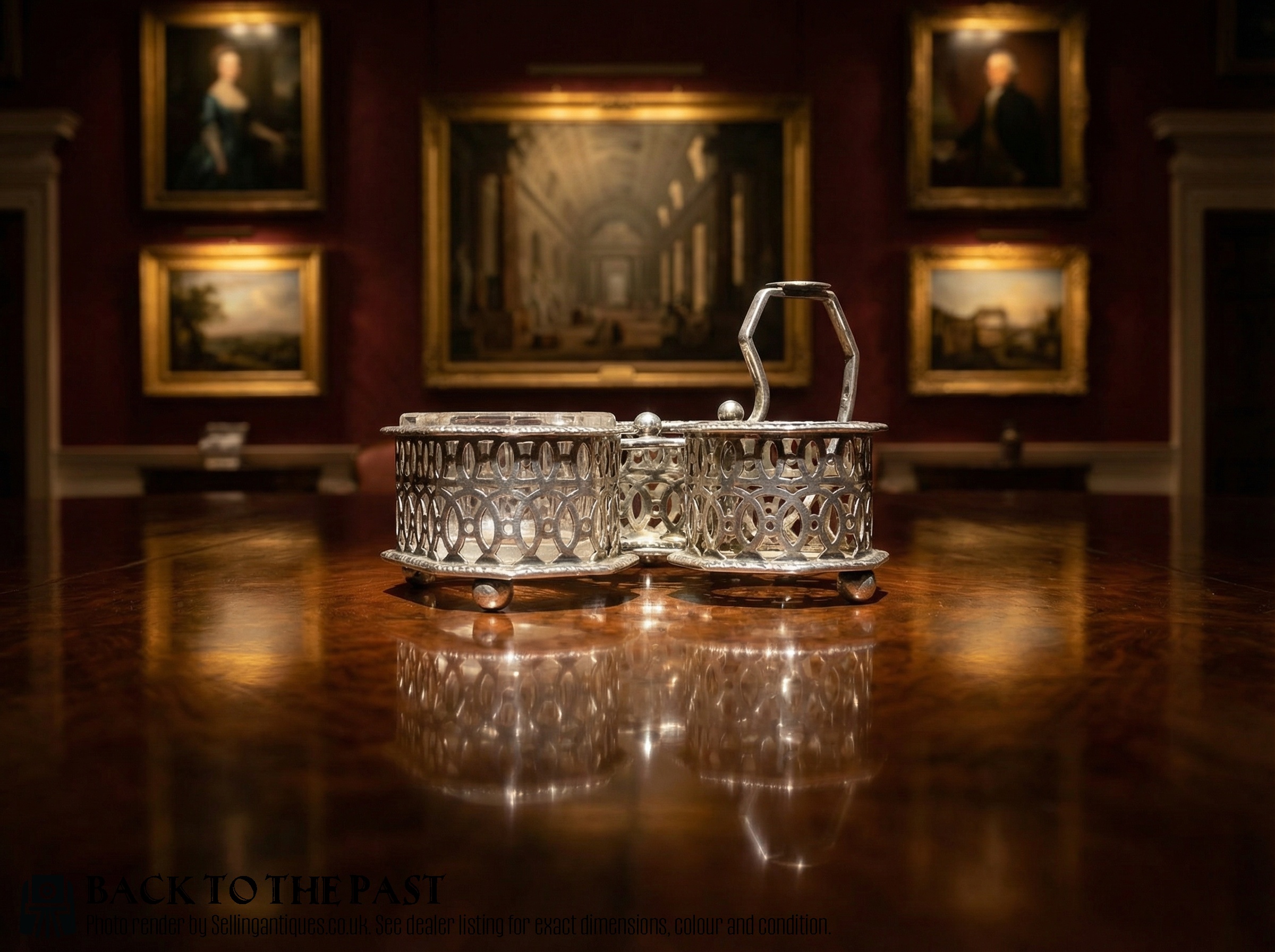
English Silver Cruet Set
An English silver cruet set holds bottles, jars, or castors for condiments like mustard, pepper, salt, oil, and vinegar within a unified stand.
The versions you encounter span from classic Victorian and Edwardian silver plate frames to George V sterling silver pieces and mid-century condiment sets.
Many examples take standard stand forms, while others appear as elaborate novelties shaped like carts, horseshoes, violins, or butlers' trays.
Materials and Construction
Frames and stands are constructed primarily from sterling silver or silver plate over a base metal, often paired with clear cut glass or cranberry glass bottles.
Some nineteenth-century novelty stands incorporate natural materials such as oak alongside metalwork, while interior linings utilise fabrics like velvet and silk.
Listings feature periods spanning from the Victorian era and Edwardian years through to George V and mid-century decades.
Evaluating Quality and Craftsmanship
The distinction between ordinary and superior pieces lies in the crispness of the cast mounts and the precise fit of the glass bottles within their designated rings.
Novelty cruets achieve higher regard when the thematic detailing, whether an equestrian horseshoe or a miniature vehicle, is executed with sculptural conviction rather than mere utility.
Wilmot Manufacturing Co·William Hutton and Sons·Elkington·Deykin and Harrison
The English Silver Cruet Set Glossary
- Condiment set
- A related grouping of open salt cellars, mustard pots, and pepper shakers intended for table service. These often accompany or form part of a broader cruet arrangement.
- Silver plate
- A manufacturing method where a thin layer of silver is fused to a base metal core. This technique allowed makers to produce substantial dining wares at a lower cost than solid sterling.
- Cut glass
- Glassware patterned with sharp, geometric facets carved by a wheel. It catches the light on the dining table and adds considerable weight to the condiment bottles.
- Novelty cruet
- A cruet set modelled after a familiar object, animal, or scene, such as a jockey, a violin, or a cart. These decorative pieces were popular conversation starters in the Victorian and Edwardian periods.
English Silver Cruet Set: Frequently Asked Questions
What is an English silver cruet set?
An English silver cruet set is a coordinated collection of condiment containers held within a dedicated metal stand. These sets were designed to organise seasonings at the dining table.
They typically include bottles for oil and vinegar alongside shakers and pots for salt, pepper, and mustard. The stands themselves range from simple frames to elaborate novelty sculptures.
How were these sets used?
These sets sat in the centre of the dining table during meals so diners could season their food to taste. Servants also used them to replenish individual place settings.
Because sauces and spices were costly and varied, having them neatly presented signalled hospitality and social standing. The fitted bottles kept liquids and powders contained between uses.
How do I clean silver plate cruet stands?
Clean silver plate frames gently with a specialist silver polish and a soft cloth, avoiding abrasive pads that can wear away the thin silver layer. Take care to keep moisture away from any fitted wooden bases.
Glass bottles and stoppers can be washed separately in warm, soapy water. Ensure glass components are completely dry before placing them back into the metal rings.
Are all cruet sets made of sterling silver?
Many surviving cruet sets are made from silver plate rather than solid sterling silver. Manufacturers used electroplating to create durable, bright tableware for everyday dining.
Sterling silver examples do exist, often bearing traditional hallmarks that record the assay office and date of manufacture. Silver plated items carry maker's marks specific to electroplate production.
How do I date an antique cruet set?
Dating relies on maker's marks, stamped registration numbers, and stylistic clues within the metalwork and glass. Victorian and Edwardian pieces often feature distinct aesthetic markers.
Sterling silver items display clear hallmarks with date letters that pinpoint the exact year of assay. Novelty designs frequently correspond to patent registration years stamped into the metal.