




Victorian Cobalt Blue Dish
A victorian cobalt blue dish brings rich depth and historical character to a table, combining striking cobalt pigments with the refined forms of the nineteenth century.
Victorian Cobalt Blue Dish
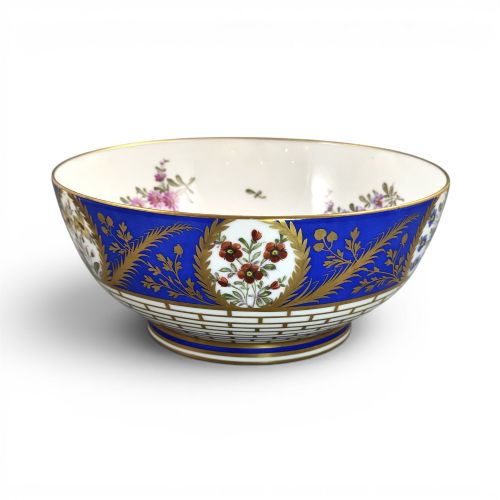
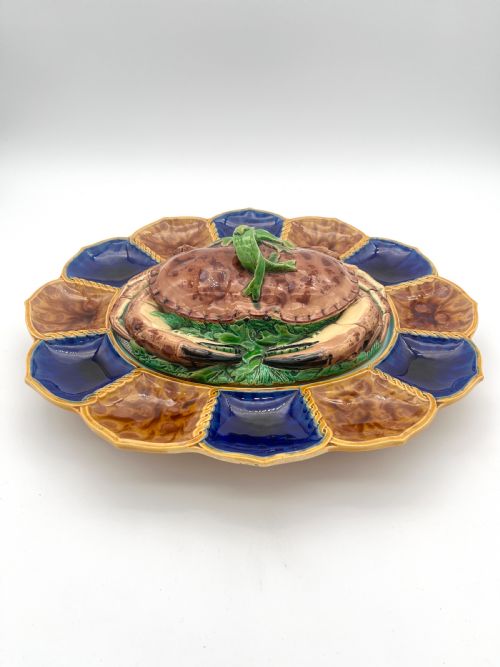
When you search for a victorian cobalt blue dish, you encounter a variety of nineteenth century ceramic and glass items designed for display or dining. The selection includes cabinet plates, serving platters, decorative dishes, and specialised vessels like salt cellars paired with glass liners.
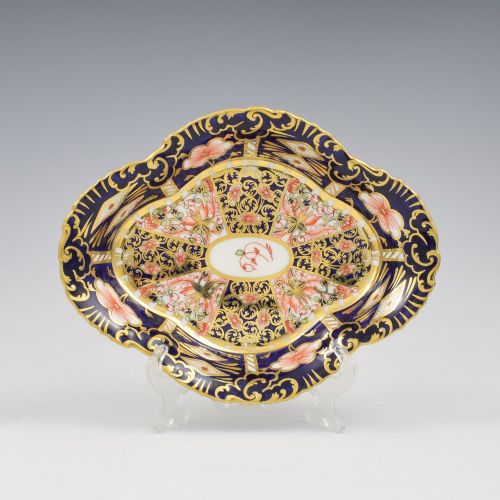
Most examples originate from English and European potteries operating during the Victorian era, alongside Japanese export wares in the Imari style. These pieces range from functional earthenware and ironstone platters to delicate porcelain cabinet plates and enamelled glass jars.
The dominant aesthetic unites deep cobalt pigment with white ceramics, gold leaf detailing, or colourful enamel painting. Whether utilised for serving or displayed as decorative art, these items reflect the diverse manufacturing styles of the eighteen hundreds.
How they were made
Potters and glassmakers utilised mineral oxides, primarily cobalt, to achieve the intense blue hues fused onto porcelain, earthenware, and glass bodies during kiln firing. Artisans applied glazes and enamel colours by hand, frequently incorporating gold leaf detailing or intricate transfer-printed patterns beneath the final protective glaze layer.
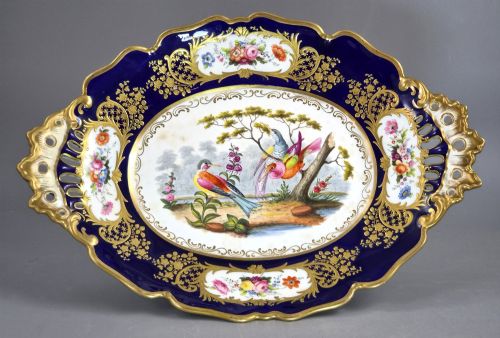
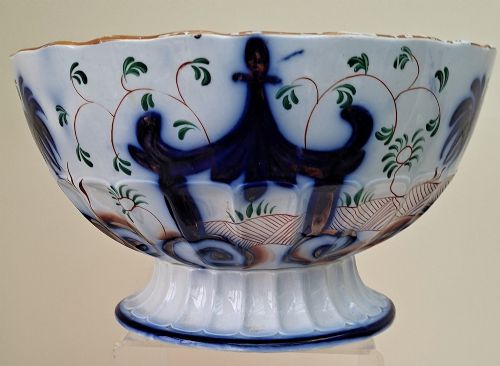
Heavier serving vessels and meat platters utilised durable ironstone or stoneware bodies moulded to withstand regular use. Conversely, cabinet plates and decorative dishes employed fine porcelain bodies shaped for visual delicacy and painted with pictorial scenes or floral motifs.
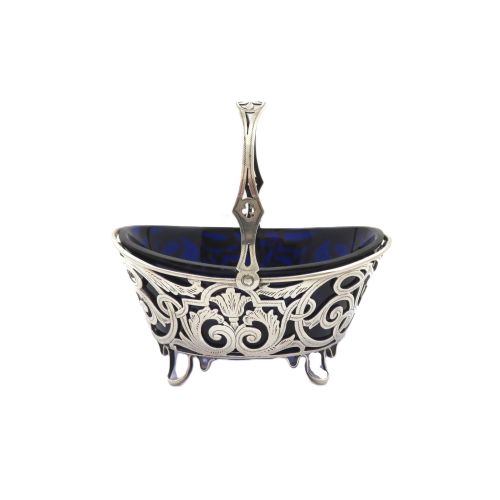
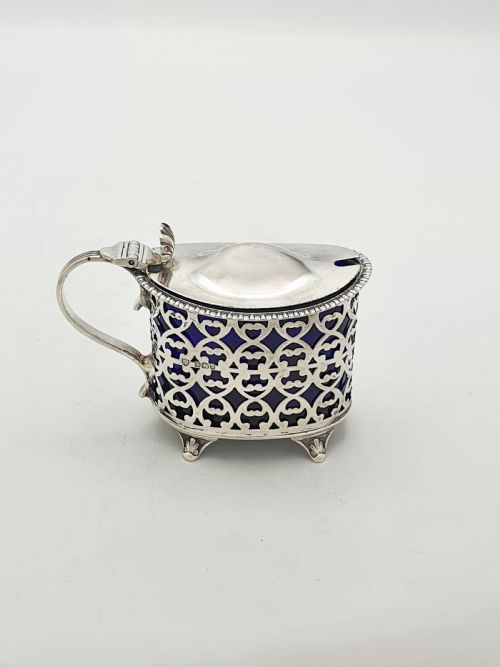
Victorian diners relied on tiny silver salt cellars fitted with blue glass liners to keep their table salt neatly contained.
What varies in quality
Quality in these pieces rests upon the precision of the hand-painting and the clarity of the cobalt glaze against the white ceramic or porcelain ground. Superior examples exhibit crisp detail in gilt accents and pictorial transfers, alongside well-balanced forms free from distortion acquired during kiln firing.
The reputation of the maker and the complexity of the design process also influence the standing of an item. Pieces bearing attribution to established nineteenth-century factories or featuring elaborate hand-painted enamel work represent the upper tier of the range.
Coalport·Samson Paris·Minton·Royal Crown Derby·Pucher Deroche·Doulton Burslem·John Ridgway·Royal Vienna·Meissen·Copeland·Wedgwood·Thomas Dickson·Aynsley·Mason Ironstone·Thomas Forester Sons
The Victorian Cobalt Blue Dish Glossary
- Cobalt blue
- A deep, stable blue pigment derived from cobalt oxide, utilised extensively in ceramic glazes and glass production. It maintains its intense colouration under high kiln temperatures.
- Ironstone
- A type of heavy, durable earthenware patented in the nineteenth century to imitate Chinese porcelain. It provides a sturdy body suitable for large serving platters and tureens.
- Imari
- A style of Japanese porcelain decorated in underglaze blue, iron red, and gold, which heavily influenced nineteenth-century European ceramic production. Japanese Imari pieces were widely exported during the Meiji period.
- Cabinet plate
- A decorative ceramic plate intended for display in a cabinet or on a wall rather than for dining use. These items typically feature elaborate hand-painted scenes or gilded borders.
Victorian Cobalt Blue Dish: Frequently Asked Questions
How were cobalt blue dishes used?
Victorian households utilised these blue dishes for various dining and decorative purposes, ranging from serving meats at the dinner table to holding condiments in salt cellars.
Finer porcelain cabinet plates and decorative dishes served primarily as visual ornaments in parlours and dining rooms, displayed on walls or within glass cabinets.
How do I care for antique ceramic dishes?
Wash these items gently by hand using mild detergent and warm water to protect the delicate glazes and gold leaf detailing from harsh abrasive agents.
Avoid placing nineteenth-century ceramics in dishwashers or subjecting them to sudden temperature changes, which can crack the old glaze or body.
How can I tell the period?
Examine the base of the dish for factory backstamps, impressed registration marks, or handwritten attributions that often denote nineteenth-century production dates.
The weight, style of decoration, and material composition - such as ironstone or soft paste porcelain - also offer clues to whether a piece belongs to the Victorian era.
What is Japanese Imari?
Japanese Imari refers to decorative ceramics featuring a distinctive palette of cobalt blue, iron red, and gold accents. Victorian makers frequently borrowed these patterns for their own earthenware and porcelain.
These pieces were produced for both domestic use and export during the nineteenth century, combining traditional Asian motifs with European forms.