




Victorian Coastal Wall Art
These Victorian coastal wall art pieces capture harbours, shipping and rugged shores in oils and watercolours, bringing maritime history directly into your room.
Victorian Coastal Wall Art
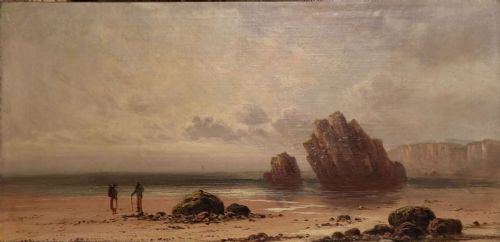
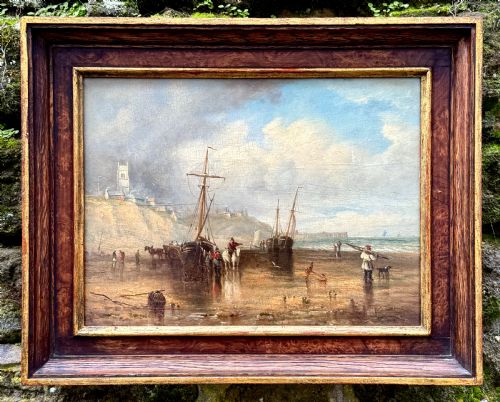
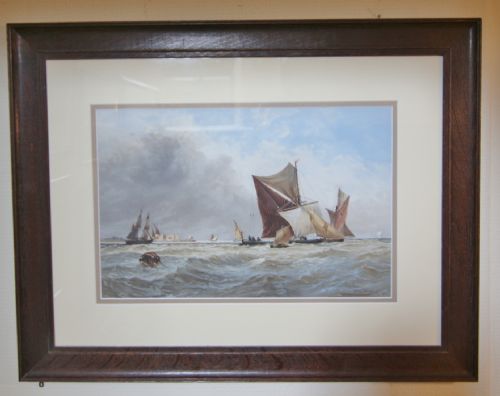
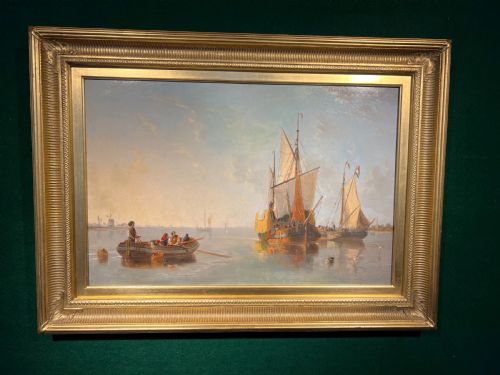
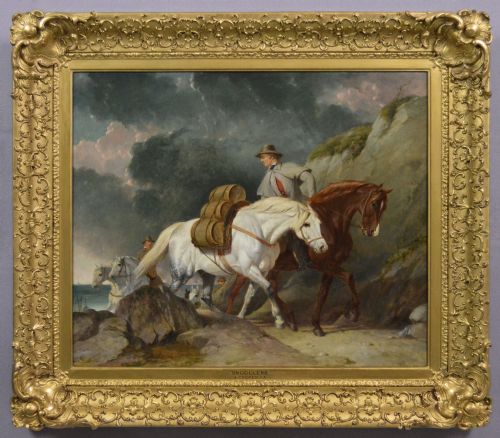
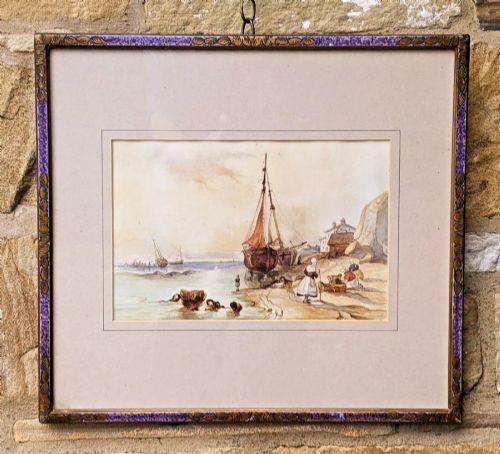
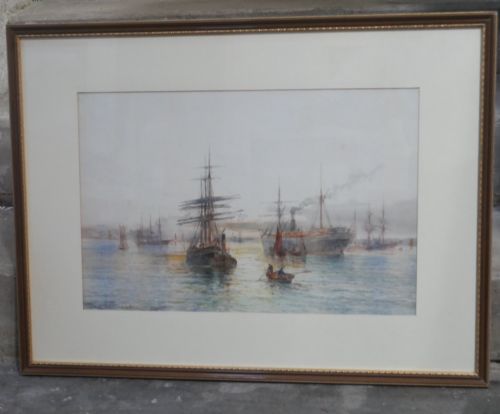
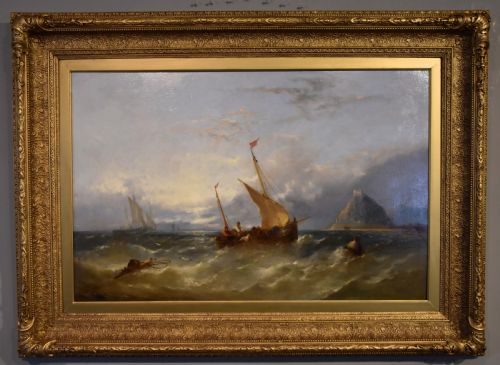
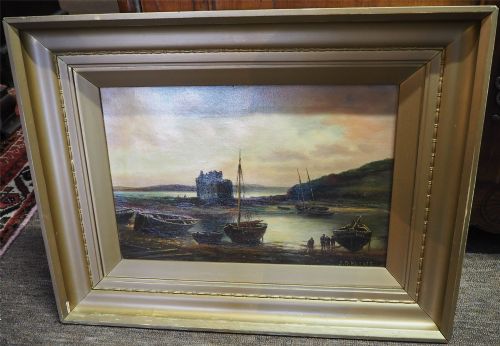
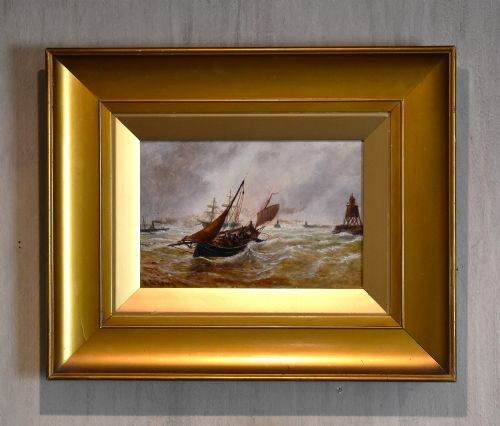
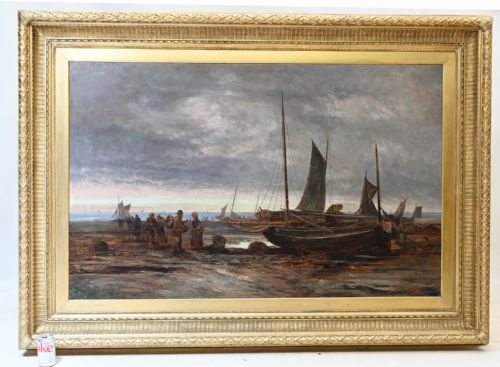
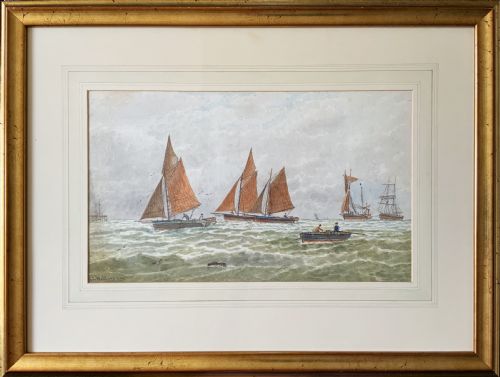
Victorian coastal wall art encompasses framed paintings, watercolours and engravings depicting marine landscapes, fishing harbours and open seas. You will frequently encounter original oil paintings on canvas alongside detailed watercolours on paper, capturing maritime scenes from British and European shores.
The subjects range from tranquil Scottish inlets and Cornish fishing villages to dramatic depictions of shipping vessels, coastal paths and stormy waters. Many compositions focus on local landmarks, beaches and maritime activities spanning the nineteenth century.
How they were made
Artists worked primarily in oil on canvas or applied watercolour to paper, employing traditional techniques to build depth, light and atmosphere. Canvases were stretched over wooden frames and often housed within ornate gilt wood and gesso frames.
The use of glass protected delicate watercolours on paper from environmental damage, while heavier oils relied on the sturdy weave of canvas and board. Artisans finished these works with period mouldings that complemented the maritime subject matter.
Materials recorded across the inventory include gilt wood, gesso, glass, canvas and wood.
What varies in quality
Quality rests upon the artist's ability to render light upon water, movement in waves and the specific architecture of boats and coastal buildings. Finer works display confident brushwork and precise atmospheric conditions rather than formulaic repetition.
The construction and original pairing of the frame also dictate the overall standard, with heavy gilt wood and gesso mouldings adding considerable substance to the piece. Signed works by documented artists command greater attention through their established provenance and technical execution.
James Orrock·William Banks Fortescue·Bernard Benedict Hemy·Thomas Creswick·TB Hardy·John Wilson Carmichael·Abraham Cooper RA·William Henry Williamson·George Stanfield Walters·Abraham Hulk I·John Moxon·William Frederick Settle·Alfred George Morgan·Charles William Adderton·Thomas Bush Hardy·Arthur Tucker·William Greaves·Jonathan Couch·T.S. Wallis·Charles Sim Mottram RBA·George Gregory·William Pitt·William Raymond Dommersen·James Webb
The Victorian Coastal Wall Art Glossary
- Seascape
- A work of art depicting the sea, coastal views or maritime activities. These compositions often focus on shipping, shorelines and atmospheric weather conditions.
- Gesso
- A plaster-like mixture applied to wooden frames before gilding or painting. It provides a smooth surface for intricate moulded ornamentation.
- Gilt wood
- Wood coated with a thin layer of gold leaf or metallic paint. This finish was commonly utilised for elaborate Victorian picture frames.
- Canvas
- Heavy woven fabric stretched across a wooden frame to serve as a support for oil painting. It remains the most prevalent medium surface for larger marine works.
- Watercolour
- A painting method where pigment is suspended in a water-soluble binder on paper. It allows for translucent washes of colour and fine linear detail.
Victorian Coastal Wall Art: Frequently Asked Questions
What subjects appear most frequently?
The works predominantly depict British and European coastal scenes, including fishing boats, harbours, rocky shores and shipping vessels.
Specific locations such as Cornwall, Whitby, and various river estuaries frequently anchor the compositions.
How should I hang these framed works?
Ensure paintings are placed away from direct sunlight and damp environments to protect the canvas, paper and gilt frames.
Use appropriate wall fixings suited to the substantial weight of nineteenth-century wood and gesso mouldings.
Are watercolours framed under glass?
Watercolours on paper require glass protection to shield the pigments from moisture and atmospheric dust.
Oils on canvas generally remain open to the air, relying on the varnish layer for preservation.
How can I identify the period?
Look for stylistic markers of nineteenth-century realism, frame construction methods, and artist signatures or exhibition labels on the reverse.
Materials such as heavy gesso frames and specific canvas stamps also offer clear dating clues.