

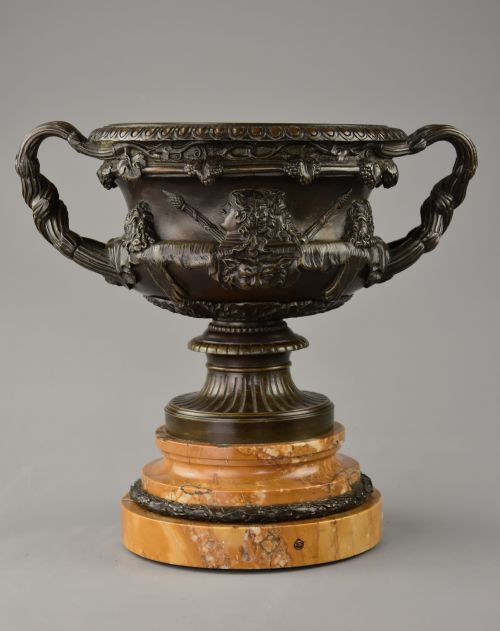
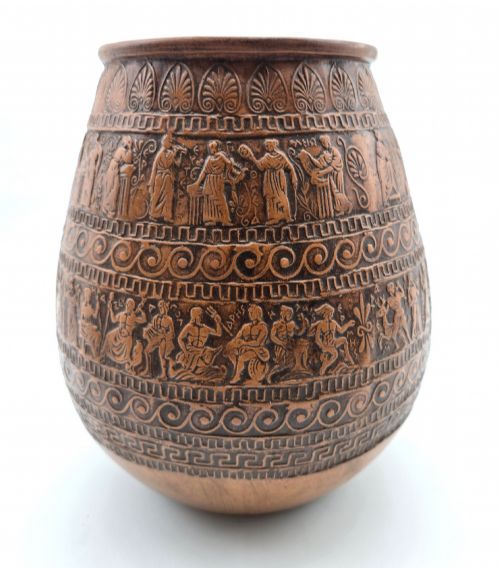
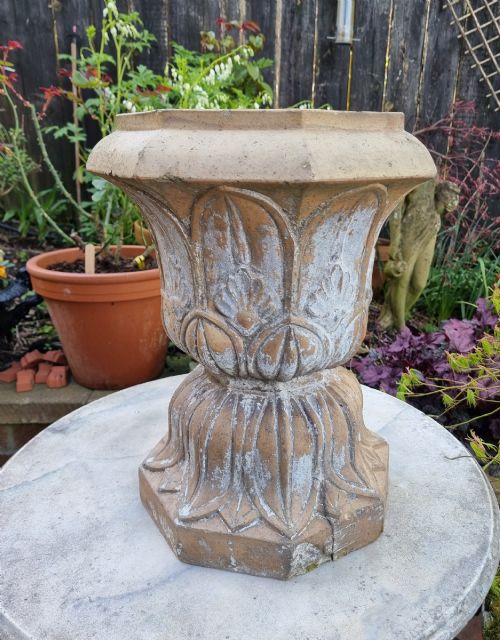
Victorian Classical Urns
Victorian classical urns bring architectural gravity to a room, drawing on ancient forms executed in cast iron, bronze, and porcelain.
Victorian Classical Urns
When searching for victorian classical urns, buyers encounter heavy garden vessels and refined interior ornaments spanning the nineteenth century. These objects adopt classical vocabulary, drawing directly from ancient Greek and Roman models mediated through the Grand Tour and revival styles.
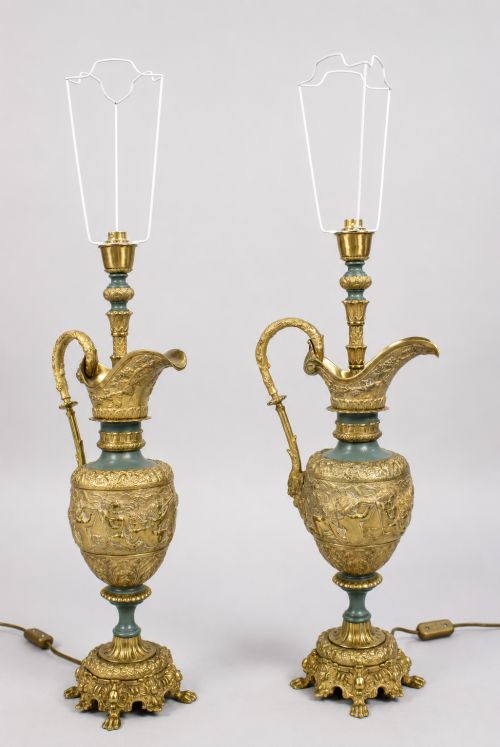
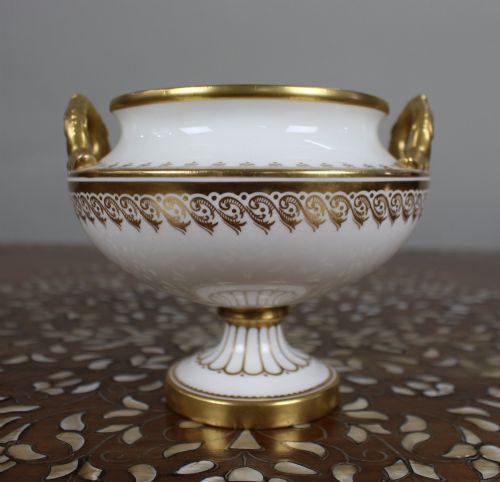
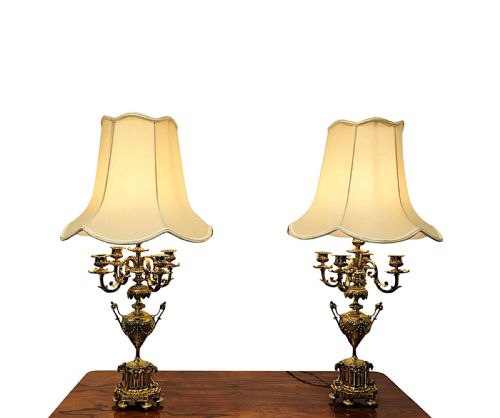
The most frequent examples on this page are cast iron campana garden urns and decorative bronze or porcelain mantle pieces. Makers also adapted these classical silhouettes into table lamps, candelabras, and mirrors, embedding ancient motifs into nineteenth-century domestic interiors.
How they were made
Foundries shaped heavy garden vessels using cast iron, while interior pieces utilised patinated bronze, ormolu, and hand-painted porcelain. Artisans employed casting, turning, and chasing techniques to render crisp acanthus leaves, handles, and neoclassical swags.
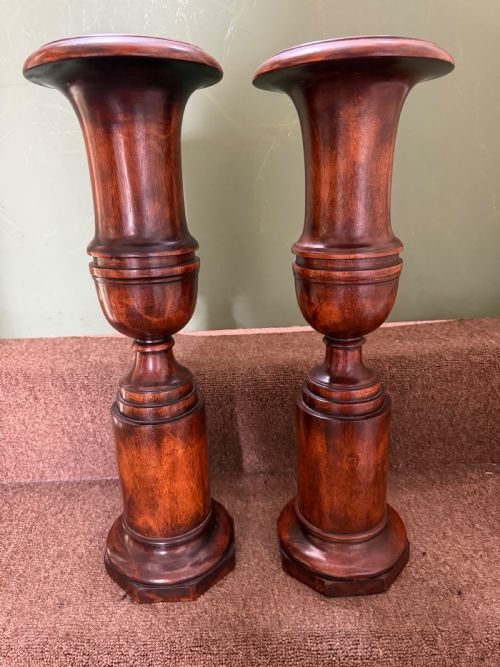
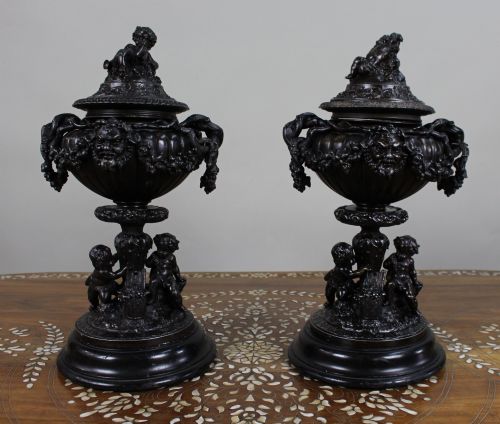
Makers combined mixed media, mounting bronze and spelter figures on marble plinths or integrating gilt metal mounts with ceramic bodies. Terracotta and soft stone provided alternative mediums for garden contexts, finished with weathered patinas.
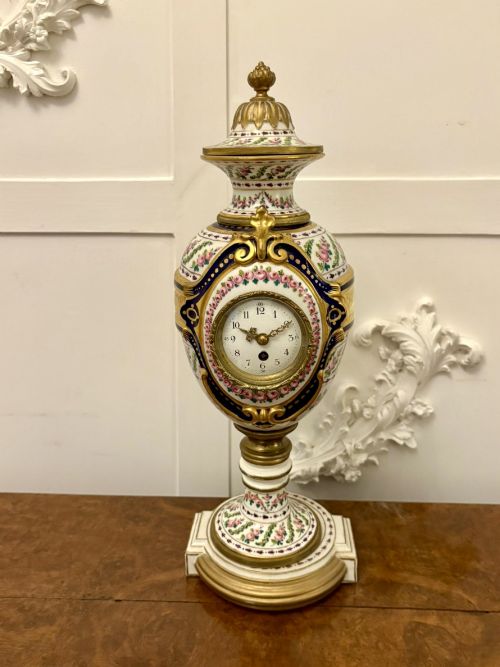
Listings feature garden urns in cast iron and terracotta alongside interior porcelain vases, bronze clocks, and converted table lamps.
What varies in quality
Quality rests in the crispness of the casting and the depth of the metal patination or hand-painted detail. Finer pieces retain intricate relief work on handles and classical friezes, whereas simpler production items show softer edges from worn moulds.
The integrity of materials also divides the range, distinguishing solid bronze and heavy cast iron from lighter spelter or composite substitutes. Original mounts, matching pedestals, and intact lids elevate the distinction of surviving examples.
Coalbrookdale·Andrew Handyside·Val D Osne Foundry·Ridgeways·Walker And Hall
The Victorian Classical Urns Glossary
- Campana
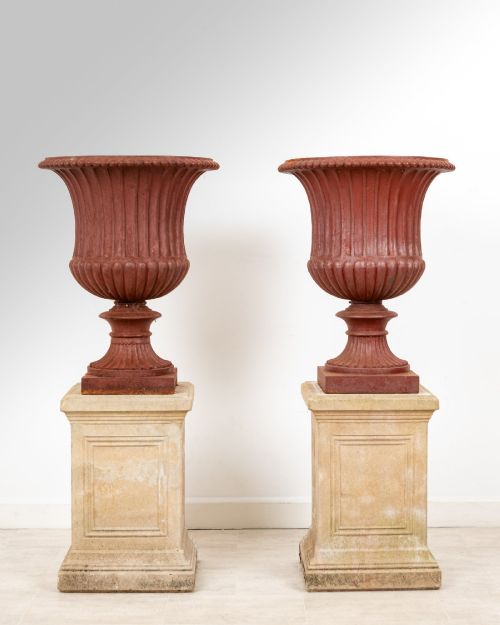
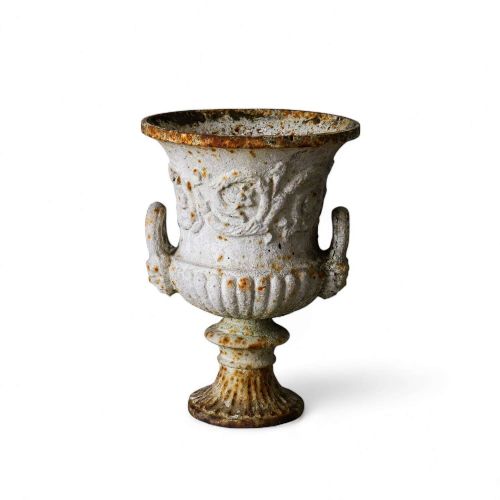
- A bell-shaped garden or decorative urn with a flared lip and footed base. This form derives directly from ancient Roman pottery and stone vessels.
- Grand Tour
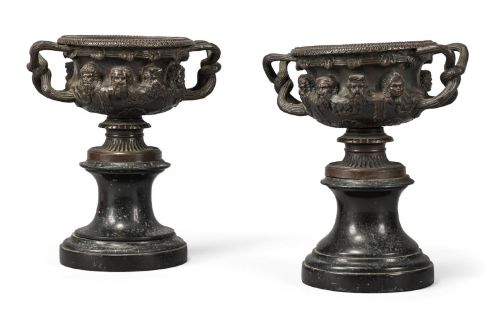
- A cultural journey undertaken by wealthy nineteenth-century travellers who collected small bronzes, marbles, and terracotta vases as souvenirs. These reduction pieces often replicated famous antiquities like the Warwick Vase.
- Ormolu
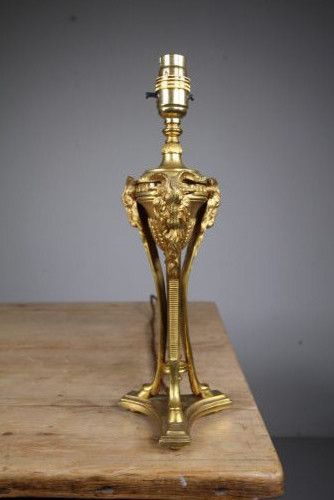
- Gilt bronze produced by applying a finely ground gold-mercury amalgam to a bronze base. This technique creates a rich, durable golden surface seen on high-status nineteenth-century decorative pieces.
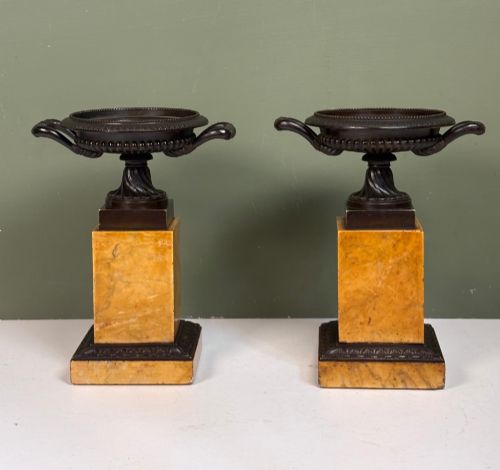
- Tazza
- A shallow cup or vase set upon a pedestal foot, frequently fashioned from marble, bronze, or semi-precious stone. They served as decorative vessels on tables and mantelpieces.
- Spelter
- A zinc alloy cast and patinated to imitate bronze. It provided a more affordable alternative for nineteenth-century decorative figures and urns.
Victorian Classical Urns: Frequently Asked Questions
Where were victorian classical urns placed?
Garden urns stood on stone pedestals along paths, terraces, or lawn edges where cast iron could withstand the weather. Smaller interior versions decorated mantelpieces, side tables, and entrance halls.
Interior pieces often functioned as lamps, clocks, or inkwells, blending classical decoration with practical domestic use. Larger bronze and terracotta examples anchored formal reception rooms and libraries.
How do I identify a grand tour urn?
Grand tour pieces are typically smaller bronze or marble reductions of famous ancient monuments, such as the Warwick Vase. They were acquired by travellers visiting Italy during the nineteenth century.
These pieces display fine patination and scholarly accuracy in replicating classical sculpture, distinguishing them from standard domestic Victorian wares.
Are cast iron urns suitable for outdoor use?
Cast iron urns are exceptionally heavy and durable, designed specifically to remain outdoors throughout the year. Over decades, they develop stable weathered patinas.
Some examples feature original painted surfaces that benefit from sheltered placement to preserve the historic finish against moisture.
What is the difference between campana and tazza urns?
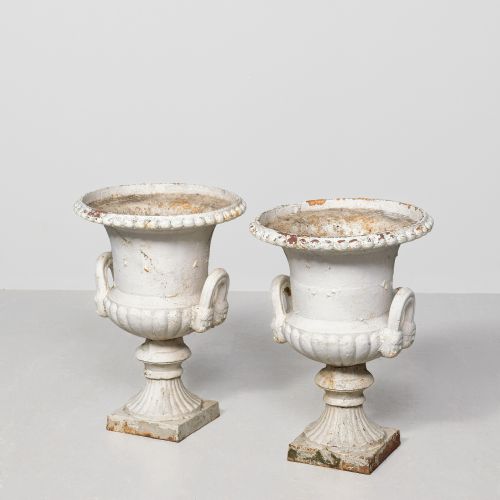
Campana urns feature a distinctive bell shape with an upturned rim, deep bowl, and a pedestal base. They are traditionally associated with garden planting and heavy cast iron production.
A tazza is much shallower, resembling a wide basin or cup on a stem, and is more commonly found in marble or bronze for interior display.