




Victorian Grand Tour Urn
A victorian grand tour urn brings the classical antiquity of Italy straight into nineteenth-century drawing rooms as a heavy, decorative souvenir.
Victorian Grand Tour Urn
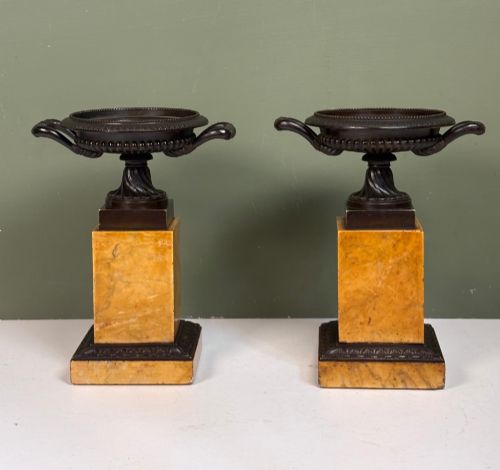
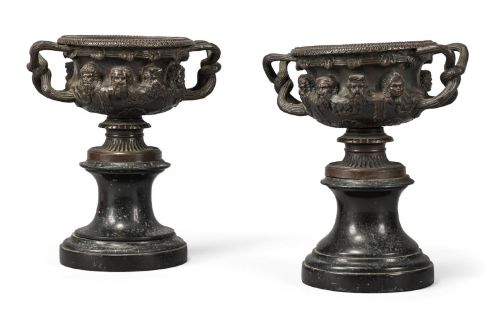
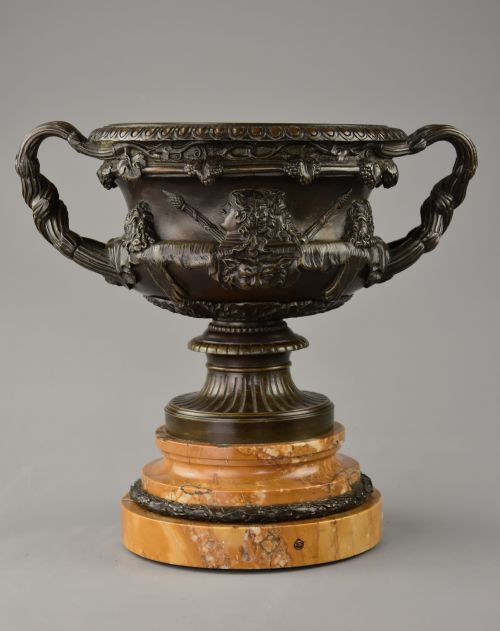
When you search for a victorian grand tour urn, you encounter nineteenth-century decorative pieces fashioned as souvenirs for travellers returning from Italy. These objects frequently take the form of reductions after famous classical antiquities like the Warwick Vase or the Albani Vase, channelling neoclassical and Greek revival aesthetics.
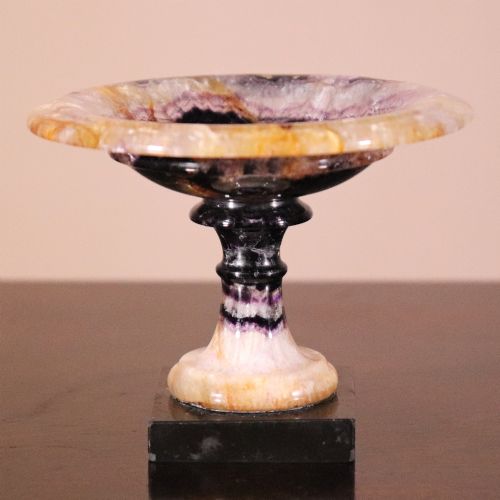
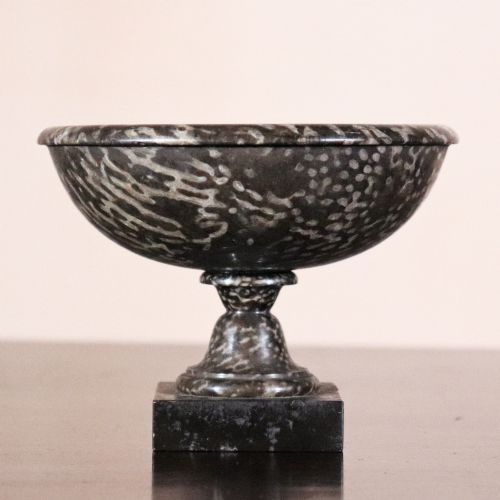
The pieces on this page span the mid to late nineteenth century, predominantly covering forms such as lidded urns, tazza vases, ewers, and ornamental bowls. They serve as tangible reminders of the continental travels undertaken by affluent Victorians during the era of the Grand Tour.
Materials and construction methods
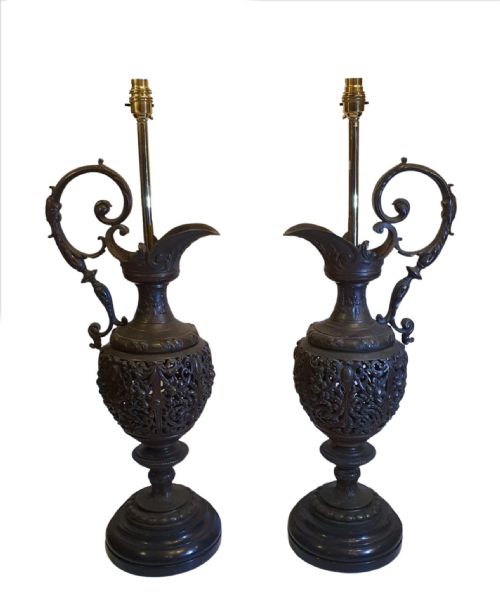
Foundry workers cast these objects in bronze, frequently applying a dark patination to mimic excavated antiquities, and paired them with heavy mounts of marble, black marble, or rouge griotte. Artisans also turned decorative mineral stones into vessels, utilising striking natural varieties such as Blue John, fluorite, Ashford coral marble, malachite, and serpentine.
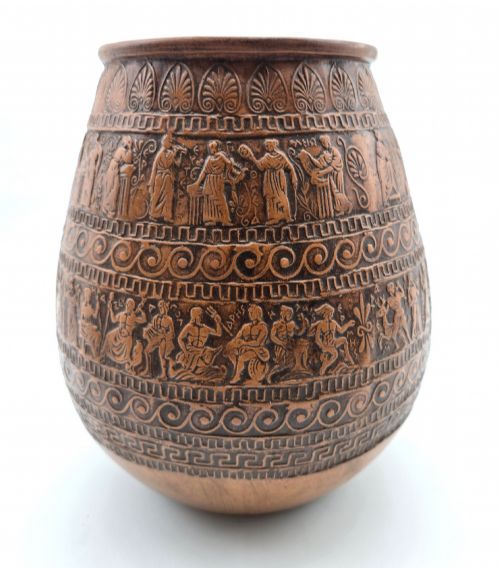
Makers drew upon classical models, reducing monumental Roman and Greek sculptures into portable domestic sizes while maintaining sculptural relief details on the metal bodies. Terracotta also appears among these vessels, shaped and fired to emulate ancient earthenware souvenirs.
Some nineteenth-century travellers returned home and promptly wired their ancient-looking bronze ewers for electricity as table lamps.
Separating ordinary foundry work from superior souvenir casting
The choice and combination of materials also dictate the standing of a piece, particularly when dense marbles and decorative minerals are fitted with precision. Solid bronze mountings and carefully balanced marble or slate bases indicate a higher tier of nineteenth-century workshop production.
The Victorian Grand Tour Urn Glossary
- Warwick Vase
- A famous monumental Roman marble vase discovered at Hadrian's Villa, which nineteenth-century founders frequently reduced in bronze as a grand tour souvenir. These scaled-down versions capture the Bacchic mask handles and vine wreath friezes of the original.
- Tazza
- A shallow saucer-like ornamental bowl or cup raised on a stem and foot, commonly turned from marble or cast in bronze. These pieces functioned as decorative tazze on nineteenth-century sideboards and tables.
- Grand Tour
- The traditional journey of continental Europe undertaken by upper-class young Englishmen and other travellers in the eighteenth and nineteenth centuries. Souvenirs purchased along the route form the core of these antique collections.
- Ewer
- A large jug with a wide spout and a looped handle, often cast in bronze in pairs during the nineteenth century. These decorative vessels emulate antique drinking jugs found in classical collections.
Victorian Grand Tour Urn: Frequently Asked Questions
What is a grand tour urn?
A grand tour urn is a nineteenth-century decorative souvenir modelled after classical Greek and Roman antiquities seen during European travels. Travellers brought them home to display their classical learning and appreciation for ancient art.
These pieces typically take the form of bronze reductions, stone tazze, or terracotta vases placed on mantelpieces and tables. They encapsulate the Victorian obsession with classical revival design.
How do you date these pieces?
Dating relies on the stylistic markers of the nineteenth century, the specific character of the bronze patination, and the turning marks on the stone bases. Most pieces on this page originate from the mid to late nineteenth century, coinciding with the height of Victorian travel to Italy.
Comparative study of known foundry reductions after famous antiquities like the Warwick Vase helps narrow down the decade of production. Documentation or family provenance occasionally confirms a specific mid-nineteenth-century acquisition date.
Where were these urns made?
Many of these souvenir objects were cast and carved in Italian workshops operating in cities like Rome, Florence, and Naples to cater directly to travelling gentry. Other examples were produced in British foundries influenced by the prevailing neoclassical taste of the period.
The materials often provide a clue to origin, with Italian workshops frequently utilising local marbles and lapidary stones alongside bronze foundries. British manufacturing centres also reproduced these classical forms for the domestic market.
How should I display an urn?
These heavy pieces require a sturdy surface such as a sideboard, console table, or mantelpiece that can safely support the combined weight of bronze and stone. Placing them away from direct sunlight protects the patination and preserves the natural polish of decorative minerals.
Because many were created as ornamental showpieces or decorative bowls, they command attention as standalone focal points or arranged as balanced pairs. Keeping them in stable indoor environments prevents thermal shock to sensitive stones like malachite and Blue John.