

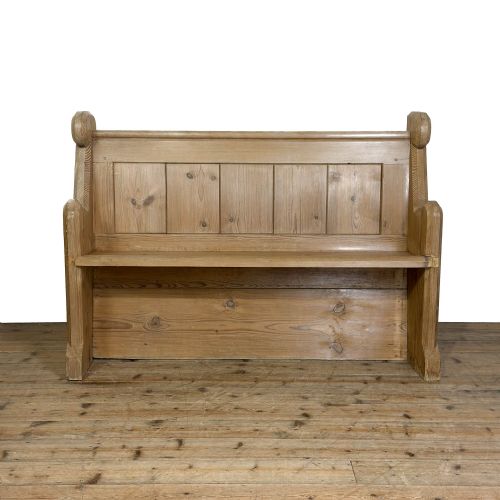
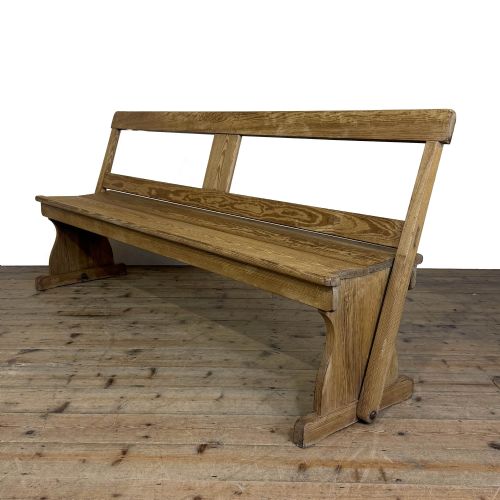
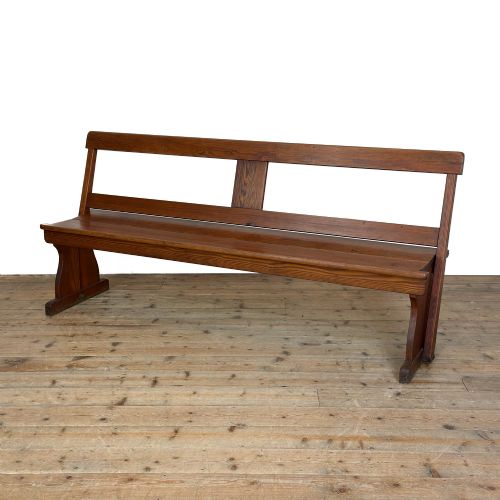
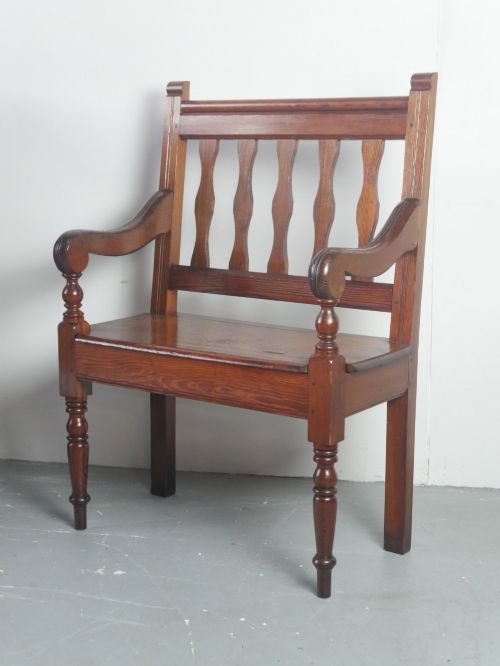
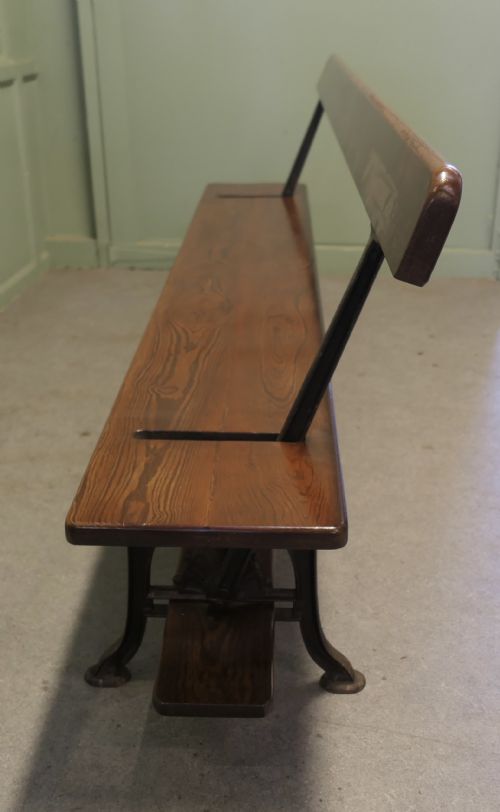
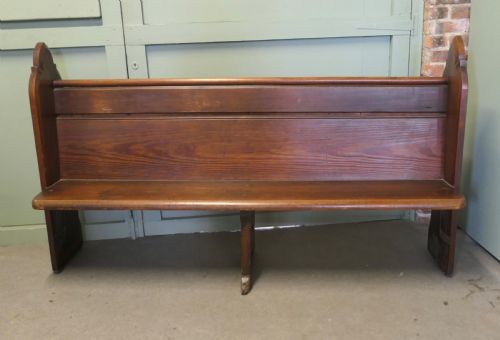
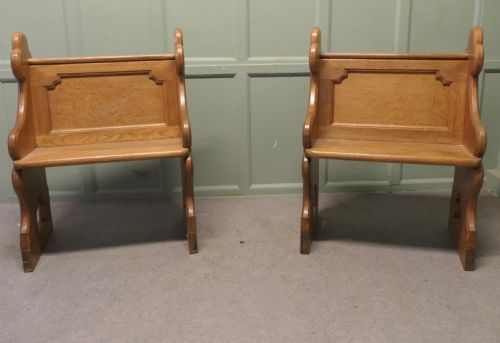
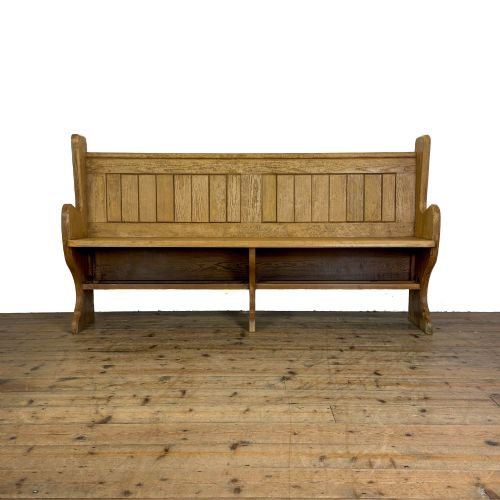
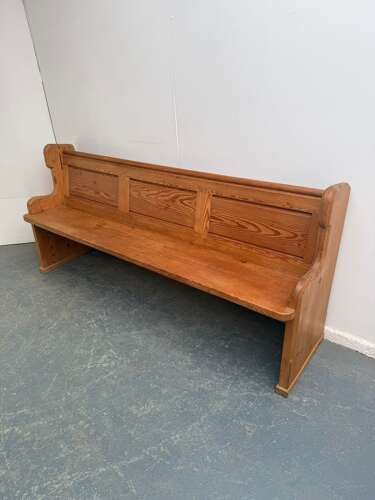
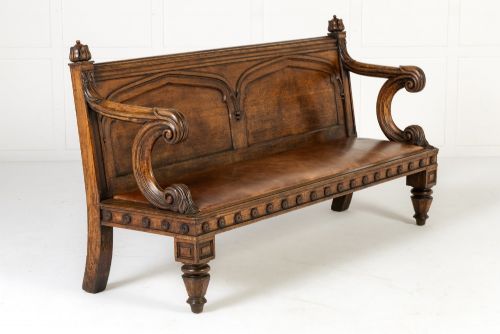
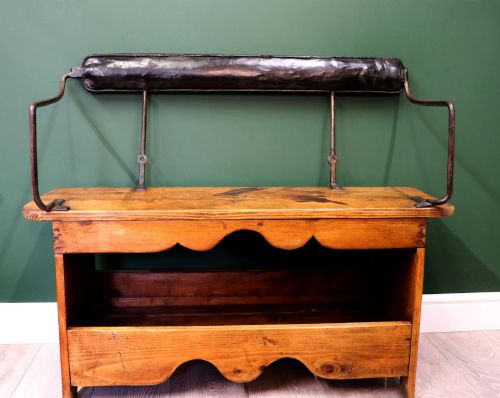
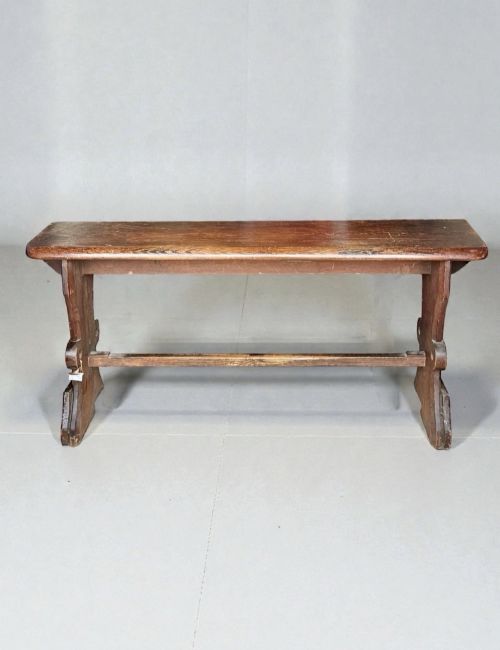
Victorian Church Pew Bench
A victorian church pew bench brings solid architectural character and functional length to a hallway or kitchen.
Victorian Church Pew Bench
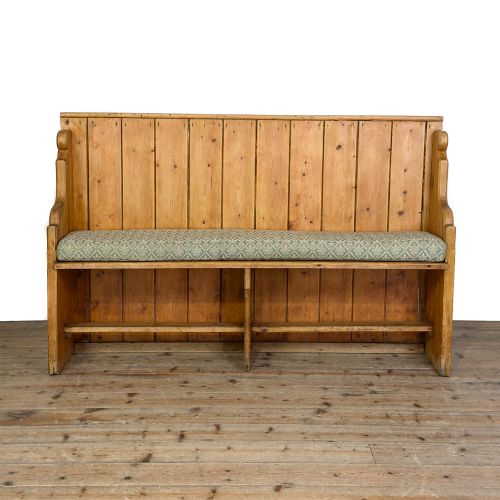
When you search for a victorian church pew bench, you encounter long, linear seating derived from ecclesiastical and domestic interiors of the nineteenth century. These sturdy wooden forms serve as practical benches in hallways, kitchens, and living spaces.
The versions most commonly met on this page span the nineteenth century, including specific dates such as 1850, 1880, 1900, and 1910, alongside Edwardian examples. They appear in configurations ranging from single-seater organ benches to long multi-seater chapel and church pews.
Makers and builders produced these benches for specific houses of worship, schools, and domestic halls, occasionally retaining marks relating to locations such as St. Paul's Church, Tiverton, or the chapel at Llanfair.
Materials and Construction
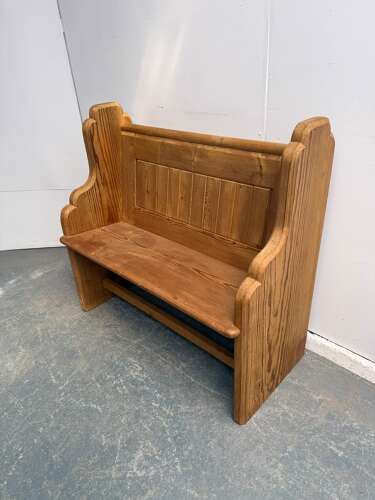
The primary woods recorded in the evidence are pine, pitch pine, oak, and elm, sometimes complemented by walnut or fabric, leather, and cast iron elements. Wax finishes appear frequently across the timber surfaces to protect the grain.
Victorian Church Pew Bench Retail Price Guide 2026
Typical asking prices for victorian church pew bench among the pieces listed under this phrase on Sellingantiques today, from the lower quarter to the upper quarter. They describe what is for sale here now, not the wider market.
Listings feature pieces spanning the 19th century, Victorian period, 1850, 1880, 1900, 1910, Edwardian era, and 1920.
Assessing Quality and Character
Quality in these benches rests upon the integrity of the solid timber and the presence of original construction details, such as box storage compartments or reversible mechanisms. Dense, figured pitch pine and heavy oak examples demonstrate greater structural substance than lighter utilitarian pine pieces.
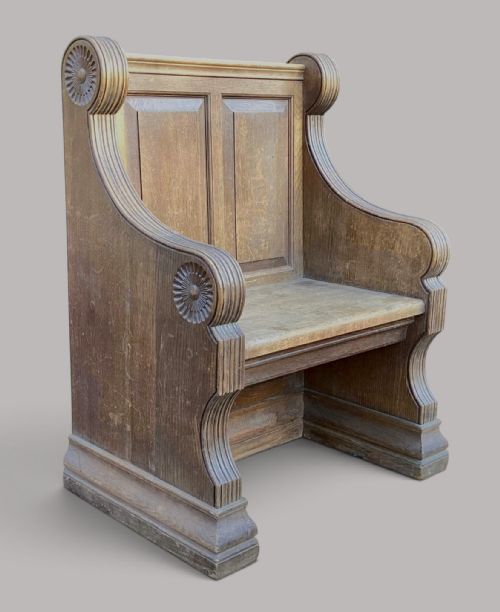
The distinction between a standard workshop product and a finer architectural piece often lies in the depth of Gothic carving, the proportions of the high back, and whether the bench retains its original surface texture or historic painted finishes.
The Victorian Church Pew Bench Glossary
- Settle
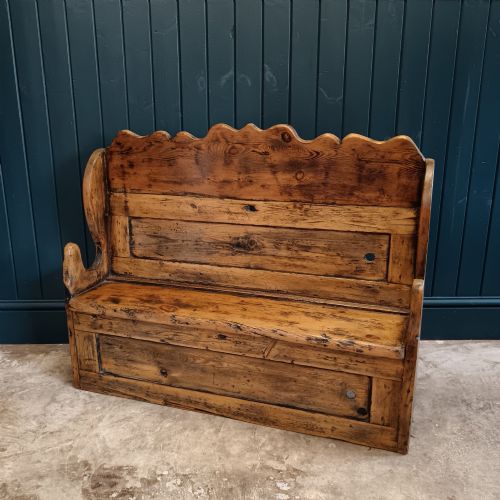
- A wooden bench with a high back, solid arms, and frequently a box seat for storage underneath. This form provides shelter from drafts in domestic and tavern interiors.
- Pitch Pine
- A durable, resinous pine variety native to North America, widely utilised for nineteenth-century church seating due to its pronounced grain pattern.
- Gothic Revival
- An architectural and decorative style drawing inspiration from medieval design forms. It manifests in pointed arches, trefoil cutouts, and vertical emphasis on church furniture.
- Organ Bench
- A specialised seating form designed for musicians, often narrower or shorter than standard congregational pews and occasionally accompanied by side tables.
Victorian Church Pew Bench: Frequently Asked Questions
Where do these church pews come from?
The pieces originate from nineteenth-century churches, chapels, and domestic halls across Britain and Europe. Many retain specific regional connections or institutional markings.
Over time, surplus ecclesiastical furniture and architectural salvage entered the domestic market for use in hallways and kitchens.
How do I use a pew bench at home?
These benches fit naturally against hallway walls, along dining tables, or as fireside seating. Their narrow profile accommodates tight spaces while offering generous seating length.
Storage variants with lift-up box seats or flip-over backs provide hidden practicality for modern living areas.
What is the difference between oak and pine pews?
Oak pews offer a heavier, denser construction with pronounced medullary rays, often associated with formal Gothic Revival or ecclesiastical commissions. They provide a darker, more substantial visual weight.
Pine and pitch pine benches tend to exhibit lighter tones and prominent grain lines, offering a more rustic country house aesthetic.
How do I identify a Victorian date?
Nineteenth-century pieces often display characteristic joinery methods, tool marks, and wood ageing patterns consistent with the Victorian period. Specific dates like 1850 or 1880 appear alongside broader Victorian and Edwardian classifications.
Stylistic cues such as Gothic architectural tracery and box settle construction help place the item within its era.