
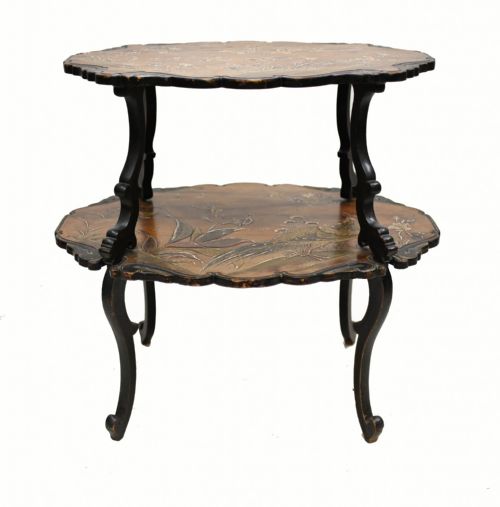
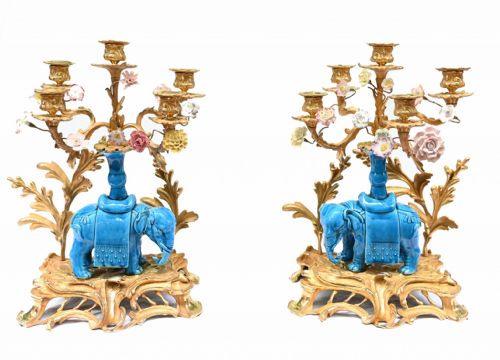


Victorian Chinoiserie Table
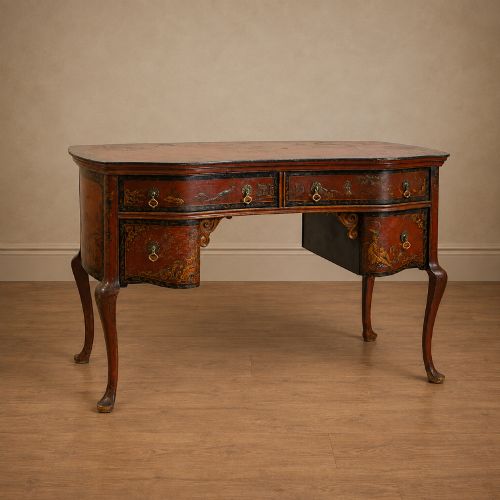
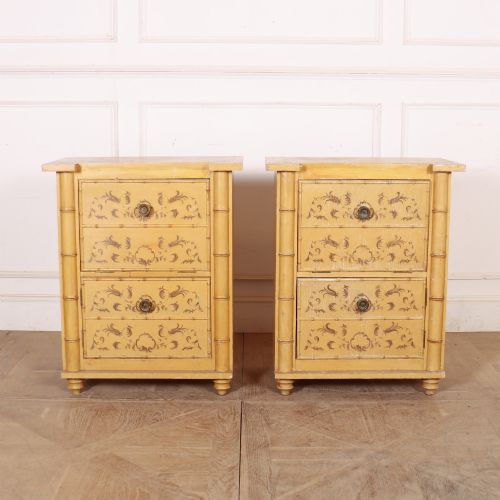
These pieces bring together lacquer, bamboo and hand-painted decoration in a Victorian chinoiserie table that adds distinct character to a room.
Victorian Chinoiserie Table
A Victorian chinoiserie table draws on nineteenth-century interpretations of East Asian design, merging traditional British furniture forms with decorative motifs from Chinese and Japanese aesthetics.
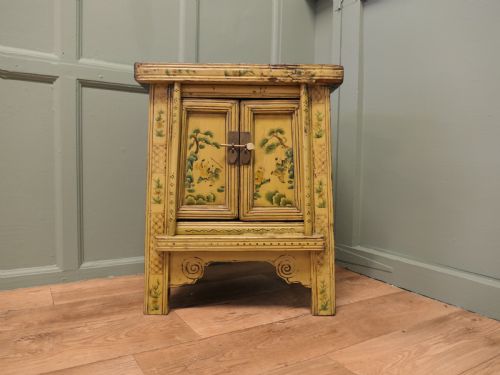
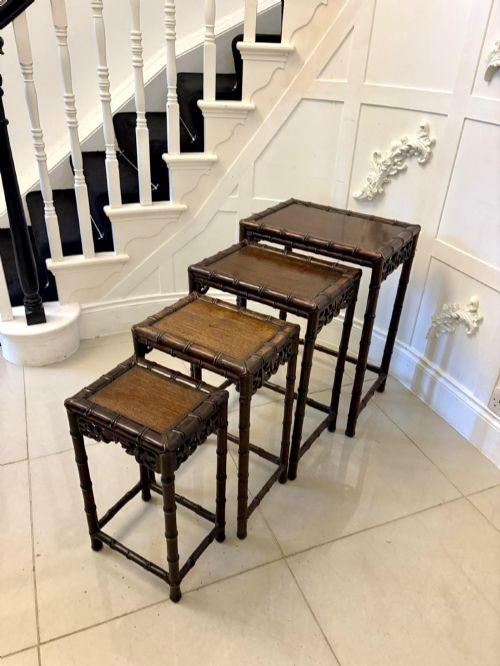
The most frequent examples found in these listings include occasional tables, nests of tables, tray tables, and side tables finished with lacquer or bamboo framing.
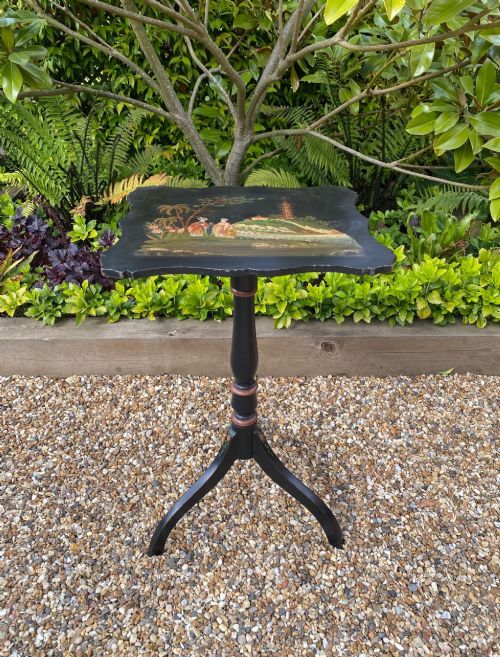
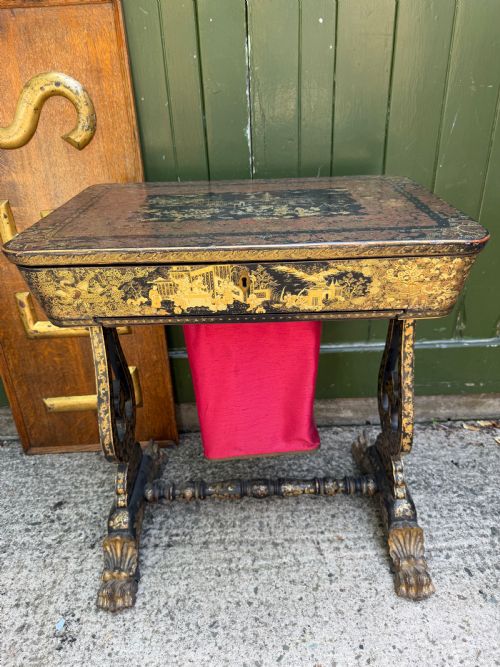
Makers of the period applied these finishes to diverse formats, ranging from kidney-shaped dressing tables to folding tripod stands and multi-tiered sewing tables.
Materials and Construction
Workshops relied heavily on wood, papier-mâché, and bamboo as structural substrates, often ebonising surfaces or applying black and cream lacquer before painting intricate details.
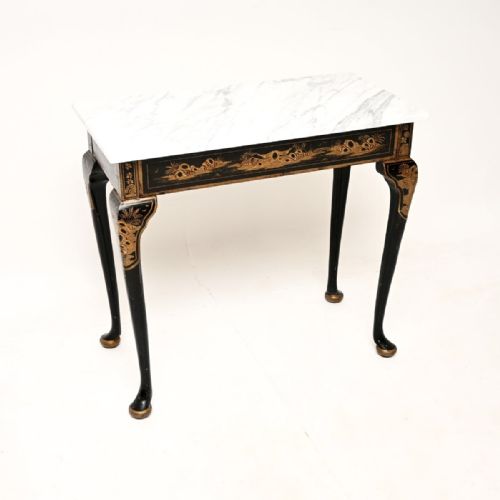
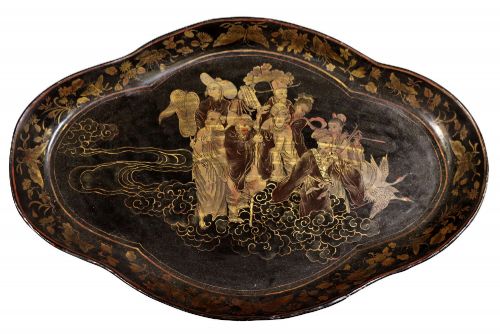
Gilding, gold leaf, and hand-painted motifs complete the ornamentation, frequently combined with brass hardware, marble inserts, or porcelain accents.
Japanning techniques were widely employed to emulate imported oriental lacquerware, securing metallic powders and pigments beneath layers of protective varnish.
Victorian Chinoiserie Table Retail Price Guide 2026
Typical asking prices for victorian chinoiserie table among the pieces listed under this phrase on Sellingantiques today, from the lower quarter to the upper quarter. They describe what is for sale here now, not the wider market.
The inventory records pieces spanning the Victorian era, the Aesthetic Movement, and Chinese Export styles, utilising materials like brass, gold leaf, and marble.
Evaluating Quality
Quality rests upon the crispness of the hand-painted ornament and the depth of the lacquer layers rather than the mere presence of decoration.
Structural integrity sets apart standard production pieces from finer items, particularly in the stability of bamboo frames, the tight joining of nests of tables, and the preservation of original stands.
Superior examples retain intact gold leaf and minimal craquelure across the lacquered surfaces, showing precise brushwork on figures, pavilions, and botanical motifs.
The Victorian Chinoiserie Table Glossary
- Chinoiserie
- European decorative style imitating Chinese and East Asian artistic traditions. It appears across furniture, lacquer panels, and ceramics of the period.
- Japanning
- European imitation of Japanese lacquer work achieved through layers of varnish and heat-cured finishes. Artisans used this technique to create glossy black surfaces on tables and trays.
- Papier-mâché
- Composite material made from paper pulp or sheets mixed with glue and pressed into moulds. Victorian makers utilised it for lightweight tray tables and occasional furniture.
- Aesthetic Movement
- Nineteenth-century design movement promoting art for art's sake and incorporating oriental motifs. This philosophy heavily influenced the bamboo and ebonised tables of the era.
- Tripod Table
- Furniture supported by a single central pillar resting on three feet. These pieces often feature tilting mechanisms for easy storage.
Victorian Chinoiserie Table: Frequently Asked Questions
How do I clean a lacquered table?
Dust surfaces gently using a soft, dry microfibre cloth to prevent scratching the delicate finish. Avoid using modern chemical polishes, water, or abrasive cleaners that can damage the aged lacquer.
Keep the furniture away from direct sunlight and radiators to prevent the wood from warping and the lacquer from cracking over time.
Are nest of tables sturdy?
Nineteenth-century nests are generally stable for normal daily use, such as holding drinks or small lamps. However, the smaller nested tables have lighter frames and should be handled with care.
Inspect the joints where the legs meet the tabletop to ensure the hide glue remains secure before placing heavier objects on them.
Can I use a tray table for serving?
Many examples on this page consist of removable papier-mâché or wooden trays resting on folding stands. While historic trays were designed for serving, modern use risks moisture damage to the antique painted surfaces.
Protect the lacquer by placing coasters underneath glasses and avoiding hot dishware directly on the decorative panel.
How do I date a bamboo table?
Examine the construction methods, fixings, and wear patterns on the lower tiers to determine the age. Late nineteenth-century pieces often display hand-turned bamboo or tiger bamboo with pegged joinery.
Compare the style of the lacquered panels to documented Aesthetic Movement designs, which gained widespread popularity during the eighteen-eighties and nineties.