


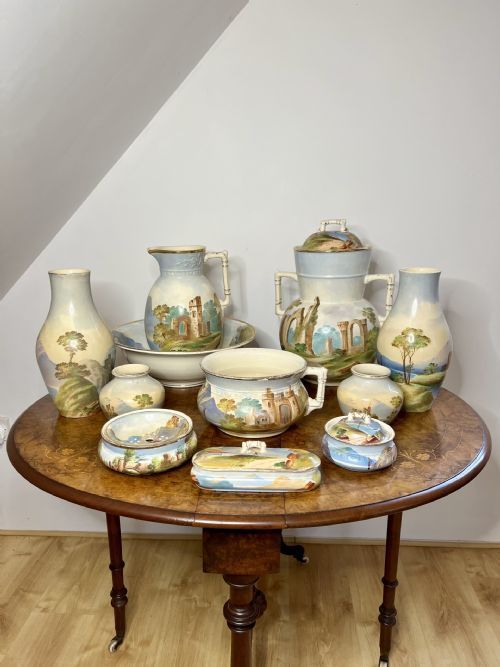


Victorian Ceramic Wash Bowl
A victorian ceramic wash bowl brings the washstand to life with heavy earthenware and bright glaze.
Victorian Ceramic Wash Bowl
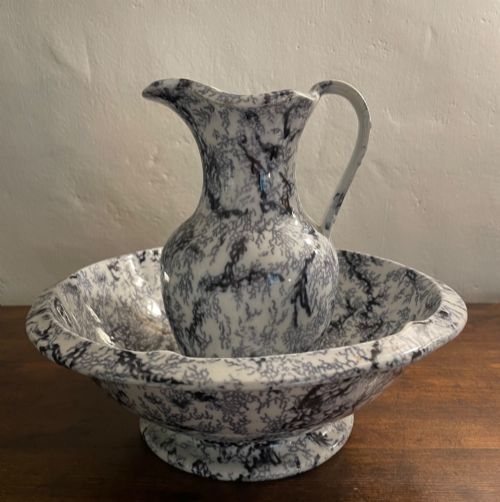
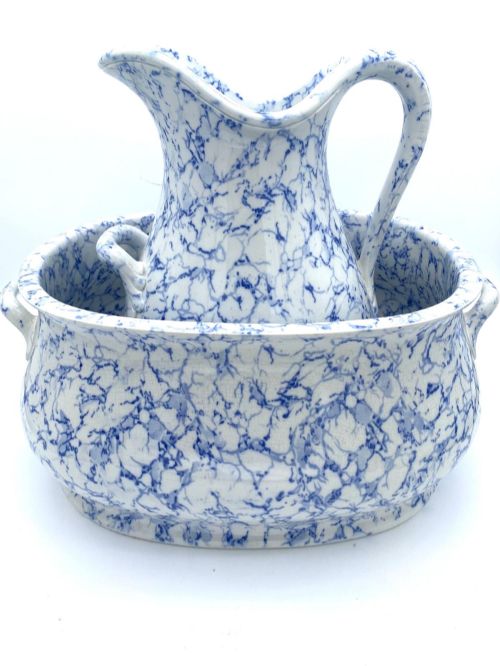
A victorian ceramic wash bowl forms the central basin of a wash set or washstand set used for personal ablutions before indoor plumbing became universal. These vessels arrive in various forms including footbaths, toilet basins, and complete jug and bowl sets.
The pieces span the nineteenth century into the Edwardian era, incorporating styles such as Victorian Chinoiserie, Gaudy Welsh, and Aesthetic Movement alongside plain earthenware.
Buyers meet individual basins and multi-piece sets featuring matching pitchers, soap dishes, and chamber pots intended for bedroom or bathroom use.
How They Were Made
Potters shaped these vessels from earthenware, ironstone, and porcelain before applying lead or tin glazes to seal the porous clay. Many surfaces received transfer-printed patterns in cobalt blue or flow blue, while others displayed hand-painted enamel and gilt details.
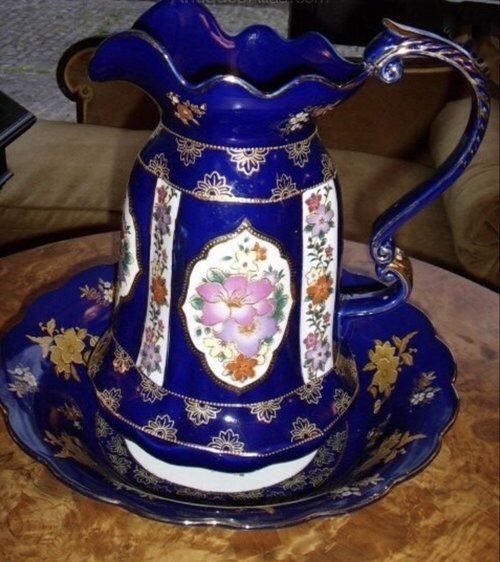
Makers utilised ironstone for durability in daily use, firing the heavy ceramic bodies at high temperatures to withstand hot water. Finer porcelain pieces received delicate floral motifs and gold leaf accents for display in formal chambers.
Listings include earthenware, ironstone, and porcelain pieces spanning the nineteenth and early twentieth centuries.
What Varies in Quality
The distinction between standard utility ware and superior pieces lies in the crispness of the transfer print and the richness of the glaze. Master potteries applied dense cobalt designs evenly across the curves without blurring or pooling.
Elaborate models incorporate hand-applied enamel, gilt highlights, and sculptural elements such as moulded handles and fluted rims. The weight of the ironstone and the clarity of the maker stamp separate ordinary basins from exceptional examples.
Mann & Co·Doulton Burslem·Mark Jones & Sons·Masons Ironstone·Minton
The Victorian Ceramic Wash Bowl Glossary
- Flow blue
- A transfer-printing technique where the cobalt blue ink bled slightly into the white glaze during firing, creating a misty, soft-edged pattern.
- Ironstone
- A heavy, durable type of earthenware patented in the nineteenth century that resisted chipping better than standard pottery.
- Gaudy Welsh
- A style of colourful pottery featuring cobalt blue, copper lustre, and bright enamel flowers, popular in Welsh and English homes.
- Spongeware
- Pottery decorated by dabbing pigment onto the biscuit body using a sponge, producing a mottled, speckled pattern.
- Chinoiserie
- European decorative art reflecting Chinese artistic motifs, often seen in blue and white landscape prints on basins.
Victorian Ceramic Wash Bowl: Frequently Asked Questions
How were wash bowls used?
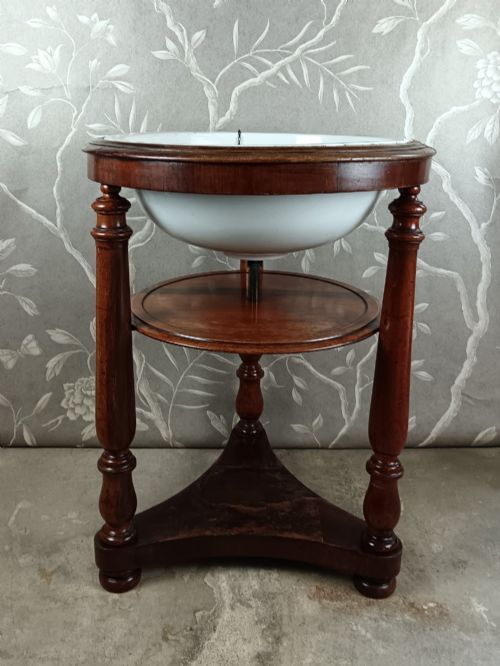
These basins sat in wooden washstands or on dressing tables to hold water for morning washing before bathrooms moved indoors. Servants filled the matching pitcher from a larger ewer and emptied the basin after use.
Families used the complete sets for washing faces, hands, and hair in the bedroom. They formed part of the daily domestic routine in larger Victorian and Edwardian houses.
How do I date a wash bowl?
Pottery marks on the underside provide the clearest indication of date and maker, often including registry diamonds or factory stamps. Stylistic clues such as Aesthetic Movement geometry or Edwardian floral borders also narrow the production period.
Earlier nineteenth-century pieces often feature deep flow blue printing on heavy earthenware. Later Edwardian sets tend toward lighter porcelain bodies with delicate pastel or polychrome transfer designs.
Are these bowls waterproof?
Most pieces retain their glazed ceramic surfaces and hold water without difficulty. The fired glaze forms an impermeable barrier over the porous earthenware or ironstone beneath.
Earthenware pieces with minor hairline cracks require care if used for holding water. Many collectors display them dry or use liners to protect the historic glaze.
How do I clean an antique basin?
Warm water and mild soap remove dust and surface grime safely from glazed ceramic surfaces. Avoid harsh abrasives that scratch the delicate nineteenth-century glaze or wear away gold leaf accents.
Gentle cleaning preserves the transfer print and any hand-painted enamel details. Dry the basin thoroughly with a soft cloth after washing.