
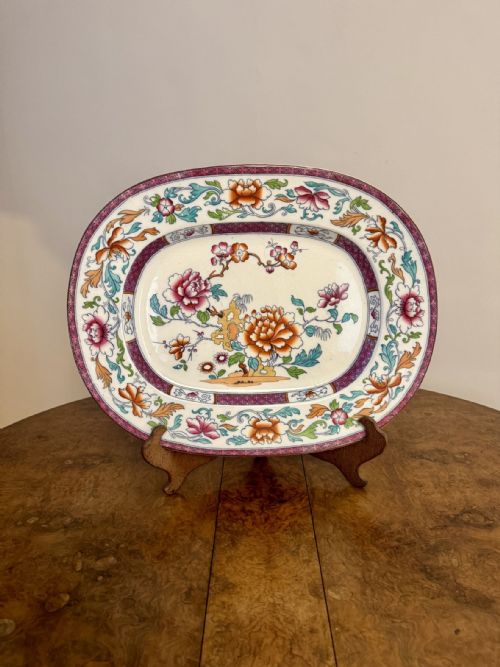


Victorian Ceramic Meat Dish
These robust earthenware and ironstone serving dishes carried the Sunday joint to the nineteenth-century dining table with weight and utility.
Victorian Ceramic Meat Dish
A victorian ceramic meat dish takes the form of a large serving platter or ashet designed for presenting roasted meats at the table. These heavy vessels emerge in various styles including classic blue and white transferware, Chinoiserie scenes, and rich Imari palettes.
Most examples found here date from the nineteenth century, spanning early Victorian periods down to the eighteen-nineties. Forms range from simple rectangular platters to specialised shapes featuring reservoirs and well and tree designs for catching juices.
Makers such as Minton, Copeland and Garrett, and Mason's dominate the output from this era. Buyers encounter substantial ironstone bodies alongside refined earthenware platters meant for daily household service.
How they were made
Potters shaped these large platters from earthenware, ironstone, and pearlware bodies, firing the clay at high temperatures to withstand heavy carving knives. Ironstone provided a particularly dense, vitreous ground that resisted chipping during daily kitchen use.
Decoration relied heavily on blue and white transfer printing, a technique where engraved copper plates transferred detailed scenes onto the ceramic surface before glazing. Enamel colours and gold leaf were sometimes added over the glaze for richer patterns.
Listings span the nineteenth century, featuring earthenware, ironstone, and glazed pottery decorated with transfer printing.
What varies in quality
Quality rests upon the crispness of the transfer print and the balance of the ceramic body itself. Early pieces with deep cobalt tones and clear detailing command attention above routine factory output.
The presence of specialised functional elements, such as integral draining wells, strainers, or deep reservoirs, separates standard platters from superior serving vessels.
Copeland and Garrett·Minton·Elkin Knight and Bridgwood
The Victorian Ceramic Meat Dish Glossary
- Ashet
- A regional term, common in Scotland, used to describe a large serving platter or meat dish.
- Ironstone
- A heavy, durable type of feldspathic earthenware patented in the nineteenth century to rival Chinese porcelain.
- Transferware
- Pottery decorated by applying a printed design from an engraved copper plate onto the ceramic surface via tissue paper.
- Well and tree
- A platter design featuring a recessed channel around the edge and a central treed pattern that drains meat juices away from the joint.
- Pearlware
- A refined earthenware developed in the late eighteenth century featuring a subtle blue-tinted glaze over a white body.
Victorian Ceramic Meat Dish: Frequently Asked Questions
How were these dishes used at the table?
These large platters carried the main roast to the dining table for family service before individual portions were carved. The generous surface area allowed ample room for joints of beef, lamb, or game alongside surrounding garnishes.
Specialist variants included wells or draining channels to collect carving juices, preventing the meat from sitting in liquid during the meal.
How do I care for a nineteenth-century platter?
Wash these ceramic dishes by hand using warm water and mild soap rather than placing them in a modern dishwasher. The historical glazes and potential enamel or gold leaf details degrade under harsh automatic cycles.
Store large platters flat or supported securely on edge in a plate rack to prevent tipping and rim damage.
What is the difference between earthenware and ironstone?
Standard earthenware provides a porous, lighter ceramic body that formed the basis for much early nineteenth-century transferware. Ironstone is a much heavier, denser ceramic material formulated to resist chipping and heavy kitchen wear.
Ironstone platters feel substantially thicker and heavier in the hand than standard earthenware serving pieces.
Can I still use these platters for serving food?
Many collectors continue to use these sturdy nineteenth-century dishes for serving large roasted joints during family gatherings. The dense ceramic bodies handle warm food safely after centuries of existence.
Inspect the glaze for any deep crazing or historical repairs before serving acidic foods directly on the surface.