


Victorian Transferware Serving Dish
Victorian transferware serving dish pieces bring practical nineteenth-century utility and intricate printed scenes straight to the dining table.
Victorian Transferware Serving Dish
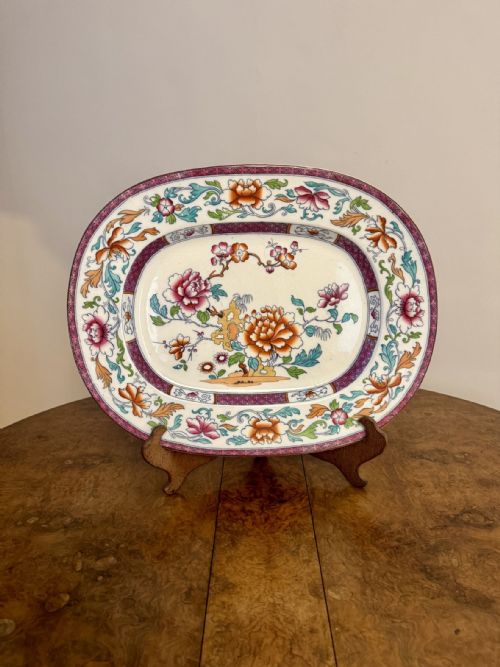
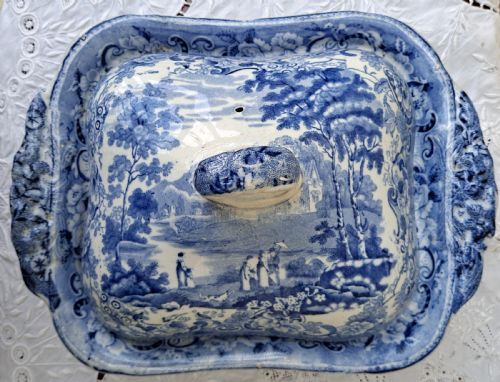
A victorian transferware serving dish is a utilitarian ceramic form designed to present large joints of meat, vegetables, or courses at the nineteenth-century table. These vessels appear in broad categories such as substantial platters, lidded tureens with ladles, cheese dishes, and deep chargers.
The version most commonly met on this page is the large blue and white meat platter or lidded tureen. Such pieces showcase detailed printed landscapes, architectural views, and orientalist patterns produced across English and Scottish potteries.
Materials and technique
Potters built these serving forms using earthenware, refined stone china, pearlware, and ironstone, which provided a durable body for heavy daily use. Glazed pottery and porcelain received smooth vitreous surfaces to protect the porous clay underneath.
Makers applied intricate designs through transfer printing, pressing a paper engraving inked with blue pigment onto the bisque ceramic before firing. Additional highlights occasionally included enamel colours and gold leaf applied over the glaze.
The listings show nineteenth-century production spanning earthenware, ironstone, and pearlware across regional British potteries.
Judging the range
Quality rests primarily in the crispness of the transfer print and the ambition of the modelled form. Stronger examples display deep, uniform cobalt tones without blurring, smudging, or pale patches from uneven ink application.
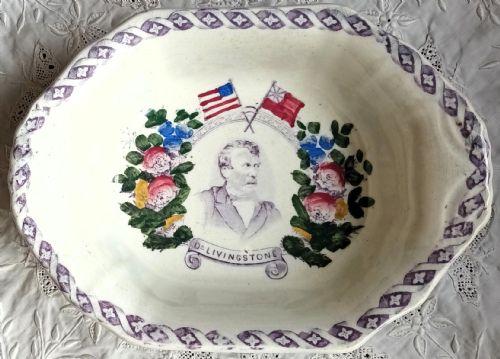
The prestige of the producing pottery and the complexity of the named series also dictate standing. Elaborate architectural, commemorative, or chinoiserie patterns executed on heavy, unwarped ironstone or pearlware bodies represent the peak of the maker's art.
James Wallace and Co·Minton·Doulton Burslem·Copeland and Garrett·Ridgways·Elkin Knight and Bridgwood
The Victorian Transferware Serving Dish Glossary
- Transferware
- Ceramic pottery decorated by transferring a printed design from a copper plate onto paper and then onto the clay body. This mechanical method allowed complex pictorial scenes to be replicated consistently.
- Tureen
- A deep covered bowl used for serving soups, vegetables, or sauces at the dining table. Many nineteenth-century examples include matching ladles and protective stands.
- Pearlware
- A refined earthenware developed by Josiah Wedgwood that featured a subtle bluish tinge in the transparent glaze. It served as a transitional ceramic body before the widespread adoption of ironstone.
- Ironstone
- A heavy, durable type of feldspathic earthenware patented in the nineteenth century to imitate Chinese porcelain. It resisted chipping and supported large serving platters and heavy chargers.
- Reservoir
- A well or channel built into the surface of a carving platter to collect meat juices. This practical feature kept joints elevated during carving.
Victorian Transferware Serving Dish: Frequently Asked Questions
What is a Victorian transferware serving dish used for?
These vessels served functional roles in nineteenth-century dining, holding large roasts, vegetables, or cheeses for communal table service. Platters often included wells to catch juices, while tureens kept cooked food warm beneath fitted lids.
Today, collectors use them for seasonal dining displays, wall mounting, or serving food at large gatherings. Their robust ceramic construction makes them remarkably practical for modern entertaining.
How do I date a transferware dish?
Dating relies on maker's marks, pattern names, and the specific ceramic body used by the pottery. Early pieces often feature pearlware or transitional bodies, while later Victorian examples utilise heavy ironstone and registered registry marks.
Stylistic clues such as Regency shapes, chinoiserie motifs, or commemorative subjects also help narrow the decade of production. Examining the clarity of the blue transfer print provides further clues to the manufacturing era.
What does blue and white mean on these dishes?
Blue and white refers to the dominant cobalt oxide pigment used under the glaze during the nineteenth century. This classic palette endured because cobalt could withstand high kiln temperatures without losing its rich colour.
Potters reproduced intricate landscapes, historical buildings, and romantic scenes using this chemical compound. It remains the most recognisable aesthetic associated with nineteenth-century British ceramics.
Are these dishes safe for food use?
Most nineteenth-century earthenware and ironstone bodies remain stable for serving dry or cold foods. However, microscopic crazing in the glaze can absorb liquids over time.
Hand washing is essential to preserve the historic glaze and prevent modern detergents from damaging the ceramic body. Avoid dishwashers and microwaves to protect these antique pieces.