


Vintage Floral Transferware Plate
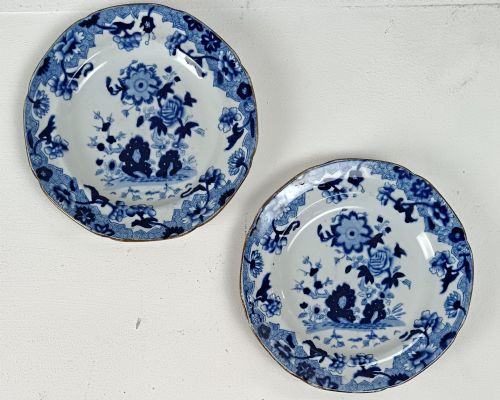
These vintage floral transferware plates bring pattern and domestic history to the table, formed in earthenware and ironstone across the Georgian and Victorian eras.
Vintage Floral Transferware Plate
When you search for a vintage floral transferware plate, you encounter table ceramics decorated using a copperplate printing method that transfers ink onto the clay body before glazing. These pieces range from tea plates and dinnerware sets to large serving platters spanning the Georgian and Victorian periods.
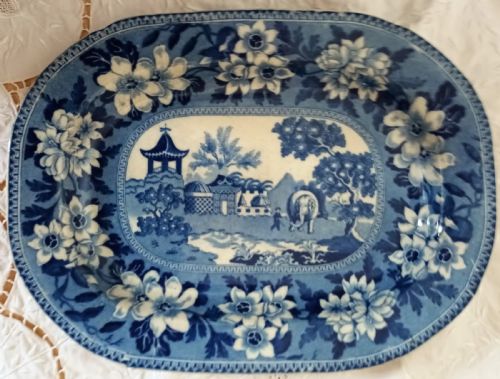
The items most frequently met on this page include blue and white tea plates and meat platters bearing botanical and pictorial scenes. Earthenware, ironstone, and pearlware form the primary bodies of these nineteenth-century items.
How they were made
Potters shaped ceramic and ironstone bodies before applying detailed transfer-printed designs from engraved copper plates. An enamel or ceramic glaze sealed the printed pattern during firing, protecting the surface for daily use.
Makers utilised distinct colour palettes, predominantly blue and white, across wares produced by factories such as John Rogers and Son and Elkin and Newbon. Some serving pieces incorporated silver plate mounts for handles and rims.
Elephants march across early nineteenth-century meat platters right alongside traditional English garden flowers.
What varies in quality
Quality rests in the crispness of the transfer print and the clarity of the ceramic glaze, where finer plates maintain sharp botanical details without blurring. The weight and refinement of the earthenware or ironstone body also distinguish standard domestic wares from superior production.
Completeness within sets and the preservation of the original glaze surface govern the standing of individual pieces. Richness in the blue and white pigments and smooth application across complex platter shapes indicate careful manufacturing.
John Rogers and Son·Elkin and Newbon
The Vintage Floral Transferware Plate Glossary
- Transferware
- Ceramic pottery decorated by pressing a paper sheet inked from an engraved copper plate onto the unglazed or bisque surface. This technique allowed intricate patterns to be replicated rapidly across large dinner services.
- Ironstone
- A dense, durable type of earthenware patented in the nineteenth century to rival porcelain. It provides a sturdy white body well-suited for heavy meat platters and dinnerware.
- Pearlware
- A refined earthenware developed in the Georgian era featuring a bluish-white glaze that pooled in recesses to mimic Chinese porcelain. It bridges the transition from creamware to later white ironstone bodies.
- Biscuits barrel
- A ceramic container fitted with a lid and often metal mounts, designed for storing dry biscuits on the dining table. They frequently match the decorative schemes of contemporaneous dinner services.
Vintage Floral Transferware Plate: Frequently Asked Questions
How do I date these plates?
Dating relies on ceramic body composition, glaze characteristics, and registry marks stamped or printed on the underside. Georgian pieces often feature pearlware bodies, whilst Victorian items lean towards heavier ironstone.
Style provides further clues, as early nineteenth-century botanical prints differ significantly from later Victorian aesthetic layouts. Examining the depth of the blue transfer print helps narrow the decade of production.
Can I use these for dining?
Many of these nineteenth-century ceramics remain robust enough for gentle table use, though hand washing is essential to preserve the historic glaze. Older earthenware bodies can be porous and sensitive to modern detergents.
Most collectors prefer to display meat platters and tea plates on walls or dressers rather than risking daily wear. Thermal shock from hot food should also be avoided on antique ceramic glazes.
What is transfer printing?
Transfer printing is a process where an engraved metal plate is inked and pressed onto tissue paper, which is then applied to the ceramic body. This transferred the design before the piece received its final glaze and kiln firing.
The method replaced hand-painting for many commercial potteries, allowing consistent botanical patterns across entire dinner services. Slight overlaps in the pattern often reveal where the paper joined during application.
Why are some pieces ironstone?
Ironstone was developed to create a harder, more resilient ceramic than standard earthenware, making it ideal for large serving platters and heavy dinnerware. Its dense body resisted chipping during daily nineteenth-century household use.
The material accepted the blue transfer print cleanly while offering a bright white background that highlighted floral motifs. This durability explains why many large platters survived in usable condition.