


Victorian Ceramic Fireplace Ornament
A victorian ceramic fireplace ornament brings character to a mantelpiece through traditional earthenware moulded into animals and figures.
Victorian Ceramic Fireplace Ornament
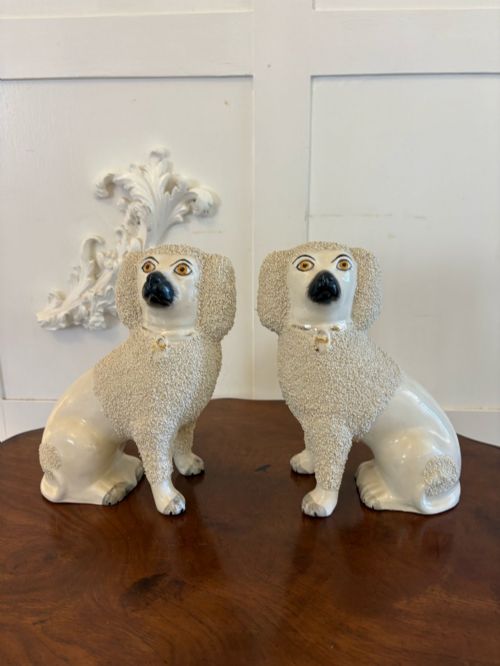
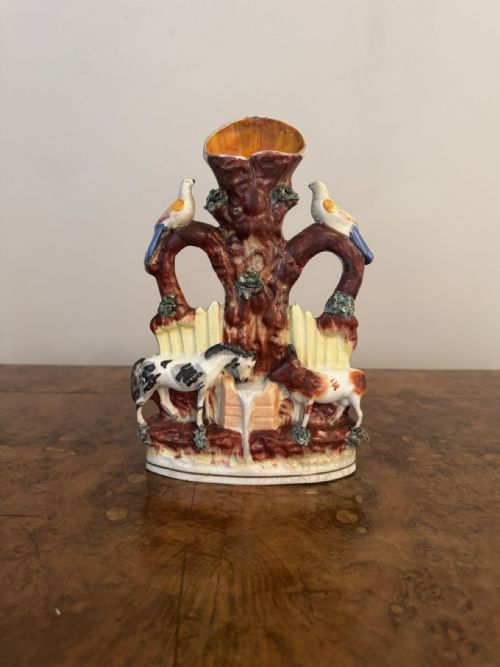
A victorian ceramic fireplace ornament typically takes the form of a decorative figurine designed to sit upon a mantelpiece. The most common examples encountered here are pairs of pottery dogs, spaniels, pugs, and poodles, alongside spill vases and flatback figures.
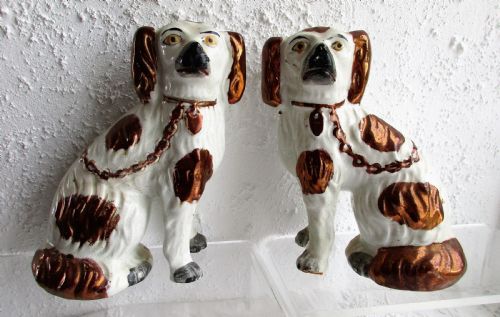
These pieces originate from the nineteenth century, spanning decades from the eighteen-fifties through to nineteen hundred. Collectors frequently encounter pairs of mantel dogs, often modelled as seated spaniels or greyhounds, produced for domestic display.
Materials and production
These objects are formed from earthenware and ceramic materials, shaped into pottery figures and statues. Manufacturers applied lead glaze, enamel, and sometimes gold leaf or gilt details to finish the surface, while certain examples incorporate glass eyes.
Potters utilised moulding techniques to create flatback figures and spill vases designed to stand against a wall. The application of copper lustre and hand-painted pigments added colour and contrast to the finished earthenware bodies.
Watch closely for the ceramic pugs with soulful expressions staring back from the mantel.
Judging the standard
The presence of original elements, such as distinct glass eyes or matching pairs with balanced proportions, distinguishes the better examples. Consistency in the glaze and the depth of the earthenware body also mark the standard of the manufacture.
The Victorian Ceramic Fireplace Ornament Glossary
- Flatback
- A figure moulded with a flat, unadorned reverse side designed to stand flush against a wall or mantelpiece. This method saved time and materials during production.
- Spill vase
- A hollow pottery cylinder incorporated into a figure, designed to hold taper spills for lighting fires or pipes. They combine practical utility with decorative animal or human subjects.
- Earthenware
- A porous pottery body fired at lower temperatures, requiring a glaze to render it waterproof. It serves as the primary material for nineteenth-century mantel ornaments.
- Comforter spaniel
- A popular nineteenth-century mantel dog modelled after Queen Victoria's own pets, typically displayed in pairs facing one another on either side of a fireplace.
Victorian Ceramic Fireplace Ornament: Frequently Asked Questions
What animals appear most often?
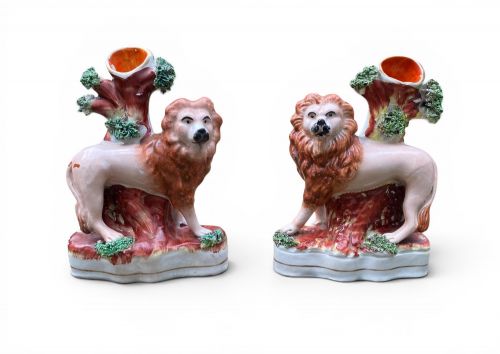
Spaniels dominate the selections, accompanied by poodles, pugs, greyhounds, lions, cats, and sheep. Pairs of dogs intended to sit at either end of a mantelpiece form the majority of the available pottery figures.
Other subjects include human figures, such as Scots harvesters, depicted in flatback styles and spill vases.
How were these ornaments displayed?
Owners placed them upon mantelpieces above fireplaces, usually arranged as symmetrical pairs flanking a clock or mirror. Their flat backs allowed them to rest securely against the wall.
They served purely decorative roles, though versions with integrated spill holders provided a dual purpose for holding wooden tapers.
How do I date these pieces?
Dating relies on style, modelling techniques, and materials recorded from the nineteenth century. Pieces range from the eighteen-fifties through to nineteen hundred, with many examples originating from the eighteen-eighties.
Details like copper lustre, hand-painted enamel, and glass eyes help anchor pieces within this Victorian timeframe.
Are they sold in pairs?
Many listings feature matching pairs designed to mirror each other on a mantelpiece. This includes pairs of spaniels, greyhounds, poodles, and lions.
Individual figures and smaller collections of four or five items also appear within the selection.