
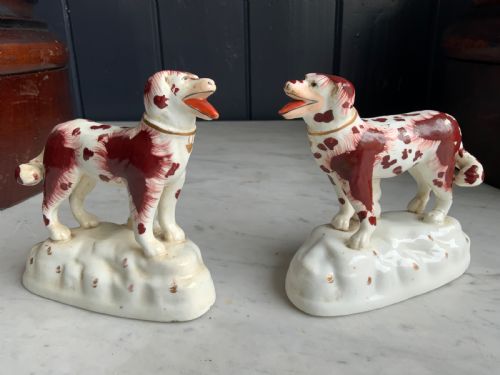
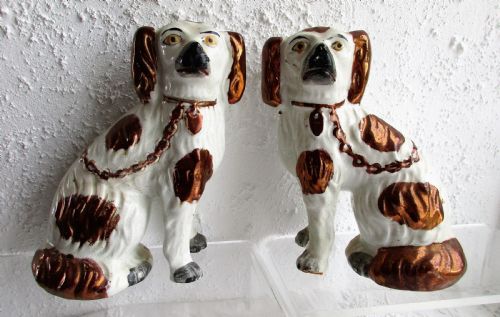


Antique Porcelain Spaniel Pair
These antique porcelain spaniel pair items are stalwart mantelpiece ornaments designed to bring domestic charm into a room.
Antique Porcelain Spaniel Pair
An antique porcelain spaniel pair consists of ceramic figurines modelled as seated dogs, commonly known as comforter spaniels. These decorative objects date predominantly from the Victorian period, with examples appearing across the nineteenth century up to the mid twentieth century. Buyers encounter pairs modelled in earthenware, pottery and ceramic, often set on cushions or adorned with gilt highlights.
The assortment on this page spans traditional English figures, including white glazed variations and copper lustre finishes. Makers such as Royal Dolton and Beswick also contribute to the spaniel figures found in this selection. These decorative figures serve as classic mantel ornaments, traditionally displayed facing inwards on either side of a fireplace.
How they were made
Many of these decorative objects incorporate hand-painted elements, with specific examples featuring moulded encrusting upon the base cushions. The firing and glazing techniques varied across the nineteenth and twentieth centuries, resulting in distinct surface lustres and ceramic textures.
Listings feature periods spanning the Regency era, the nineteenth century, Victorian times, and the mid twentieth century.
What varies in quality
The depth of the glaze and the complexity of the decoration, such as copper lustre or detailed cushion bases, distinguish finer decorative figures from standard production pieces. Consistency across both animals in a pair also marks the better specimens.
Royal Dolton·Beswick
The Antique Porcelain Spaniel Pair Glossary
- Comforter spaniels
- Staffordshire pottery figures modelled after Queen Victoria's own spaniels, traditionally placed on mantelpieces. These decorative dogs were designed to sit facing inwards towards each other.
- Copper lustre
- A metallic glaze technique that produces a reflective, copper-like sheen on pottery and earthenware surfaces. This finish adds a distinct reddish-bronze glow to the ceramic body.
- Lead glaze
- A shiny, protective coating applied to pottery before firing to give a glossy finish and waterproof the ceramic body. It creates a smooth surface typical of nineteenth-century earthenware.
- Enamel
- Opaque glass-like pigments applied over the glaze and fired again to add colour and detail to ceramic figures. This technique provides the rich reds, blacks and golds seen on the spaniels.
- Encrusting
- Applied clay details, such as modelled flowers or foliage, added to the base or cushion of a figurine for decorative effect. This labor-intensive technique enhances the texture of the object.
Antique Porcelain Spaniel Pair: Frequently Asked Questions
What are Staffordshire spaniels?
Staffordshire spaniels are ceramic figurines modelled on the king Charles spaniel breed, popular during the Victorian era. Potters in England produced these decorative dogs in pairs to adorn household mantelpieces.
These figures often feature glazed earthenware bodies with painted markings, gilt accents, and occasionally copper lustre finishes. They represent a staple of nineteenth-century traditional English pottery.
How were these spaniels displayed?
Owners traditionally placed these spaniel pairs on either end of a mantelpiece above a fireplace. They were arranged so that the two dogs faced inwards toward each other.
This symmetrical placement was a common feature of Victorian interior decoration, creating a balanced focal point in the room.
How do I date an antique spaniel pair?
Dating these ceramic figures involves examining the materials, glaze characteristics, and potting styles. Nineteenth-century examples often utilise earthenware or lead glazes with hand-painted details.
Later twentieth-century pieces, including those by makers such as Beswick or Royal Dolton, exhibit different manufacturing marks and glaze formulas compared to earlier Victorian specimens.
What materials are used in these figures?
These decorative objects are constructed from ceramic materials including earthenware and porcelain. Artisans applied lead glazes, enamel paints, and gilt highlights to finish the surface.
Some variations incorporate copper lustre finishes or textured clay encrusting on the base cushions to enhance their decorative appeal.