
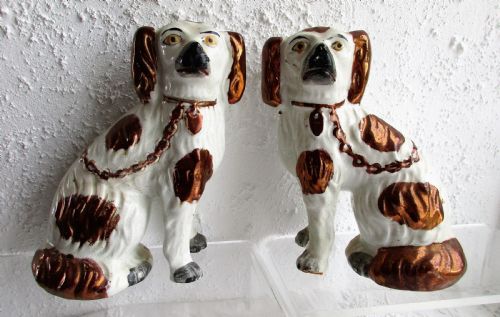


Fireplace Ceramic Spaniels
Fireplace ceramic spaniels are the quintessential Victorian mantelpiece figures that bring traditional British charm and symmetry to a room.
Fireplace Ceramic Spaniels
Fireplace ceramic spaniels are decorative figures traditionally manufactured as pairs to sit on either side of a hearth. The examples on this page are predominantly Victorian earthenware Staffordshire dogs dating from the nineteenth century.
Buyers will frequently find seated spaniel pairs finished in white and gilt, copper lustre, or hand painted with coloured markings. These figures range from standard mantelpiece ornaments to larger decorative objects and collections of four or five pieces.
What varies in quality
The richness of the finish also creates distinction, whether through deep copper lustre or well preserved gold leaf accents. Larger formats and balanced pairs command attention for their presence on the mantelpiece.
Some nineteenth century spaniels feature glass eyes that catch the flickering light of the hearth fire.
The Fireplace Ceramic Spaniels Glossary
- Earthenware
- A porous pottery body fired at lower temperatures, commonly used for nineteenth century figures. It forms the structural base beneath the glaze.
- Copper Lustre
- A metallic glaze finish producing a reflective coppery sheen. This technique was frequently applied to Victorian mantelpiece ceramics.
- Comforter Spaniels
- A traditional term for Staffordshire pottery dogs placed on hearths. They derive their name from their role as domestic companion figures.
- Gilt
- A thin layer of gold applied to the ceramic surface for decoration. It is often seen highlighting the lockets and chains on these figures.
Fireplace Ceramic Spaniels: Frequently Asked Questions
How were fireplace ceramic spaniels displayed?
These figures were traditionally arranged as facing pairs on either side of a fireplace mantelpiece.
Their symmetrical placement provided a balanced focal point in nineteenth century domestic interiors.
What materials make up these dogs?
The pieces are constructed from earthenware ceramic and finished with various glazes.
Makers added enamel paint, copper lustre, gold leaf, and occasionally glass eyes for surface detail.
How do I date nineteenth century spaniels?
Dating relies on stylistic clues, modelling characteristics, and the specific type of glaze used.
Victorian pieces show variations in earthenware composition and hand painting methods across different decades.
Are all the spaniels sold in pairs?
Many listings feature traditional pairs designed to sit together on a hearth.
However, some entries comprise larger collections of four or five individual figures.