
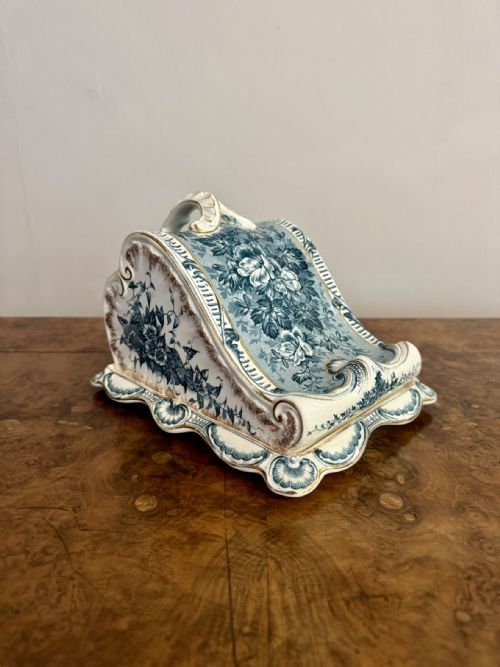
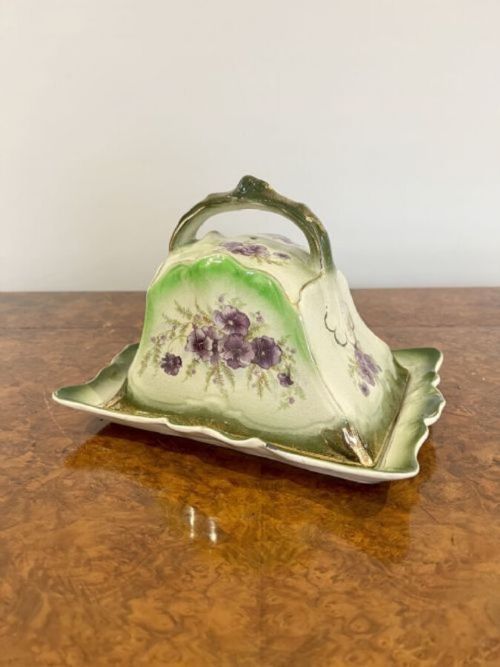
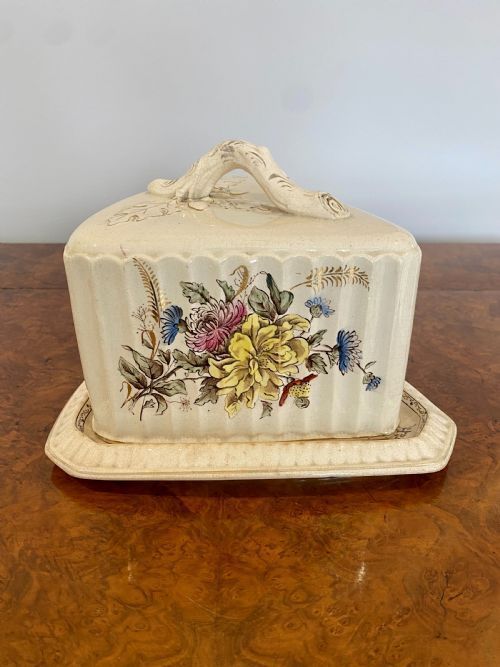
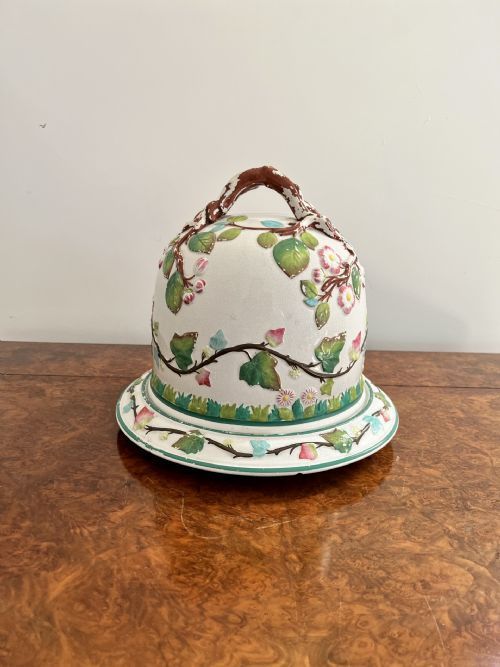


Victorian Ceramic Cheese Cover
These robust victorian ceramic cheese cover pieces kept the dining table tidy and the larder fresh, and today they make striking centrepieces for any sideboard.
Victorian Ceramic Cheese Cover
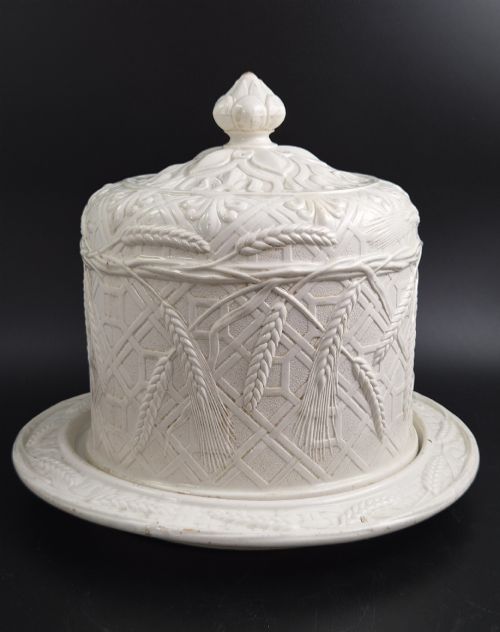
When you search for a victorian ceramic cheese cover, you encounter large domed vessels designed specifically to preserve cheese before refrigeration became common. These substantial covers rest upon matching circular stands or plates, protecting blocks and wedges from dust and household insects.
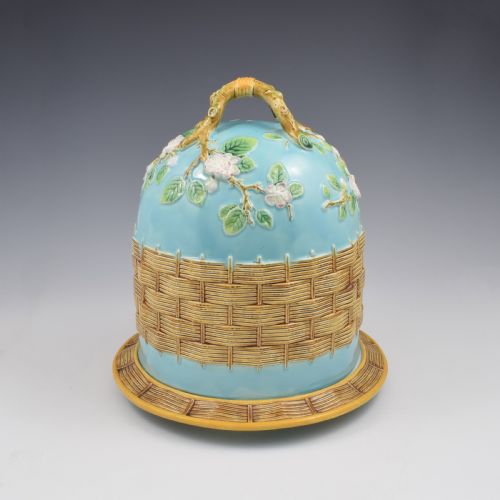
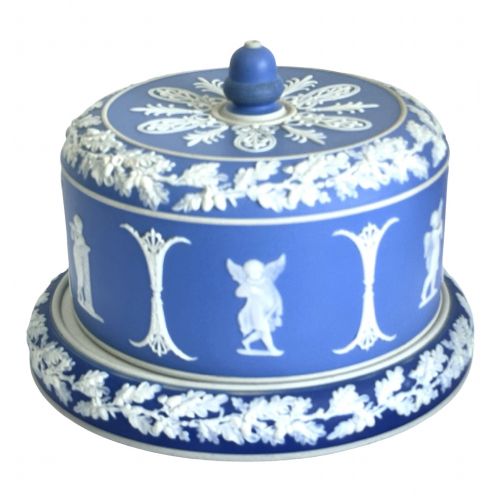
Most examples found here hail from the nineteenth century, spanning periods from the middle decades through to nineteen hundred. You meet diverse forms ranging from simple white ironstone to heavily modelled majolica and delicate jasperware.
The heavier pieces often accommodate a full Stilton wheel, whilst standard domes suit everyday cheddar and softer varieties. Each serves as both a practical table accessory and a notable example of nineteenth-century ceramic design.
What varies in quality
The distinction between ordinary utility wares and exceptional pieces rests upon the crispness of the moulded relief and the depth of the glaze. Finer vessels display sharp detailing in botanical or architectural motifs without blurring or pooling in the recesses.
Proportion and scale also dictate superiority, with larger domes requiring greater skill from the potter to prevent warping during high-temperature firing. The presence of a matching original stand elevates a piece considerably above a cover found in isolation.
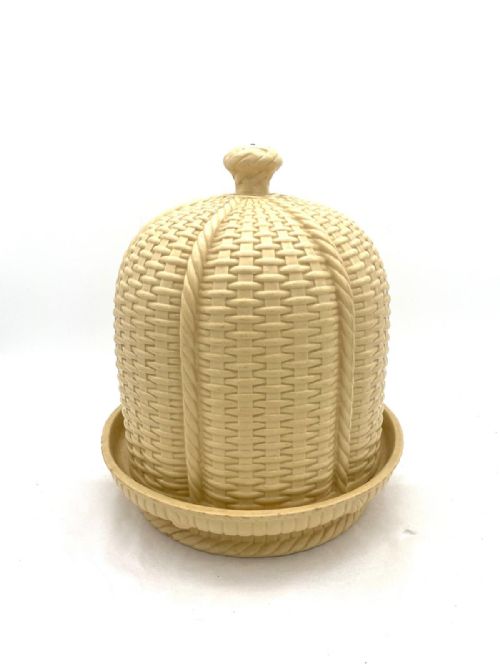
Some Victorian covers are moulded to resemble giant wicker baskets or blossoming apple trees, proving that nineteenth-century dining took its dairy very seriously.
George Jones·Wedgwood·James Dudson·Copeland
The Victorian Ceramic Cheese Cover Glossary
- Ironstone
- A durable, heavy earthenware developed in the nineteenth century to imitate Chinese porcelain. It resists chipping and forms a reliable white base for serving pieces.
- Jasperware
- A fine-grained, unglazed stoneware developed by Josiah Wedgwood. It is characterised by contrasting coloured relief figures applied against a solid background.
- Drabware
- A utilitarian ceramic body coloured in subdued shades of greyish-brown or olive. It gained popularity during the early nineteenth century for kitchen and dairy use.
- Cheese Bell
- An alternative name for a domed cheese cover that resembles a traditional bell shape. The top often incorporates a loop handle for lifting.
Victorian Ceramic Cheese Cover: Frequently Asked Questions
Were these domes used for Stilton cheese?
Many of the larger cylindrical domes were specifically sized to accommodate tall Stilton cheeses. The substantial height allowed the entire wheel to sit comfortably under cover.
Smaller bell-shaped versions suited standard cheddar wedges and everyday household dining. Both types kept the strong aromas contained within the dining room.
How do I date a ceramic cheese cover?
Examine the base for impressed factory marks, registration numbers, or maker names. The style of the ceramic body, such as heavy ironstone or colourful majolica, also points towards specific decades.
Victorian pieces often display registration diamonds or specific potter stamps from the mid to late nineteenth century. Comparing the decorative motifs helps narrow the manufacturing period further.
Can I still use these for serving cheese?
These historical covers function well for serving modern cheeses at room temperature. The ceramic material helps maintain a stable temperature for the dairy underneath.
Ensure the glaze is sound and free from deep staining before placing food directly onto the surface. Many collectors prefer to place a parchment sheet beneath greasy cheeses.