


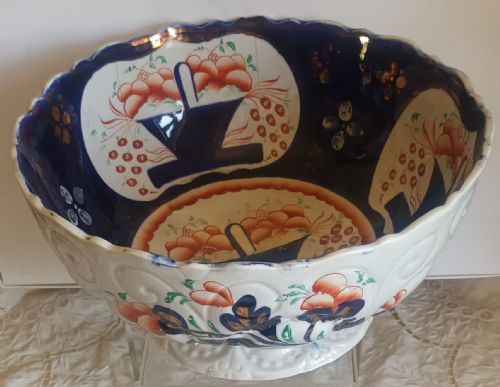


Victorian Ceramic Centrepiece
A victorian ceramic centrepiece anchors a dining table or sideboard with sculptural porcelain, earthenware and vibrant enamel.
Victorian Ceramic Centrepiece
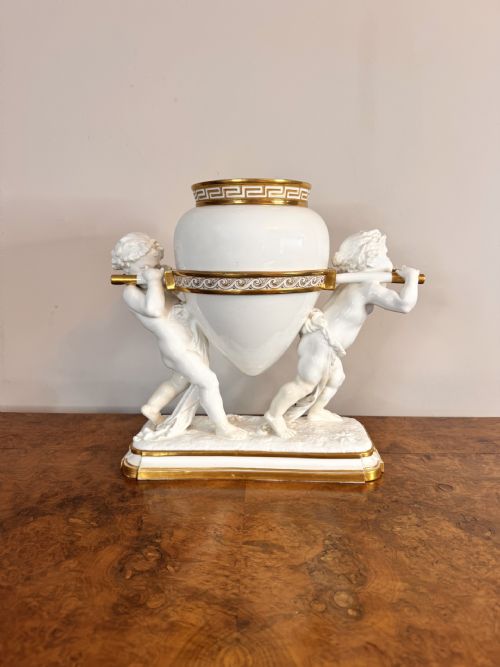
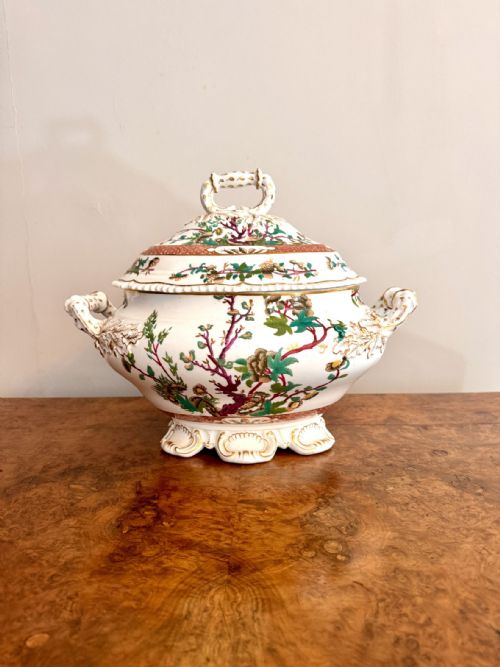
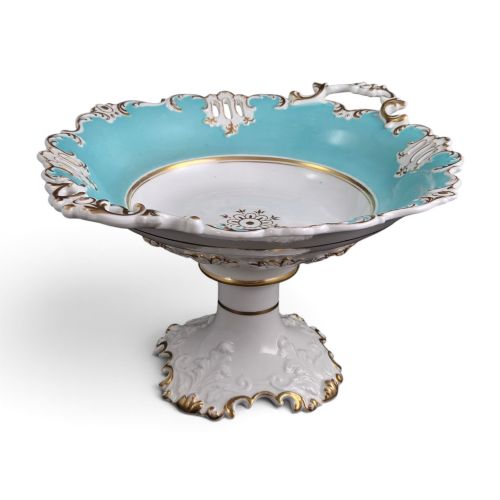
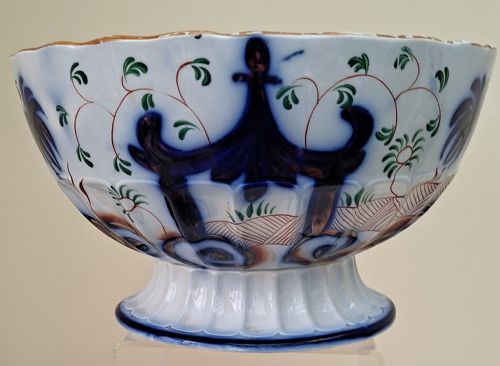
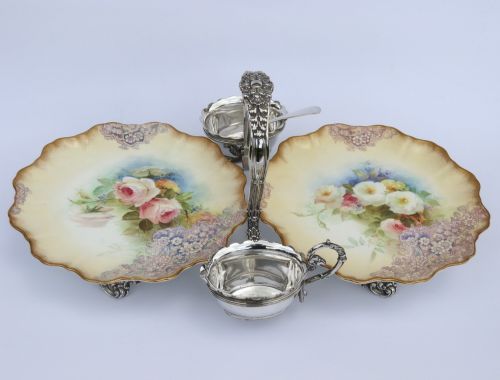
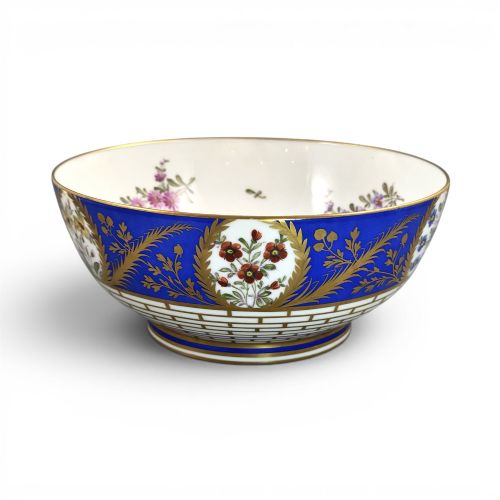
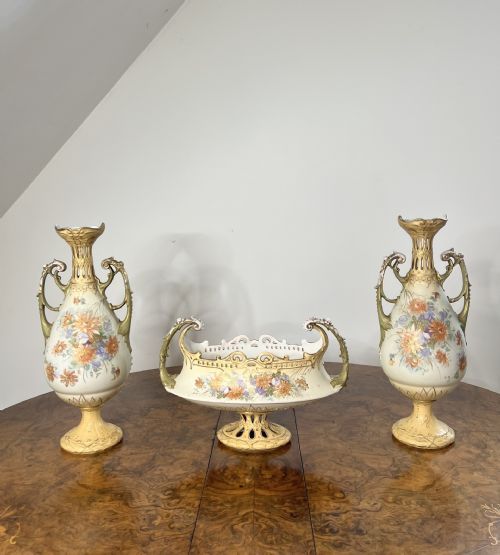
A victorian ceramic centrepiece brings together decorative bowls, comports, and figural arrangements designed to dominate a table or sideboard. These items emerge from nineteenth-century production centres across Britain and continental Europe, spanning styles from Rococo Revival and Neoclassical to Art Nouveau.
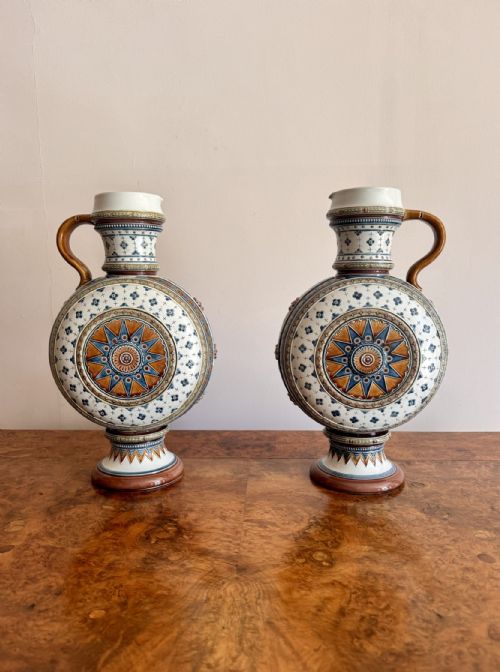
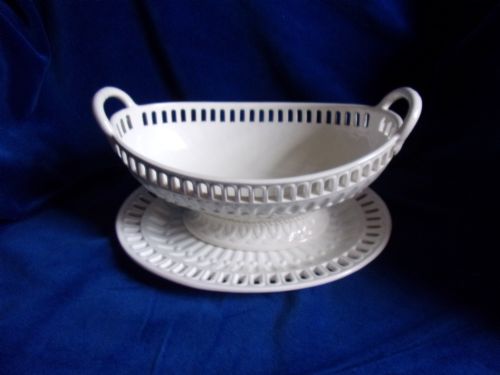
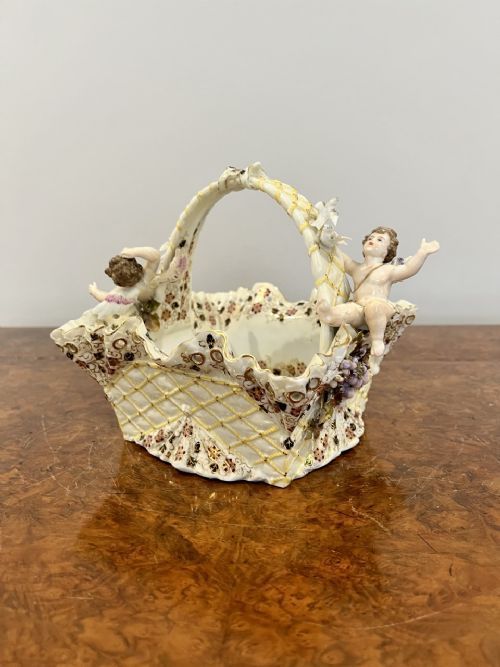
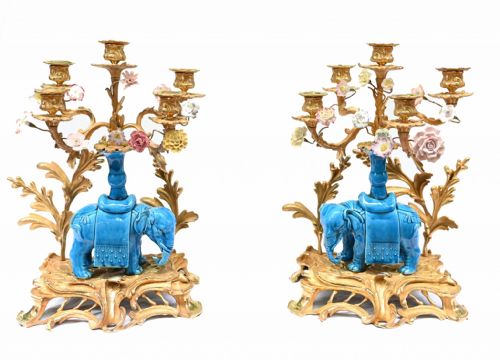
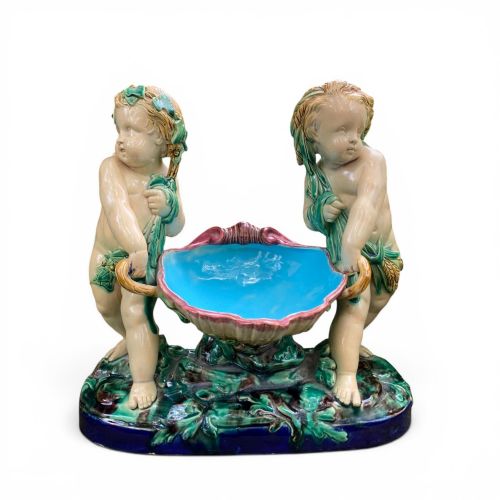
The objects most frequently met on this page include majolica bowls adorned with figures, bone china comports, and porcelain baskets. Makers utilise earthenware, porcelain, and ironstone to form large display vessels, often supported by gilt bronze mounts or paired with matching side vases.
The form developed to serve fruit, flowers, or sweetmeats during formal dining, shifting over the decades from restrained classical urns to elaborate sculptural centrepieces featuring putti, animals, and floral motifs.
How they were made
Potters shaped these vessels using ceramic bodies such as soft-paste porcelain, bone china, majolica earthenware, and ironstone, frequently building complex figural supports by hand. Kiln firing fixed the form before artisans applied hand-painted enamels, floral sprays, and underglaze colours.
Gilding, gold leaf, and ormolu mounts were added to enhance decorative bowls and comports, sometimes paired with champlevé enamel or silver-plated elements. Moulded details like lattice work, basketweave textures, and relief putti were standard techniques across English and continental factories.
Victorian Ceramic Centrepiece Retail Price Guide 2026
Typical asking prices for victorian ceramic centrepiece among the pieces listed under this phrase on Sellingantiques today, from the lower quarter to the upper quarter. They describe what is for sale here now, not the wider market.
What varies in quality
The distinction between standard domestic ware and top-tier display pieces rests on the crispness of the modelling and the depth of hand-painted detail. Superior examples display finely sculpted figures, precise gilding, and well-balanced proportions that maintain visual harmony from every angle.
The presence of complex technical feats, such as openwork lattice ceramic, intricate majolica glazes, or heavy gilt bronze and champlevé enamel mounts, elevates a piece. Lesser items rely on simple transfer printing or repetitive moulding with minimal hand finishing.
Minton·Coalport·Royal Vienna·Doulton Burslem·Royal Worcester·Meissen·Sitzendorf
The Victorian Ceramic Centrepiece Glossary
- Comport
- A raised dish or bowl on a foot, used for serving fruit or sweetmeats at the table. These pieces often feature bone china or ironstone construction.
- Majolica
- A type of earthenware coated with an opaque tin glaze and painted with metallic oxide colours. Developed greatly in the nineteenth century, it yields vibrant greens, blues, and purples.
- Parian ware
- A fine-grained unglazed porcelain resembling white marble, named after Parian marble from the Greek island of Paros. It was frequently used for nineteenth-century portrait busts and sculptural centrepieces.
- Tazza
- A shallow bowl or cup mounted on a stem and foot, originating from Renaissance plate forms. In nineteenth-century ceramics, it serves as an ornamental centrepiece or comport.
- Champlevé
- An enamelling technique where troughs or cells are carved into a metal surface and filled with vitreous enamel before firing. It appears on the mounts of French and continental decorative vessels.
Victorian Ceramic Centrepiece: Frequently Asked Questions
What was a victorian ceramic centrepiece used for?
These large vessels held fruit, flowers, or sweetmeats as the visual focal point of a formal dining table. They were designed to impress dinner guests and complement the decorative scheme of the room.
Beyond dining use, many remained on sideboards or console tables purely as decorative ornaments, showcasing the wealth and taste of the household through sculptural porcelain and painted scenes.
How do I date a nineteenth century ceramic piece?
Dating relies on factory registry marks, impressed stamps, and stylistic cues such as the transition from classical Neoclassical forms to ornate Rococo Revival or floral Art Nouveau. Comparing the ceramic body and glaze type against known factory production windows helps narrow the decade.
Hand-painted signatures and decorator ciphers also provide clues, though many nineteenth-century items carry only registry diamonds or impressed numbers indicating the batch and year of design registration.
How do I display a large centrepiece safely?
A heavy centrepiece requires a sturdy, level surface such as a large dining table, sideboard, or sturdy console that can support the combined weight of the ceramic and any metal mounts. Placing the piece away from heavy foot traffic prevents accidental knocks to protruding handles, figures, or delicate floral elements.
Avoid positioning porcelain and majolica vessels in direct, prolonged sunlight to protect hand-painted enamel colours and gilding from fading over time.
What is the difference between porcelain and earthenware?
Porcelain is fired at higher temperatures, resulting in a vitreous, non-porous body that is often translucent when held to the light. Bone china and hard-paste porcelain belong to this dense, refined category.
Earthenware, such as majolica and standard pottery, is fired at lower temperatures and is opaque and porous before glazing. It allows for thick, vibrant coloured glazes and heavy relief moulding.