
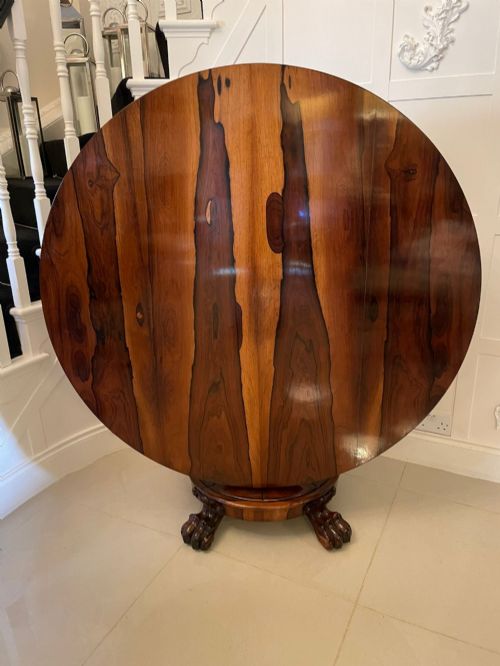
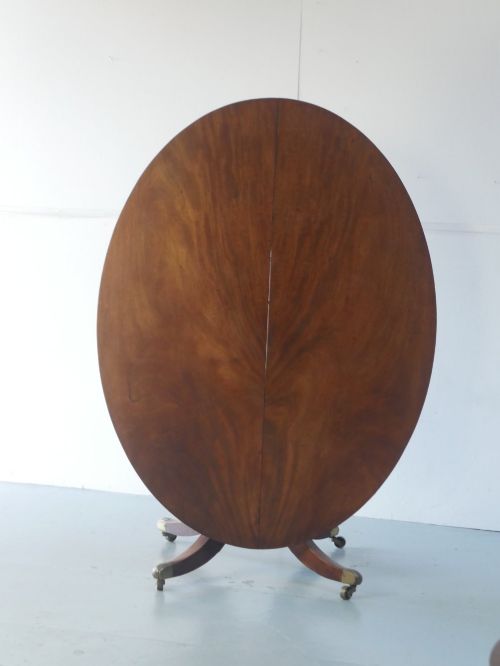
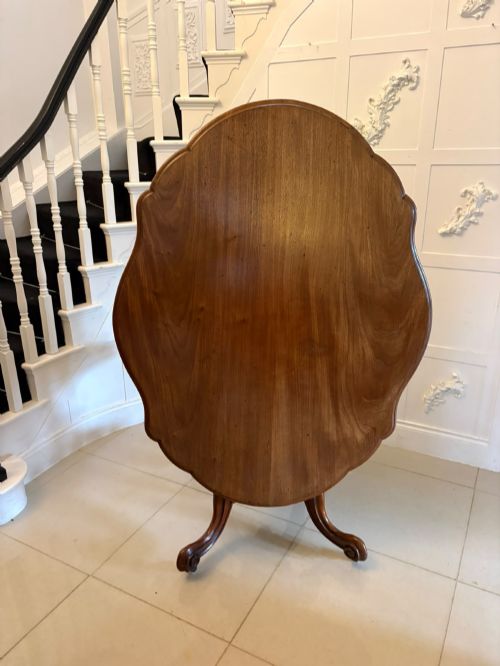
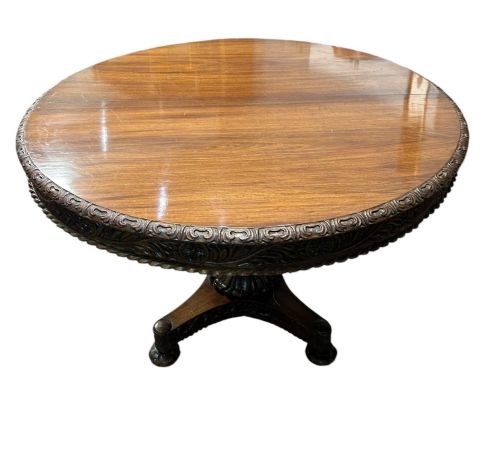

Victorian Centre Dining Table
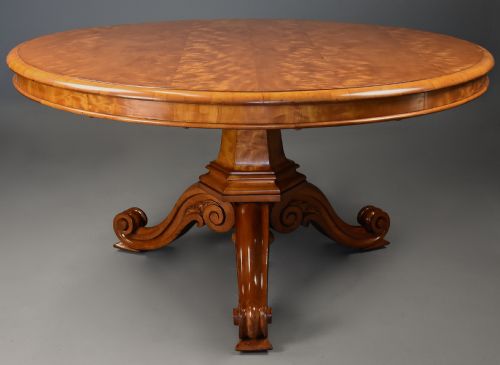
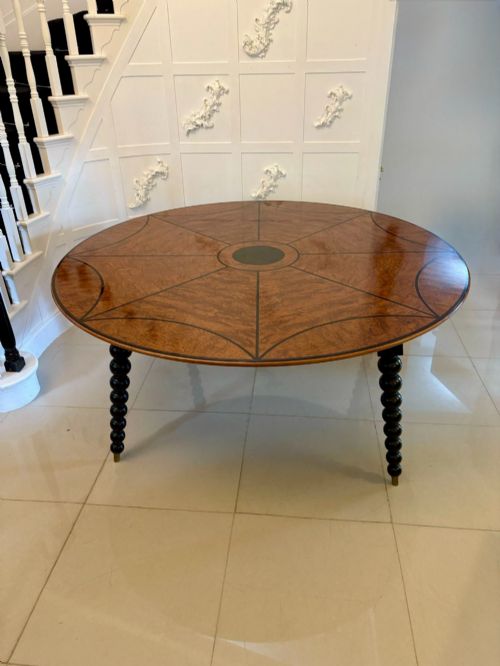
When you search for a victorian centre dining table, you find versatile multi-use tables designed to sit proudly in the middle of a room.
Victorian Centre Dining Table
A victorian centre dining table serves the dual purpose of a freestanding room centrepiece and a functional dining surface.
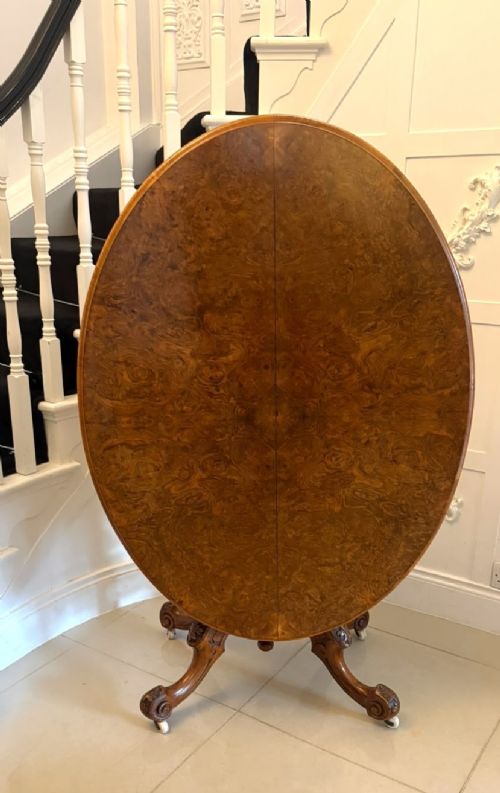
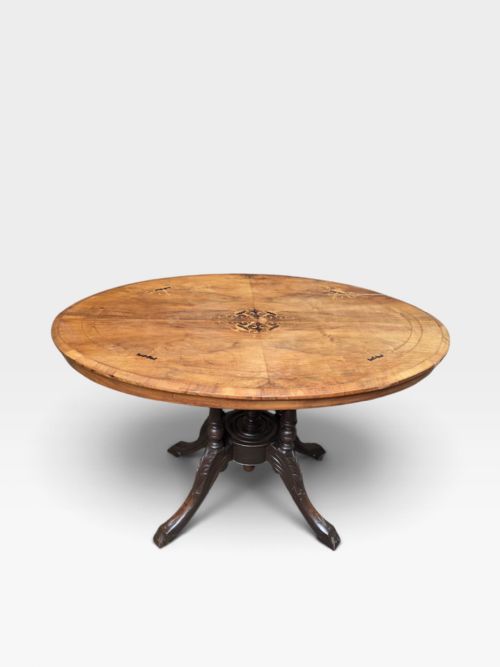
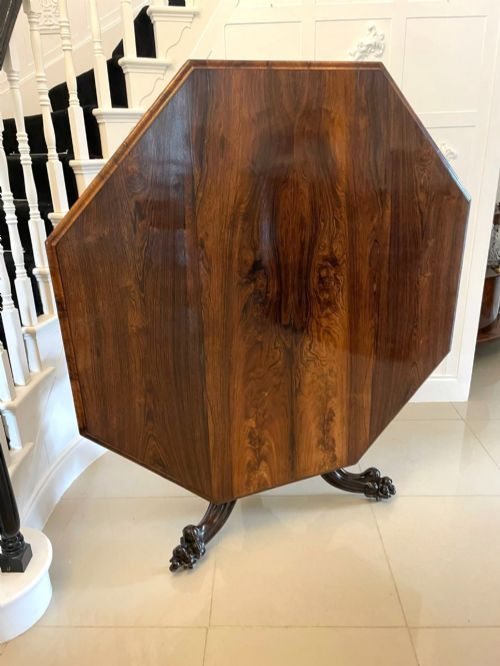
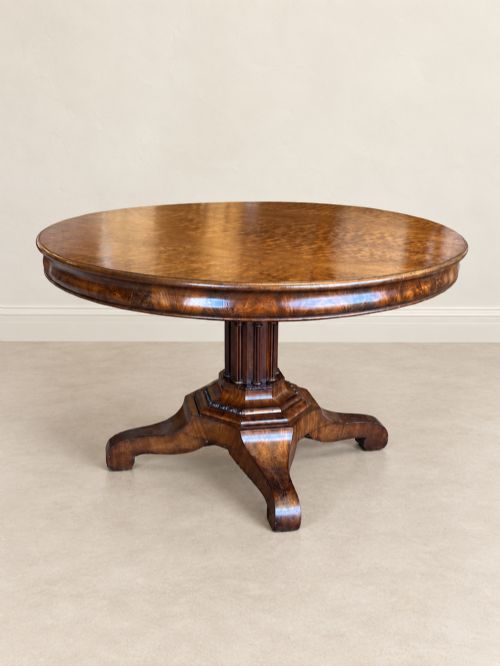
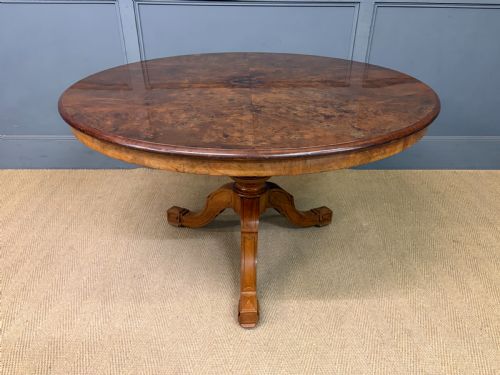
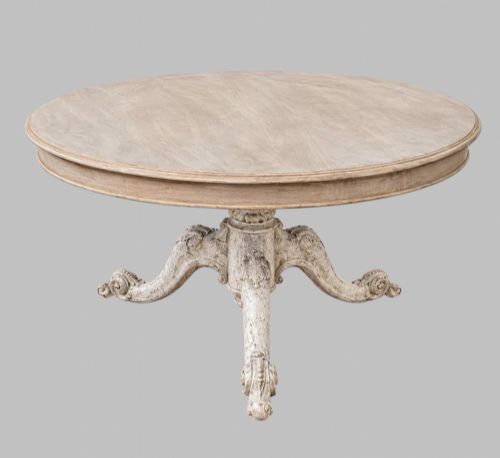
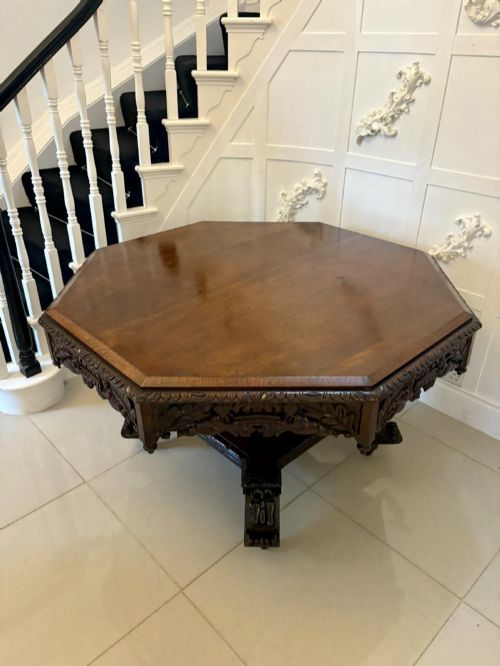
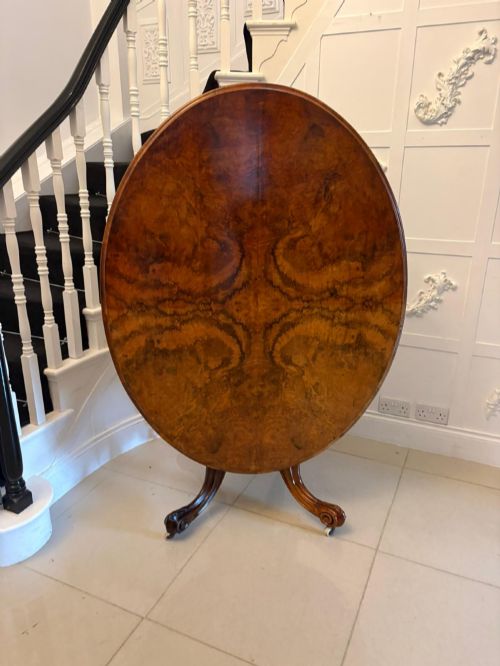
The most common forms you will encounter on this page are circular, oval, or octagonal shapes, frequently featuring tilt tops or pedestal bases.
These pieces bridge the gap between formal dining furniture and flexible library or occasional tables from the nineteenth century.
How They Were Made
Cabinet makers utilised dense hardwoods like mahogany, rosewood, and burr walnut, often laid as figured veneers over stable secondary timbers.
Many examples incorporate intricate boxwood inlay, marquetry, or carved solid wood bases with turned pedestals and quadrapod supports.
Listings feature woods like rosewood, mahogany, and burr walnut alongside oak and padauk.
What Varies in Quality
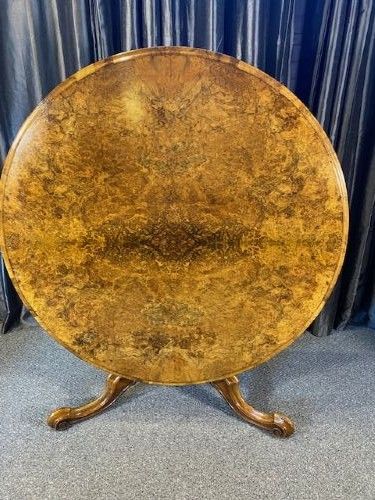
Quality rests in the choice of timber figurations, such as highly figured burr walnut or flame mahogany, matched symmetrically across the top.
Subtlety and depth of hand-carving on the bases and the crispness of marquetry work separate standard workshop production from notable maker output.
Gillows·Holmes Baldock
The Victorian Centre Dining Table Glossary
- Tilt top
- A mechanism allowing the table top to pivot to a vertical position when not in use. This saves floor space in smaller rooms.
- Loo table
- A large round or oval parlour table popular for card games and social gatherings. They often feature heavy tilt-top mechanisms.
- Marquetry
- Decorative veneer patterns formed by fitting together small pieces of different coloured wood. Craftsmen create elaborate floral or geometric motifs.
- Quadrapod base
- A pedestal support resting on four feet or splayed legs. This design offers stability for large circular or oval dining tops.
- Burr walnut
- Timber taken from the abnormal growth of a walnut tree, yielding swirling grain patterns. It forms the primary decorative surface on high-end Victorian tables.
Victorian Centre Dining Table: Frequently Asked Questions
Can I use a centre table for everyday dining?
Many Victorian centre tables were built sturdy enough to function as primary dining surfaces for families. Their solid pedestal construction provides adequate legroom for seating six guests.
However, you should consider the polished timber surface and protect it with appropriate table pads during meals to prevent heat marks and scratches.
How do I operate a tilt top mechanism?
Tilt top tables use a brass catch or release pin beneath the top that locks the surface horizontally onto the pedestal block. Releasing this catch lets the top pivot upright.
Ensure you hold the weight of the top securely when releasing the mechanism to prevent sudden movement or strain on the pivot hinge.
What is the difference between a breakfast table and a loo table?
Breakfast tables and loo tables share similar circular or oval tilt-top forms from the nineteenth century. Loo tables earned their name specifically from the card game loo.
In practice, makers used the terms interchangeably in period records, though loo tables often showcase more elaborate marquetry and burr walnut veneers.
How do I fit a large round table into a modern room?
Freestanding centre tables require adequate clearance around the perimeter so chairs can pull out comfortably. Measure your room to ensure people can walk freely past the pedestal base.
Positioning the table beneath a central ceiling light fixture helps anchor it visually as the primary focus of the room.