




Victorian Dining Table Chairs
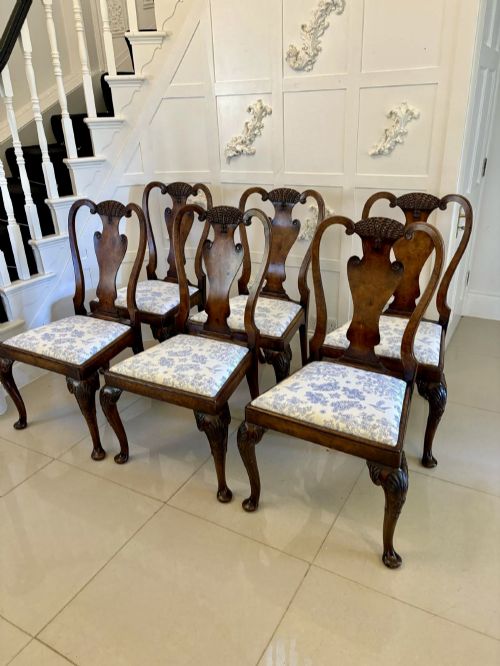
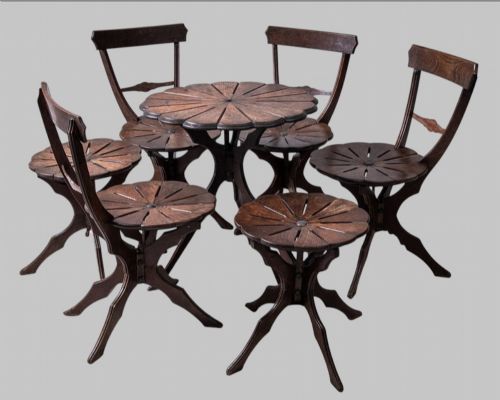
These Victorian dining table chairs bring solid timber and carved detail to the room, offering robust seating designed to last.
Victorian Dining Table Chairs
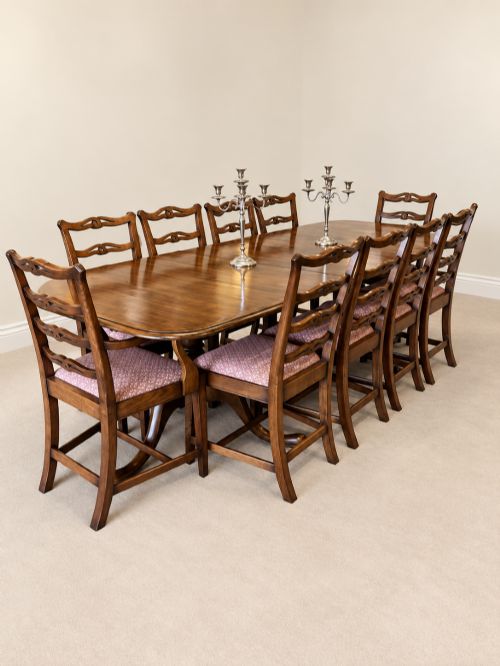
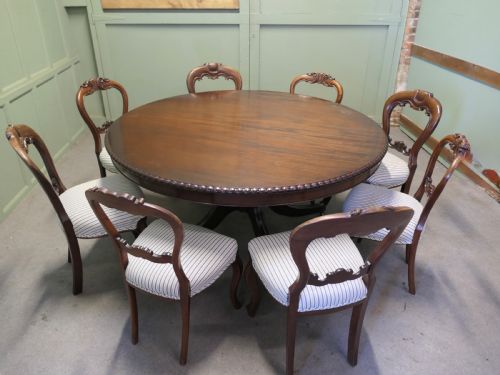
Victorian dining table chairs appear frequently alongside extending mahogany or oak tables, forming matching sets for formal dining. Buyers searching for victorian dining table chairs often encounter large groups of eight to sixteen matching seats alongside wind-out or leaf tables.
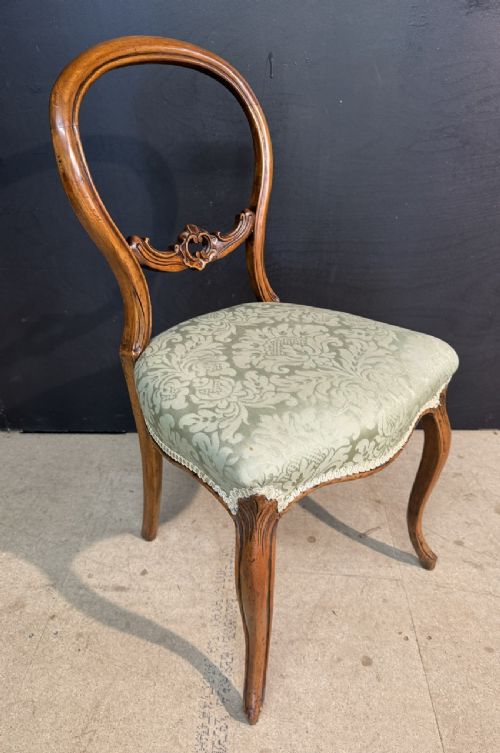
Beyond standard mahogany sets, variations include walnut, rosewood, and oak configurations, sometimes featuring bar backs, balloon backs, or carved frames. These chairs originate primarily from the nineteenth century, ranging from early Victorian periods through to later decades.
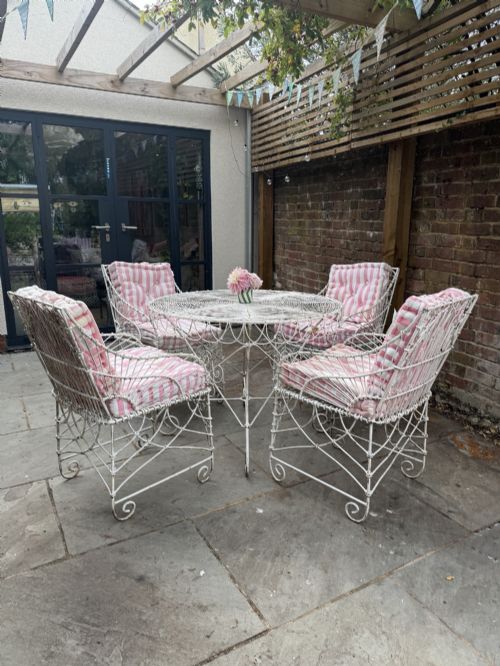
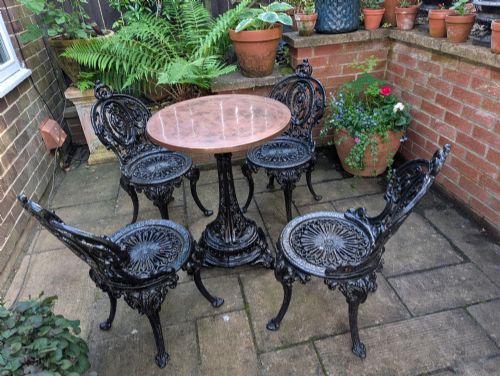
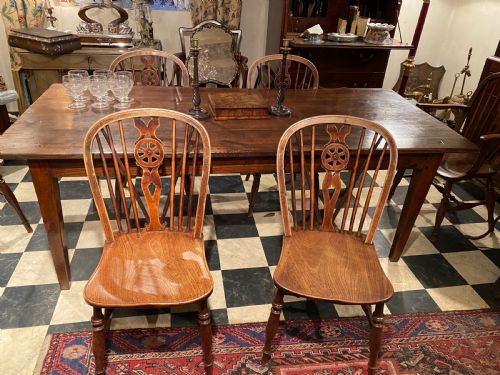
Alongside timber dining sets, the selection includes related seating such as side chairs, parlour suites, and kitchen table chairs. Sets often range from compact six-seater arrangements up to substantial twelve or sixteen-chair assemblies designed for boardrooms and grand dining rooms.
Materials and construction
Makers relied heavily on solid hardwoods, predominantly mahogany, oak, walnut, and rosewood, selected for their grain and structural strength. Timber components were frequently turned, carved, or assembled with upholstered drop-in seats covered in fabric.
Joinery techniques focused on durability, employing sturdy frames to withstand daily use around the dining table. Many examples incorporate polished finishes that highlight the natural depth and colour of the underlying wood.
Periods represented span the nineteenth century, Regency era, and early twentieth-century revivals.
Judgments of quality
Quality rests in the crispness of the timber carving and the architectural proportion of the chair frame. Superior pieces display substantial timber scantlings and cohesive design matching the accompanying table.
Matching sets that remain complete without later replacements command greater interest from collectors. The integration of original upholstery webbing and timber seasoning further differentiates standard workshop output from exceptional commissions.
James Shoolbred·Christopher Dresser
The Victorian Dining Table Chairs Glossary
- Wind-out table
- A dining table mechanism operated by a handle that separates the leaves to insert additional centre leaves. This system allows the table to expand or contract depending on the number of guests.
- Balloon back
- A chair back shape formed in a continuous curved oval resembling a balloon. This style was widely adopted across nineteenth-century seating.
- Bar back
- A chair design featuring a horizontal wooden slat across the upper backrest. It provides lumbar support while maintaining a clean profile.
- Pollard oak
- Oak timber displaying small clustered knots formed from buried buds or pollarding. Cabinet makers valued this wood for its decorative mottled grain figure.
Victorian Dining Table Chairs: Frequently Asked Questions
How do I match chairs to an extending table?
Look for matching timber species, such as mahogany or oak, and corresponding leg styles like cabriole or turned supports.
Consider the height of the apron and the width of the seats to ensure comfortable legroom when the table is fully extended with leaves.
Are large sets harder to find?
Sets comprising ten, twelve, or sixteen chairs appear less frequently than smaller six-seater configurations.
Larger dining sets were originally commissioned for substantial homes and institutions, making complete matching assemblies desirable for modern dining spaces.
What is a wind-out dining table?
A wind-out table uses an internal metal screw mechanism operated by a crank handle to part the table halves.
This design allows extra leaves to drop into the centre, accommodating larger gatherings without compromising stability.
How do I care for antique timber chairs?
Keep wooden chairs away from direct heat sources and sudden temperature fluctuations to prevent the timber from splitting.
Apply traditional beeswax periodically to nourish the polished surface and maintain the natural lustre of the wood.