
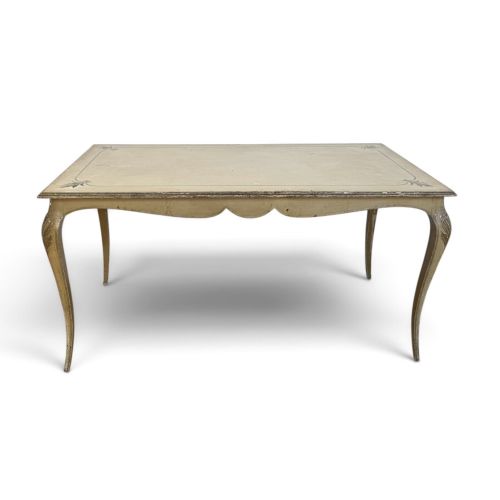
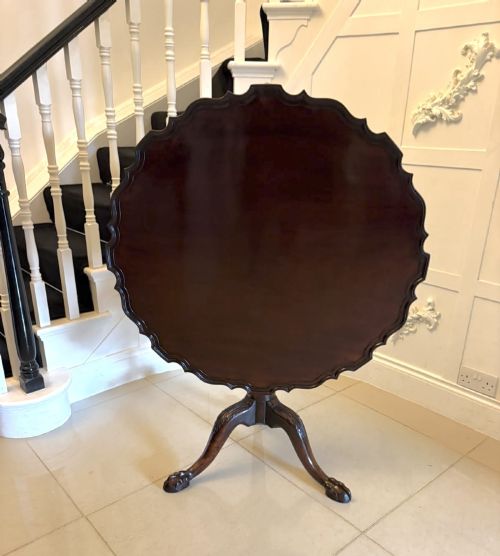
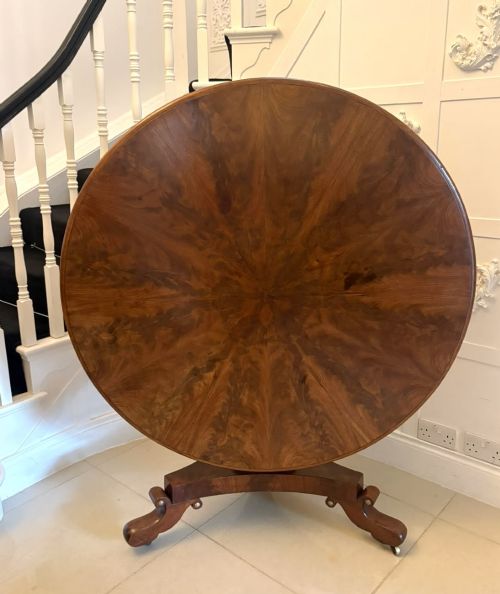
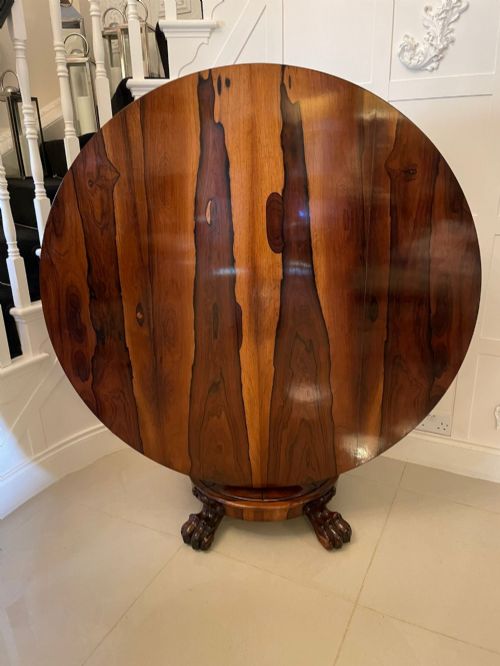
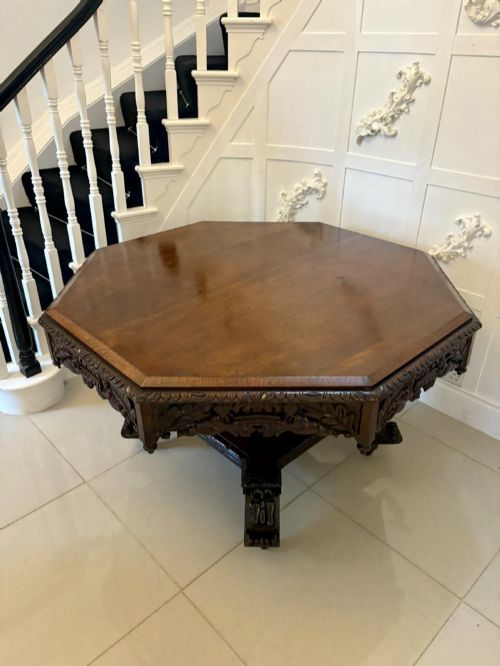
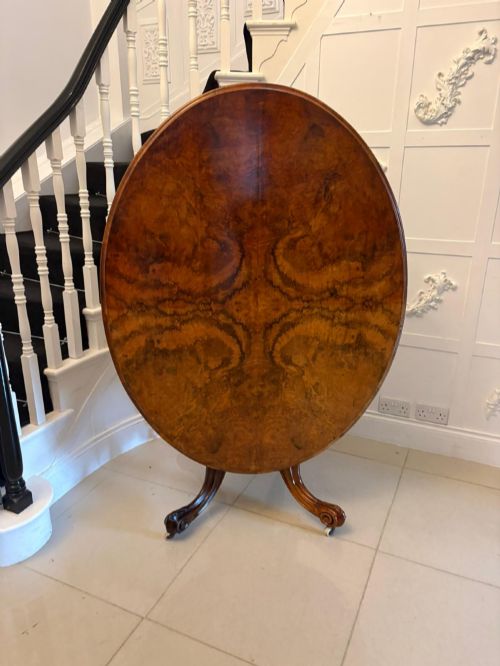


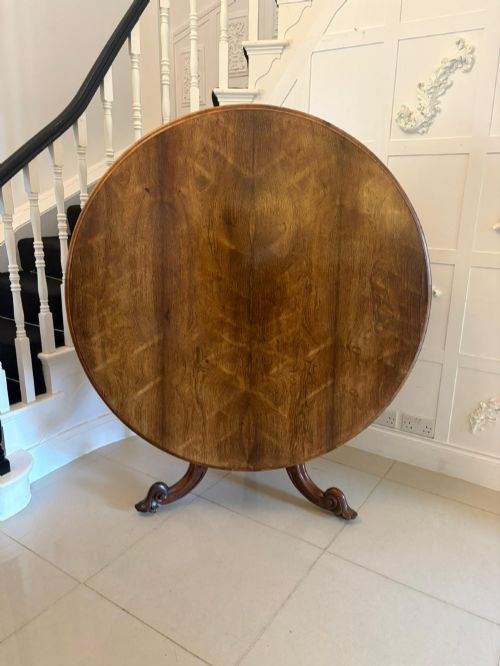
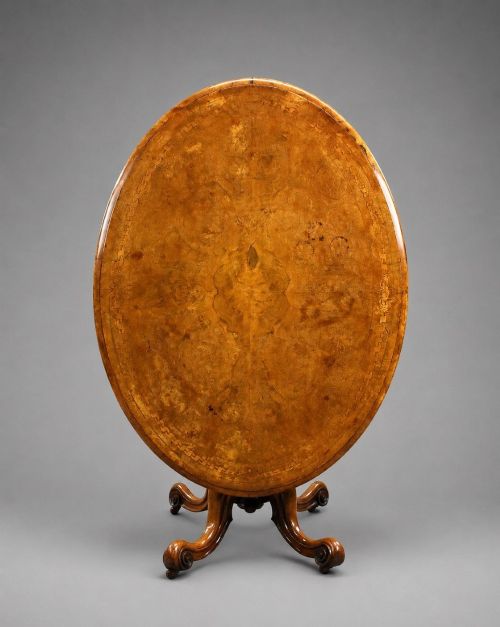
Centre Dining Table
When you search for a centre dining table, you find adaptable multi-functional furniture designed to sit proudly in the middle of a room while accommodating sit-down meals.
Centre Dining Table
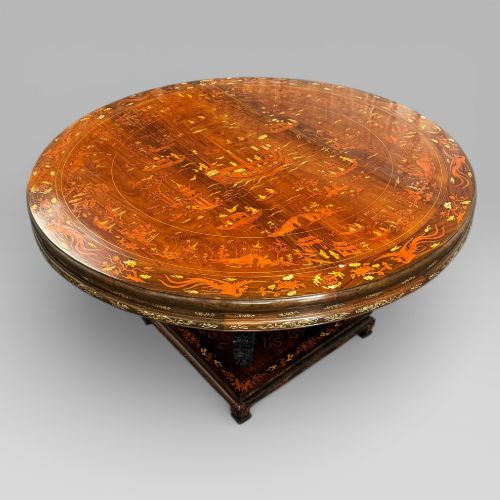
A centre dining table combines the everyday utility of a dining surface with the freestanding presence of a principal room centrepiece. These versatile pieces transition easily from a breakfast or evening meal to serving as an occasional display surface when the room is empty.
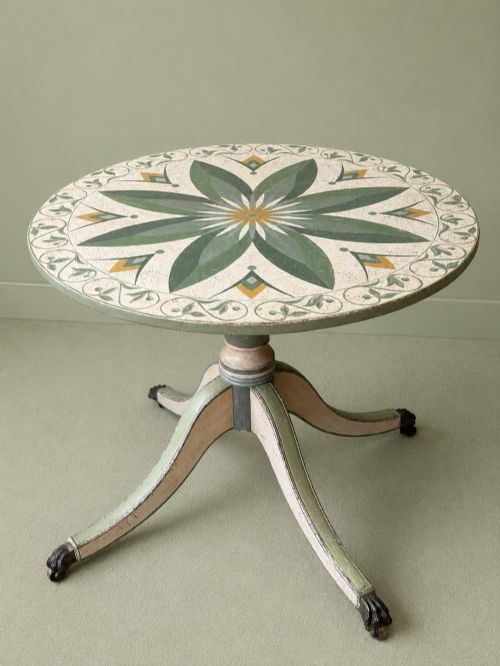
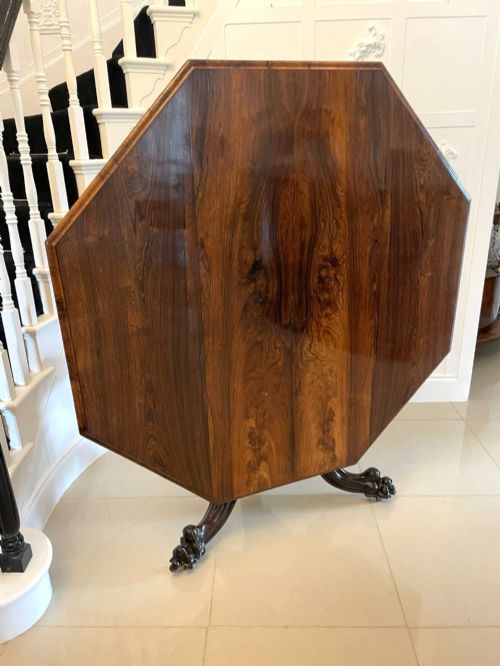
The versions you meet most frequently on this page date from the nineteenth century, spanning Regency, William IV, and Victorian eras. Many feature circular tops supported by pedestal bases, while others offer tilt mechanisms to save space against a wall when not in daily use.
Materials and Construction
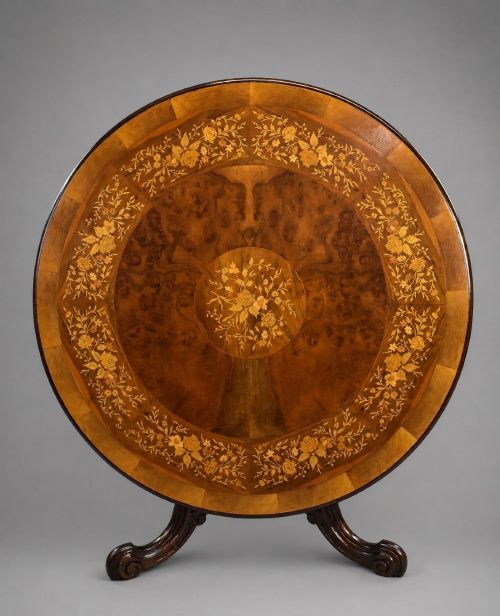
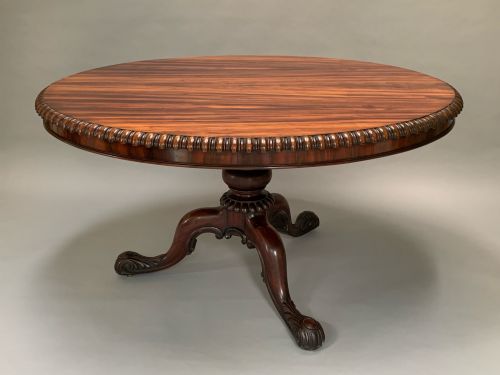
Cabinet makers relied heavily on dense tropical hardwoods, choosing figured rosewood, burr walnut, and flame mahogany for their striking surface grain. These timbers were frequently sliced into thin veneers and laid over sturdy secondary woods to create complex geometric patterns or symmetrical tabletops.
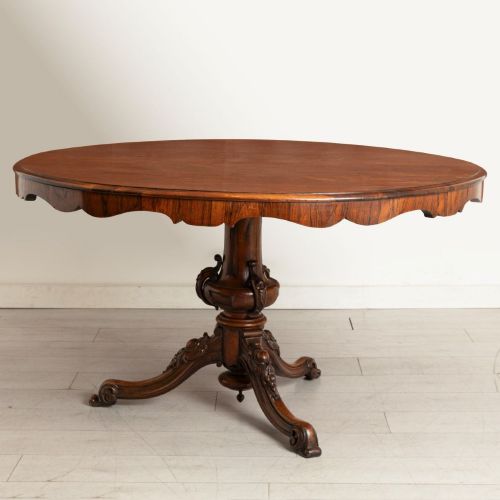
Pedestal supports often incorporate carved walnut or solid rosewood columns resting upon triform or quadrapod bases. Brass inlays, boxwood stringing, and tilt-top mechanisms demonstrate the advanced joinery employed by prominent workshops during the Georgian and Victorian periods.
Listings feature eighteenth-century Georgian designs alongside nineteenth-century Victorian, William IV, and Regency periods.
Evaluating the Build
Quality reveals itself in the selection of the timber and the precision of the underlying construction. A superior table exhibits continuous, highly figured grain patterns across the tabletop, whereas lesser examples rely on poorly matched veneers with visible joins.
The stability of the pedestal and the smooth operation of the tilt mechanism indicate workshop skill. Solidly pinned joints, substantial weight in the base, and crisp, hand-carved ornamentation separate high-end cabinet work from standard commercial production.
Gillows·Edwards & Roberts
The Centre Dining Table Glossary
- Tilt-top
- A hinged tabletop mechanism allowing the surface to fold vertically into a flat position for storage against a wall. This ingenious space-saving design became widely popular during the Regency and Victorian periods.
- Loo table
- A round or oval Victorian card and games table frequently utilised for dining. These heavy tables often feature tilt mechanisms and elaborate burr walnut or rosewood veneers.
- Burr walnut
- Timber harvested from the gnarled growths on walnut trees, yielding turbulent, highly decorative grain patterns. Cabinet makers prized this material for elite Victorian centre and breakfast tables.
- Triform base
- A three-sided pedestal foot configuration typical of Regency and William IV furniture. This structural arrangement provides steady support beneath heavy circular dining surfaces.
- Marquetry
- The art of applying pieces of veneer to a structure to form decorative patterns and pictures. Skilled artisans utilised various coloured woods to create floral or geometric motifs on table surfaces.
Centre Dining Table: Frequently Asked Questions
Can I use a centre table for everyday dining?
These tables served central domestic roles historically and remain well-suited for daily meals. Their sturdy pedestal construction provides ample legroom around the perimeter.
Ensure the finish is properly protected against heat and moisture if you use antique polished timber for frequent family dining.
How do I spot a tilt-top table?
Look beneath the tabletop for a brass catch or wooden locking mechanism secured to the central pedestal block. This catch releases the surface so it pivots ninety degrees.
Tilt mechanisms were engineered to let large round tables stand flush against room boundaries when dining was finished.
What is the difference between a breakfast table and a centre table?
Breakfast tables traditionally feature tilt-top mechanisms designed for morning meals in private chambers or parlours. Centre tables often have fixed tops meant for permanent display in the middle of a grand reception room.
In practice, nineteenth-century makers and contemporary dealers frequently used both terms interchangeably for round pedestal dining furniture.
How do I date a nineteenth-century dining table?
Examine the timber choices, base geometry, and carved motifs to determine the era. Regency pieces often showcase brass inlay and sweeping mahogany grain, while Victorian examples lean toward heavy burr walnut and elaborate scrolling pedestals.
Secondary woods and construction methods hidden beneath the surface also offer reliable clues to the decade of manufacture.