


Victorian Centre Desk Table
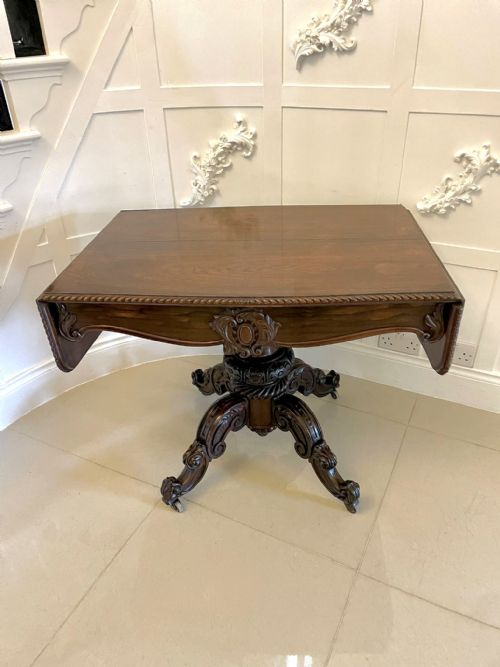
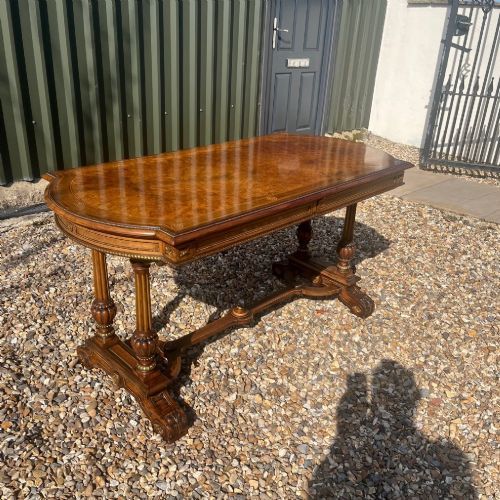
A victorian centre desk table is a versatile freestanding piece built to sit in the middle of a room, combining a spacious surface with purposeful workspace.
Victorian Centre Desk Table
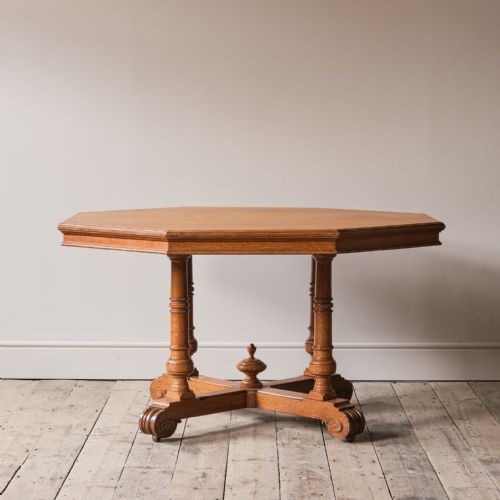
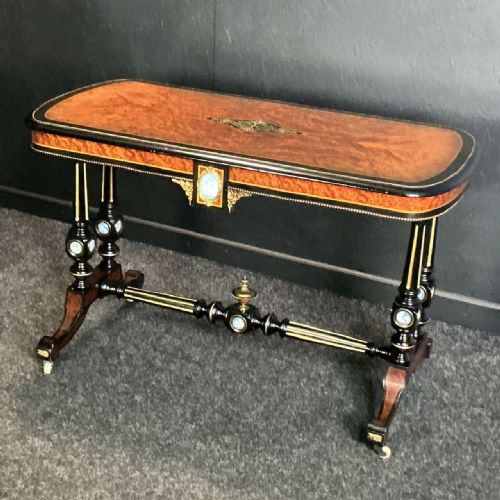
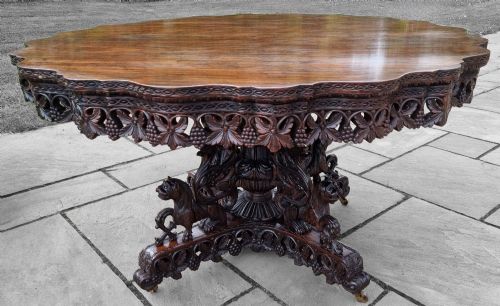
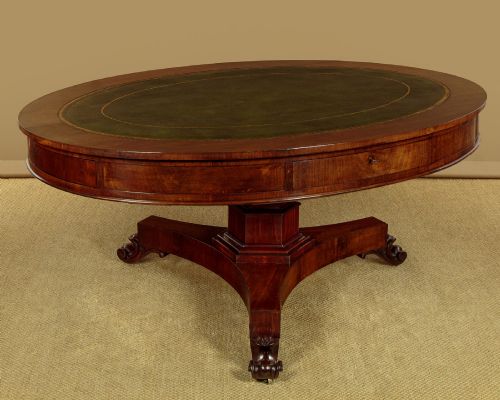
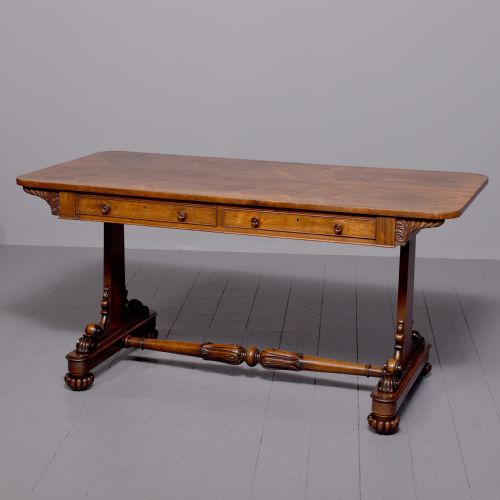
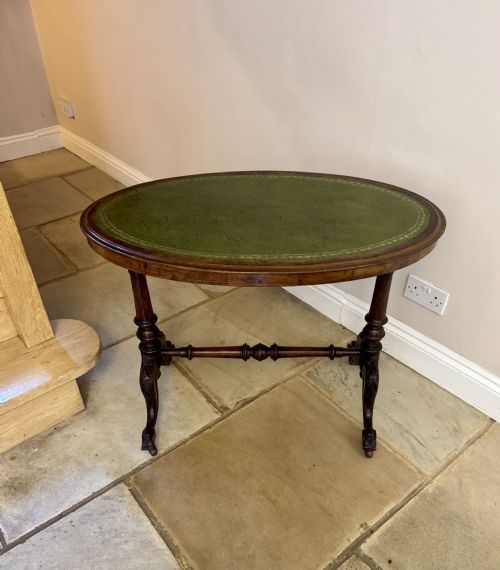
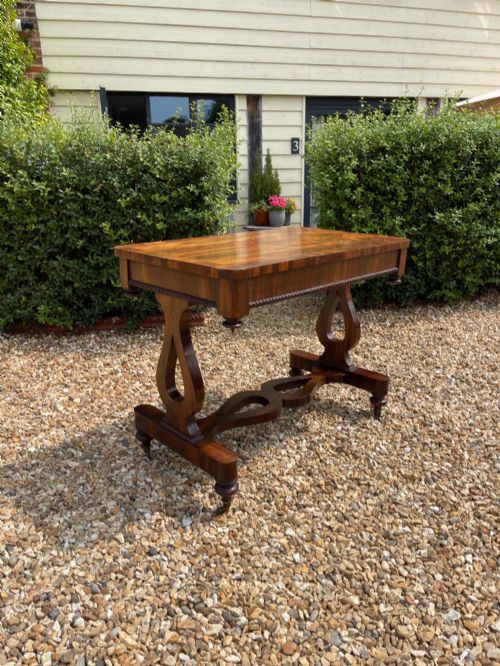
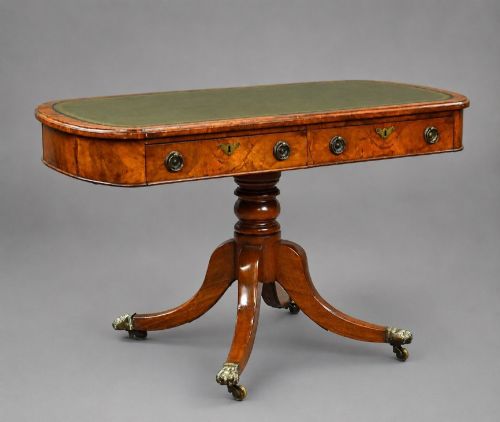
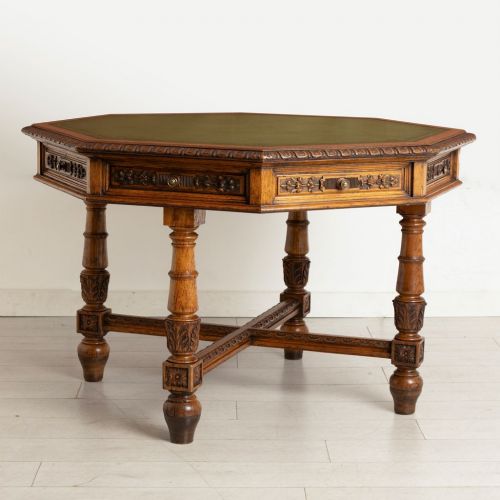
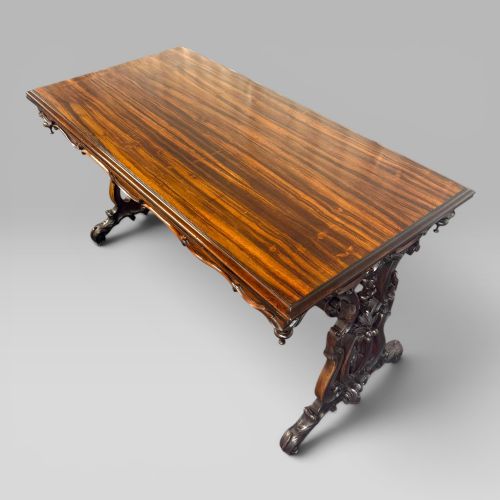
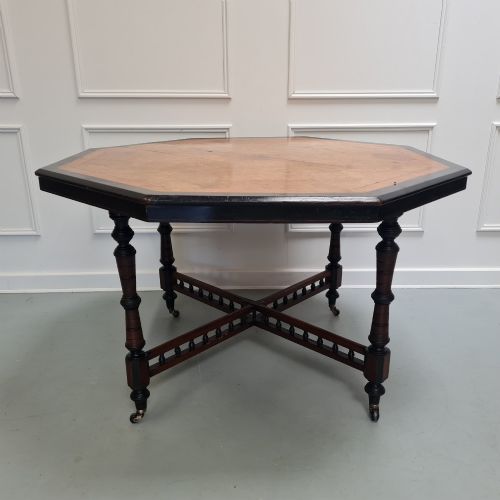
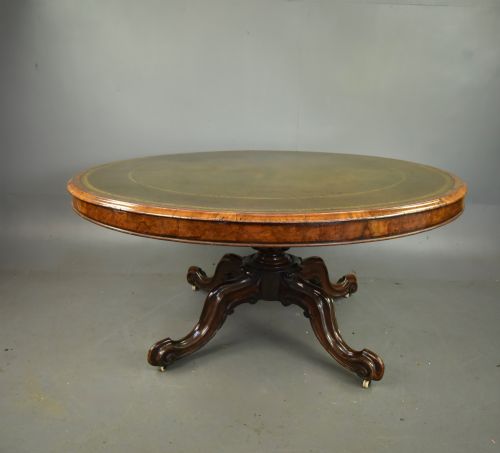
A victorian centre desk table serves multiple functions as a library table, writing desk, or freestanding table placed prominently within a room. These pieces appear in forms such as octagonal library tables, serpentine desks, oval drum tables, and sofa tables.
Makers designed these items to be viewed from all sides, placing finished parquetry, marquetry, and carving on every elevation rather than pushing them against a wall. The construction accommodates seated work while maintaining the decorative presence required for principal reception rooms.
The evidence shows a strong concentration of walnut, burr walnut, rosewood, and oak pieces spanning the nineteenth century, alongside revival influences like Gothic, French Louis XV, and Aesthetic Movement designs.
Materials and Construction
Cabinet makers built these tables using dense timbers like mahogany, oak, rosewood, and walnut, often applying highly figured burr walnut veneers or satinwood inlay to the primary surfaces. Secondary structural elements relied on solid oak or mahogany to provide stability for heavy central pedestals or carved cabriole legs.
Leather inserts, frequently tooled with gold leaf, formed the writing surfaces on library tables and desks. Ormolu mounts, brass details, and marquetry enrichment were applied to the most elaborate examples to satisfy Victorian taste for decorative complexity.
One extraordinary nineteenth-century table incorporates a working clock directly into the centre of the surface.
Evaluating Quality
Quality depends upon the choice and matching of veneers, particularly the symmetry of burr walnut or flame mahogany grain across the top. The crispness of hand-carving on rosewood or oak frames and the precision of marquetry and parquetry patterns distinguish superior examples.
Internal construction standards, including drawer linings and the rigidity of the freestanding frame under load, separate standard production pieces from exhibition quality works.
Edward’s And Robert’s·Mein of Kelso·James Shoolbred & Co. London
The Victorian Centre Desk Table Glossary
- Centre table
- A freestanding table finished on all sides designed to stand in the middle of a room. These pieces do not have a designated front or back.
- Library table
- A large rectangular or round table used for reading and writing, often fitted with inset leather tops and frieze drawers. They belong to the broader category of centre tables.
- Ormolu
- Gilded bronze mounts applied to furniture for decorative effect. It appears frequently on French revival Victorian pieces.
- Marquetry
- Decorative veneer patterns formed by fitting together small pieces of wood, shell, or ivory into pictorial or geometric designs. Craftsmen utilised this technique on table tops.
- Drum table
- A circular library table with a deep frieze containing drawers, resembling the shape of a drum. They often rest on a central pillar and tripod base.
Victorian Centre Desk Table: Frequently Asked Questions
Where should a centre desk table go?
These pieces belong in the middle of a room where their finished backs and sides remain fully visible. They function effectively as independent desks or central display surfaces.
Position them away from walls to maintain clearance for drawers and chairs used around the perimeter.
How do I care for leather desk tops?
Leather surfaces require occasional treatment with specialist wax or leather balm to prevent drying and cracking. Avoid using harsh chemical cleaners that strip the gilt tooling.
Keep these tables away from direct sunlight and heat sources to protect both the leather and the underlying timber.
Are centre tables and writing desks the same?
Many Victorian centre tables doubled as writing desks, featuring integrated drawers and inset leather surfaces. The terms often overlap in period pieces designed for multi-use spaces.
Pure centre tables focus on display, while writing desks prioritize kneehole space and stationery storage.
How do I identify a Victorian library table?
Look for sturdy freestanding construction, heavy timber frames in walnut or oak, and often a leather-lined top surrounded by mahogany or rosewood borders. Frieze drawers for storage are typical.
Octagonal shapes, central pedestals, and carved cabriole legs point directly to nineteenth-century production methods.