



Victorian Cat Artwork
Victorian cat artwork brings domestic felines and wild big cats to life through period oils, watercolours, and prints.
Victorian Cat Artwork
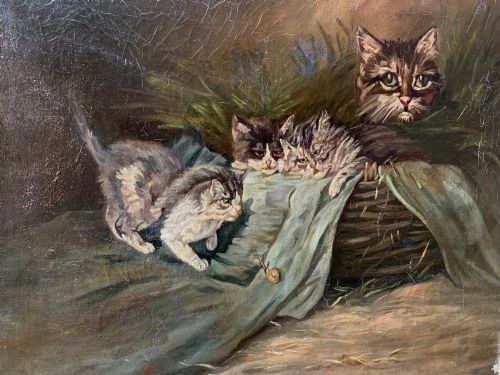
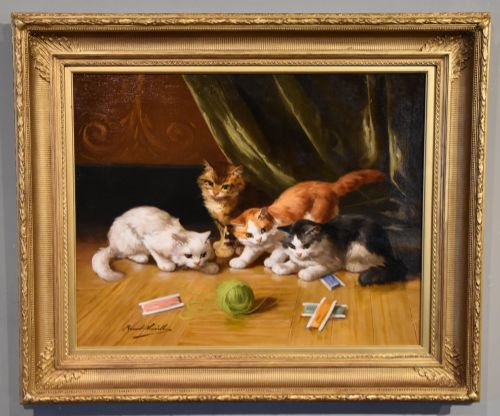
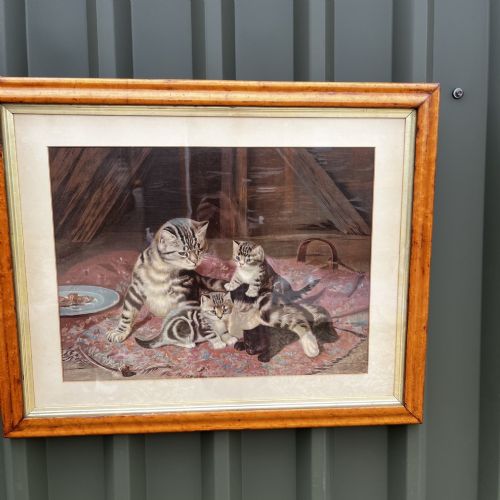
When you search for victorian cat artwork, you encounter everything from playful domestic kittens in domestic interiors to powerful big cats rendered by nineteenth-century French and British painters.
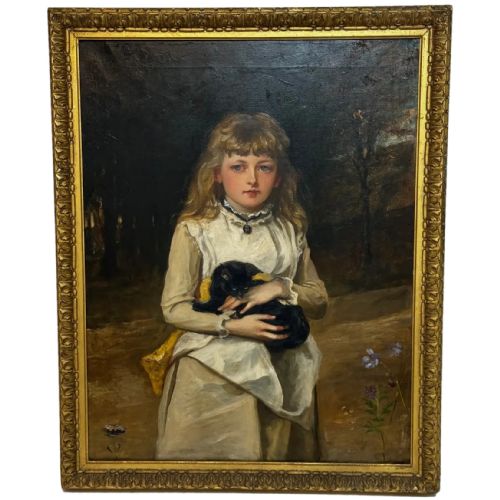
The pieces on this page span oil paintings on canvas and board, delicate paper studies, and chromolithographs, reflecting both household pets and subjects from the broader animalier tradition.
Makers and schools represented range from provincial English painters to notable animalier specialists working across the nineteenth and early twentieth centuries.
Materials and techniques
Many works utilise oil paint applied to canvas, wood panels, or paper supports, capturing fine textures of fur and light in interior scenes.
Framing often involves traditional materials such as gilt wood and gesso, preserving the original presentation of the period prints and paintings.
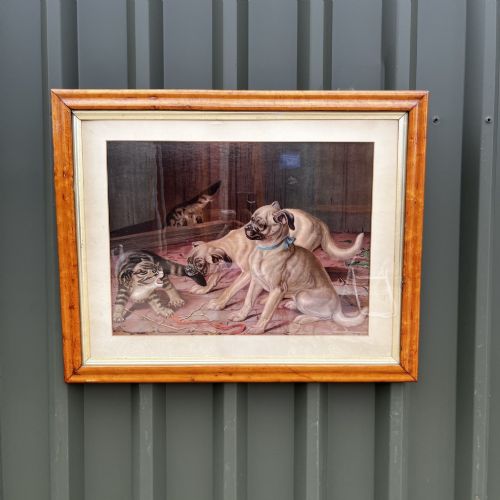
Pugs and cats occasionally share the same frame, proving that historical domestic disputes are nothing new.
Assessing quality and execution
The strength of a piece lies in the anatomical accuracy of the animals and the liveliness of the brushwork, particularly in depictions of kitten fur and feline movement.
The preservation of the original paper or canvas, alongside the integrity of period frames like giltwood, heavily influences the overall character of the artwork.
Vittorio Reggianini·Alfred Arthur Brunel de Neuville·Horatio Henry Couldrey·Louis Wain·Charles Burton Barber·Agnes Augusta Talboys·Herbert Dicksee·Henry Weigall·Cuthbert Edmund Swan·John Macallan Swan·Geza Vastagh·Bessie Bamber
The Victorian Cat Artwork Glossary
- Chromolithograph
- A colour lithographic printing technique used to produce multi-coloured reproductions of original paintings. This method allowed popular Victorian imagery to reach a wider audience.
- Animalier
- A nineteenth-century artistic style and genre focused on the realistic depiction of animals. Practitioners applied rigorous observation to both domestic pets and wild felines.
- Genre painting
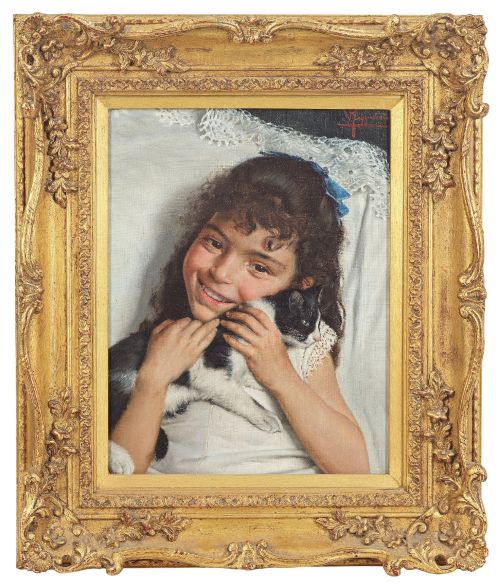
- Artwork depicting scenes from everyday life, often featuring domestic settings with children and cats. These compositions told familiar stories to Victorian viewers.
- Gesso
- A plaster-like material applied to wood before gilding or painting. It forms the decorative moulded surfaces found on period frames.
Victorian Cat Artwork: Frequently Asked Questions
What subjects appear in victorian cat artwork?
The selections encompass playful domestic kittens, family groups, and portraits of prize pets alongside larger wild felines like lions, leopards, and tigresses.
Artists captured these animals in varied contexts, from cosy indoor tea parties to dramatic natural settings.
Are these pieces original paintings or prints?
The category includes both original hand-painted works in oil on canvas, board, and paper, as well as period prints and chromolithographs.
Each listing specifies whether the work is a unique painted composition or a period reproduction from the nineteenth or early twentieth century.
How should I care for these works?
Protect works on paper and canvas from direct sunlight to prevent fading of pigments and degradation of the support material.
Keep them in stable environmental conditions away from excessive moisture to preserve both the artwork and any original giltwood framing.
Which artistic styles are common here?
Common approaches include Victorian Animalier, nineteenth-century realism, and charming genre scenes depicting children and pets together.
French and British regional schools both contributed significantly to this tradition of animal portraiture.