



Polychrome Paper Art
Polychrome paper art brings together bright pigments and delicate surfaces, offering collectors a rich variety of hand-painted and printed works from past centuries.
Polychrome Paper Art
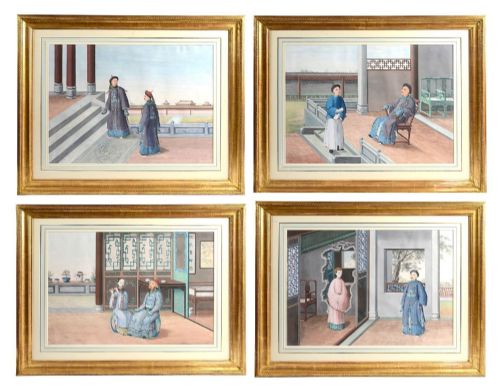
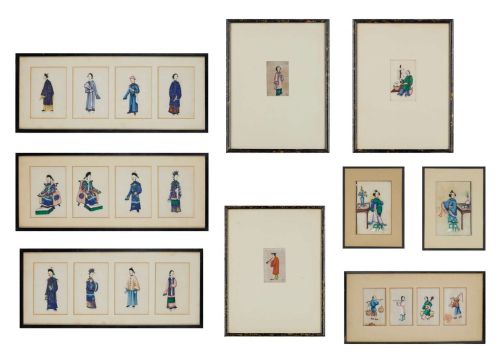
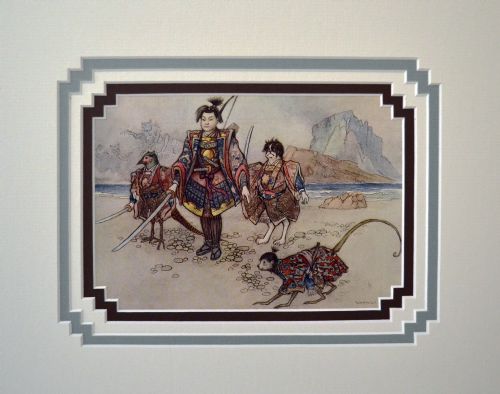
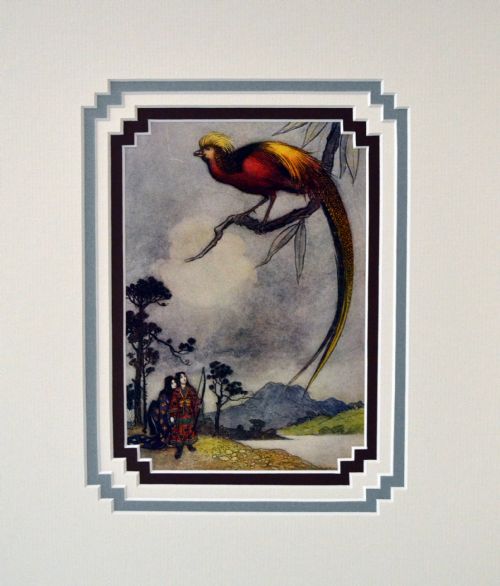
When you search for polychrome paper art, you encounter a diverse array of works created on paper, card, and pith paper across several historical periods. The pieces appearing here most frequently include 19th-century Chinese export paintings, alongside British ornithological engravings, Japanese fairy tale illustrations, and Indian miniatures.
The selection spans from Georgian and Regency examples up to early 20th-century prints and paintings. You will find sets of pith paper paintings depicting figures and insects, alongside framed botanical engravings and individual illustrative works.
Chinese export art forms a substantial portion of the available range, often featuring vibrant gouache or watercolour applications on delicate pith paper. Alongside these Asian works sit European natural history prints and whimsical animal illustrations from the Edwardian era.
Materials and Technique
The construction of these pieces relies heavily on organic supports such as standard paper, card, and fragile pith paper derived from plant pith. Artisans applied watercolours and gouache to build up bright, opaque colour layers, while others utilised traditional engraving techniques.
Many works incorporate hand-colouring over printed lines, particularly in the ornithological engravings and early edition book illustrations. Original frames in wood and glass frequently protect these delicate paper surfaces from environmental damage.
Early twentieth-century cats painted by Louis Wain occasionally turn up to stare rather judgemental collectors out of the room.
Factors of Quality
Quality in these works rests largely on the vibrancy of the remaining pigments and the precision of the brushwork or engraving line. Pieces that retain their original framing and bright, unfaded colours command greater interest among collectors.
The condition of the fragile paper support is paramount, as pith paper and older sheets are prone to splitting and staining over time. Complete sets, such as groups of botanical prints or pith paintings surviving together, demonstrate higher desirability than scattered individual examples.
The Polychrome Paper Art Glossary
- Pith paper
- A delicate material cut from the pith of the Tetrapanax papyrifer plant, commonly used for Chinese export paintings in the nineteenth century. Its spongy texture absorbs watercolours and gouache to produce a velvet-like depth of colour.
- Gouache
- An opaque water-based paint composed of pigment, water, and a binding agent such as gum arabic, often containing added white pigment to create solid, flat colour areas.
- Chinese export art
- Items manufactured in China specifically for Western markets during the Qing dynasty and earlier periods, encompassing both paintings on pith and various decorative objects.
- Ornithological engraving
- A printed image focused on birds, typically produced from a metal plate and frequently enhanced with hand-applied watercolours to record natural history specimens accurately.
Polychrome Paper Art: Frequently Asked Questions
What is pith paper?
Pith paper is a delicate material sliced from the pith of a specific Asian shrub rather than pressed from wood pulp or rags. It possesses a unique, slightly velvety texture that absorbs water-based paints to produce exceptionally vibrant colour saturation.
Because of its fragile nature, works executed on pith require careful framing behind glass to prevent physical degradation and moisture damage over time.
How should I display works on paper?
Works on paper require protection from direct sunlight and high humidity to prevent fading of watercolours and gouache pigments. Professional framing with acid-free mounts and UV-filtering glass helps preserve the delicate paper supports.
Positioning these pieces away from direct heat sources and fluctuating temperatures ensures the organic materials remain stable for years to come.
What defines Chinese export art?
Chinese export art encompasses items created in China during periods like the Qing dynasty expressly for export to European and American buyers. These works often blend traditional Eastern subjects with Western aesthetic preferences.
Common examples include pith paper paintings of local figures, insects, and botanical studies designed to satisfy Western curiosity about Eastern life.
How do I care for antique prints?
Antique prints on paper or card demand stable environmental conditions to avoid foxing, staining, and brittleness. Keeping them in low-light rooms behind protective glass shields the delicate inks and hand-applied watercolours.
Avoid hanging such pieces in damp environments like kitchens or unheated spaces where moisture can quickly ruin the paper support.