


Victorian Carver Armchairs
Victorian carver armchairs provide sturdy seating with historical character, combining timber frames with traditional craftsmanship for everyday use.
Victorian Carver Armchairs
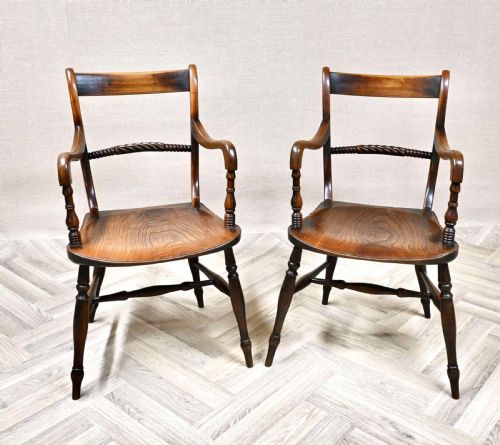
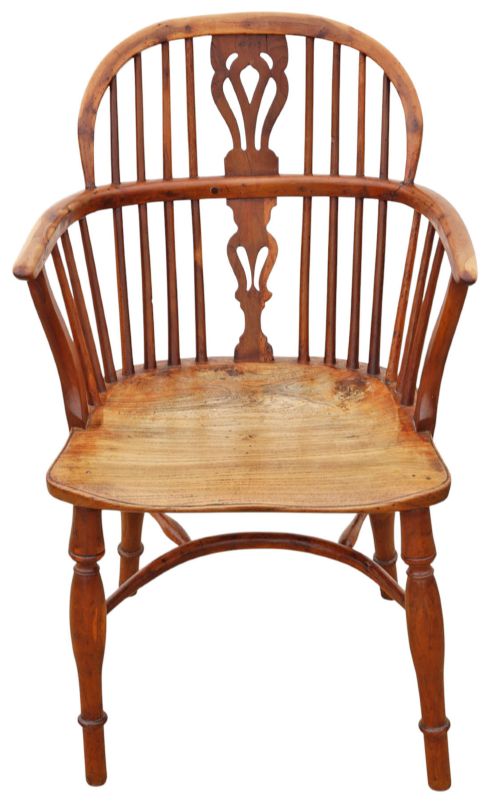
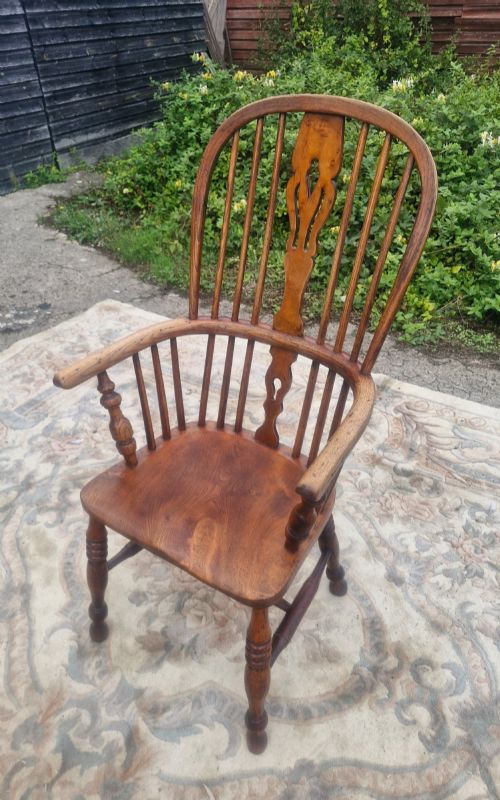
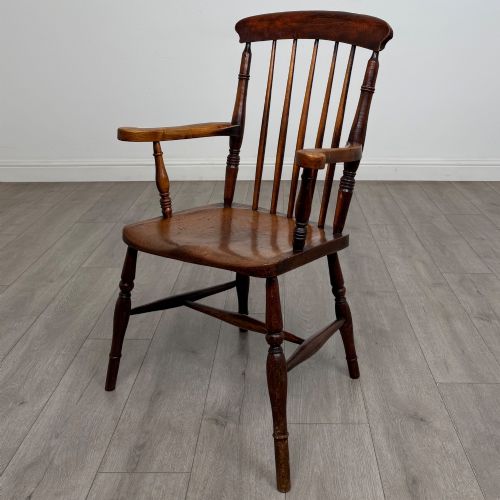
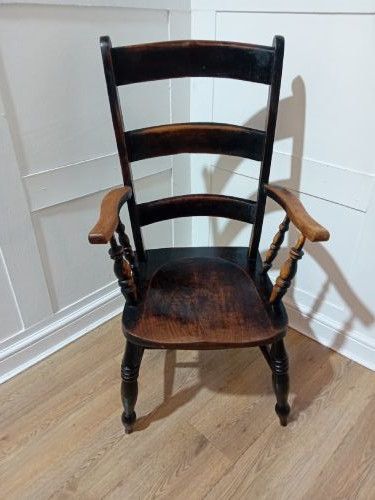
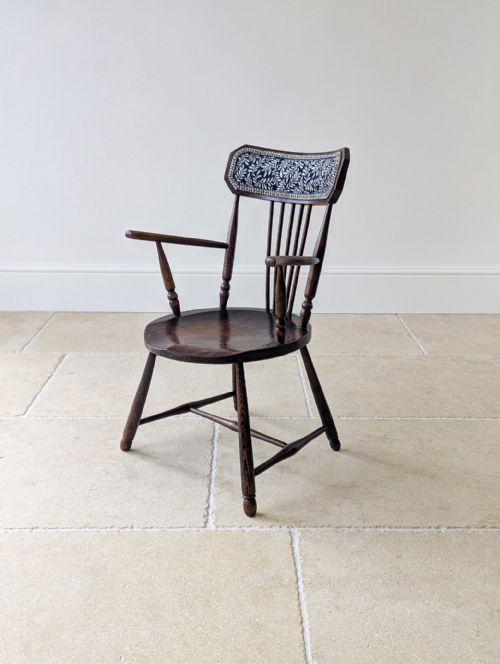
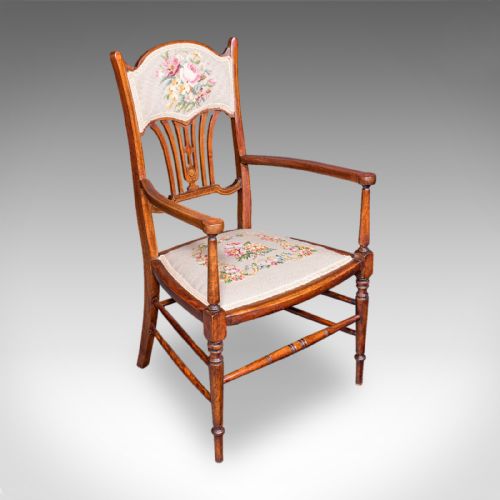
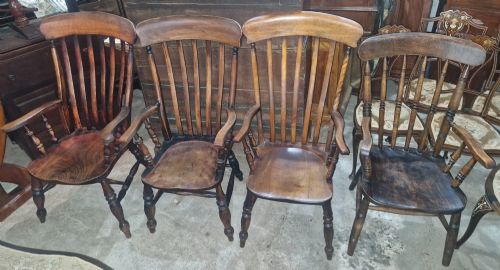
The selection ranges from simple stick-back kitchen chairs in elm and ash to elaborate walnut and mahogany dining carvers. Regional English traditions appear strongly across the Windsor examples, spanning Thames Valley, Lincolnshire, and Nottinghamshire variations.
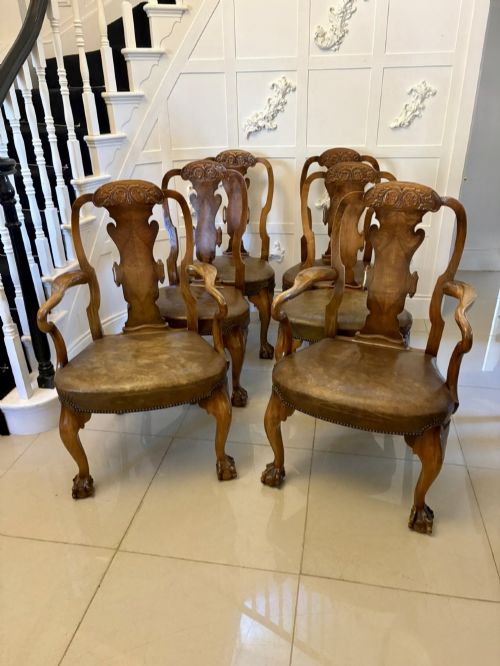
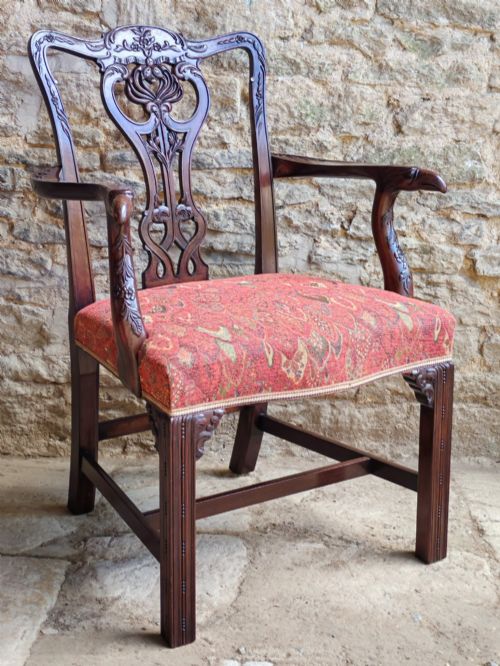
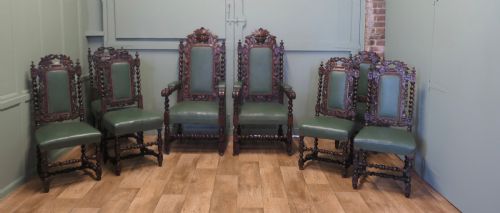
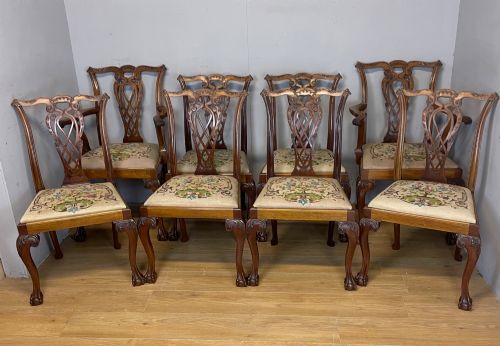
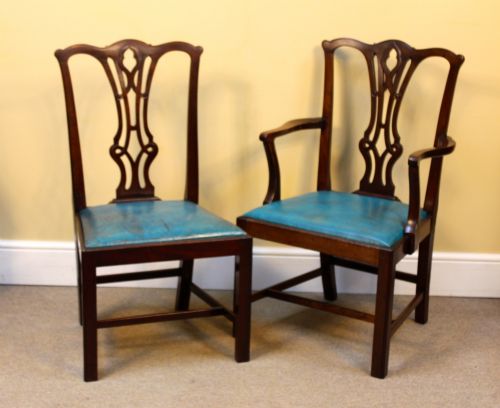
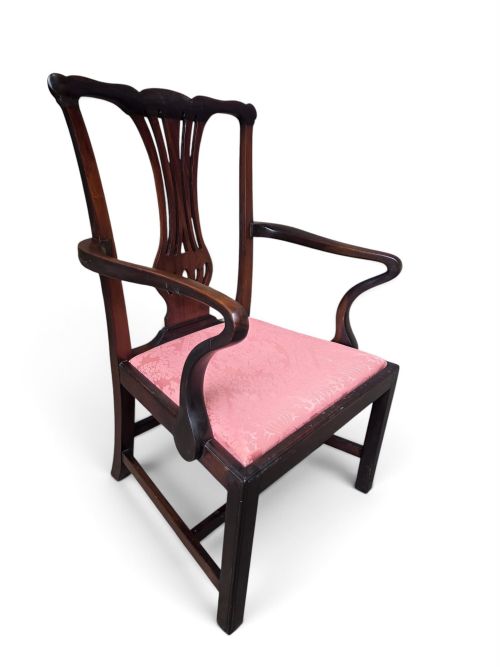
Formal styles take inspiration from earlier periods, yielding Chippendale revival, Hepplewhite style, and Gothic Jacobean interpretations. These seats functioned as head-of-table chairs or comfortable parlour seating.
Quality variations
The degree of hand-carving and timber selection distinguishes standard utility seating from high-end cabinet work. Figured walnut and dense mahogany demand greater skill in shaping compared to domestic beech or elm.
Proportional harmony and original surface patination separate superior examples from heavily altered pieces. Retaining original leather, finishes, and timber integrity preserves historical authenticity.
Elm seats frequently display deep indentations from generations of sitters finding their favourite spot by the hearth.
Howard and Sons·Philip Clissett·Warings
The Victorian Carver Armchairs Glossary
- Carver chair
- An armchair designed to match a set of dining chairs, typically featuring open arms to accommodate wide clothing. These sat at the head and foot of a dining table.
- Windsor chair
- A wooden chair constructed with a solid elm seat into which the legs and stick-back spindles are wedged. Regional variations include bar-back and high-back forms.
- Stick back
- A chair construction method where turned wooden spindles form the backrest. This technique provides lightweight strength.
- Elbow-chair
- An alternative historical term for an armchair, often referencing seats used in morning rooms or studies. They offer lower arm heights than formal dining carvers.
- Revival style
- Nineteenth-century designs that reinterpret eighteenth-century aesthetic movements such as Chippendale and Hepplewhite. Makers applied contemporary Victorian proportions to historical motifs.
Victorian Carver Armchairs: Frequently Asked Questions
What defines a carver armchair?
A carver armchair is a seating piece with integrated armrests designed to match a larger set of dining chairs. Historically placed at the head of a dining table, it offered additional support compared to standard side chairs.
These chairs appear in both formal mahogany dining sets and vernacular country kitchen variations. The open arm construction accommodated the voluminous fashion of nineteenth-century garments.
How do I identify a Windsor carver?
Windsor carvers feature a distinct construction where spindles and legs fit directly into a thick wooden seat base, usually shaped from elm. They often incorporate bentwood bows and stick backs rather than upholstered panels.
Regional English types display subtle variations in comb backs, bar backs, and leg turnings. Local timber choices like ash and beech further distinguish country workshop output.
Where were these chairs used?
Victorian carver armchairs served multiple domestic functions across different rooms of the house. Formal mahogany and walnut versions belonged in dining rooms and morning rooms, accompanying sets of matching chairs.
Simpler ash, elm, and beech models functioned as practical seating in farmhouse kitchens and cottages. Their sturdy build suited heavy daily use in domestic workspaces.
How do revival styles differ?
Revival styles draw aesthetic inspiration from earlier design periods like the eighteenth century or Gothic era. Victorian cabinet makers reinterpreted these historical motifs using contemporary nineteenth-century woodworking standards.
Chippendale revival and Jacobean styles exhibit carved walnut or oak frames with updated proportions. These pieces allowed Victorian households to display historical taste while enjoying modern comfort.