
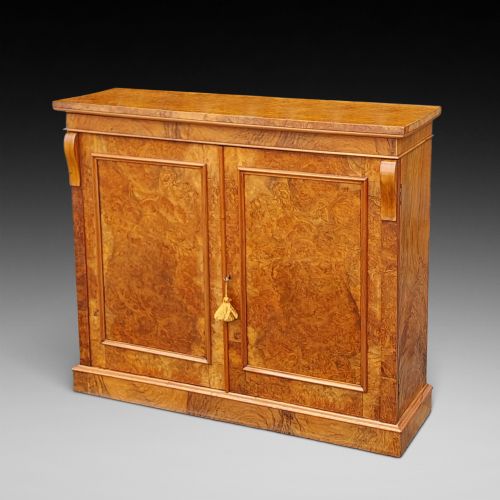
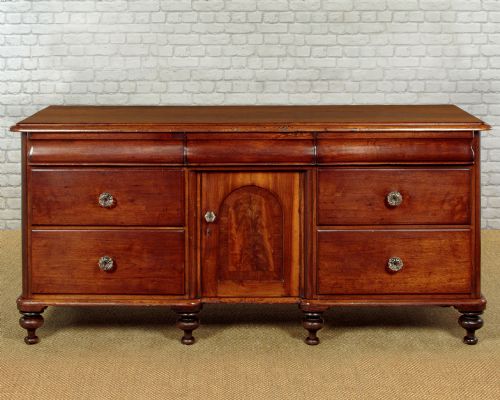
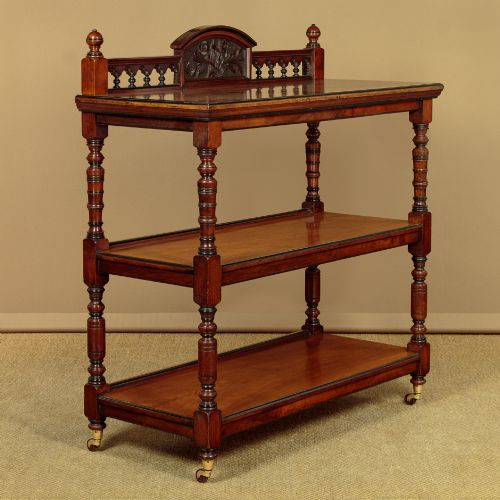

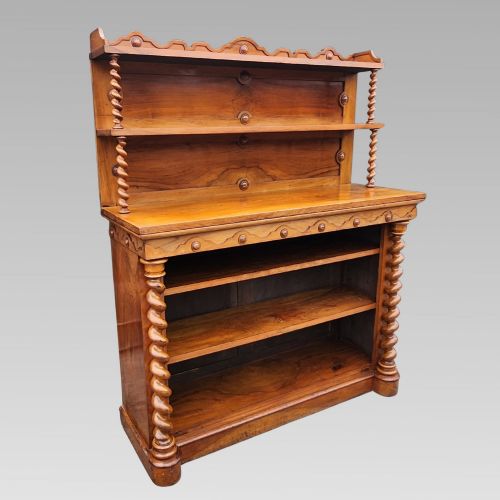
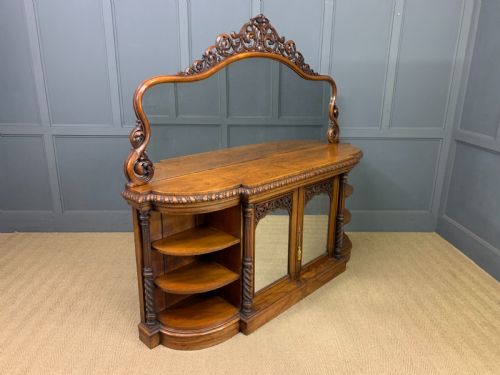


Victorian Carved Walnut Sideboard
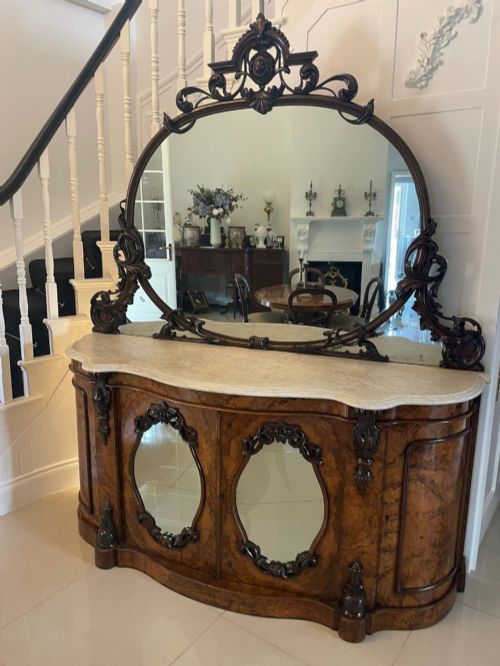
A victorian carved walnut sideboard brings rich grain and solid presence to a room, offering both display space and deep storage.
Victorian Carved Walnut Sideboard
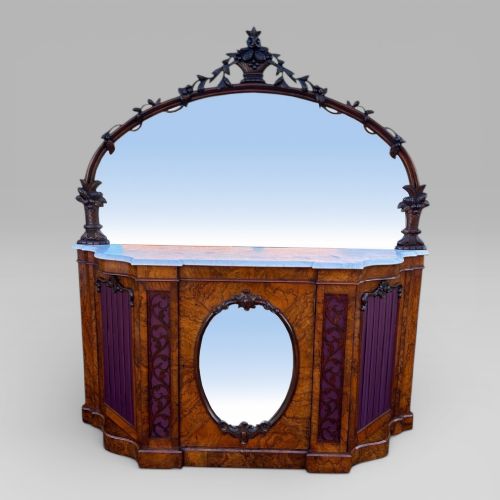
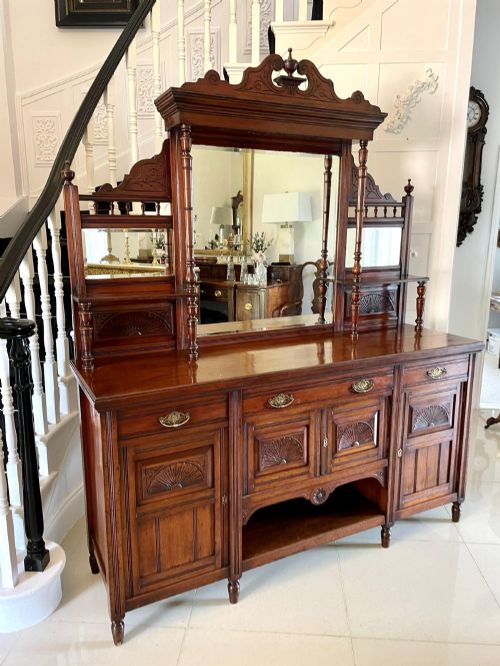
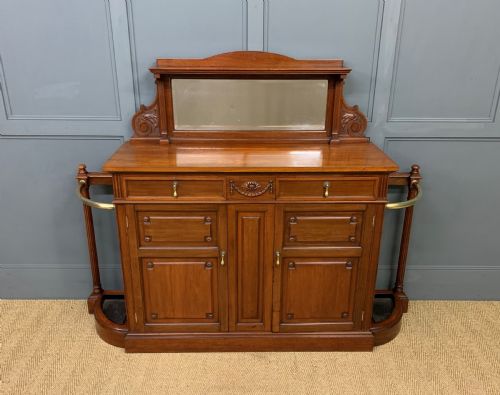
A victorian carved walnut sideboard is a substantial dining or drawing room piece that often incorporates a mirror back, a marble top, or glazed doors for display. These items span various forms such as credenzas, chiffoniers, buffets, and cabinets produced across the nineteenth century.
The version most commonly encountered on this page is the mirror-backed credenza or sideboard in figured burr walnut, frequently dated to the middle decades of the eighteen-fifties and eighteen-eighties. Such pieces combine display surfaces with enclosed cupboards, resting on plinths or carved feet.
Origins range from standard domestic cabinet works to high-end exhibition quality makers, reflecting both modest dining rooms and grand Victorian reception spaces.
Materials and Technique
Many examples integrate inset marble tops, shaped glass panels, and brass or ormolu mounts, complemented by internal oak shelving and velvet-lined interiors. Marquetry inlay in contrasting woods and mother of pearl also appears on select decorative surfaces.
Listings feature walnut, burr walnut, oak, marble, glass, brass, mirror, and ormolu across Victorian, Gothic Revival, Aesthetic Movement, and Rococo Revival styles.
Quality and Execution
The standard of carving sets the baseline for quality, moving from repetitive machine work to deep, crisp, hand-chiselled foliage and scrollwork. The choice of timber veneer dictates visual impact, with tightly figured burr walnut commanding greater presence than plain grain.
Structural complexity marks the upper tier, seen in serpentine breakfronts, matched veneer symmetry, and heavy cast bronze or ormolu mounts rather than plain brass hardware.
Shoolbred & Co.
The Victorian Carved Walnut Sideboard Glossary
- Burr walnut
- A figured timber veneer obtained from the gnarled growths of walnut trees, prized for its swirling grain patterns. It creates a highly decorative surface on cabinet doors and drawer fronts.
- Credenza
- A low cabinet or sideboard, frequently featuring glass-fronted side cupboards and a central door. These pieces often include mirror backs and marble tops in Victorian iterations.
- Marquetry
- The art of applying pieces of veneer to a structure to form decorative patterns and pictures. Craftsmen utilise various coloured woods to create floral or geometric designs.
- Ormolu
- Gilded bronze mounts and ornamentation applied to furniture. It adds metallic contrast to the dark walnut surfaces.
- Serpentine front
- A furniture front curved with a convex centre flanked by concave ends. This shape requires advanced cabinet-making skill to execute in solid timber and veneer.
Victorian Carved Walnut Sideboard: Frequently Asked Questions
What is a credenza?
A credenza is a low form of cabinet or sideboard that sits against a wall, frequently featuring enclosed cupboards and display space. In nineteenth-century examples, these pieces often incorporate mirrored backs and marble surfaces.
They served as serving stations in dining rooms or display furniture in drawing rooms for porcelain and ornaments.
How do I identify burr walnut?
Burr walnut is distinguished by its swirling, knotty grain patterns rather than straight parallel growth lines. This veneer comes from excrescences on the tree where the grain has grown in a distorted fashion.
Cabinet-makers matched these veneers symmetrically across large surfaces like cupboard doors to create striking visual patterns.
Were these pieces used in dining rooms?
Sideboards and buffets were primarily designed for dining rooms to store plate, glassware, and linens, while serving food from the top surface. Marble-topped versions provided durable, wipe-clean surfaces for carving meat or placing hot dishes.
Drawing room variants, such as credenzas and chiffoniers, focused more on display and decorative storage.