

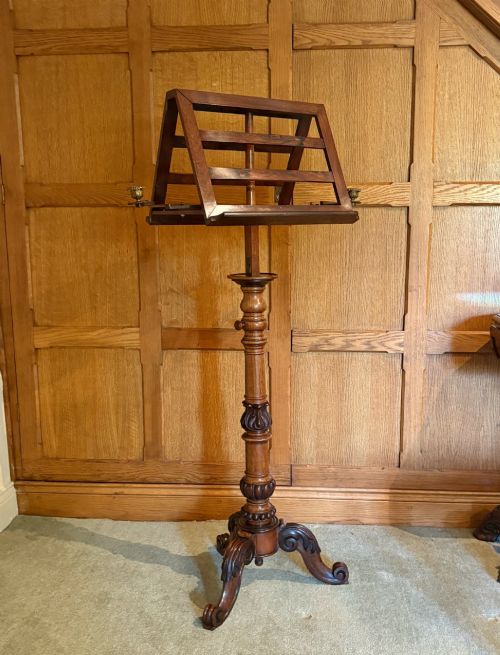
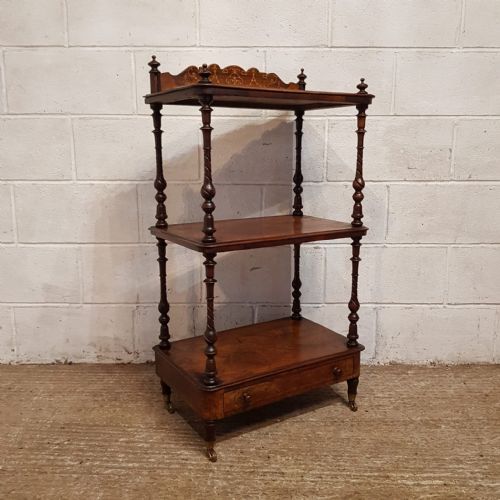
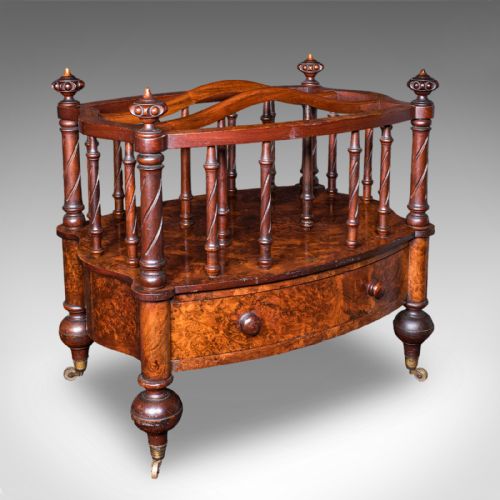
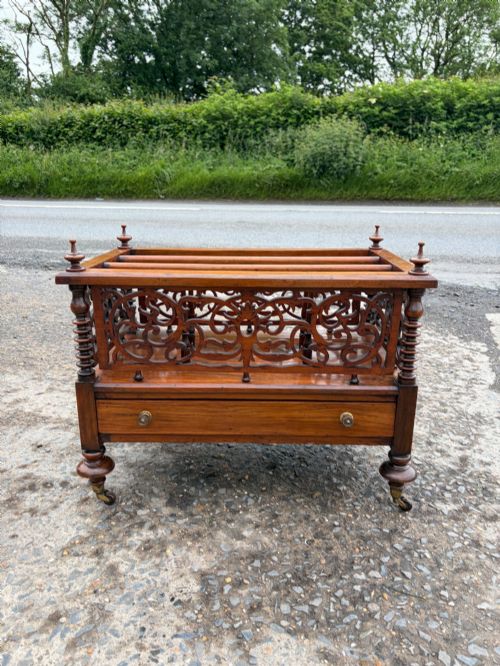
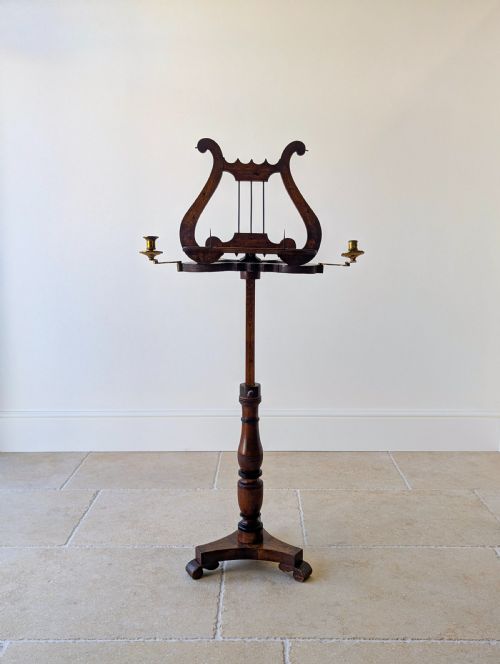


Victorian Carved Music Stand
A victorian carved music stand offers practical elegance for holding scores, books and folios in a period interior.
Victorian Carved Music Stand
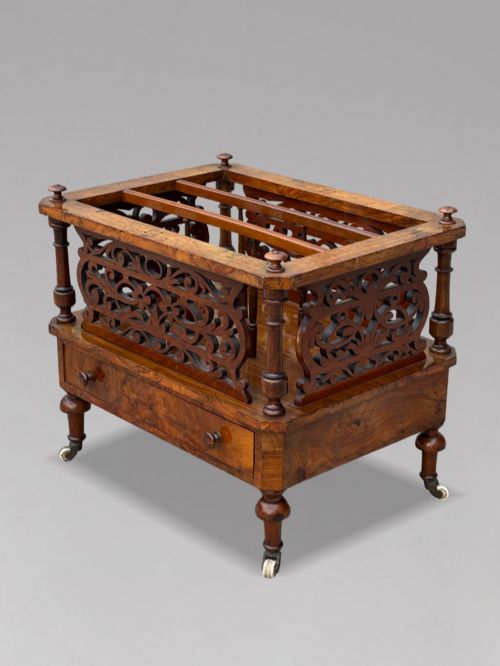
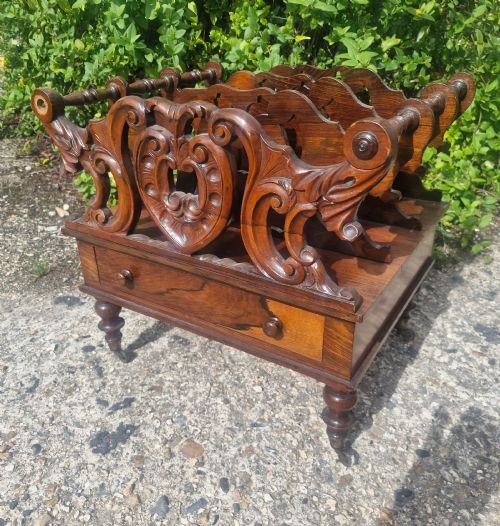
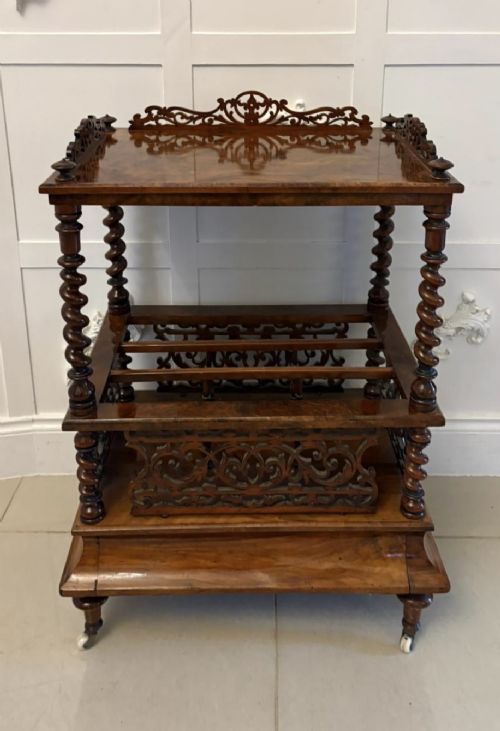
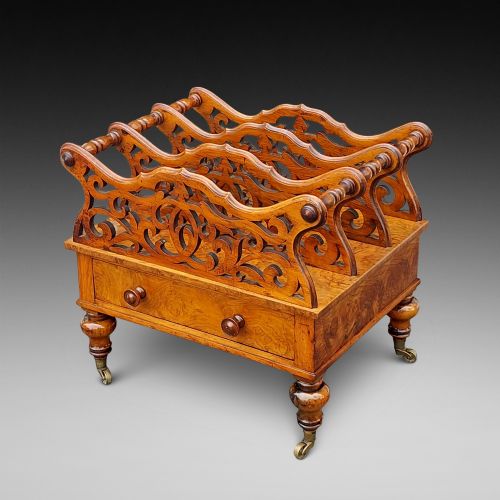
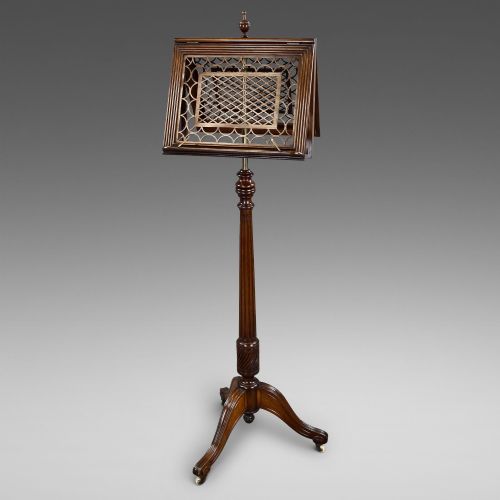
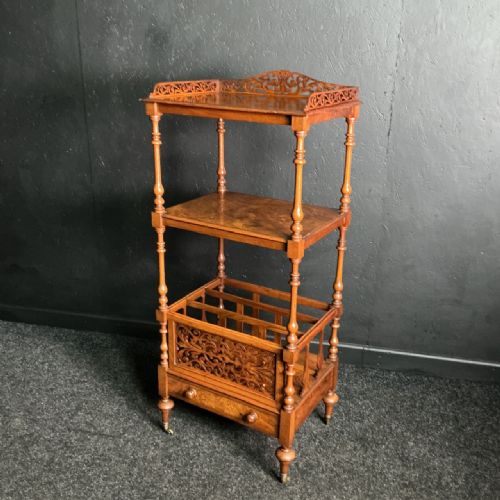
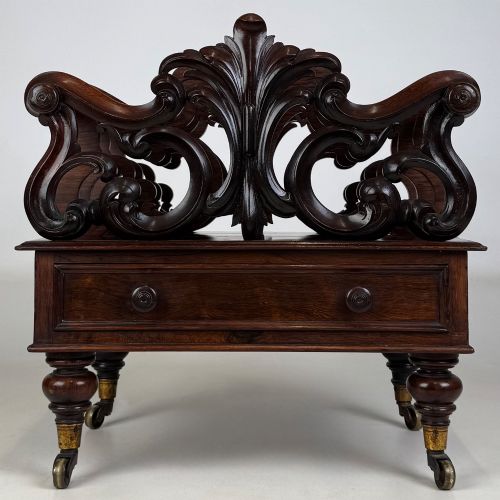
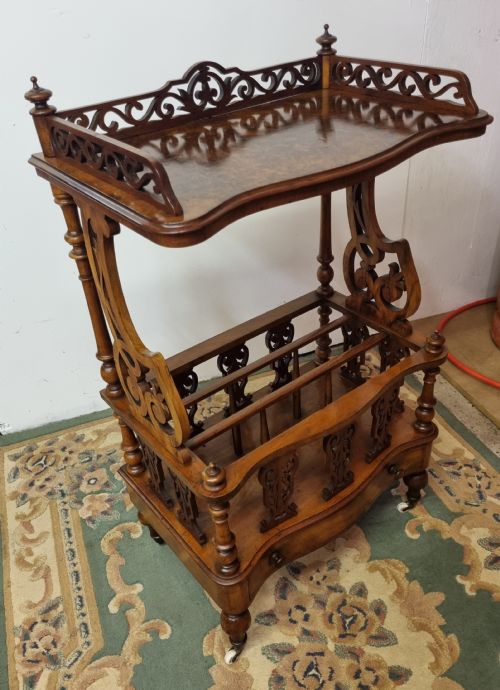
A victorian carved music stand encompasses specialised pieces designed to hold sheet music and folios, frequently appearing alongside related items such as canterburys, music cabinets and whatnots. The selection spans standard music stands, duet stands and lecterns, alongside multi-functional pieces incorporating magazine racks and occasional tables.
Most examples originate from the nineteenth century, drawing heavily on Victorian, Regency and William IV design traditions. Buyers encountering this category will find walnut, burr walnut and rosewood forms dominating the current selection, occasionally accompanied by mahogany, oak and gonçalo alves.
Beyond standard domestic stands, the evidence includes specialised variations such as Black Forest portfolio stands, Fall Front music cabinets and Gothic Revival pieces. These diverse forms reflect the nineteenth-century domestic focus on amateur musicianship and organised parlours.
Materials and construction
Cabinetmakers utilised rich timber veneers such as burr walnut, rosewood and figured walnut to create visually striking surfaces on stands and canterburys. Solid mahogany and oak appear frequently in structural elements, lecterns and duet stands, while exotic woods like gonçalo alves provide unusual variation.
Construction techniques combined traditional joinery with decorative carving, inlay and fretwork to elevate utilitarian music furniture into statement drawing-room pieces. Brass details, ceramic components and glass elements occasionally feature as fittings, hinges and support mechanisms within the documented pieces.
A solitary Black Forest portfolio stand proves that nineteenth-century musicians occasionally required furniture carved with woodland wildlife.
Assessing quality
Quality in a victorian carved music stand depends on the depth and crispness of the timber carving, the figuration of the burr walnut or rosewood veneer, and the structural integrity of the adjusting mechanisms. Superior pieces exhibit refined proportions, careful timber selection, and harmonious integration of inlay or fretwork.
Gabriel Viardot·Gillows·Henry Ogden & Son
The Victorian Carved Music Stand Glossary
- Canterbury
- A low stand with slatted divisions used originally for holding sheet music or newspapers. These often incorporate lower drawers and occasional table tops.
- Whatnot
- An open set of multi-tiered shelves used for displaying ornaments and small objects. They frequently share design characteristics with music stands and canterburys.
- Duet stand
- A music stand designed to hold scores for two performers simultaneously. They usually feature wide, adjustable reading ledges.
- Lyre-form
- A decorative motif shaped like an ancient Greek lyre, commonly utilised in the central support columns of music stands and card tables.
- Japonisme
- A late nineteenth-century artistic style reflecting the influence of Japanese art on European design. It appears in aesthetic movement furniture from this era.
Victorian Carved Music Stand: Frequently Asked Questions
What is a music stand?
A music stand is a dedicated piece of furniture designed to hold sheet music at a comfortable reading height for musicians. Nineteenth-century examples often feature adjustable columns and carved reading desks.
These pieces served a central role in Victorian parlours where home music-making formed a standard domestic pastime. They ranged from simple tripod stands to elaborate freestanding cabinets.
How do canterburys relate to music stands?
Canterburys function as low storage racks specifically built for sheet music, folios and periodicals. They share the same domestic sphere as music stands and frequently appear alongside them in period listings.
Many canterburys incorporate compartmentalised upper sections above small drawers or turned legs, combining storage with display surfaces.
Where were music stands used?
Music stands were placed in drawing rooms, music rooms and parlours of nineteenth-century homes. They provided accessible storage and support for evening entertainment and practice.
Their design allowed them to function as decorative furniture when not actively in use, fitting neatly beside pianos or seating areas.