


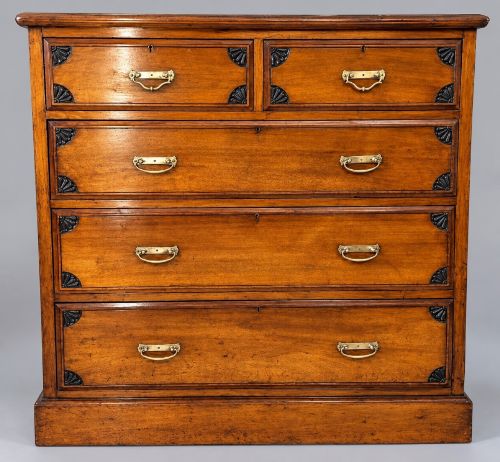
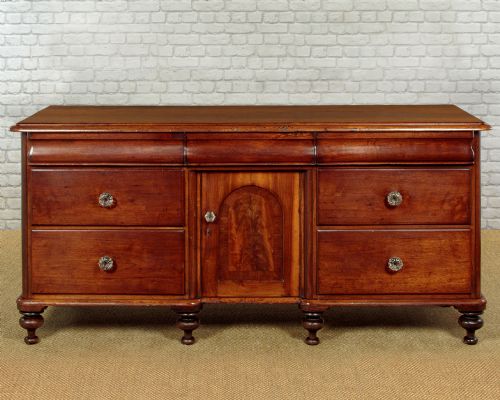
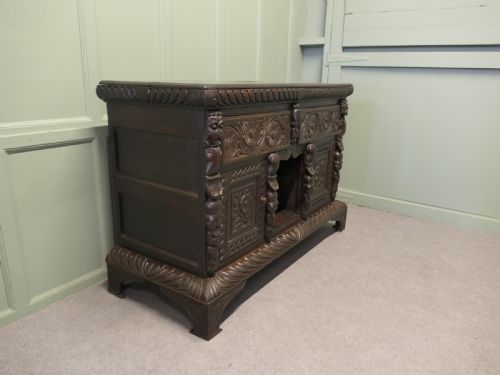
Victorian Carved Dresser Base
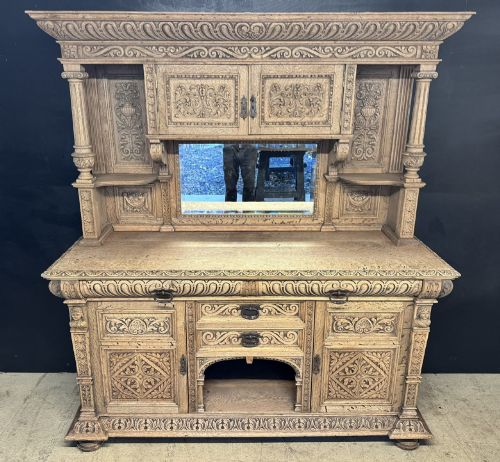
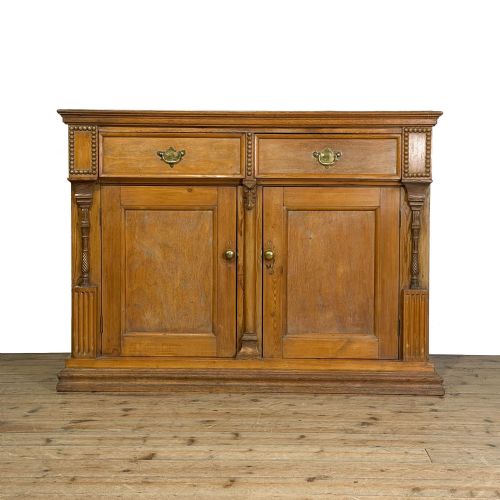
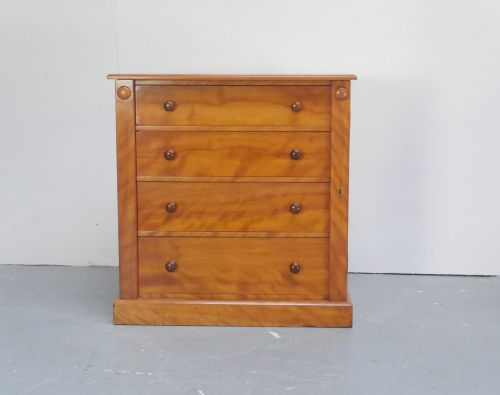
A victorian carved dresser base brings robust timber and detailed relief work into a dining space or hallway.
Victorian Carved Dresser Base
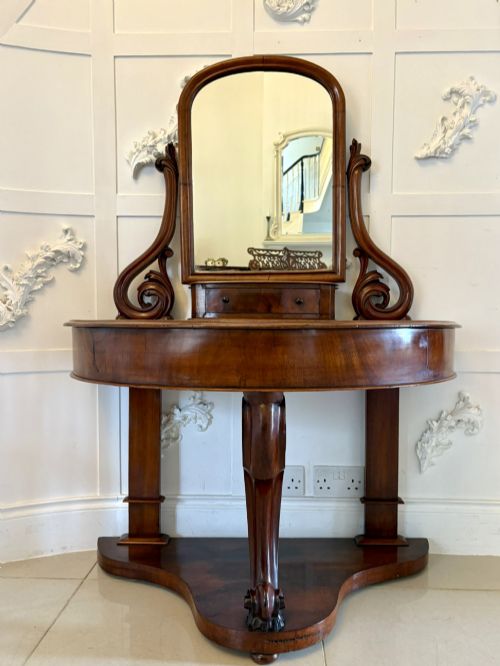
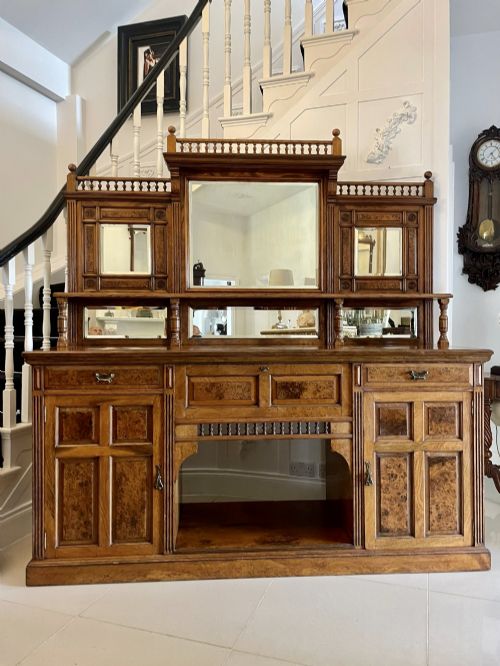
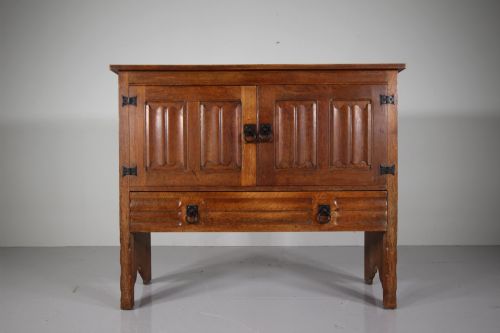
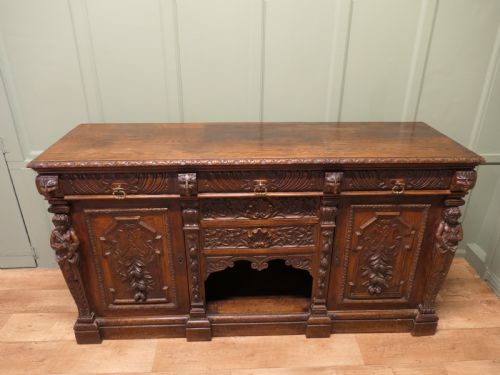
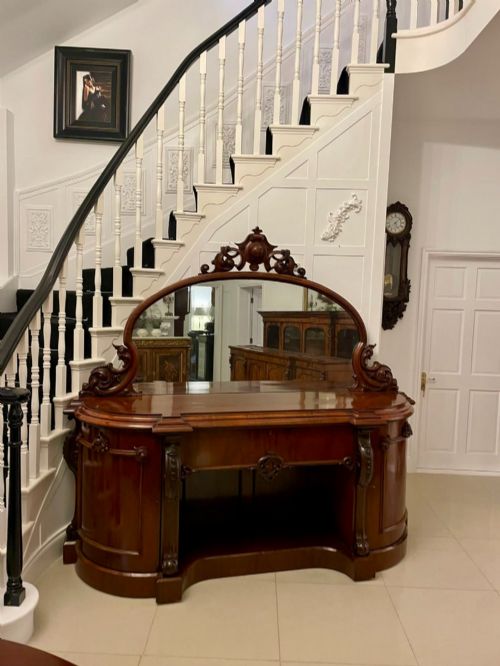
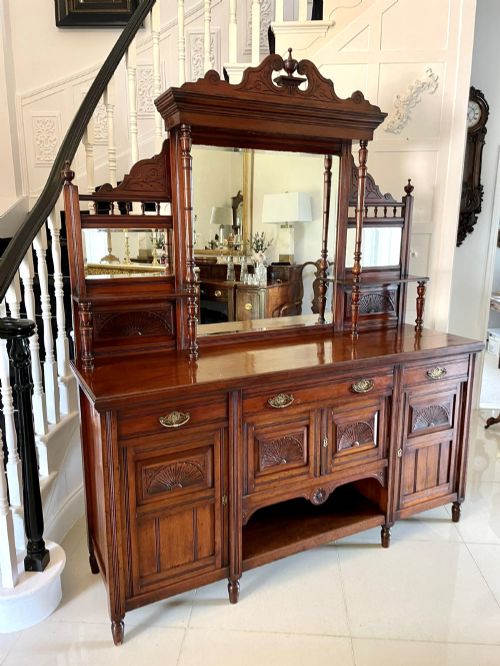
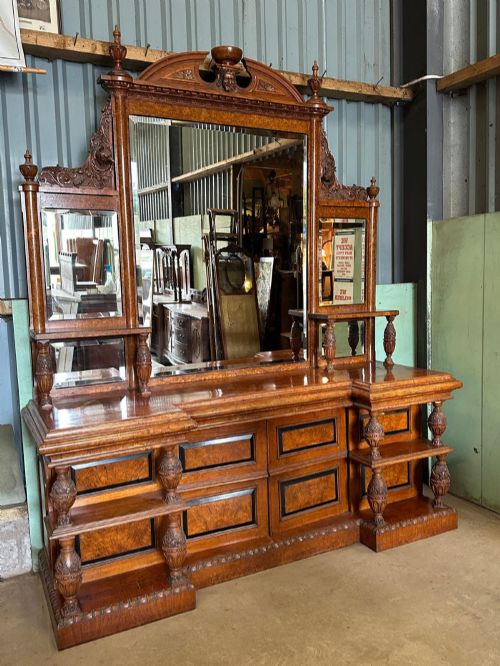
A victorian carved dresser base spans heavy oak, mahogany, walnut, and pollard oak designs originating across the nineteenth century and into the early twentieth century. Buyers encounter these sturdy low storage units outfitted with cupboards, drawers, and occasionally mirror backs or plate racks.
The selection ranges from vernacular kitchen pieces to formal dining room sideboards displaying Gothic Revival, Jacobean Revival, or Arts and Crafts styling. These heavy furniture items serve as substantial anchor pieces for traditional and eclectic interiors alike.
Materials and construction
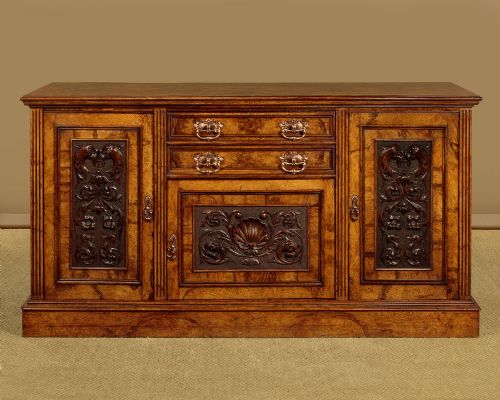
Cabinetmakers built these low storage units primarily using solid oak, mahogany, and walnut, often accentuating drawer fronts and doors with figured pollard oak veneers. Brass hardware and iron fittings provide functional contrast to the dark timber surfaces.
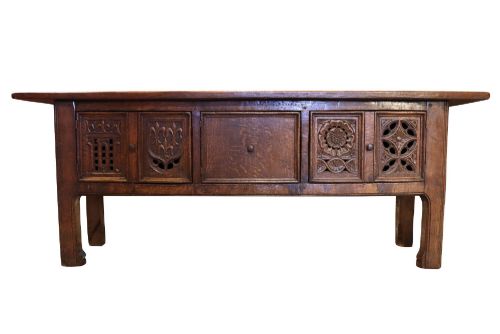
Joinery techniques involve sturdy frame and panel construction designed to support heavy carved relief details such as Green Man masks, floral motifs, and geometric strapwork. Surfaces receive traditional wax or polish finishes that highlight the natural grain of the wood.
Victorian Carved Dresser Base Retail Price Guide 2026
Typical asking prices for victorian carved dresser base among the pieces listed under this phrase on Sellingantiques today, from the lower quarter to the upper quarter. They describe what is for sale here now, not the wider market.
Listings span oak, mahogany, walnut, and pine, reflecting diverse nineteenth-century domestic interiors.
Assessing craftsmanship
The standard of carving dictates much of the visual merit, shifting from stiff, mechanical stamping to deep, crisp hand-chisel work with distinct undercut relief. Timber selection also defines the tier, with highly figured pollard oak and rich burr walnut commanding greater attention than plain pine or secondary woods.
Structural integrity relies on the retention of original hardware, stable timber movement without excessive warping, and well-fitted drawers that slide smoothly within their housings. Heavy mirror-back additions and superstructure elements require secure original fixings to the base cabinet.
T Simpson and Son
The Victorian Carved Dresser Base Glossary
- Dresser base
- A low cabinet or sideboard featuring drawers and cupboards, historically used in kitchens or dining rooms for serving food and storing utensils.
- Green Man
- A sculptural architectural ornament depicting a human face disgorged from foliage, frequently carved into nineteenth-century oak furniture.
- Pollard oak
- Timber taken from trees that were pollarded, yielding a densely knotted and highly decorative grain pattern prized for cabinet veneers.
- Gothic Revival
- A nineteenth-century architectural and decorative style drawing inspiration from medieval forms, pointed arches, and tracery.
- Court cupboard
- A heavy enclosed wooden sideboard or buffet featuring recessed upper sections or tiered display plate racks.
Victorian Carved Dresser Base: Frequently Asked Questions
Where did people use dresser bases?
These low cabinets traditionally stood in large country kitchens or dining rooms to hold tableware, linens, and serving dishes.
Today, homeowners repurpose them as media consoles, hallway storage units, or dining room servers.
How do I spot Gothic Revival pieces?
Gothic Revival items feature architectural motifs such as pointed arches, quatrefoils, heavy linenfold panelling, and exaggerated strapwork hinges.
These details give the timber a solemn, medieval appearance distinct from simpler vernacular furniture.
Are mirror backs original?
Many nineteenth-century sideboards incorporate tall wooden superstructures fitted with bevelled mirrors and small display shelves.
These mirror backs were built as integral parts of the primary design rather than later additions.
What is pollard oak?
Pollard oak comes from trees pruned specifically to encourage dense branching, which creates swirling, mottled grain patterns.
Cabinetmakers sliced this timber into veneers to decorate the primary doors and drawer fronts of high-status sideboards.