

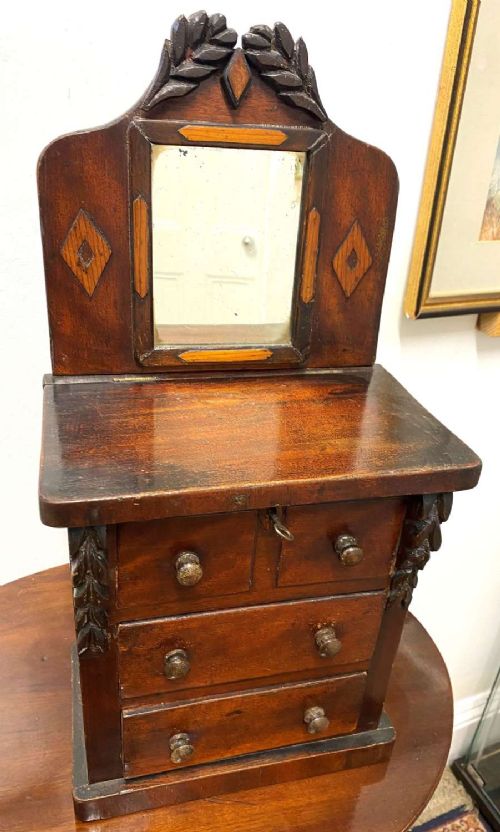
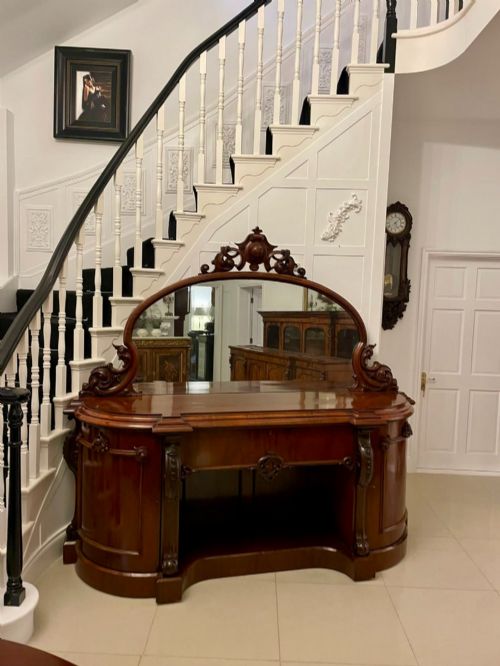
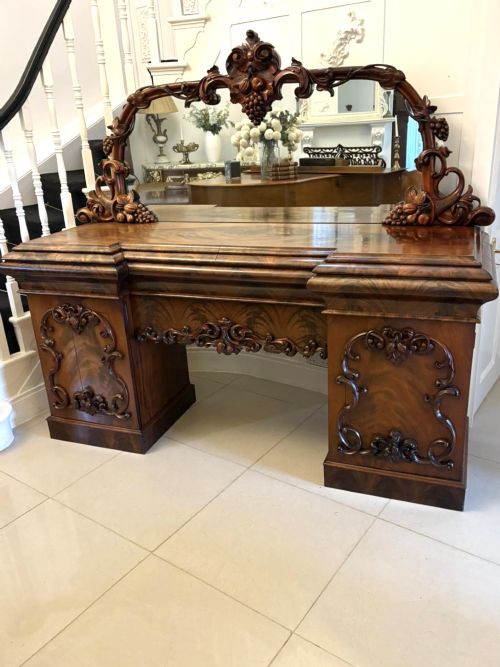
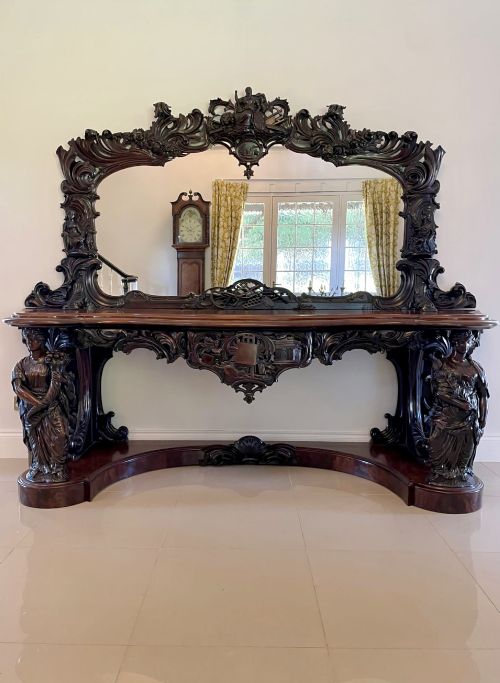
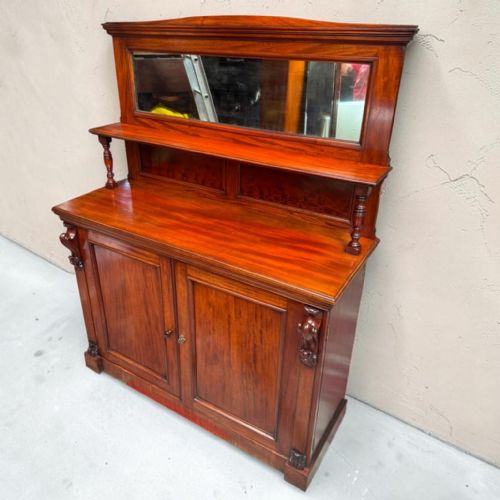
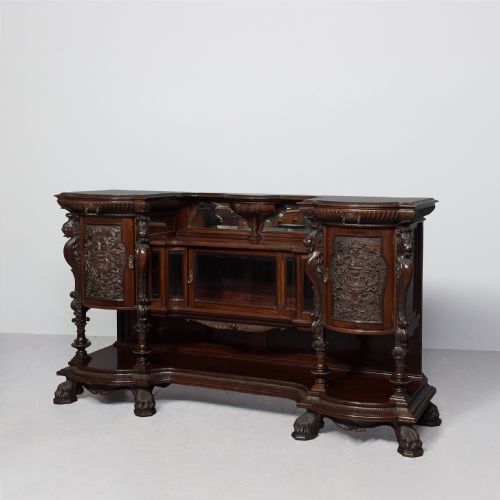
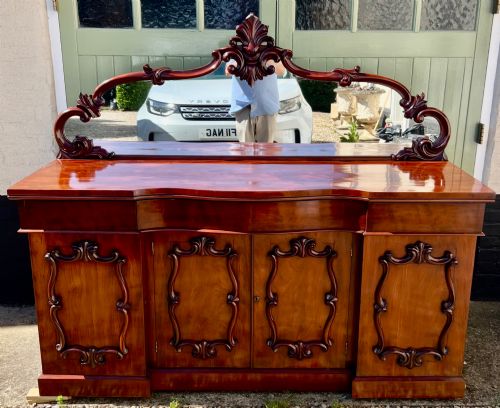
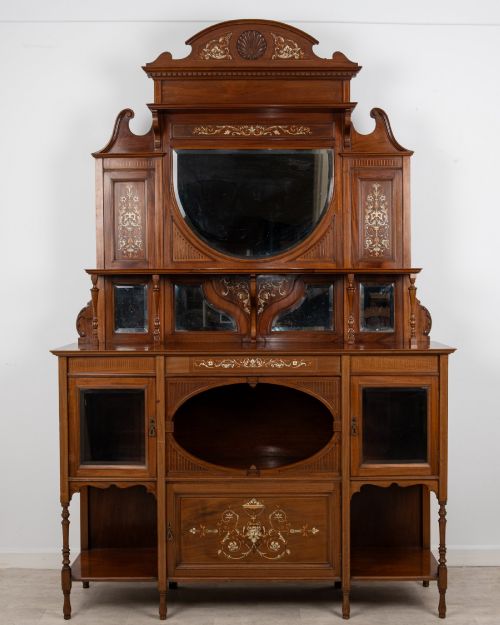


Victorian Mahogany Mirror Sideboard
A victorian mahogany mirror sideboard anchors a dining room with rich timber and reflected light.
Victorian Mahogany Mirror Sideboard
A victorian mahogany mirror sideboard combines a substantial timber base with an upright wooden frame holding a glass mirror plate. These pieces serve as functional serving stations and decorative centerpieces originating primarily from the nineteenth century.
Most examples encountered here date from the Victorian era, spanning decades from eighteen fifty to nineteen ten. Formats range from pedestal sideboards and breakfront chiffoniers to console tables and drop centre cabinets.
Makers utilise dense tropical hardwoods enhanced by mirrored superstructures to brighten dark nineteenth century interiors. The lower section typically provides cupboard storage and drawers whilst the upper portion displays reflective glass.
Assessing quality
The distinction between standard production items and exhibition pieces lies in timber selection and carving depth. Superior examples display symmetrical flame mahogany veneers and crisp, deep relief carving rather than shallow machine stamping.
Proportion and structural integrity define the better specimens, where large mirror frames remain stable without warping the base cabinetry. Finer workshops employ intricate satinwood inlay and robust brass mounts that endure heavy daily use.
Victorian Mahogany Mirror Sideboard Retail Price Guide 2026
Typical asking prices for victorian mahogany mirror sideboard among the pieces listed under this phrase on Sellingantiques today, from the lower quarter to the upper quarter. They describe what is for sale here now, not the wider market.
Listings feature items built from solid mahogany, flame mahogany veneer, and glass, spanning the Victorian period up to nineteen ten.
Shapland & Petter·Gillows·Maple & Co
The Victorian Mahogany Mirror Sideboard Glossary
- Mirror back
- An upright wooden frame containing a glass plate attached to the rear of a sideboard. This component reflects room light and displays decorative objects placed on the ledge below.
- Breakfront
- A piece of furniture where the central section projects forward from the flanking cupboards or pedestals. This architectural arrangement creates depth and shadow across the front elevation.
- Chiffonier
- A low cabinet equipped with shelves or drawers, frequently surmounted by a mirrored superstructure. Victorian households utilised these versatile pieces in dining rooms and drawing rooms.
- Pedestal sideboard
- A heavy dining room base unit featuring two substantial cupboards supporting a long top surface. These large forms provide extensive storage for table linen and dining silver.
Victorian Mahogany Mirror Sideboard: Frequently Asked Questions
What is a mirror sideboard?
A mirror sideboard is a large nineteenth century dining room cabinet featuring enclosed cupboards below and an attached upright mirror above.
Craftsmen built these pieces to store tableware while the reflective glass brightened formal Victorian dining spaces.
How do I date a Victorian sideboard?
Dating relies on stylistic clues, construction methods, and timber choice across the nineteenth century timeline.
Earlier pieces from eighteen fifty often display heavy classical carving, whilst later examples incorporate satinwood inlay or Arts and Crafts details.
Where should I place a mirror sideboard?
These imposing cabinets suit spacious dining rooms, grand hallways, or large living areas with high ceilings.
The substantial scale and reflective glass require a solid wall capable of supporting both visual weight and physical dimensions.
How do I care for mahogany furniture?
Maintain mahogany timber by avoiding direct sunlight and sudden temperature changes that cause wood to dry and crack.
Dust regularly with a soft dry cloth and apply occasional natural wax to nourish the antique polish.