



Victorian Canine Artwork
Victorian canine artwork captures the character and prestige of dogs in oils, etchings, and watercolours from the nineteenth century.
Victorian Canine Artwork
When you search for Victorian canine artwork, you encounter painted and printed depictions of dogs ranging from spaniels and terriers to working gun dogs and hounds. These pieces reflect the deep nineteenth-century fascination with animal subjects, portraying pets, champions, and hunting dogs in detailed settings.
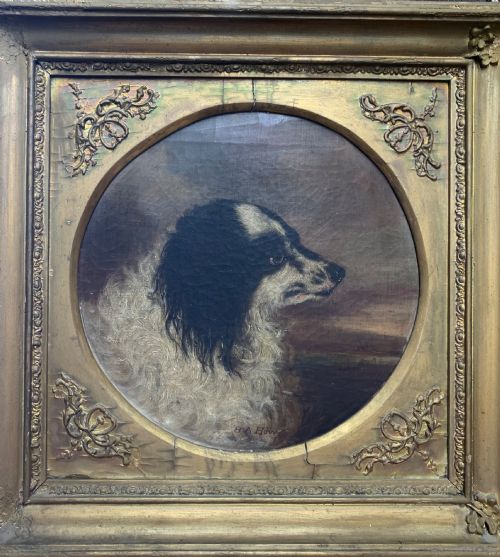
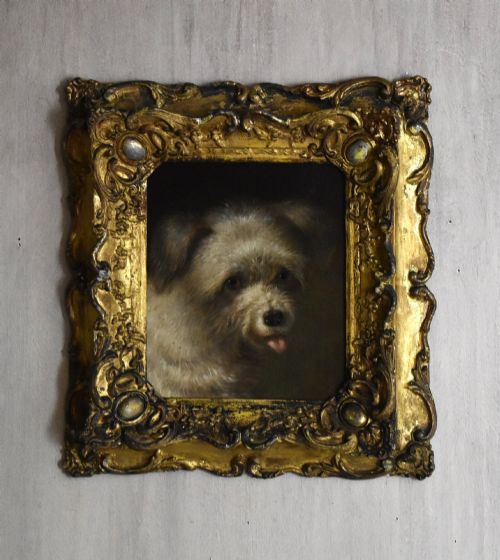
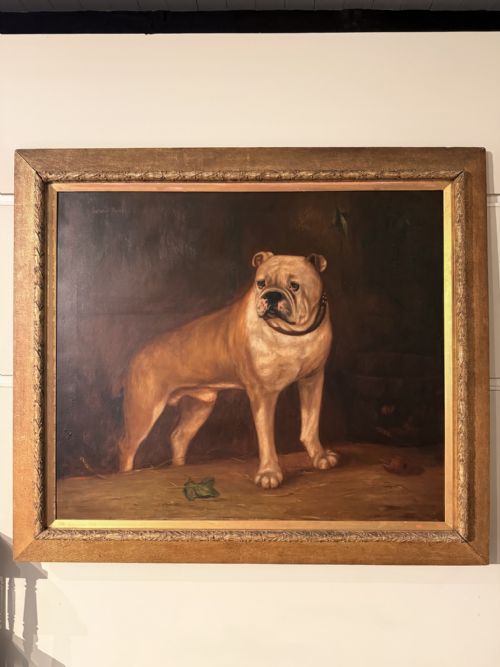
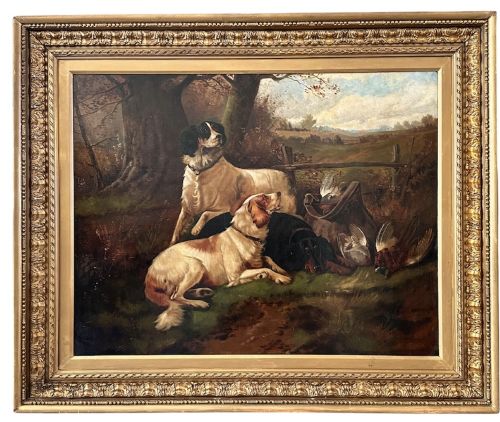
The version you are most likely to meet on this page is an oil painting on canvas or panel, frequently framed in giltwood. Many of these works depict individual portraits of beloved pets or lively scenes of sporting dogs in landscapes.
Beyond paintings, the selection includes original etchings and framed prints that capture the textures of animal coats through fine lines. These graphic works brought popular dog subjects into domestic interiors alongside larger oils.
Materials and Techniques
Artists relied primarily on oil paint applied to canvas or wood panels, building up rich layers to render the glossy sheen and varied textures of animal coats. Canvas provided a flexible support for larger works, whilst panels offered a stable surface for detailed portraiture.
Graphic works utilised copper plates for etchings and drypoints, where ink was pressed into incised lines to create crisp impressions on paper. These printed editions were often framed beneath glass in gilded wood mouldings.
Gold leaf and giltwood featured heavily in the manufacture of frames, adding weight and reflective brilliance to complement the painted subjects within.
Victorian dogs evidently sat very still, or artists were exceptionally fast with a paintbrush.
Judgements of Quality
The distinction between ordinary and superior works rests on the artist's command of anatomy and expression, capturing the distinct personality and bone structure of a breed rather than a generic silhouette. Master painters rendered the glint in an eye and the individual direction of guard hairs with precise brushwork.
Provenance and attribution elevate certain pieces, particularly those signed by established animal painters of the period or associated with notable sporting circles. Works that survive in their original gilt frames retain a greater degree of historical integrity.
Valentine T Garland·Herbert Dicksee·B A Howe·Martin Theodore Ward·John Sargent Noble·John Emms·Arthur Wardle·William Barraud·Sir Edwin Landseer·Colin Graeme Roe·John Trivett Nettleship·Jules Chardigny·Alfred Duke·George Earl·Philip Eustace Stretton·Dixon Clark
The Victorian Canine Artwork Glossary
- Etching
- A printmaking technique where lines are bitten into a metal plate with acid before ink is applied to paper. This method allows for fine tonal variations in depictions of animal hair.
- Drypoint
- A printmaking process where an artist scratches directly into a metal plate with a sharp needle, producing a velvety burr along the lines. Prints made this way show rich, dark strokes.
- Giltwood
- Wood that has been coated with a thin layer of gold leaf or gold paint. Frames made from this material were standard for nineteenth-century oil paintings.
- Canvas
- A heavy woven fabric stretched across a wooden frame to serve as a support for oil painting. It accommodates large compositions and textured brush application.
Victorian Canine Artwork: Frequently Asked Questions
What subjects appear most often in these canine works?
Paintings from this era frequently feature gun dogs, terriers, and spaniels depicted either as individual family pets or working in rural landscapes. Terriers are often shown guarding or ratting, whilst larger breeds like Newfoundlands and collies appear in dramatic or pastoral settings.
Sporting hounds also form a large category, reflecting the popularity of field sports and hunting packs during the nineteenth century.
How do you distinguish original etchings from later prints?
Original etchings display plate marks where the edge of the metal plate pressed into the paper during the printing process. They also show subtle variations in ink density within the fine lines.
Modern reproductions lack these physical indentations and reveal a dot pattern under magnification rather than continuous ink strokes.
Where were these artworks displayed in Victorian homes?
Canine art typically hung in drawing rooms, libraries, and hallways, often grouped alongside sporting trophies and family portraits. Owners placed high value on likenesses of their own working dogs or prize-winning stock.
Smaller etchings and drawings were suited to more intimate spaces like studies or morning rooms.
How should these pieces be cared for in modern interiors?
Works on canvas and paper require protection from direct sunlight and stable humidity to prevent paint cracking or paper degradation. Keeping them away from heat sources preserves both the pigments and the wooden frames.
Dusting should be done gently with a dry, soft cloth, avoiding any moisture or chemical cleaning agents on the painted surfaces.