



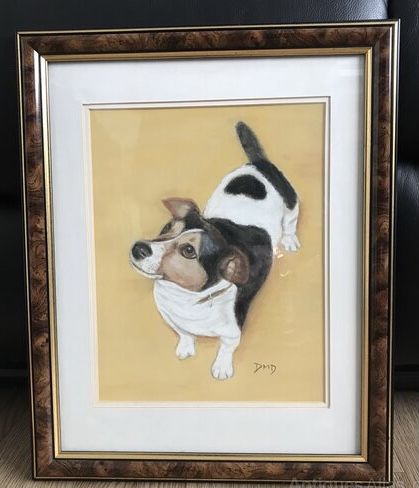
Framed Dog Wall Art
Framed dog wall art brings together centuries of portraiture and canine companionship, spanning detailed oil paintings and delicate etchings.
Framed Dog Wall Art
When searching for framed dog wall art, buyers encounter a wide variety of pieces ranging from oil paintings on canvas and board to framed prints, etchings, and needlework. The selection spans the 17th century through to the mid 20th century, capturing everything from individual portraiture of spaniels and terriers to broader sporting art and hunting scenes.
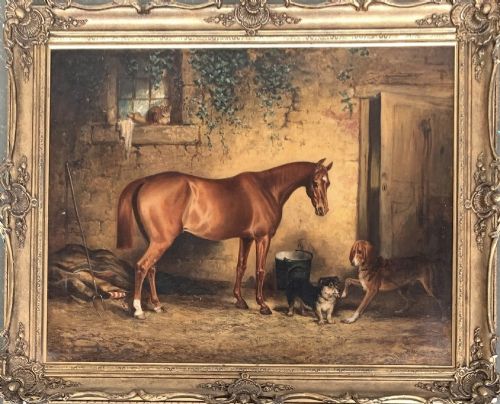
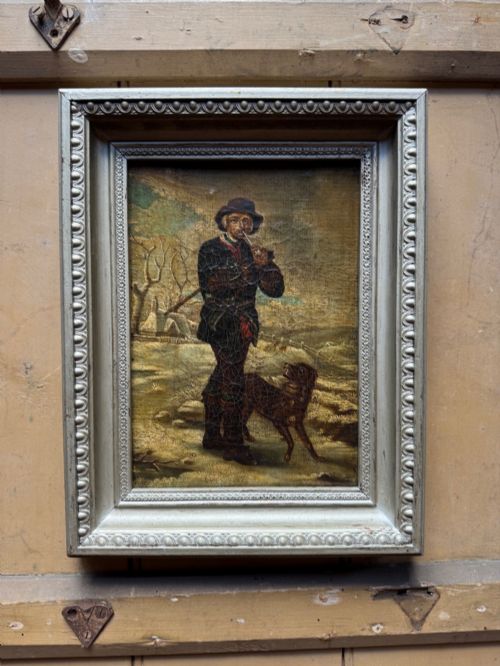
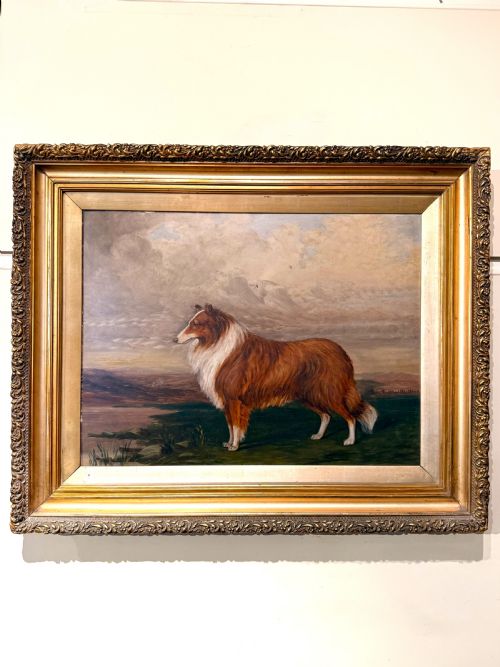
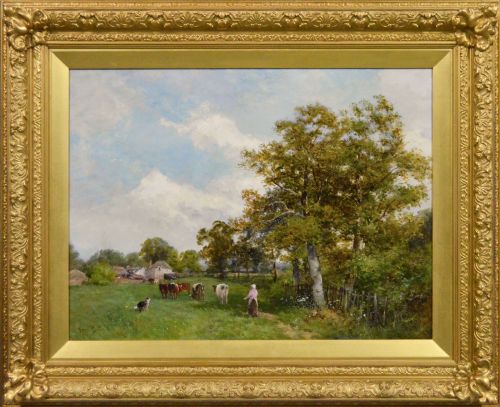
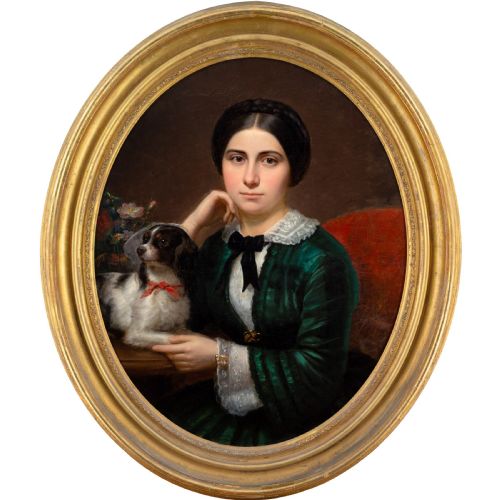
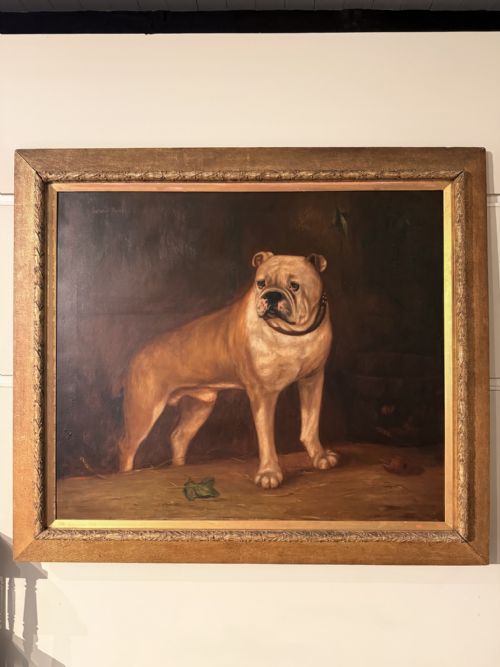
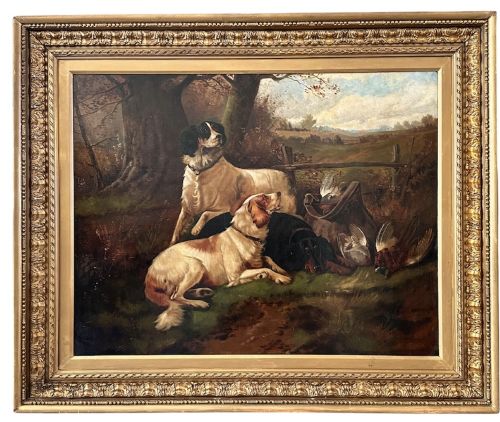
The most common forms on this page are 19th-century and Victorian oil paintings depicting canine companions alongside their owners or within landscape settings. These pieces showcase diverse styles such as British and Victorian sporting art, folk-art portraits, and continental school works.
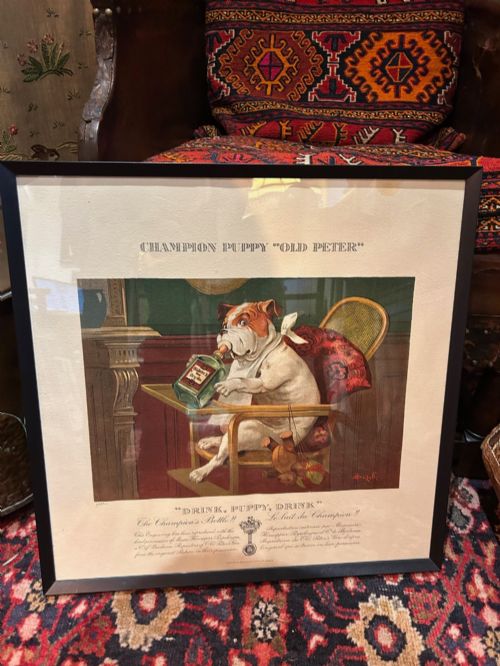
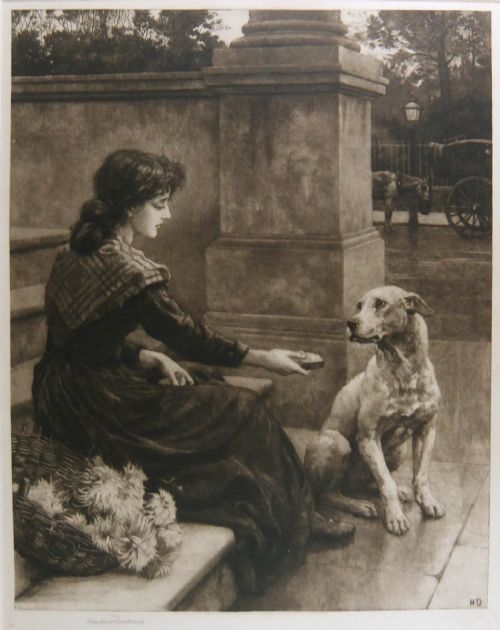
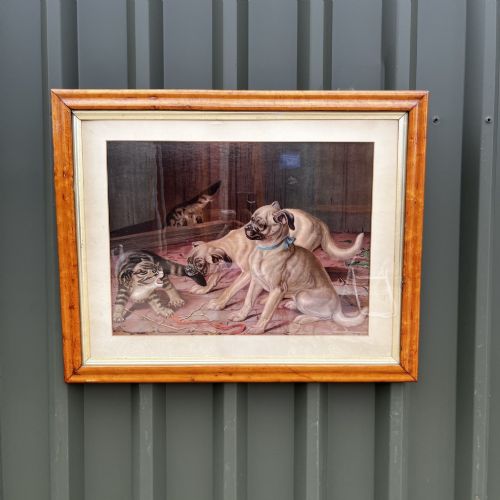
Beyond traditional oils, the inventory incorporates works on paper including original etchings, chromolithographs, and pastel watercolours under glass. Subjects extend from individual gun dogs and lapdogs to elaborate hunting hounds in winter snow.
Materials and execution
The physical construction of these pieces relies heavily on traditional media such as oil paint applied to canvas or wooden board, accompanied by works created with pastel, watercolour, and ink on paper. Etchings and prints utilise specialised pressing and printing techniques onto heavy paper stock.
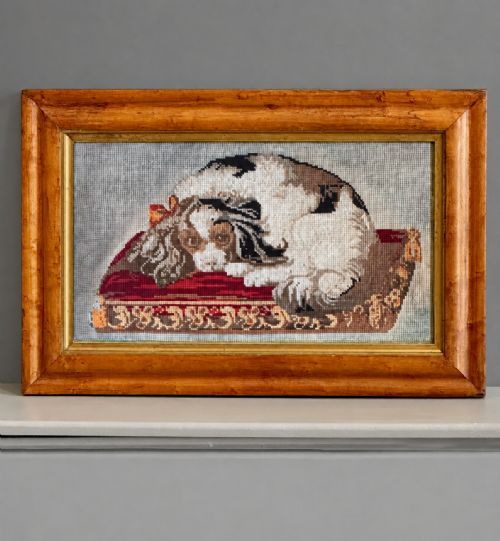
Frames form an integral part of the construction, employing materials like wood, glass, burr maple, and giltwood to protect and present the artwork. Needlework examples utilise fabric and thread, such as Berlin work wool on canvas, secured within original timber surrounds.
Dogs manage to steal food from baskets, herd cows, and patiently pose alongside children in centuries of artistic mischief.
Distinctions in quality
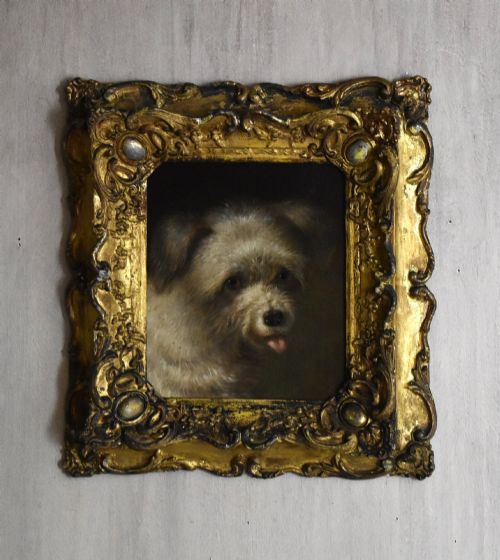
Quality in these pieces is dictated by the draughtsmanship and anatomical accuracy of the animal portrayal, distinguishing finely observed portraiture from more generic studio output. The handling of light, texture in the dog's coat, and expression elevate certain works above standard decorative pictures.
The originality and condition of the framing further influence the standing of a piece, particularly when surviving in period burr maple or gilt wood surrounds. Artist attribution and documented provenance also separate common decorative works from notable named school or master pieces.
Henry Barraud·Marcellin Auzolle·David Bates·Martin Theodore Ward·John Sargent Noble·Herbert Dicksee·C R Breytle·Horatio Henry Couldrey·Augustin Edouart·George E Sharpe·Edwin Landseer·Valentine Thomas Garland·Fannie Moody·Edwin Frederic Holt·John Alfred Wheeler·Reginald Robert Tomlinson
The Framed Dog Wall Art Glossary
- Chromolithograph
- A multicoloured planographic print produced through the application of lithographic limestone or metal plates. This technique allowed for the accurate reproduction of oil paintings in vibrant colour.
- Berlin Work
- A style of counted-thread embroidery popular during the 19th century, typically worked in wool on a canvas grid using charted designs. It frequently depicted domestic animals and sentimental scenes.
- Etching
- A printmaking process where lines are incised into a metal plate with acid before ink is applied and transferred to paper under pressure. Herbert Dicksee utilised this method for detailed canine portraits.
- Giltwood
- Timber that has been coated with a thin layer of gold leaf or gold paint. It appears frequently on decorative frames from the 19th century and earlier periods.
- Sporting Art
- Genre of artwork depicting rural sports, horses, and hounds. This tradition encompasses fox hunting scenes and portraits of prized gun dogs.
Framed Dog Wall Art: Frequently Asked Questions
What periods do these pieces date from?
The works span from the 17th century through the Victorian era up to the mid 20th century. Major representations come from the 19th century, alongside Edwardian and Regency examples.
Buyers find distinct shifts in technique and subject matter across these eras, moving from formal portraiture to looser impressionistic studies and advertising prints.
How were these dog artworks displayed originally?
Historically, dog portraits and sporting art hung in country houses, libraries, and parlours to celebrate prized pets, working animals, or hunting achievements. They served as both personal tributes and decorative statements of wealth and status.
Framing was chosen to complement domestic interiors, often utilising heavy giltwood, wood, or burr maple surrounds to draw focus to the subject.
How do I identify a Victorian dog painting?
Victorian pieces often display specific attention to texture in the animal's coat, sentimental narrative elements, or integration with human sitters. Signatures, inscriptions on the reverse, and stretcher construction provide further clues to the exact decade.
Stylistic markers include the influence of contemporary sporting artists and realist techniques common in mid-19th-century British and European schools.
Are all the artworks original period pieces?
The selection includes original oil paintings, period etchings, watercolours, and antique prints rather than modern reproductions. Many retain their original frames, glass, and backing materials from the time of creation.
Each listing records the specific medium, such as oil on canvas or original etching, to clarify the nature of the physical object.