



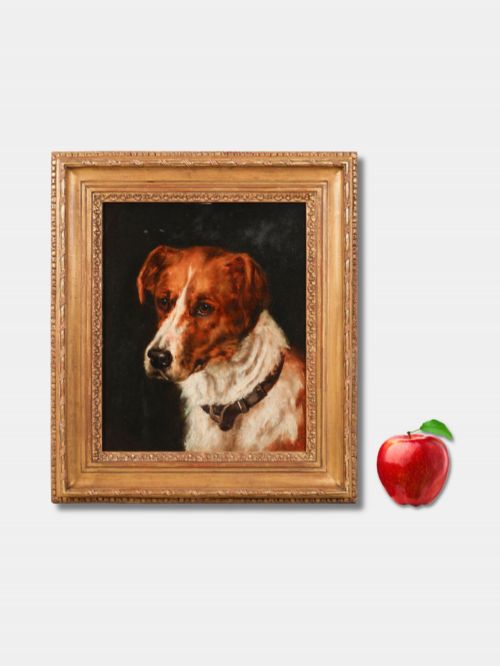

Antique Canine Oil Painting
An antique canine oil painting captures the distinct character and spirit of dogs through brushwork that has endured across centuries.
Antique Canine Oil Painting
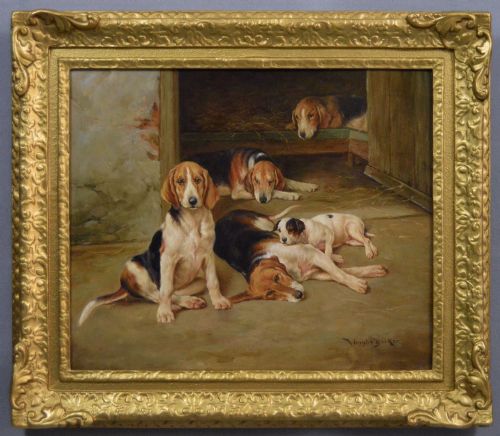
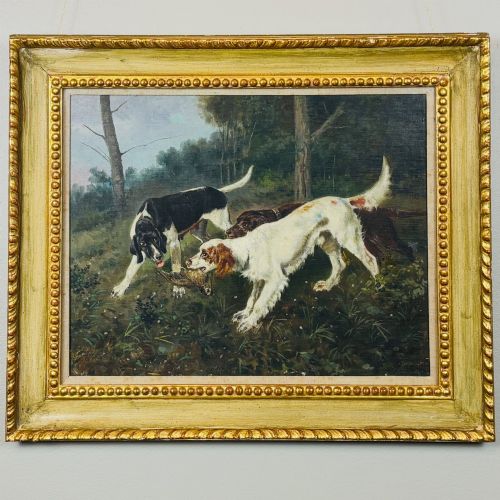
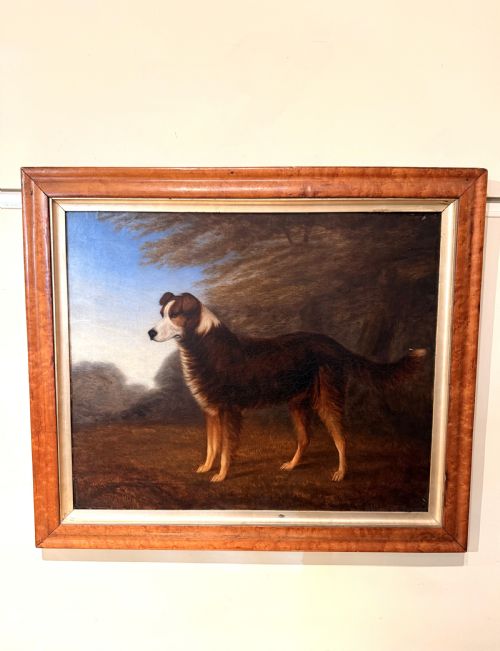
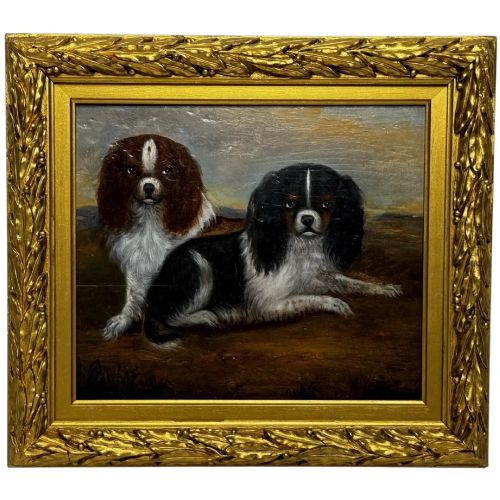
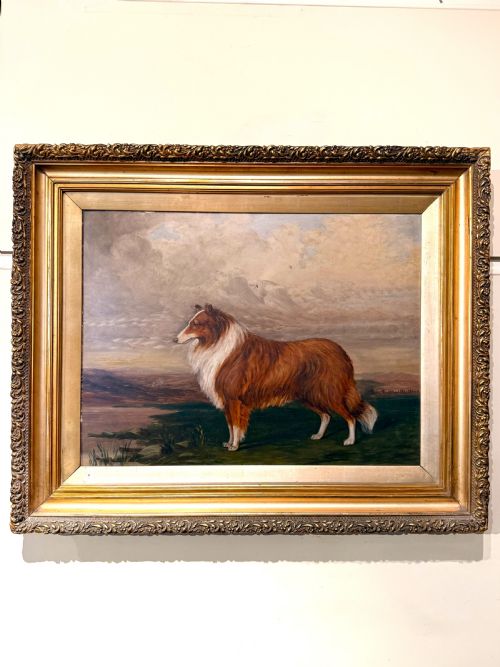
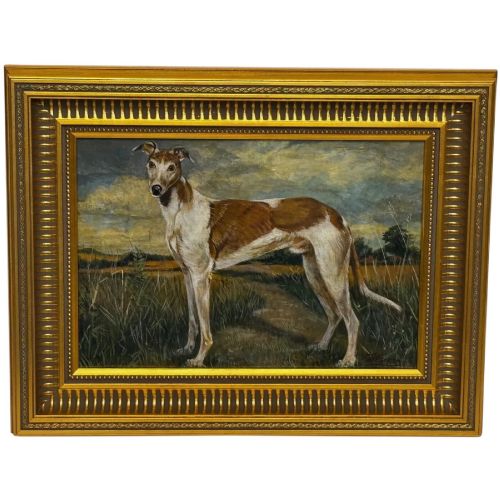
An antique canine oil painting represents a rich tradition of animal portraiture spanning the nineteenth and twentieth centuries. These works range from intimate studies of individual pets to grand depictions of sporting dogs in expansive landscapes.
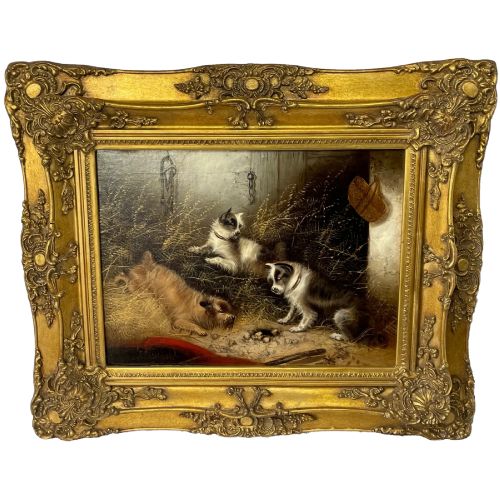
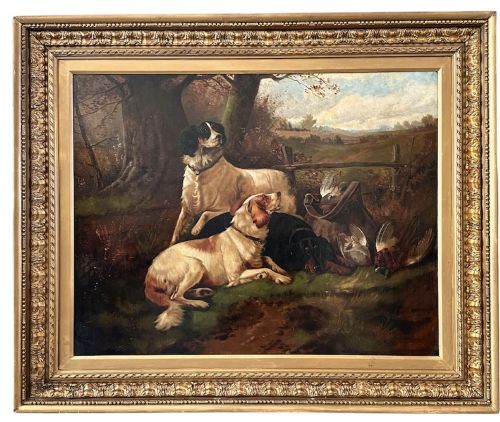
Collectors encounter diverse breeds depicted on canvas and board, reflecting changing tastes in domestic companionship and working animals. Victorian examples often highlight specific gundogs, terriers, and hounds associated with rural pursuits and family life.
The subjects include named champions, working gundogs, and beloved family pets rendered with careful observation. Many pieces originate from British schools, showcasing traditional sporting art and realistic portraiture.
How they were made
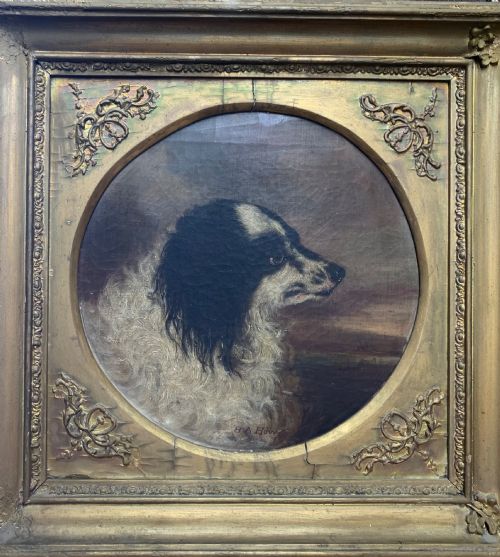
Artists utilised oil paint applied to stretched canvas or wooden boards, often building rich textures through layered brushwork. The physical support frequently bears the marks of age, such as craquelure in the pigment and traditional stretcher frames.
Antique Canine Oil Painting Retail Price Guide 2026
Typical asking prices for canine oil painting among the pieces listed under this phrase on Sellingantiques today, from the lower quarter to the upper quarter. They describe what is for sale here now, not the wider market.
Listings feature works from the nineteenth and twentieth centuries, utilising oil on canvas and wood boards within gilt frames.
What varies in quality
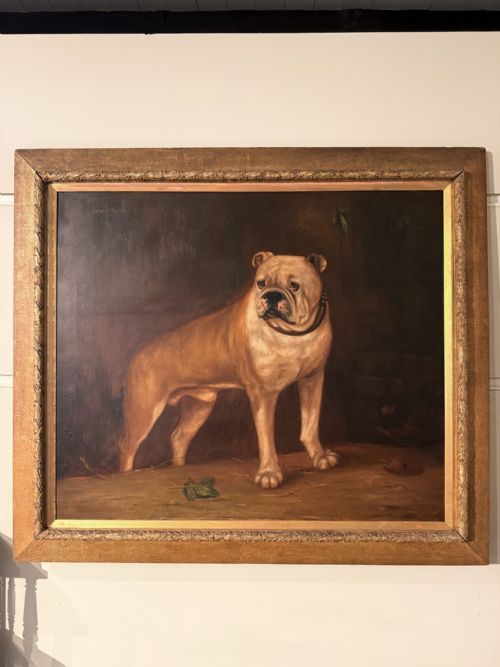
The strength of an antique canine oil painting lies in the anatomical accuracy and the artist's ability to render the personality of the animal. Finer works display meticulous attention to the texture of fur, the clarity of the eye, and the natural posture of the breed.
Compositional depth and the treatment of the surrounding landscape further separate accomplished academic works from simpler naive school pieces. Signed works by established animal painters command attention for their proven authorship and refined technique.
Valentine T Garland·Martin Theodore Ward·John Sargent Noble·John Emms·John Frederick Herring Senior·LM Webb·William Barraud·Samuel Raven·Sir Edwin Landseer·Colin Graeme Roe·John Trivett Nettleship·Alfred Duke
The Antique Canine Oil Painting Glossary
- Oil on Canvas
- A traditional painting medium where oil-based pigments are applied to a woven fabric surface stretched across a wooden frame. This combination allows for rich blending of colours and long-term durability.
- Giltwood
- Wood that has been decorated with a thin layer of gold leaf or metallic powder, frequently used for ornate nineteenth-century picture frames. It adds a warm reflective border to the artwork.
- Craquelure
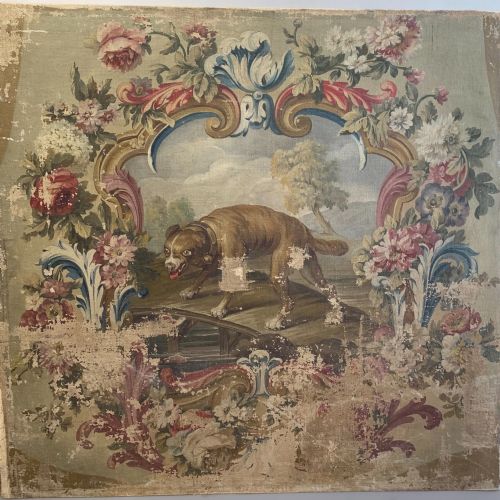
- A fine network of microscopic cracks that forms across the surface of aged oil paint as it dries and hardens over decades. It serves as a natural indicator of age in traditional paintings.
- Sporting Art
- A genre of painting dedicated to field sports, hunting, and the animals associated with them, including horses and hounds. These works document the rural traditions of the nineteenth century.
- Naive School
- Art created by self-taught painters who operate outside formal academic traditions, often characterised by flat perspective and direct charm. These works offer an honest view of domestic and rural subjects.
Antique Canine Oil Painting: Frequently Asked Questions
What subjects appear in these paintings?
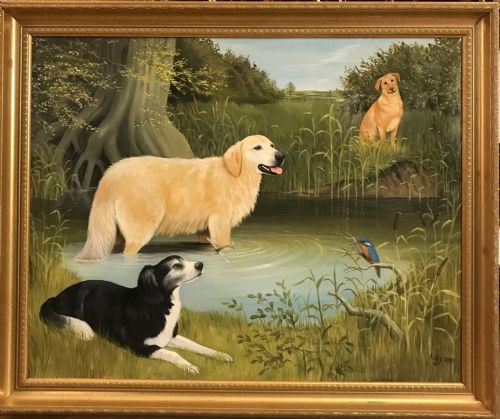
These works predominantly feature dogs, ranging from individual portraits of named pets to groups of working terriers and foxhounds. Many compositions place the animals within natural landscapes or domestic interiors.
Sporting dogs with game, working terriers guarding a catch, and spaniels resting in the field are common motifs. The focus remains on capturing the distinctive breed characteristics and individual personality of the animal.
How do I identify the period?
Dating relies on the style of dress, the style of the frame, and known artist signatures or biographical dates recorded on the work. Nineteenth-century pieces often display detailed realism and traditional varnishes that have mellowed over time.
Victorian and Edwardian works frequently employ specific stretcher constructions and canvas stamps from period art suppliers. Comparing the brushwork and subject matter to documented painters helps narrow the decade of creation.
Where should I hang them?
These paintings suit traditional living spaces, studies, and hallways where their rich tones and historical character can be appreciated. Direct sunlight should be avoided to protect the oil pigments and gilt frames from fading.
Stable indoor humidity helps preserve both the wooden stretcher frames and the canvas supports. Proper wall placement ensures the artwork remains a focal point in the room.