


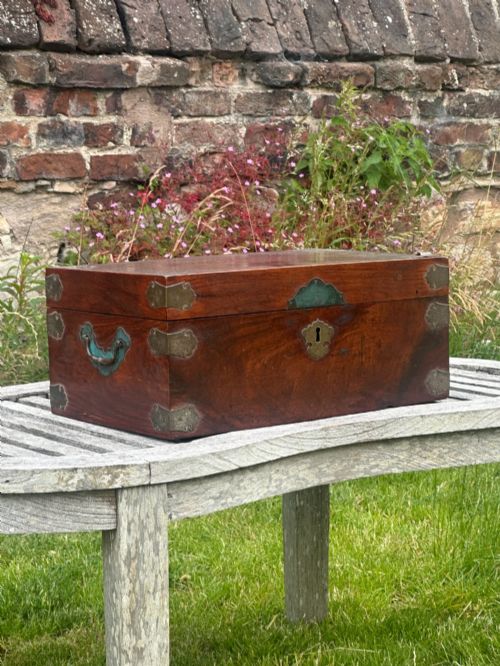
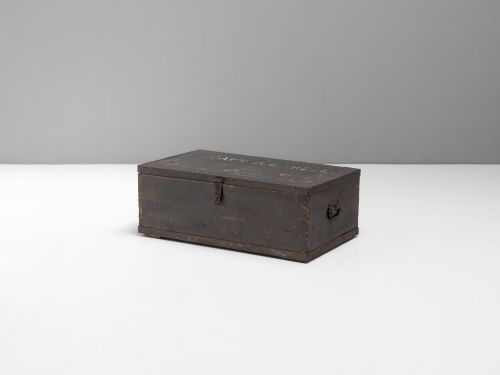
Victorian Campaign Wooden Box
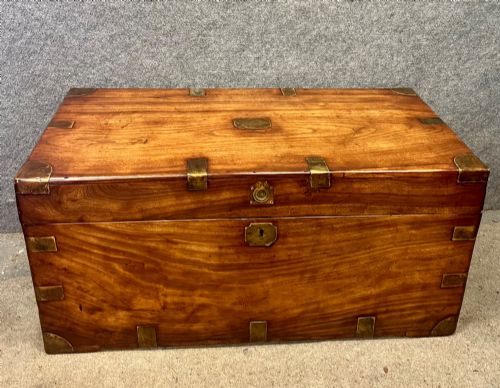
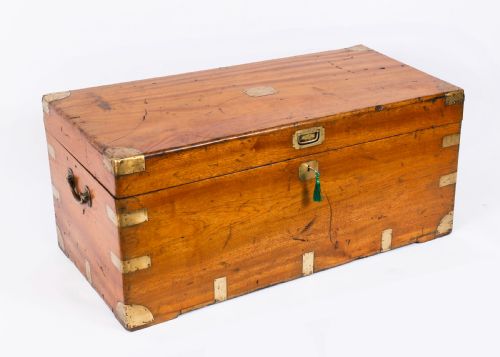
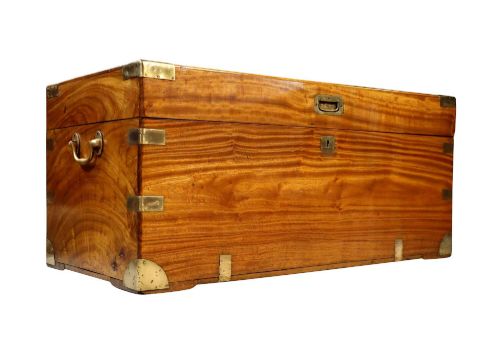
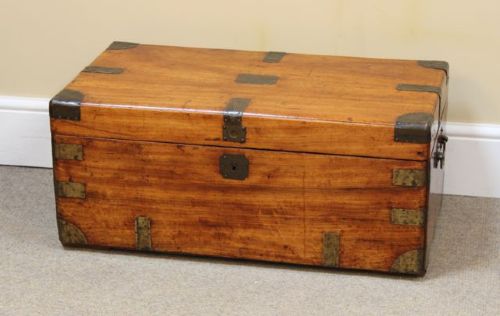
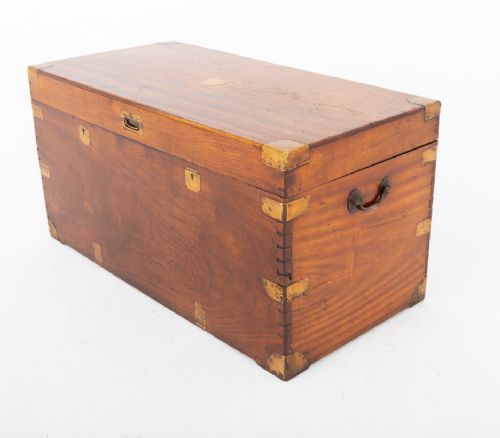
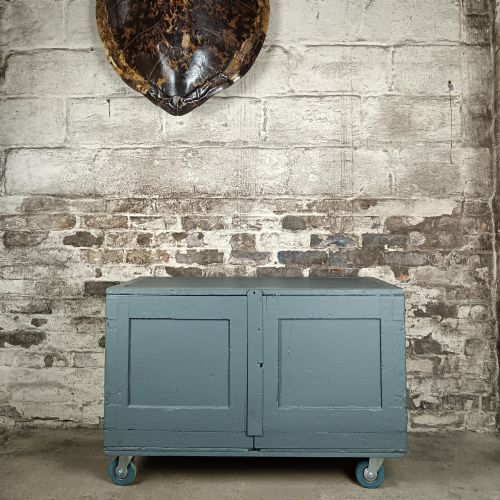
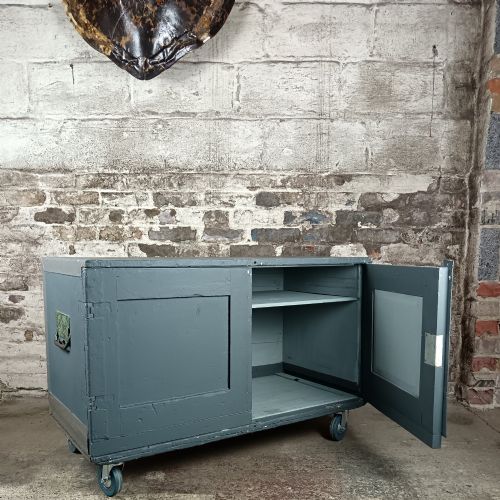
A victorian campaign wooden box is a robust, brass-bound piece built for travel, offering enduring storage and functional surfaces.
Victorian Campaign Wooden Box
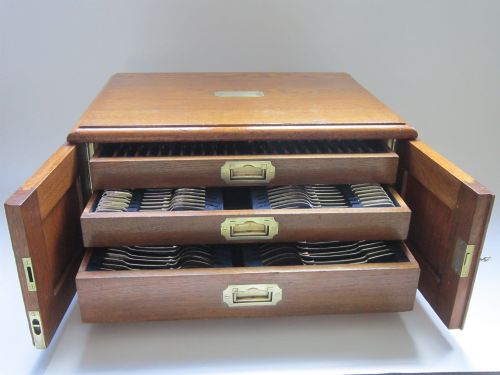
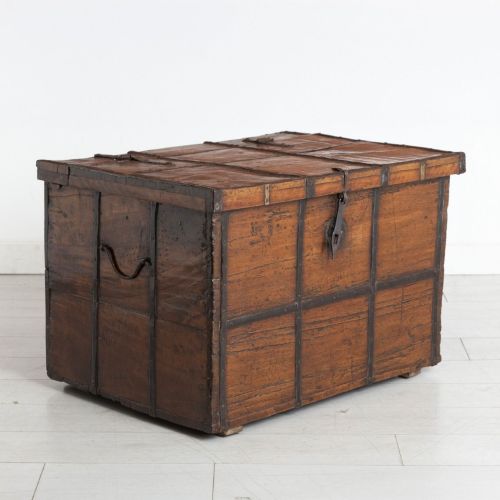
A victorian campaign wooden box encompasses heavy-duty storage trunks, compact writing slopes, and correspondence cases designed for officers and travellers. These pieces date across the nineteenth century, including specific decades such as eighteen-fifty, eighteen-sixty, eighteen-eighty, and eighteen-ninety.
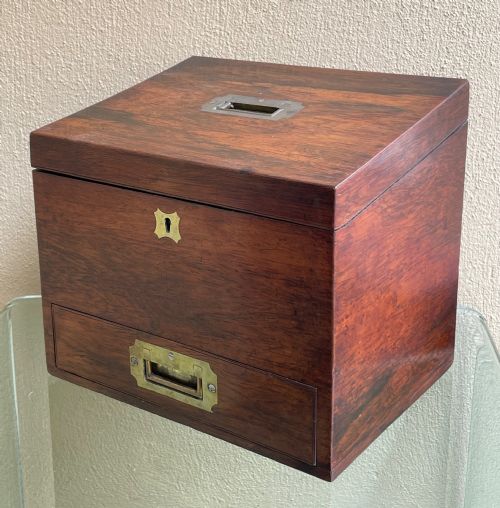
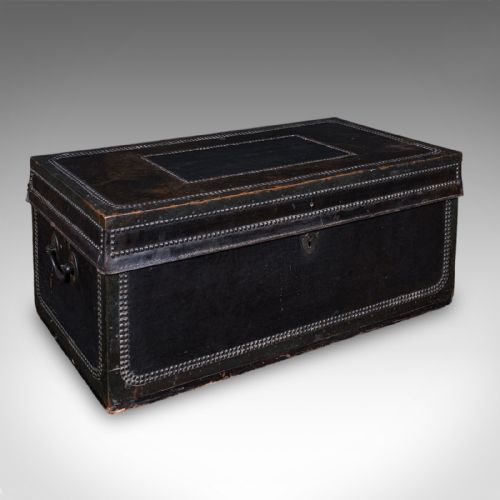
The version most commonly met on this page is the camphor wood or mahogany trunk bound in brass, alongside fitted writing slopes in mahogany, rosewood, and walnut. Such forms reflect the practical demands of military movement and colonial administration.
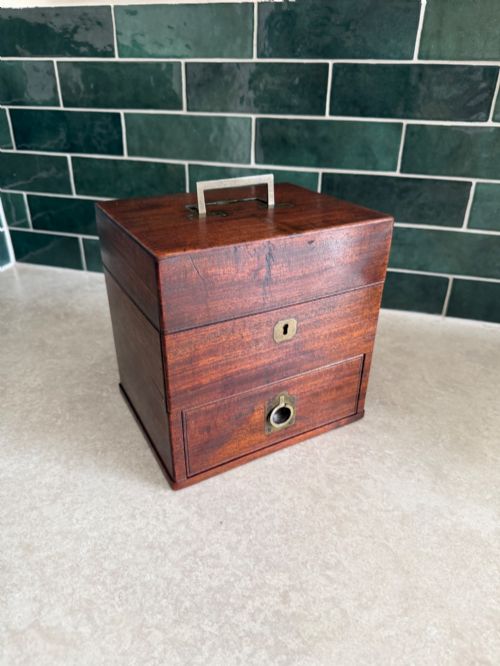
Origins stretch from English workshops to Anglo-Indian production, utilising dense timbers capable of enduring extreme climates. Buyers encounter everything from large merchant trunks to small apothecary and correspondence boxes.
Quality and Craftsmanship
Distinction across the range lies in the precision of the brass work and the integration of internal fittings such as secret drawers, inkwells, and folding writing surfaces. Superior examples display seamless flush mounts and high-grade timber selection.
The integrity of the structural joinery and the presence of original locks, working keys, and undisturbed patination elevate certain boxes above utilitarian transport containers.
Camphor wood trunks retain their distinct medicinal aroma through the centuries, offering an unintended time capsule of nineteenth-century voyages.
The Victorian Campaign Wooden Box Glossary
- Campaign chest
- A modular chest of drawers built in sections with recessed brass pull handles for ease of transport during military deployment.
- Writing slope
- A portable box with an angled, hinged lid opening to reveal a sloping writing surface, pen trays, and compartmented storage.
- Brass-bound
- Furniture reinforced along edges and corners with brass straps and brackets to withstand the rigours of transit.
- Camphor wood
- A fragrant timber native to Asia, traditionally utilised for military trunks due to its natural insect-repellent properties.
- Apothecary box
- A small compartmented case designed to hold medicinal bottles, scales, and remedies securely during travel.
Victorian Campaign Wooden Box: Frequently Asked Questions
What is a campaign box?
A campaign box is a portable piece of furniture or container built for military officers or travellers on the move. These items are designed to withstand rough transport while maintaining domestic utility.
They typically feature recessed hardware to prevent catching and robust wooden construction using durable timbers like mahogany and camphor wood.
How were writing slopes used?
Writing slopes served as portable desks for correspondence, keeping paper, ink, and writing instruments organised in one secure place. The hinged lid folded down to form a firm angled surface for writing.
Inside, compartments held inkwells, nibs, and letters, often concealing secret drawers for valuables.
Why use camphor wood?
Camphor wood was favoured for campaign trunks because its strong natural scent repels moths and insects, protecting uniforms and documents in tropical climates. The timber is also resilient and durable.
Its distinctive aroma often remains present in antique trunks long after manufacture.
How to identify Victorian pieces?
Nineteenth-century pieces often display specific joinery techniques, distinct brass hardware patterns, and characteristic timber ageing. Makers utilised materials popular during the period such as rosewood, walnut, and pitch pine alongside traditional brass binding.
Examining internal construction and lock mechanisms helps determine the approximate manufacturing decade within the era.
Are these boxes waterproof?
While tight-fitting lids and dense timbers offered protection against heavy rain and moisture during transit, they were not designed to be fully waterproof. The primary function was structural protection and organisation rather than submersion resistance.
Metal binding helped maintain tight seals across wooden panels during temperature shifts.