
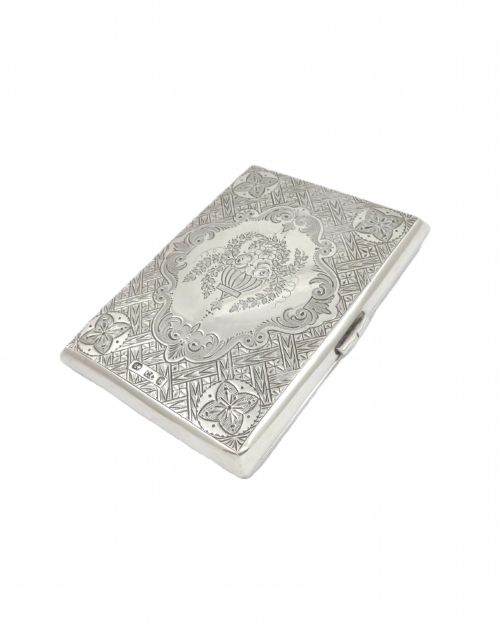
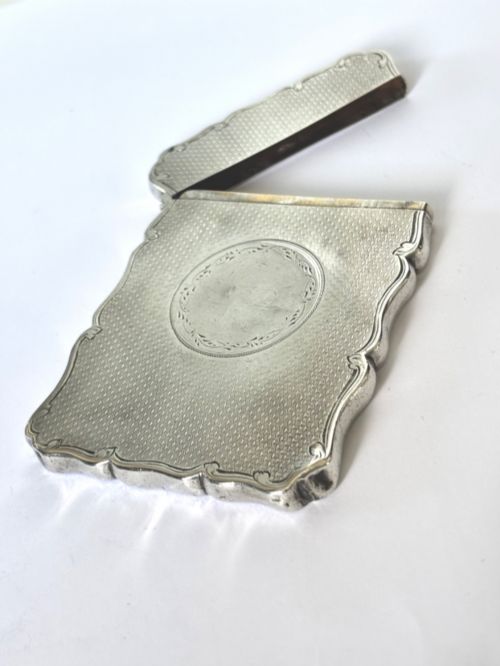


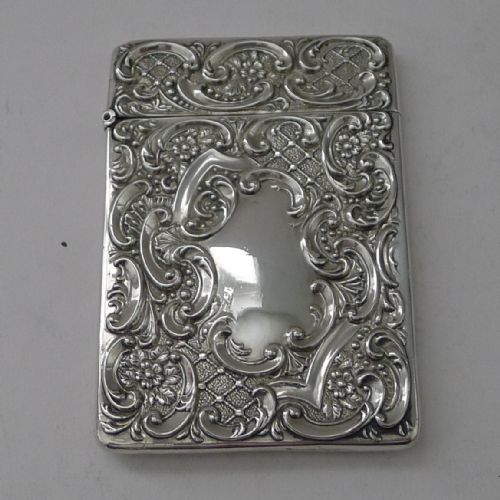


Victorian Calling Card Holder
These victorian calling card holder pieces are small pocket accessories in silver and tortoiseshell that hold visiting cards with absolute social precision.
Victorian Calling Card Holder
A victorian calling card holder is a small pocket case designed to hold visiting cards during formal social calls. These items appear primarily in the form of card cases, card boxes, and aide-mémoire pieces.
The objects stem predominantly from the Victorian and Edwardian periods, alongside examples from the nineteenth century. Makers shape them in sterling silver, tortoiseshell, mother-of-pearl, bone, Connemara marble, ebony, and hardwood.
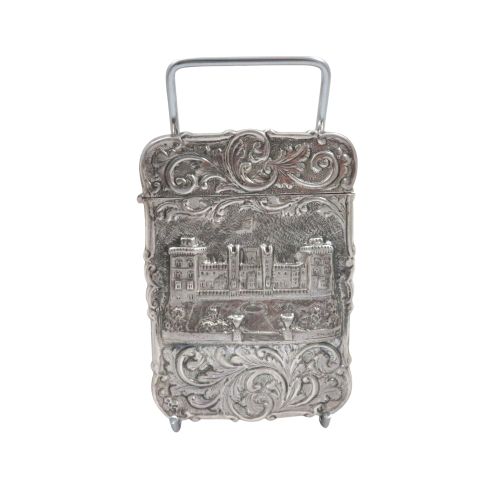
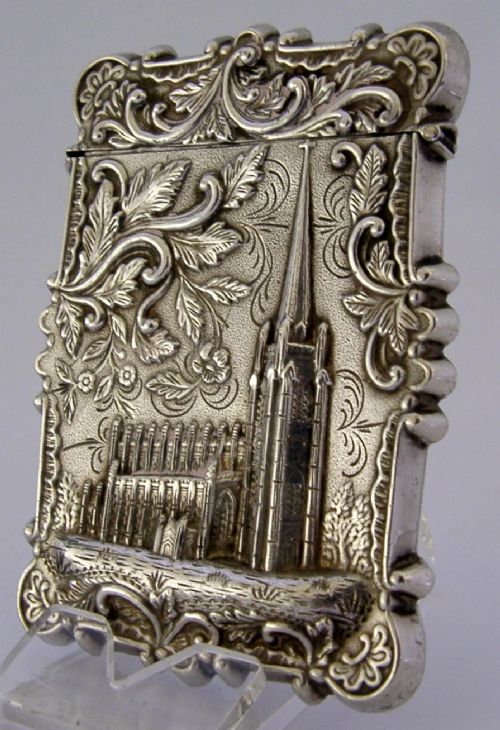
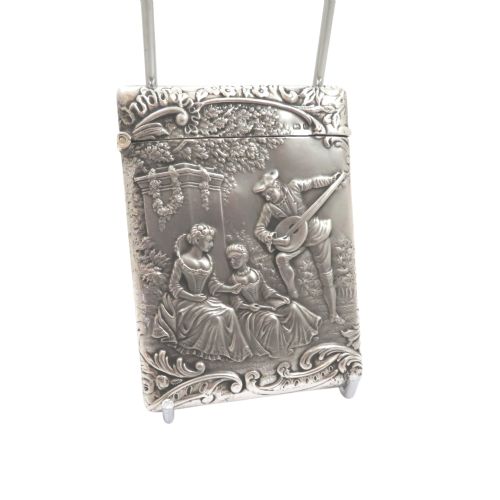
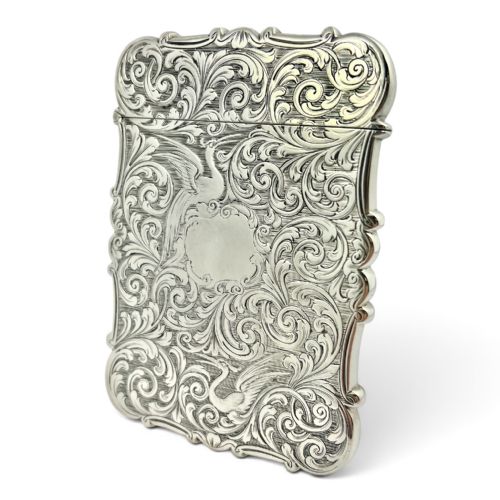
Examples on this page span plain silver surfaces to elaborate castle top scenes and repoussé deities. Buyers encounter English and Indian silver alongside Anglo-Indian designs.
Materials and Technique
Silversmiths construct these cases using sterling silver, applying techniques such as engine turning, engraving, and repoussé work. Castle top pieces display high-relief architectural scenes pressed or cast onto the metal surface.
Workers combine tortoiseshell and mother-of-pearl to build panels on stiff foundations, while hardwood and bone provide alternative rigid bodies. Artisans carve deities and flora into Indian silver surfaces with deep relief.
Victorian Calling Card Holder Retail Price Guide 2026
Typical asking prices for victorian calling card holder among the pieces listed under this phrase on Sellingantiques today, from the lower quarter to the upper quarter. They describe what is for sale here now, not the wider market.
Quality and Distinction
The standard of a victorian calling card holder rests on the crispness of its engraving and the depth of its relief work. Castle top examples achieve distinction when architectural details like Windsor Castle or St Paul's Cathedral remain sharp and legible.
Material choice and hinge construction separate standard items from superior pieces. Fine examples integrate delicate materials like mother-of-pearl or Connemara marble without gaps, operating with secure, flush closures.
Nathaniel Mills·George Unite·Foxall and Co
The Victorian Calling Card Holder Glossary
- Castle top
- A card case featuring a high-relief depiction of a famous building or landmark on the cover. These architectural scenes are typically executed in silver.
- Aide-mémoire
- A small notebook or memo pad incorporated into a card case for recording engagements. These pieces often include a tiny pencil and silk-lined compartments.
- Repoussé
- A metalworking technique where the artisan hammers the design from the reverse side to form a raised pattern on the front. Indian silver examples utilise this method extensively for figures of deities.
- Connemara marble
- A distinctive green ornamental stone quarried in Ireland, sometimes inlaid into silver card cases. It provides a smooth, variegated green surface.
- Sterling silver
- An alloy of silver containing ninety-two point five percent silver by mass and seven point five percent other metals, usually copper. British pieces frequently bear hallmarks indicating this standard.
Victorian Calling Card Holder: Frequently Asked Questions
How were calling card cases used?
Victorians used these cases to carry visiting cards when making formal social calls. Leaving a card signified a visit had occurred.
The cases protected the paper cards from damage in pockets or reticules while travelling between houses.
What materials are these cases made from?
The listings show sterling silver as the primary metal, alongside Indian silver and assorted base metals. Organic materials appear frequently in combination with metal.
Workers utilise tortoiseshell, mother-of-pearl, bone, ebony, hardwood, and Connemara marble to construct the bodies.
How do I spot an Edwardian piece?
Edwardian items date from the early twentieth century, following the Victorian era. They share similar forms to earlier card cases but reflect later design motifs.
Assay office marks and date letters stamped into the silver help confirm the exact year of manufacture.