

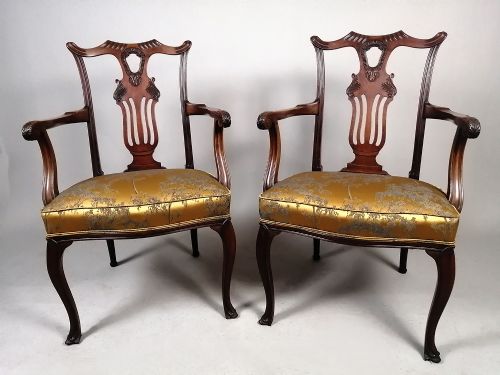
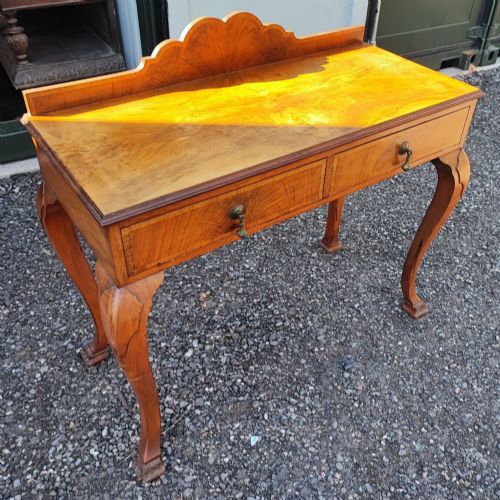
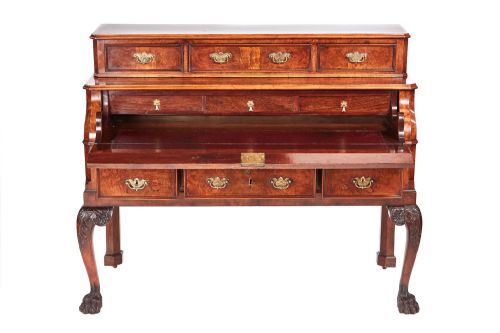
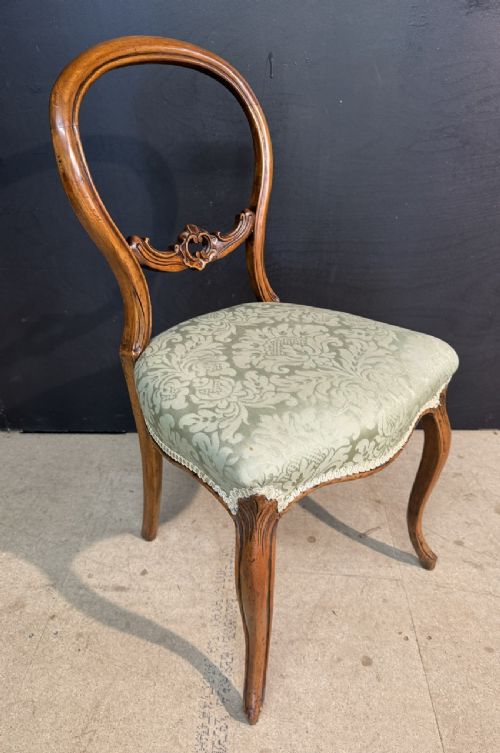

Victorian Cabriole Leg Desk
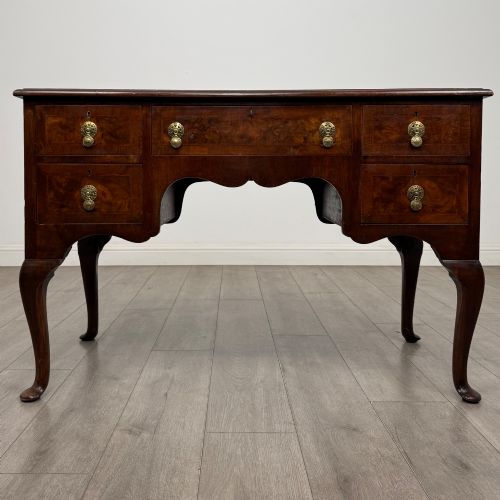
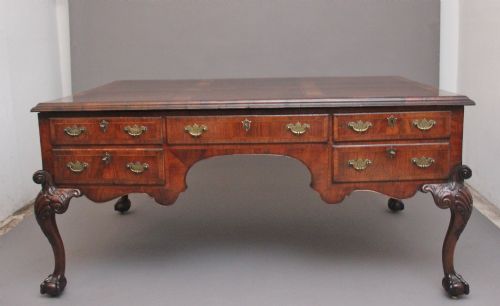
A victorian cabriole leg desk brings curved elegance and rich timber to a study, offering a graceful alternative to rigid rectangular writing furniture.
Victorian Cabriole Leg Desk
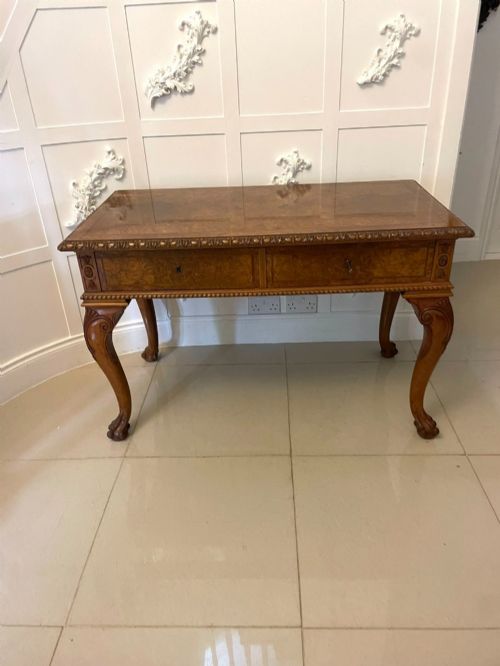
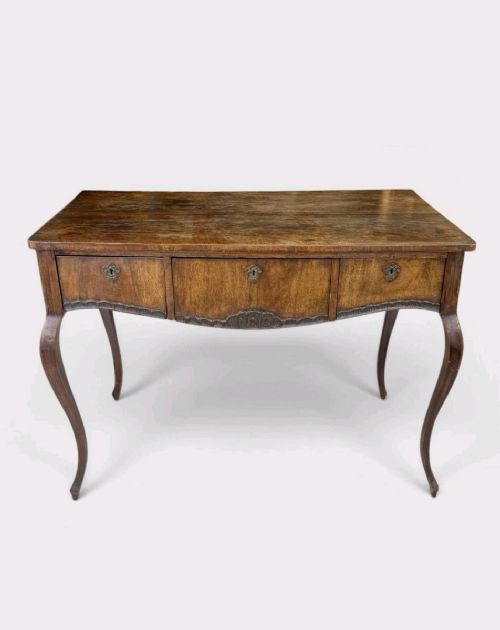
When searching for a victorian cabriole leg desk, buyers encounter nineteenth-century writing furniture defined by slender, curving supports that terminate in scrolled feet or pads. These pieces appear primarily as freestanding writing tables, kidney-shaped surfaces, and refined bureau designs.
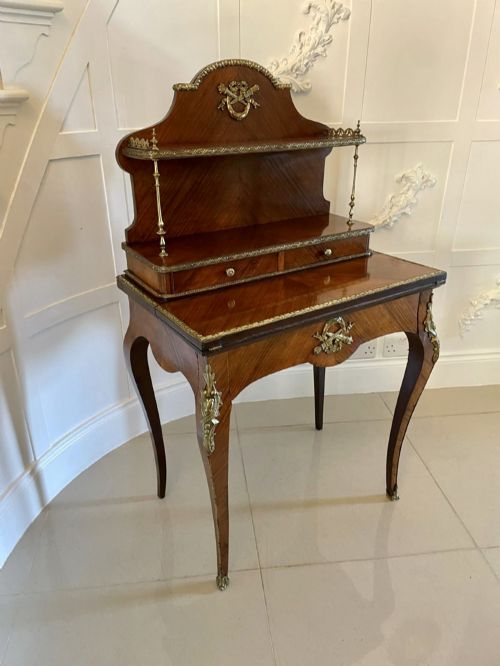
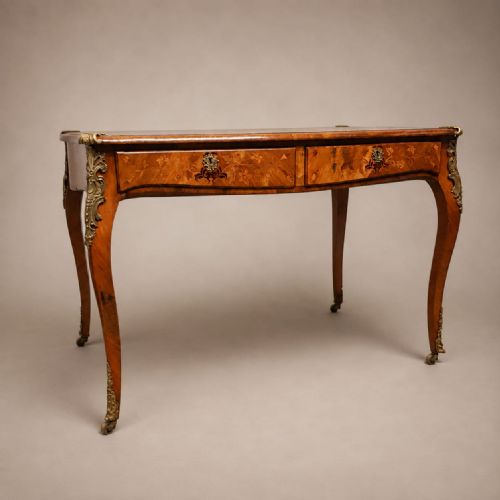
The material palette of these desks relies heavily on burr walnut, flame mahogany, and exotic kingwood veneers, frequently enhanced with intricate marquetry and gilt-bronze mounts. Many examples reflect revivalist tastes, drawing heavily upon French Louis XV and Rococo design motifs.
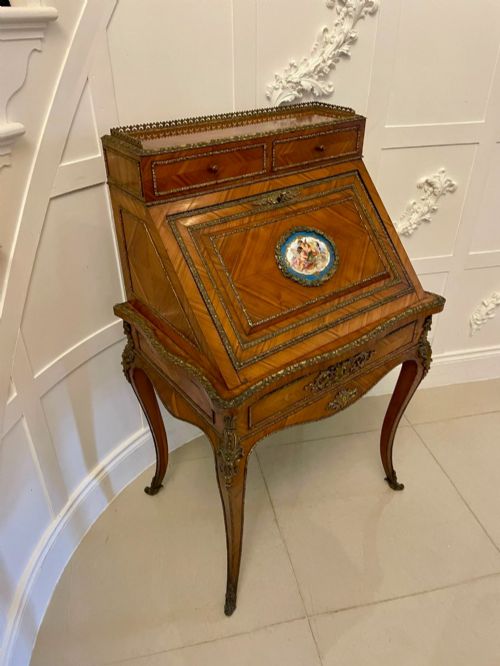
Formats range from compact ladies writing desks, known as bonheur du jour cabinets, to larger partners desks and serpentine writing tables. The curving leg profile softens the overall silhouette, distinguishing these works from earlier geometric cabinetry.
How They Were Made
Cabinetmakers constructed these desks using solid mahogany or walnut frames as a stable substrate for highly figured decorative veneers such as burr walnut, amboyna, and satinwood. Craftsmen applied these timbers in symmetrical patterns to highlight natural grain movement across the writing surface and drawer fronts.
Structural embellishments often involved cast or chased ormolu mounts fixed to corners and aprons, alongside finely tooled leather inserts set into the top. Carved wooden details on the knees and feet required skilled hand-chiselling to achieve the characteristic fluid curves of the style.
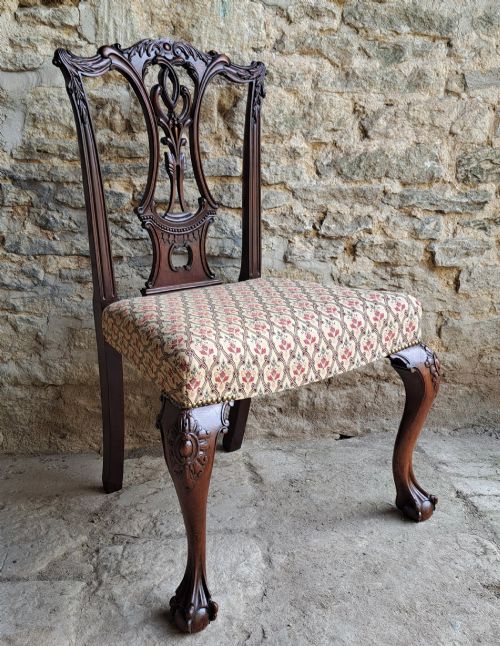
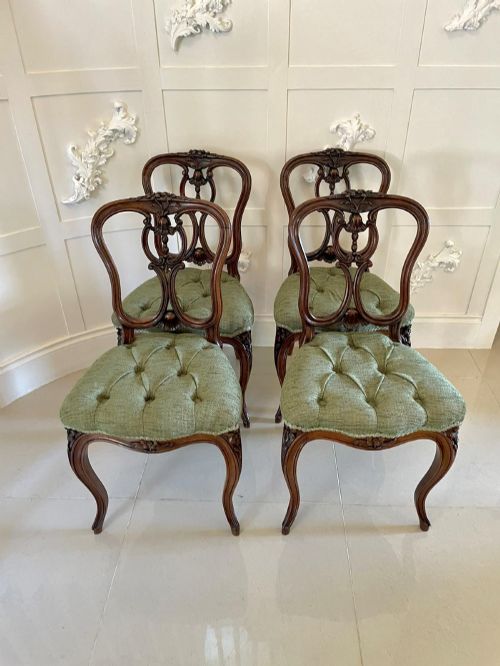
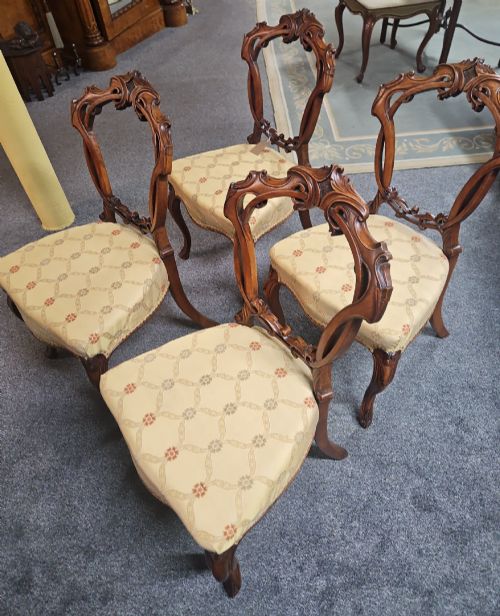
Spider web back chairs bring an arachnid delicacy to nineteenth-century seating, proving that Victorian craftsmen found inspiration in unexpected corners of the garden.
What Varies in Quality
The standard of a victorian cabriole leg desk depends largely on the selection and matching of the timber veneers, with dense burr figuring and seamless book-matching commanding greater visual depth. Poorer examples utilise plain secondary woods or display uneven fading across the polish.
Execution of the carved knee and foot elements dictates the refinement of the piece, as sharp, hand-carved contours surpass mechanical or blunt mouldings. The integration of quality bronze ormolu mounts and original leather writing surfaces further separates workshop standards.
Durand
The Victorian Cabriole Leg Desk Glossary
- Cabriole leg
- A furniture support that curves outward at the knee and tapers inward toward an ankle and foot, inspired by animal limbs. This form became central to eighteenth-century design and saw a major revival during the nineteenth century.
- Burr walnut
- A specialised timber cut from the abnormal growth or burl of a walnut tree, yielding dense, swirling grain patterns. Cabinetmakers prized this material for high-status Victorian surface veneers.
- Bonheur du jour
- A small, light ladies writing desk featuring a tiered superstructure with drawers, shelves, or a small cabinet above the main writing surface. Originating in France, the form remained popular throughout the Victorian era.
- Ormolu
- Gilded bronze ornamentation applied to furniture mounts, drawer pulls, and legs. Skilled artisans cast and fire-gilded the metal to produce a bright golden finish that accentuates dark woods.
- Marquetry
- The art of applying decorative pieces of veneer to a structural structure to form pictorial or geometric designs. Craftsmen combined contrasting timbers like kingwood, satinwood, and walnut to create intricate surface patterns.
Victorian Cabriole Leg Desk: Frequently Asked Questions
How do I identify French revival styles?
French revival pieces incorporate sweeping serpentine outlines, extensive marquetry, and cast ormolu mounts inspired by Louis XV furniture. The presence of curved cabriole legs and floral inlay points directly to this continental influence.
Victorian makers adopted these motifs enthusiastically, blending English carcase construction with flamboyant French decorative schemes.
Are kidney shaped desks practical?
Kidney-shaped writing tables offer an ergonomic curve that wraps around the user, providing accessible surface space while maintaining a compact footprint. They function effectively as freestanding centre room desks.
Many examples feature inset leather writing surfaces and multiple peripheral drawers, balancing daily utility with decorative grace.
What wood was most commonly used?
Walnut and mahogany dominate this category, with burr walnut serving as the primary choice for high-end decorative veneer work. Secondary timbers such as oak or pine often appear in drawer linings and interior framing.
Exotic accents like satinwood, kingwood, and rosewood frequently complement the main walnut body through banding and marquetry.