




French Style Ladies Bureau
These french style ladies bureau pieces combine compact writing surfaces with refined ornamental details, offering collectors elegant desks suited for domestic spaces.
French Style Ladies Bureau
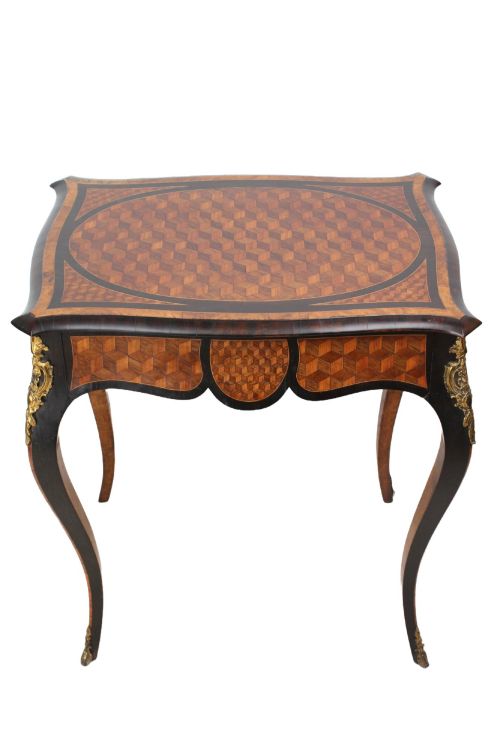
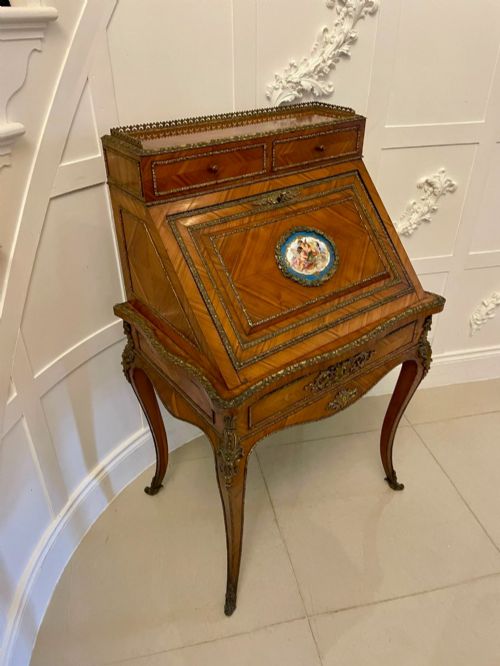
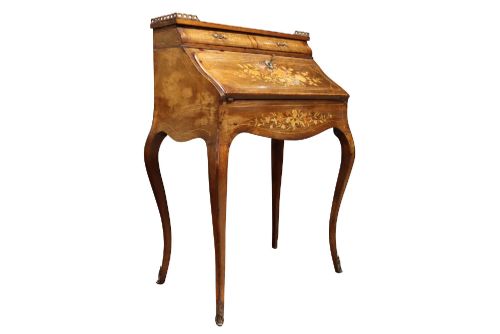
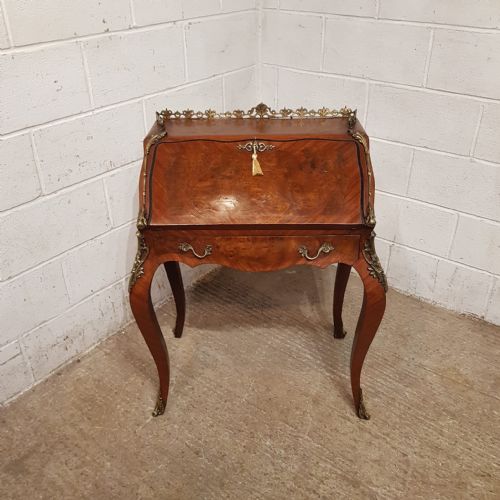
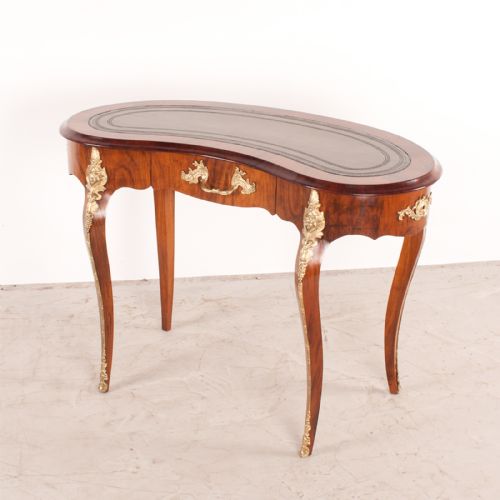
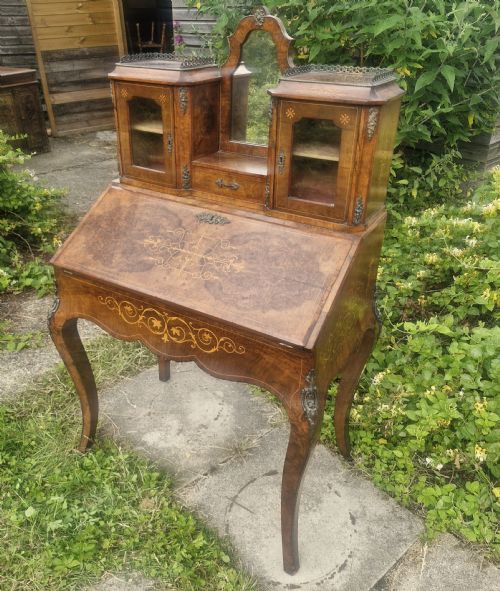
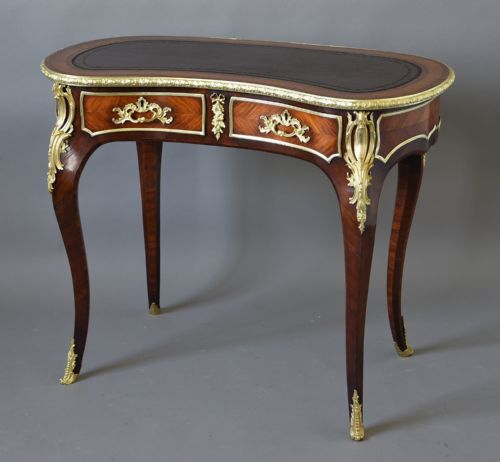
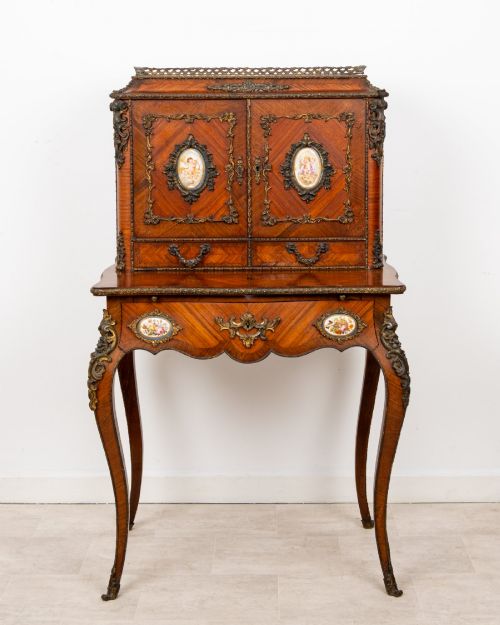
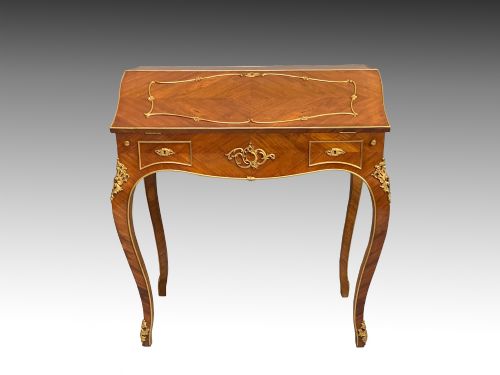
A french style ladies bureau brings together compact writing furniture forms such as the bonheur-du-jour, bureau de dame, and kidney-shaped writing tables. These pieces emerge predominantly from nineteenth-century workshops, drawing inspiration from Louis XV and Louis XVI aesthetics.
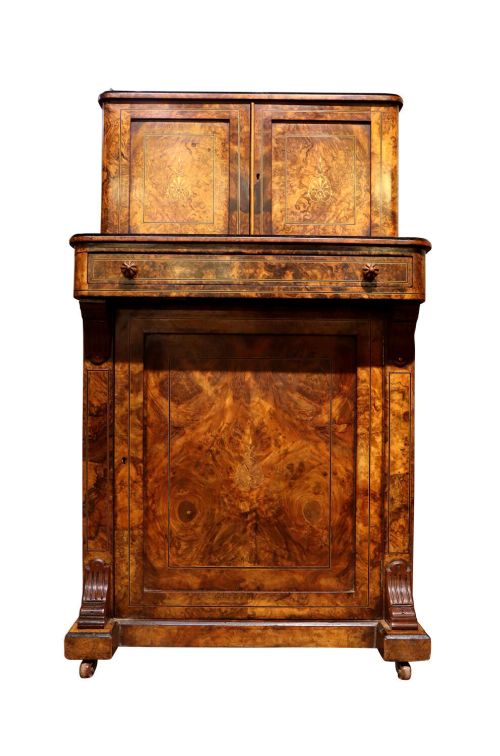
The selections available here range from Victorian interpretations made in English workshops to items originating directly in France. Cabinets feature tiered superstructures, fitted drawers, and hinged writing flaps designed for personal correspondence.
Formations vary from serpentine kidney desks to rectilinear writing tables integrated with upper shelf compartments. Each variation provides a distinct footprint while maintaining the graceful proportions expected in a lady's writing desk.
Materials and construction methods
Cabinetmakers construct these desks using foundational carcases of walnut, mahogany, or oak, layered with decorative veneers of kingwood, tulipwood, satinwood, and burr walnut. Marquetry and parquetry patterns create geometric or floral motifs across the writing surfaces and door panels.
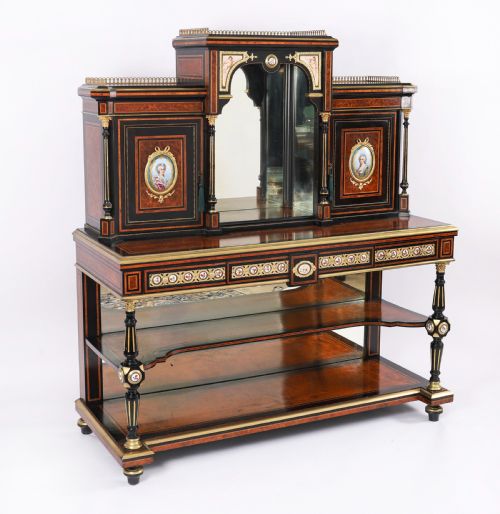
Metalwork plays a central structural and decorative role, with cast ormolu mounts, brass stringing, and gilt-bronze accents framing corners and drawers. Selected examples incorporate porcelain plaques or painted panels into the superstructure.
Leather inserts frequently line the central writing slopes, bordered by gilt tooling. Joinery relies on traditional dovetail techniques for drawer construction and precise veneering methods to apply complex wood grains.
Current listings feature pieces spanning the 18th Century through the 20th Century, constructed in walnut, kingwood, rosewood, and mahogany.
Distinctions in craftsmanship
Quality rests upon the precision of the marquetry and the choice of timber figurations, where symmetrical burr walnut or carefully matched kingwood elevates a piece. The depth and hand-chasing of the ormolu mounts distinguish standard production from superior workshop output.
Makers identified through stamps or signatures, such as Edwards and Roberts or JAS Shoolbred, demonstrate higher standards of internal joinery and material selection. The integration of supplementary elements like Sevres-style porcelain plaques indicates ambitious design execution.
Proportion and fluidity in the serpentine curves of kidney desks dictate visual success, separating balanced compositions from rigid interpretations. The retention of original brass hardware and fitted interior stationery compartments further defines high-tier examples.
JAS Shoolbred·Edwards and Roberts·Francoise Linke
The French Style Ladies Bureau Glossary
- Bonheur-du-jour
- A small light-weight lady's writing desk featuring an elevated cabinet with shelves or small drawers above the main writing surface. This form gained popularity during the mid-nineteenth-century revival periods.
- Ormolu
- Gilded bronze mounts applied to furniture edges, feet, and corners for decorative enrichment. The technique involves applying a mercury-gold amalgam to bronze before firing.
- Marquetry
- Inlaid wood veneers arranged to form pictorial or geometric patterns across furniture panels. Cabinetmakers use contrasting timber species to achieve tonal variation without paint.
- Bureau de dame
- A feminine desk typically equipped with a sloping lid or a cylinder front concealing internal compartments. These items often incorporate fine wood veneers and metal mounts.
- Parquetry
- Geometric wood inlay patterns such as lozenges, cubes, or herringbone designs used on tabletops and drawer fronts. This technique showcases the natural grain direction of varied timbers.
French Style Ladies Bureau: Frequently Asked Questions
What is a bonheur du jour?
A bonheur du jour is a small lady's writing desk that includes an upper cabinet section with shelves or small drawers. It serves as both a functional writing surface and a display cabinet.
These pieces were designed for domestic rooms rather than formal libraries, offering a compact footprint for personal correspondence and letter writing.
How do I identify Louis XV style?
Louis XV style furniture is characterised by asymmetrical curves, cabriole legs, and organic scrollwork motifs. The aesthetic avoids straight lines in favour of flowing serpentine shapes.
Ormolu mounts frequently accent the corners and aprons, highlighting the undulating contours of the wooden carcase.
Where were these desks used?
These desks were placed in private chambers, boudoirs, and drawing rooms for personal correspondence and light administrative tasks. Their refined appearance suited domestic living spaces rather than grand offices.
Many incorporated upper tiers to display small decorative objects alongside writing materials.
What woods were commonly used?
Cabinetmakers utilised a foundation of mahogany or walnut, overlaid with decorative veneers including kingwood, tulipwood, satinwood, and burr walnut. These exotic timbers provided rich colouration and complex grain patterns.
Inlays of contrasting woods created geometric borders and floral marquetry panels across the desk surfaces.
Are these desks signed by makers?
Selected pieces bear stamps, paper labels, or signatures from prominent cabinet-making firms and individual makers. These marks are typically located inside drawer linings or stamped onto wooden edges.
Maker attribution provides insight into the workshop origin and the standard of internal construction used during production.