


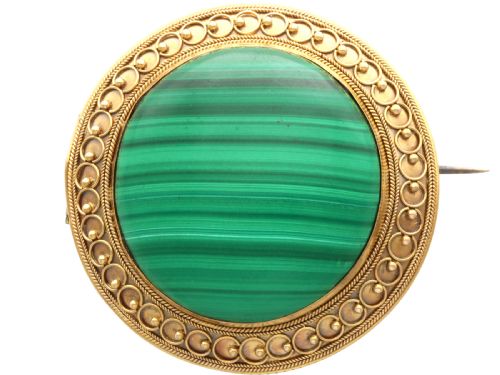


Victorian Cabochon Brooch
A victorian cabochon brooch brings together smooth, unfaceted stones and rich gold work to pin at a lapel or suspend as a pendant.
Victorian Cabochon Brooch
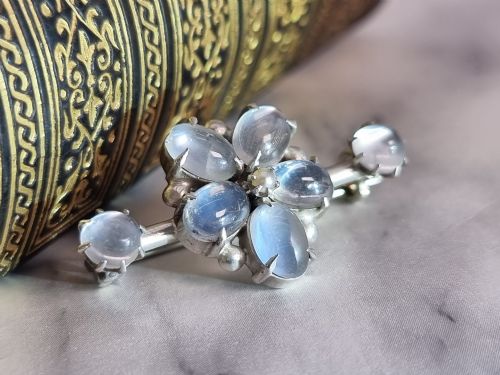
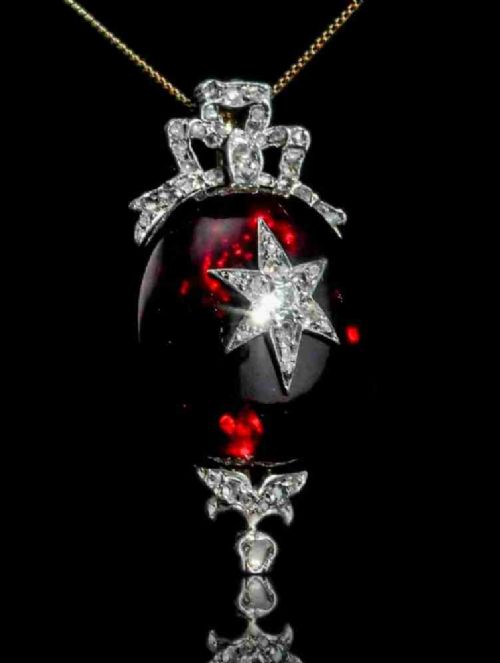
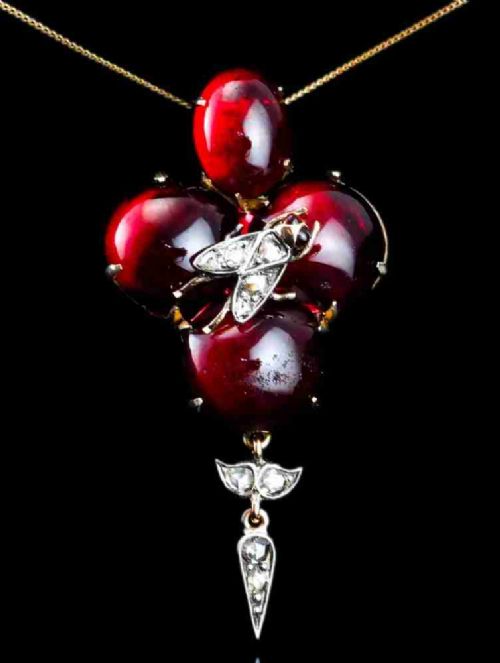
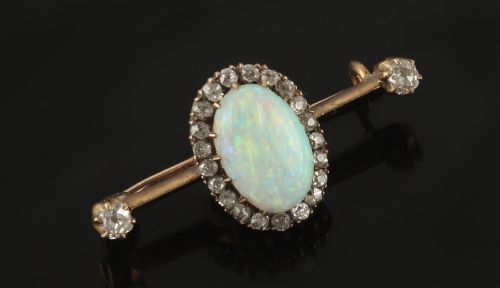
A victorian cabochon brooch displays rounded, polished gemstones rather than faceted stones, creating a soft and luminous surface. Most examples on this page date from the nineteenth century, showcasing rich stones held in secure metal settings.
Many of these jewels serve a dual purpose as both brooches and pendants, fitted with hidden loops or detachable Bails. The forms range from simple hearts and horseshoe pins to elaborate starbursts set with diamonds.
The materials span garnet, turquoise, moonstone and malachite, mounted in silver, yellow gold and rose gold. These pieces reflect the varied tastes of the period, from classic Victorian garnet clusters to later arts and crafts silver work.
Materials and Construction
Goldsmiths shaped high carat yellow and rose gold, often fifteen carat or nine carat, alongside silver and silver gilt to form the bodies of these jewels. Stones were carefully shaped into smooth cabochons and secured in closed or open back settings.
Detailed wirework, granulation and enamelling frequently decorate the metal frames, drawing on renaissance revival and etruscan revival aesthetics. Seed pearls and small diamonds are often used as secondary accents to frame the central cabochon.
A horseshoe shaped brooch served as a Victorian token of good fortune, designed to pin directly to a morning jacket.
Distinctions in Quality
The calibre of the central cabochon stone largely defines the piece, with deep colouration and good polish distinguishing superior examples. Strong visual presence relies on the balance between the main stone and its surrounding diamond or pearl work.
Structural integrity and the survival of original fittings, such as pin stems and pendant loops, indicate careful handling over time. The precision of the metalwork, whether hand chased gold or delicate silver gilt, shows the hand of a skilled maker.
The Victorian Cabochon Brooch Glossary
- Cabochon
- A gemstone shaped and polished with a smooth, rounded surface rather than faceted edges. This cut highlights the natural lustre and internal qualities of stones like moonstone, garnet and turquoise.
- Carbuncle
- An historical term for a red garnet cut in cabochon form. These deep crimson stones appear frequently in mid-nineteenth century jewels.
- Guilloche
- An engraved decorative technique where a precise mechanical pattern is etched into metal beneath a translucent layer of enamel. This method adds depth and texture to nineteenth century brooches.
- Silver Gilt
- Silver that has been coated with a thin layer of gold on its surface. This technique provided the rich colour of gold with the working properties of silver.
Victorian Cabochon Brooch: Frequently Asked Questions
How do I wear a convertible brooch?
Many nineteenth century pins feature a fold down loop or a detachable fitting on the reverse. This allows the piece to transition from a lapel pin to a necklace pendant.
Ensure the pin stem is securely locked when worn as a brooch to prevent loss.
What stones are typically found here?
Garnet, turquoise and moonstone dominate these listings, often accompanied by seed pearls and small diamonds. Stones are chosen for their smooth dome shapes rather than sparkle.
Softer materials like coral and malachite also appear within protective metal settings.
How do I date these pieces?
Dating relies on material combinations, gemstone cuts and stylistic markers such as starburst motifs or arts and crafts simplicity. Hallmarks and assay marks, where present, offer precise production years.
Stylistic shifts from mid-century garnet work to later silver and moonstone designs provide clear chronological cues.
Are these pieces fragile?
While durable enough for careful wear, these jewels incorporate antique metals and organic materials like pearls or turquoise. Store them separately to avoid surface scratches on softer stones.
Gentle cleaning with a soft cloth preserves the original metal finish and enamel work.