




Antique Guilloche Brooch
An antique guilloche brooch brings together fine metalwork and translucent coloured enamel, offering a distinct decorative accent for everyday wear.
Antique Guilloche Brooch
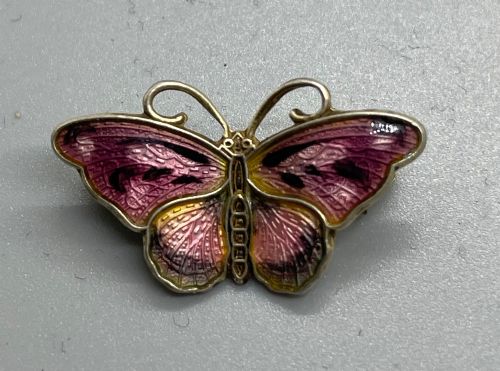
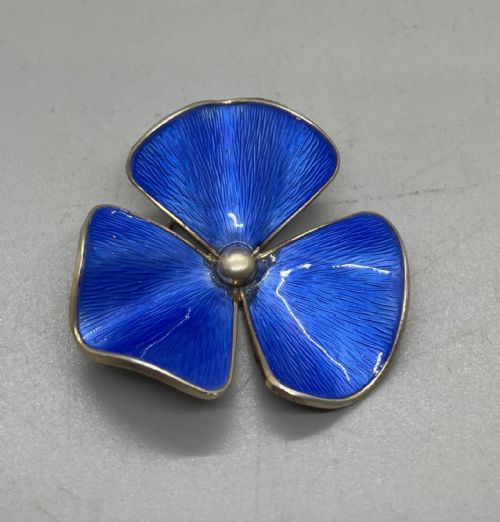
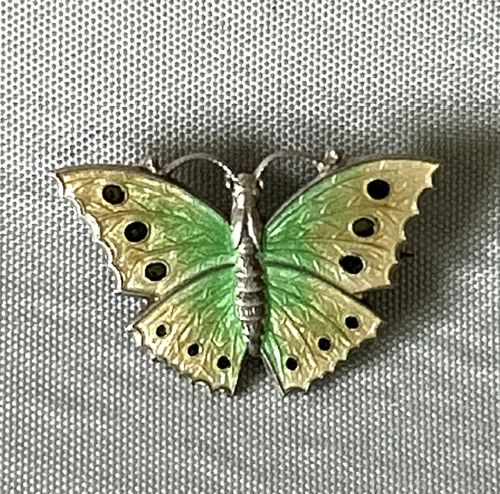
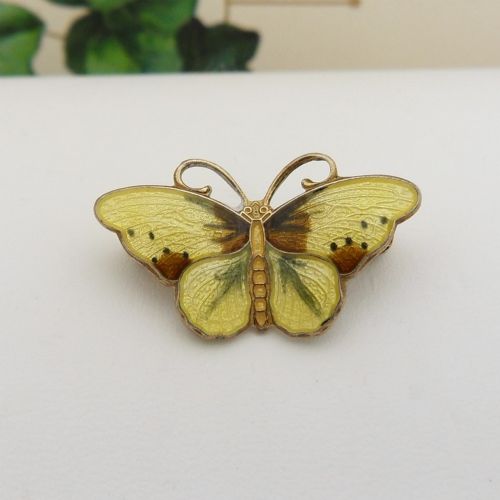
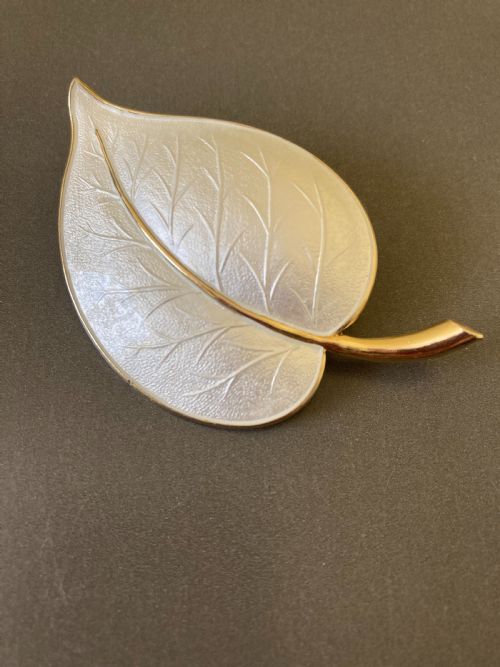
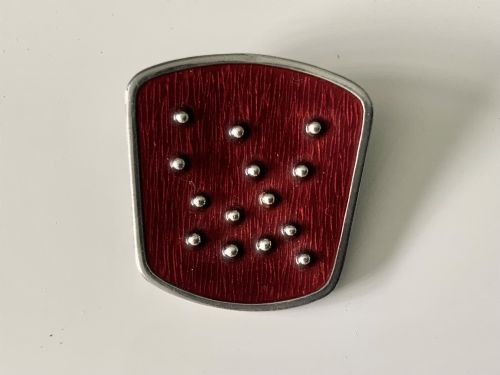
An antique guilloche brooch represents a specific decorative jewellery form defined by machined geometric patterns beneath translucent enamel. The selection spans pieces from the Victorian and Edwardian eras through the Art Deco period and into mid-century Scandinavian modern design.
The objects serve primarily as dress ornaments, though certain examples double as pendants or derive from related accessories like belt buckles. Pieces range from delicate petite items to larger statement pieces incorporating pearls, garnets, and multi-coloured enamel work.
Materials and construction techniques
Makers utilised mechanical rose engines to engrave precise, repeating geometric patterns into a metallic base, usually silver, sterling silver, or gold. This engraved foundation creates the signature shimmering depth seen beneath the finished surface.
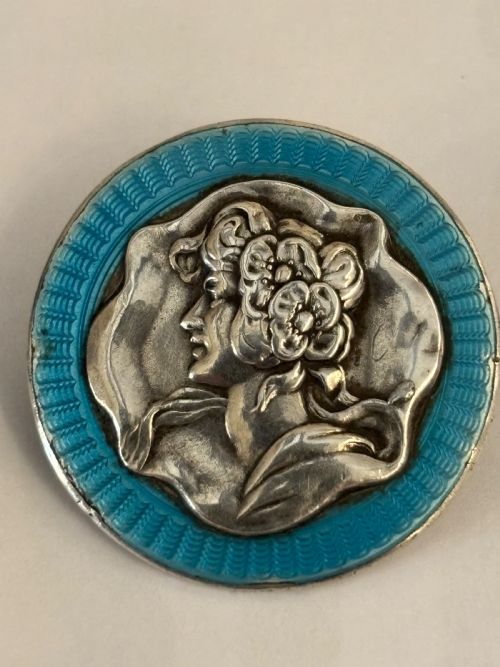
Vitreous enamel, often coloured in shades of blue, green, red, or multi-coloured hues, was applied in powdered form over the engraved metal and fired at high temperatures. The translucent glass layer allows the underlying machined pattern to show through clearly.
Finishing techniques involved mounting the enamelled plaques into secure metal frames, sometimes adding gold gilt layers or incorporating additional gemstones such as pearls and garnets. Many examples feature safety clasps, pin stems, and integrated loops to allow dual use as brooches or pendants.
Distinguishing quality across the range
The sophistication of the underlying machined engraving dictates much of the visual depth and complexity in the finished piece. Finer geometric precision creates a more vibrant play of light through the translucent enamel layers.
The clarity and even application of the vitreous enamel separate standard production from superior work. Exceptional pieces display smooth, unblemished enamel surfaces where the colour remains uniform and the metallic lustre beneath stays sharp.
The choice of base metal and secondary materials influences the overall character of the piece. Solid gold, sterling silver, silver gilt, and the inclusion of genuine pearls or garnets elevate the tier of the jewellery.
David Andersen·A H Darby & Son·Henry Matthews·Gustav Gaudernack
The Antique Guilloche Brooch Glossary
- Guilloche
- A decorative technique where a mechanical lathe engraves a precise, intricate repeating pattern into metal. This machined base provides the characteristic shimmering texture beneath translucent enamel.
- Vitreous enamel
- A glass-like substance fused to a metal surface through high-temperature firing. It provides durable, vibrant colour that resists fading over decades.
- Silver gilt
- Silver that has been coated with a thin layer of gold. This treatment offers the warm appearance of solid gold while utilising a silver base.
- Sterling silver
- An alloy consisting of silver and other metals, typically copper, standardised for durability and strength in jewellery. It appears frequently in twentieth-century Scandinavian and British pieces.
- Belt buckle
- A functional clothing fastener repurposed or designed as a decorative accessory. Certain antique pieces retain fittings that allow them to be worn as brooches.
Antique Guilloche Brooch: Frequently Asked Questions
How do I date an antique guilloche brooch?
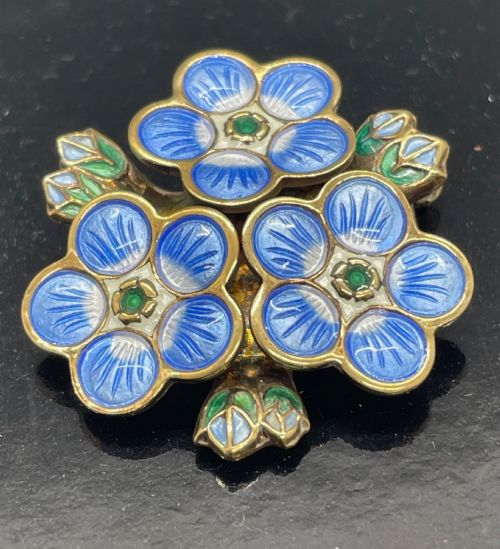
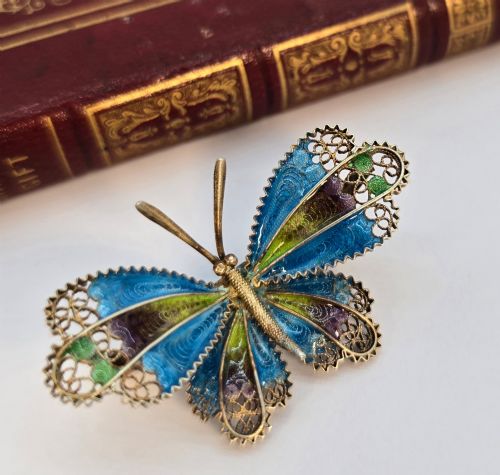
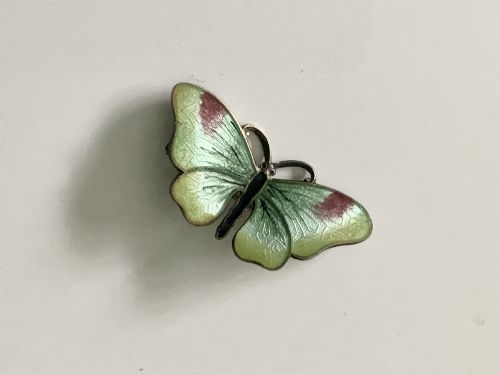
Dating relies on a combination of stylistic markers, hallmarks, and manufacturing techniques. Pieces from the Victorian and Edwardian eras often feature naturalistic motifs like pansies and hearts, while Art Deco and 1930s examples lean towards geometric butterfly and bird designs.
Assay office marks, maker stamps, and metal purity stamps such as sterling or gold karat marks help narrow down the specific decade of production. Examining the construction of the pin stem and clasp mechanism also provides reliable clues regarding age.
How were these brooches worn originally?
These ornaments served primarily to fasten or accent lapels, collars, shawls, and hats on period garments. Their colourful enamel work added a focal point to tailored wool coats and silk blouses.
Certain designs incorporated versatile loops or pendant bails, allowing the wearer to transition the piece from a chest brooch to a necklace pendant. Belt buckles from the Edwardian period were likewise adapted into wearable pins.
How do I care for my enamel brooch?
Vitreous enamel is essentially glass fused to metal, requiring gentle handling to prevent impact damage or scratching. Store the piece in a soft pouch away from harder jewellery items that might chip the surface.
Clean the metal and enamel gently with a soft, damp cloth and dry thoroughly. Avoid harsh chemical dips, ultrasonic cleaners, and prolonged exposure to moisture, which can degrade vintage pins and settings.
What is the difference between Victorian and Art Deco pieces?
Victorian and Edwardian examples frequently draw inspiration from nature, showcasing detailed floral sprays, ribbons, insects, and heart motifs in rich colour palettes. The metalwork often incorporates pearls, garnets, and heavier gold or silver settings.
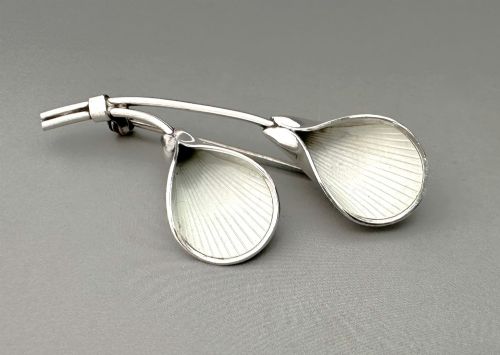
Art Deco and 1930s pieces shift towards stylised symmetry, clean lines, and vibrant Scandinavian designs such as butterflies and abstract floral arrangements. These later pieces make extensive use of sterling silver and bright enamel colours.