
Victorian Button Back Seat
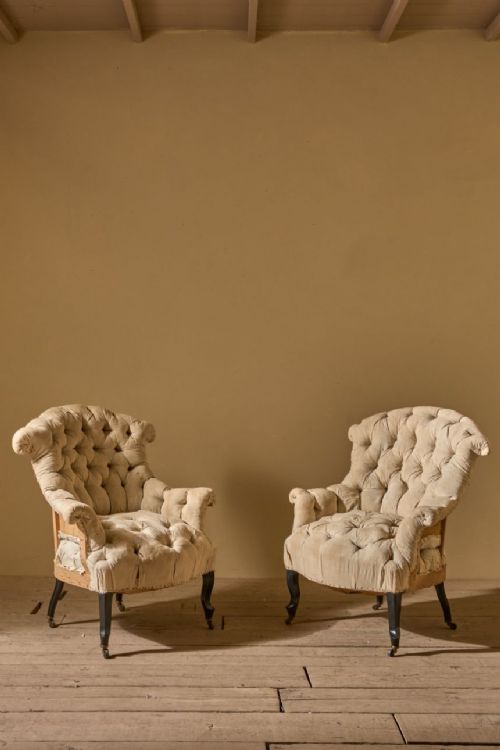
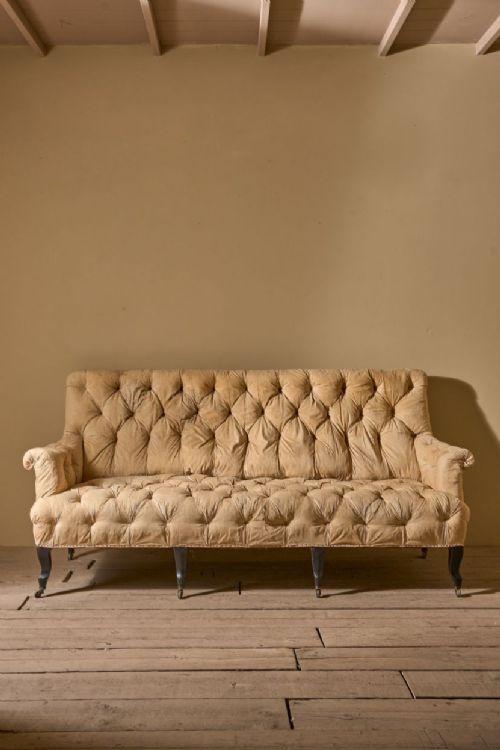
A victorian button back seat brings deep-buttoned comfort and nineteenth-century upholstery craft directly into a room.
Victorian Button Back Seat
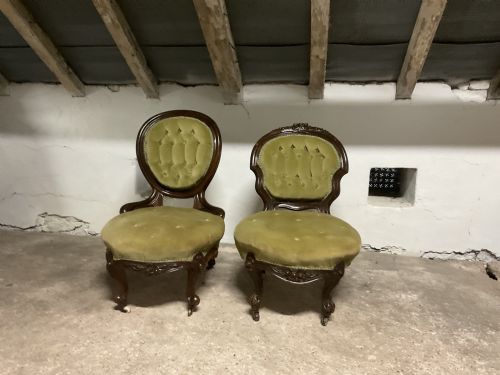
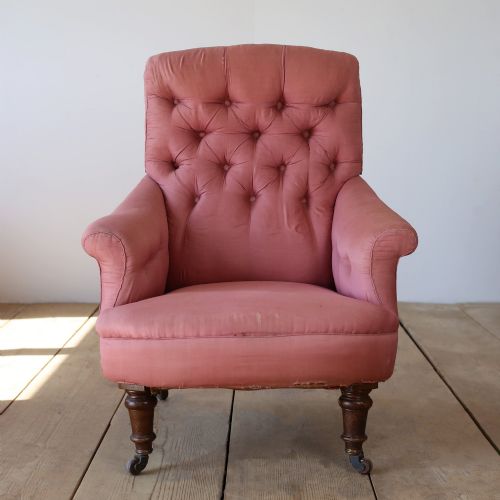
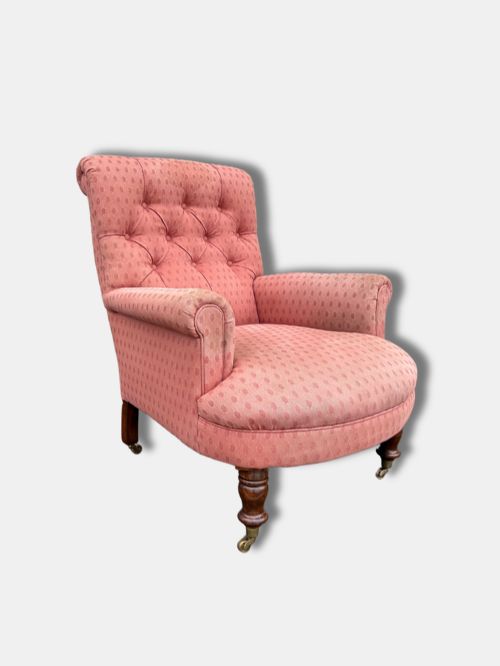
A victorian button back seat encompasses armchairs, nursing chairs, slipper chairs, and larger settees or sofas originating primarily from the nineteenth century. These seating pieces span styles from Victorian and Regency to Edwardian, reflecting the varied domestic tastes of the period.
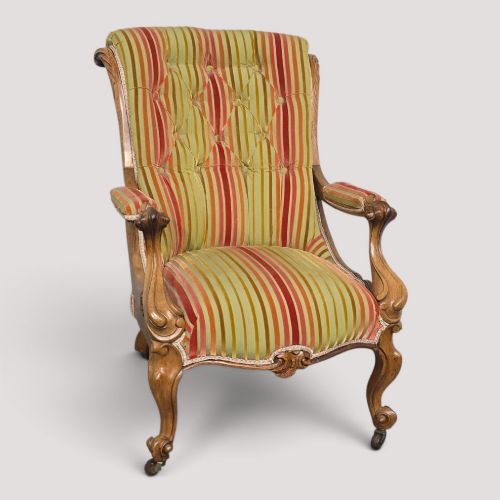
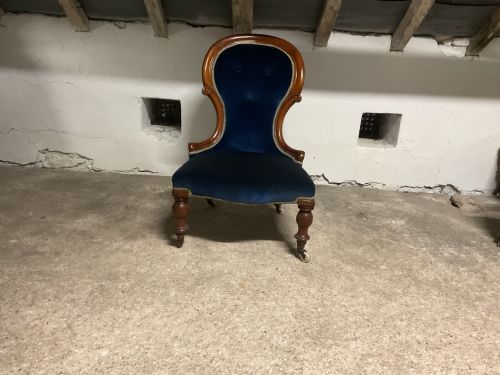
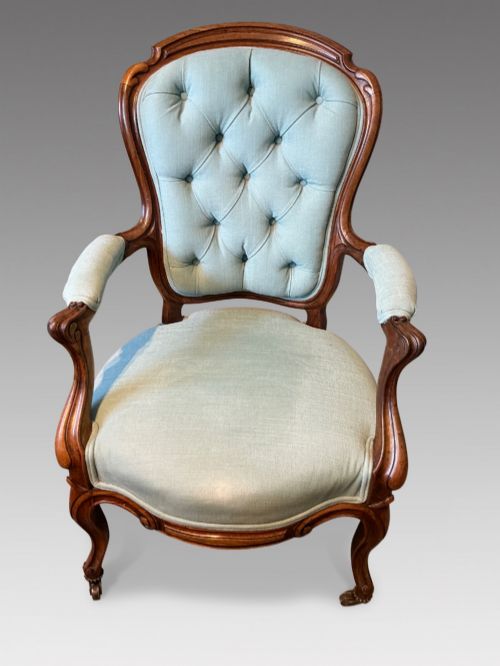
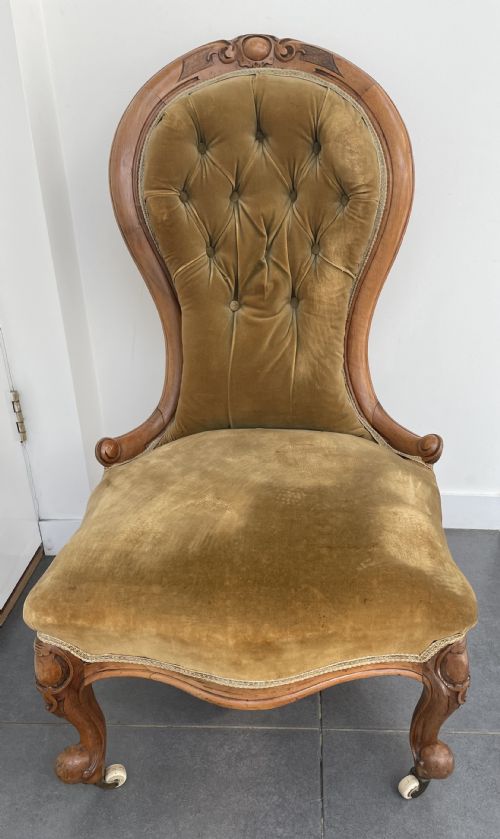
Armchairs and low nursing chairs dominate the selections, frequently constructed with walnut, mahogany, or rosewood frames. Buyers encounter both compact occasional seating and substantial country house proportions designed for deep comfort.
Materials and construction
Makers built these frames using dense hardwoods like mahogany, walnut, oak, and rosewood, often carving details into the show wood around the back and legs. Metal components such as brass castors and iron frames appear within specific library chairs and larger chesterfield sofas.
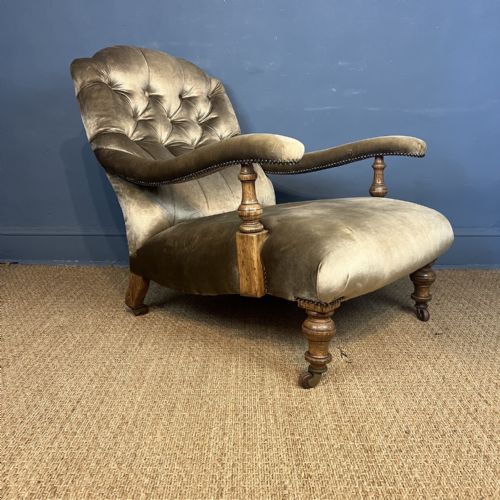
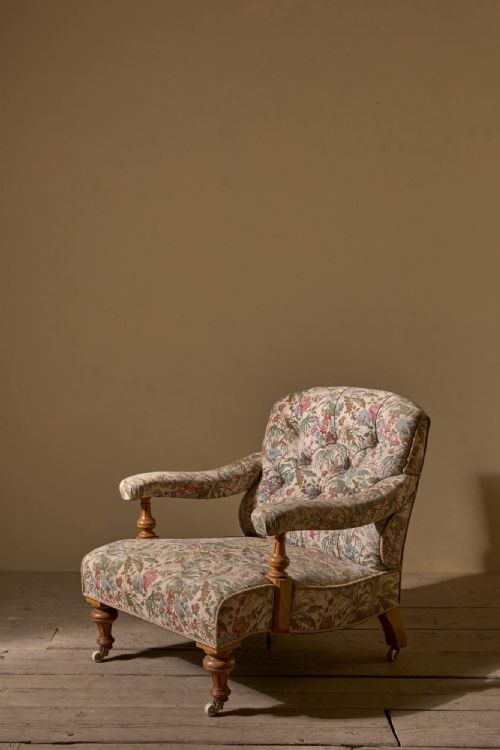
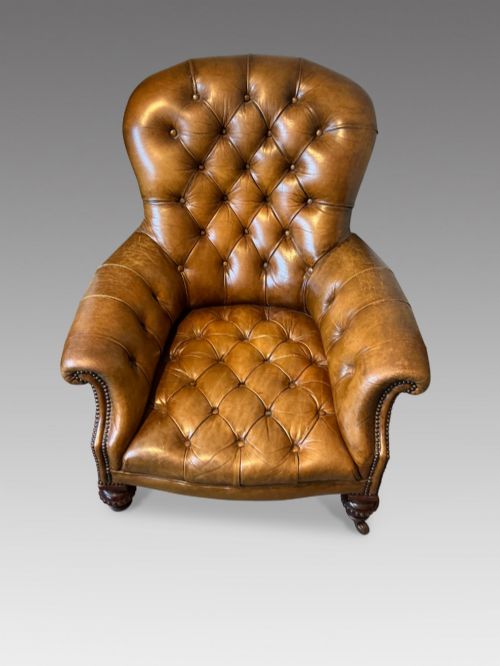
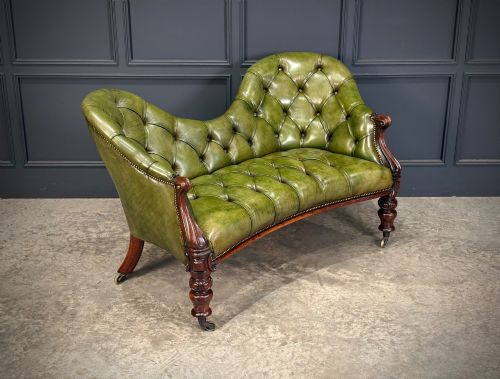
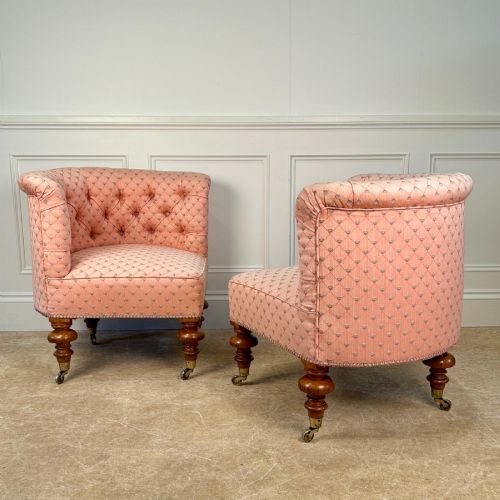
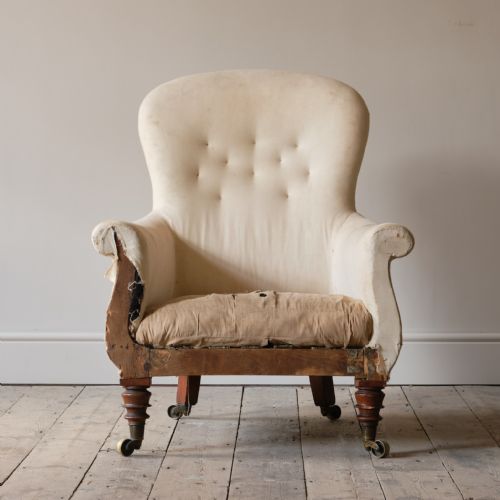
Upholstery relies on traditional stuffing secured with deep buttoning, paired with leather, velvet, or woven fabric coverings. Sprung seats and iron frames provide the structural support beneath the tightly pulled fabric and leather surfaces.
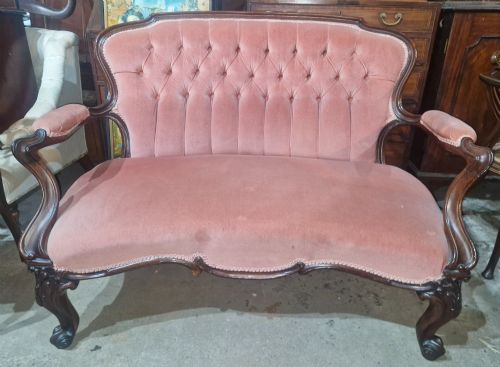
Conversation sofas allowed two people to sit facing opposite directions while maintaining a polite chat without craning their necks.
Craft and proportion
Quality rests in the precision of the timber framing and the execution of the deep buttoning across the back. Carved rosewood or walnut frames with balanced proportions distinguish finer pieces from standard domestic seating.
The choice of covering material, whether supple leather or heavy velvet, alters the character of the piece. Superior examples maintain firm internal springing and crisp joinery within the wooden structure.
Howard and Sons·Gillows
The Victorian Button Back Seat Glossary
- Button back
- An upholstery technique where indentations are formed in the padding by pulling threads or twine through the fabric and securing them to the frame, often finished with matching buttons.
- Nursing chair
- A low-seated chair traditionally designed for comfort in the bedroom or nursery, allowing the sitter to tend to children easily.
- Settee
- A medium-sized upholstered seat with a back and arms, designed to accommodate more than one person.
- Show wood
- The exposed polished wooden sections of a chair or sofa frame that remain visible around the upholstered padding.
Victorian Button Back Seat: Frequently Asked Questions
Where did people use button back seats?
These seats served primarily in formal drawing rooms, libraries, and private bedrooms of nineteenth-century homes.
Smaller nursing and slipper chairs found placement near fireplaces, whilst large chesterfield sofas anchored principal reception rooms.
How do I identify a Victorian piece?
Victorian seating exhibits characteristic timber choices such as walnut and mahogany, combined with distinct revival styles including Rococo.
Makers often integrated deep buttoning alongside turned wooden legs fitted with brass castors.
Are these seats suitable for daily use?
The robust hardwood frames and sprung interiors provide substantial support for regular seating in contemporary living spaces.
Buyers should assess the condition of the internal webbing and upholstery before committing to daily placement.