
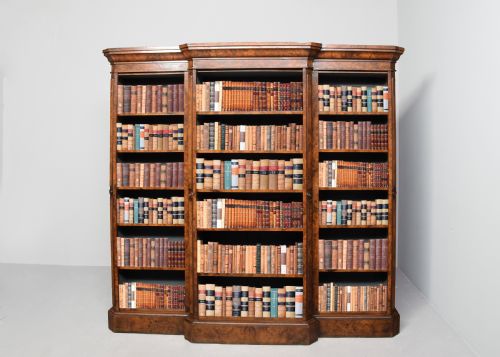
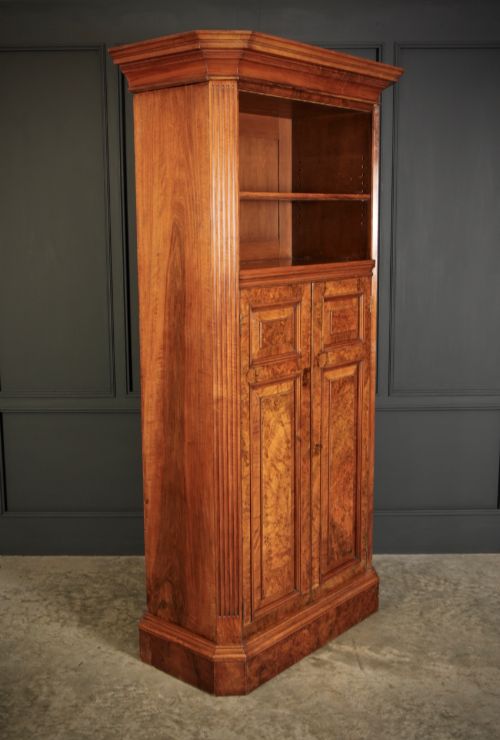
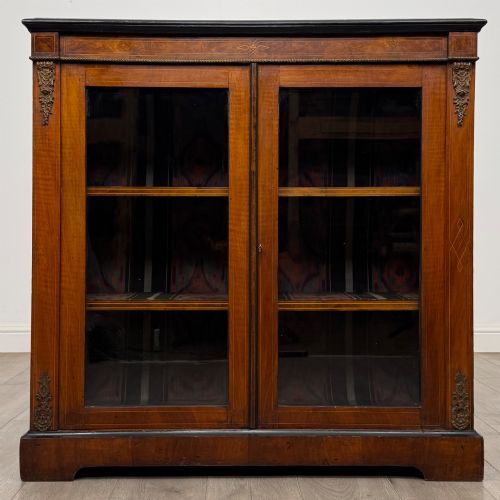
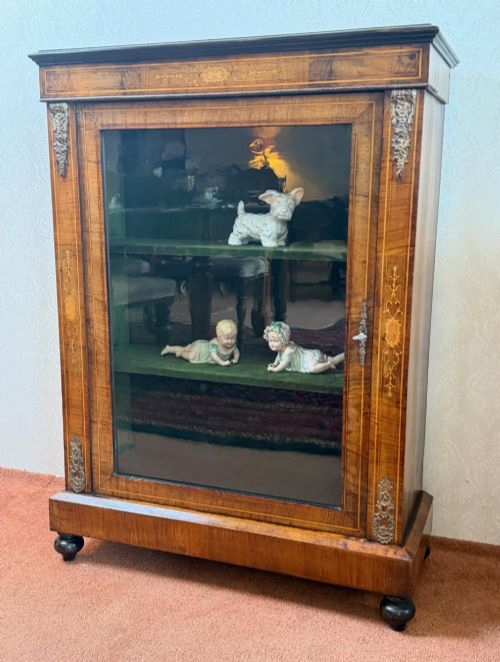
Victorian Burr Walnut Bookcase
A victorian burr walnut bookcase brings patterned timber and polished glass together to frame a room's library with mid-nineteenth-century craft.
Victorian Burr Walnut Bookcase
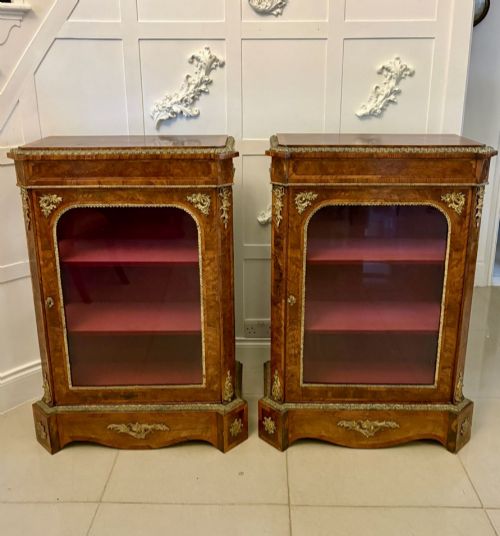
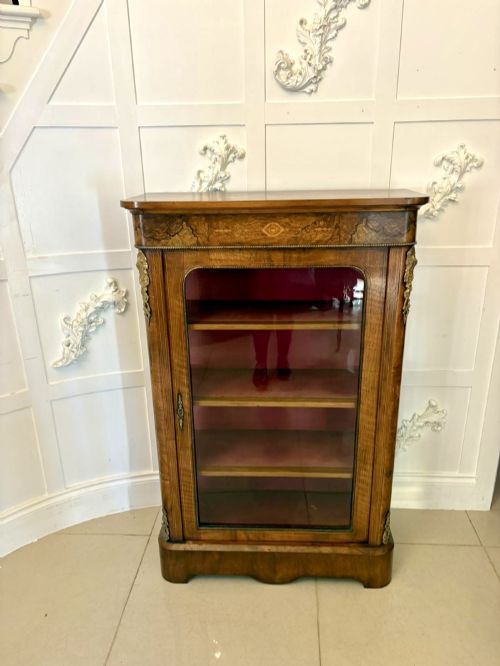
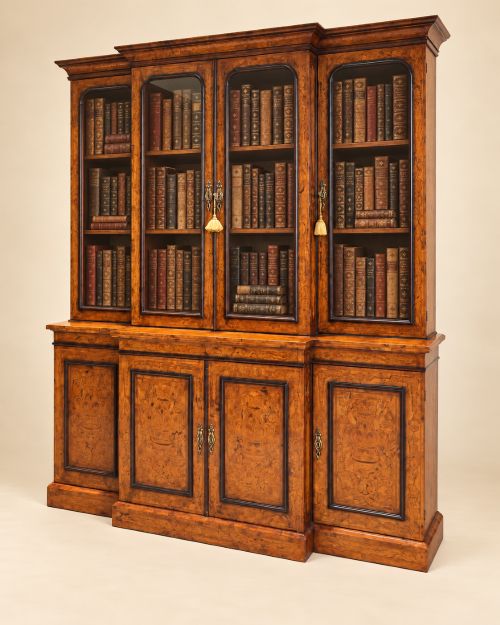
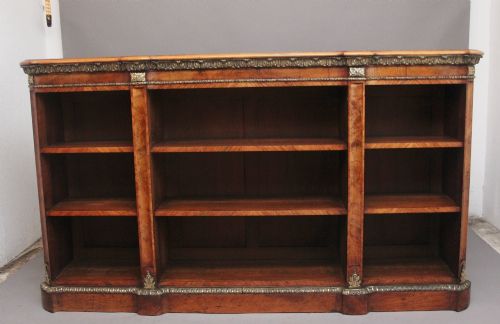
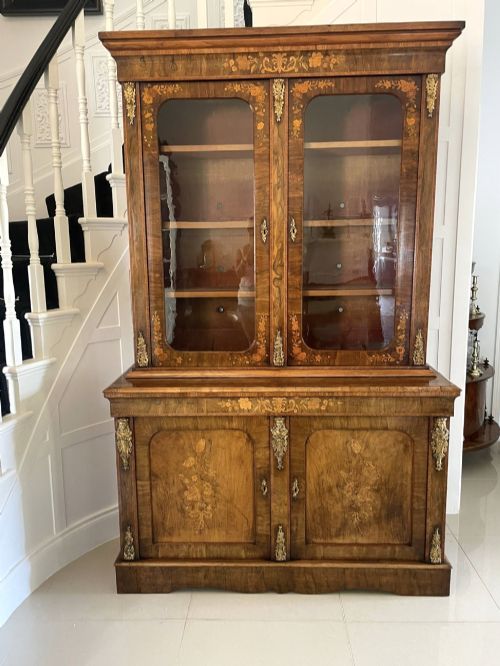
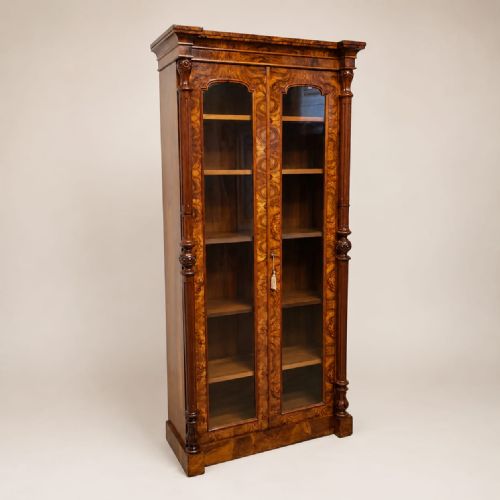
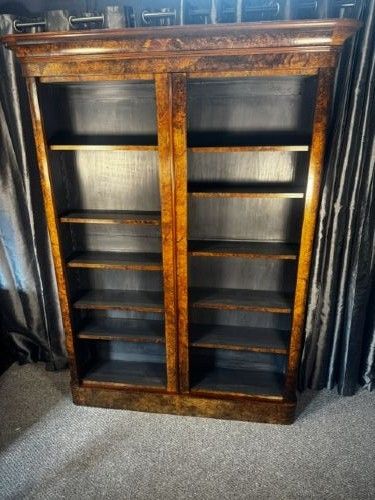
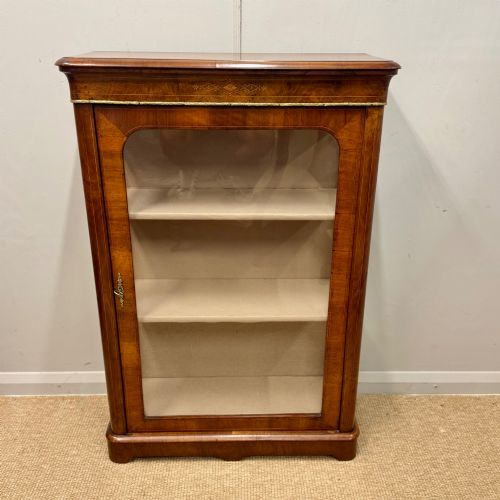
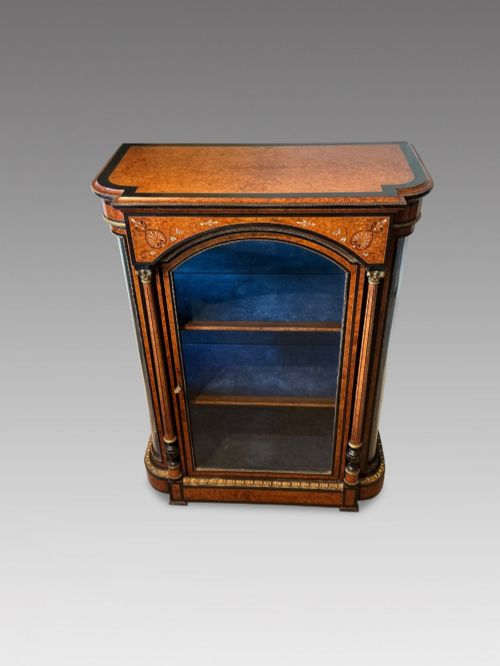
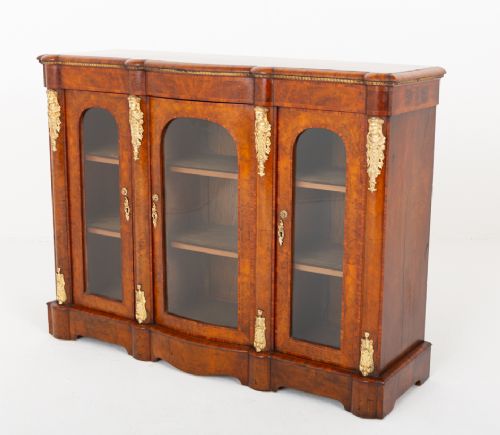
A victorian burr walnut bookcase is typically a glazed or open shelving unit built during the nineteenth century, most frequently encountered in mid-Victorian forms from around 1850 to 1880. These pieces range from tall breakfront library cabinets and credenzas to compact pier cabinets and low open bookshelves designed for domestic display.
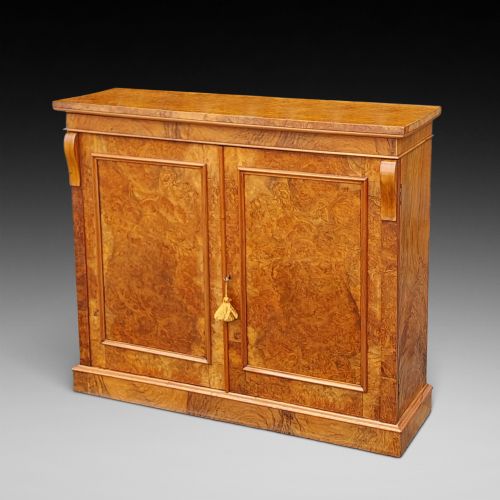
The material identity rests on burr walnut veneer, chosen for its swirling grain patterns and warm tone, often set with glass doors, adjustable shelves, or compartmentalised storage. Makers adapted these forms for both formal reception rooms and private studies, creating functional furniture that also served to showcase fine bindings and ornaments.
What varies in quality
The level of execution in a victorian burr walnut bookcase depends largely on the selection and symmetry of the veneer grain, the crispness of any marquetry inlay, and the weight of the bronze or ormolu mounts. Finer examples display continuous grain matching across wide breakfront facades without awkward breaks or patches in the timber.
Structural heft and interior joinery also separate standard production from superior pieces, particularly in the thickness of the walnut used for adjustable shelving and the precision of the glazed door frames. The presence of secondary timbers like oak inside drawers and backboards generally indicates higher workshop standards.
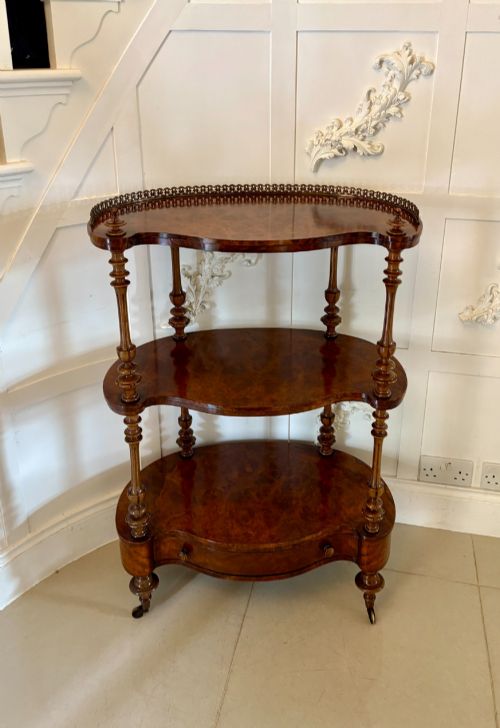
Listings feature burr walnut, glass, brass, ormolu, and velvet across periods from Regency to late Victorian.
Johnstone and Jeanes
The Victorian Burr Walnut Bookcase Glossary
- Burr walnut
- Timber taken from the gnarled growth or root of a walnut tree, yielding a highly figured, swirling grain pattern used for decorative veneer. Cabinet makers prized this wood for high-status furniture fronts.
- Breakfront
- A piece of furniture where the central section projects forward from the flanking wings. This architectural arrangement creates shadow and depth across large bookcases and credenzas.
- Ormolu
- Gilt bronze mounts cast and chased with decorative motifs, applied to the corners and panels of cabinets. They provide metallic contrast against dark wood surfaces.
- Pier cabinet
- A low freestanding display cabinet designed to fit the wall space between windows. These pieces typically feature single glazed doors and polished tops for ornaments.
- Marquetry
- Inlaid patterns formed by fitting contrasting pieces of veneer into a prepared ground. Floral and geometric motifs frequently decorate nineteenth-century cabinet doors.
Victorian Burr Walnut Bookcase: Frequently Asked Questions
Were these shelves adjustable?
Many nineteenth-century examples include rows of small wooden or metal ratchets inside the uprights to alter shelf heights.
This adaptability allowed owners to store books of varying sizes, from pocket volumes to tall folios.
How do I care for burr walnut?
Burr walnut requires stable indoor humidity away from direct sunlight and heat sources to prevent the thin veneer from drying or cracking.
Regular dusting with a dry cloth and occasional light waxing maintains the french polished surface without building up residue.
What is a pier cabinet?
A pier cabinet is a narrow glazed or open display unit made to stand against the solid section of wall between two windows.
These compact pieces often incorporate ormolu mounts and velvet-lined interiors for displaying porcelain and small collectibles.