


Victorian Breakfront Display Cabinet
A Victorian breakfront display cabinet brings architectural presence and grand scale to a room, offering generous glazed storage for fine collections.
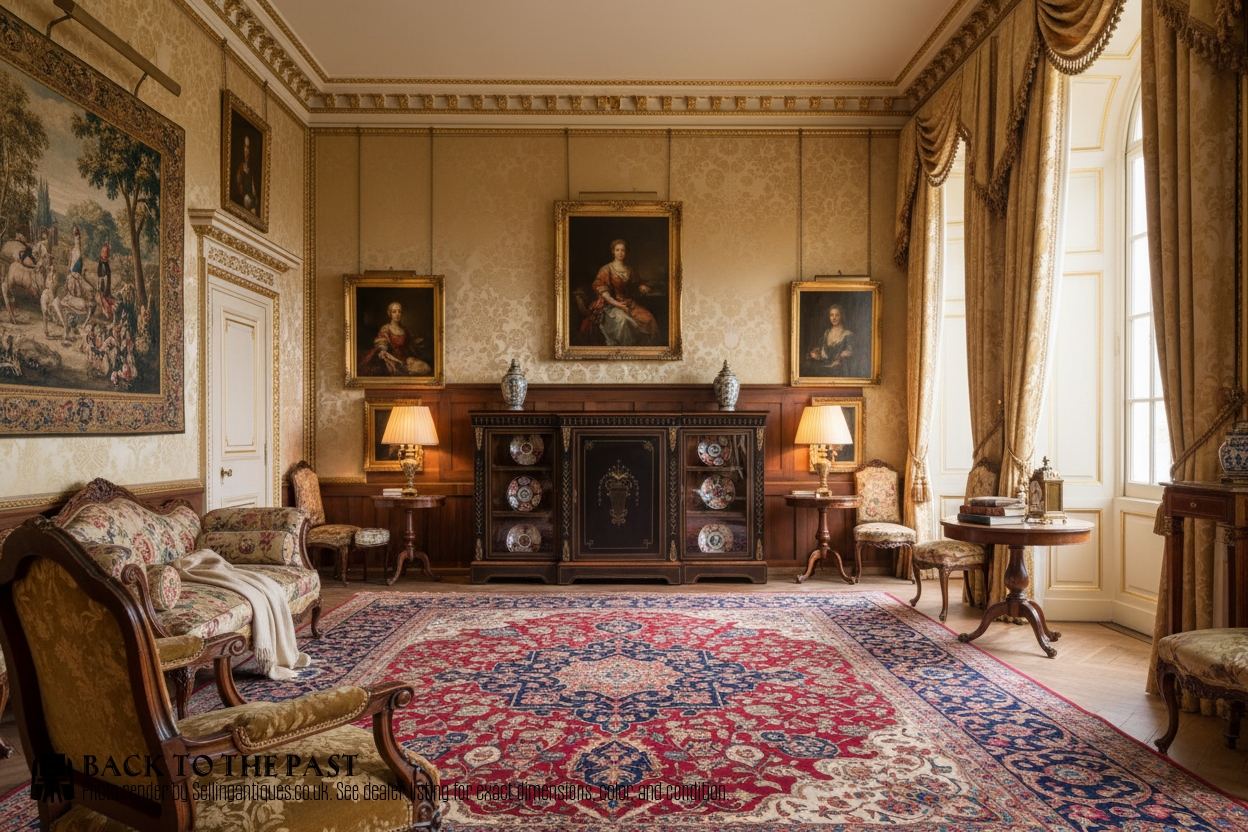
Victorian Breakfront Display Cabinet
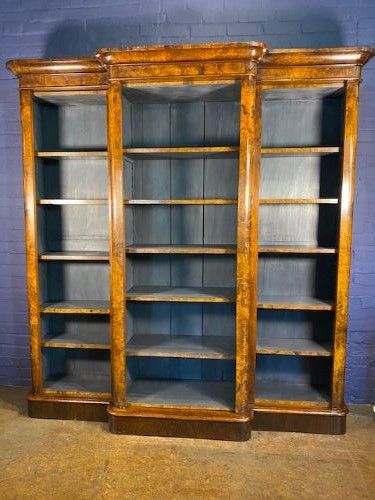
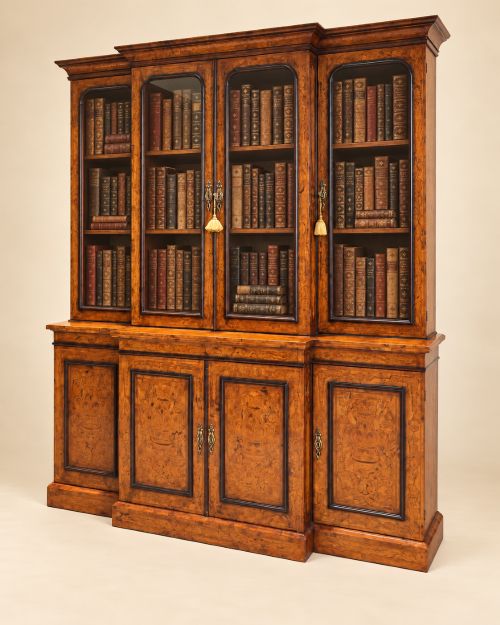
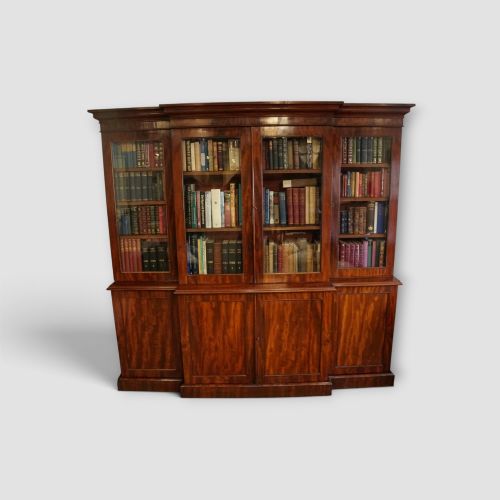
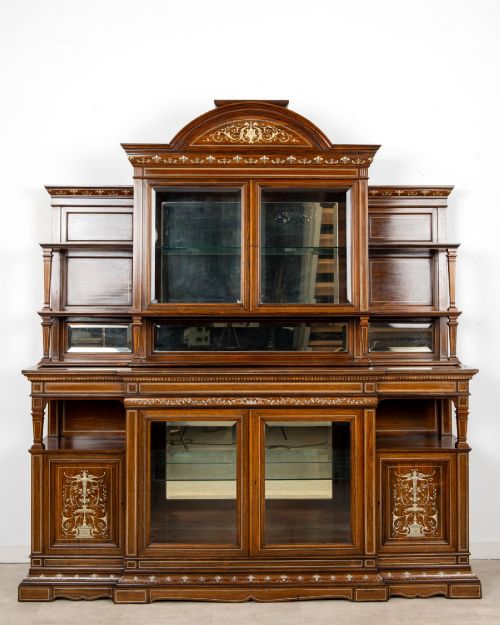
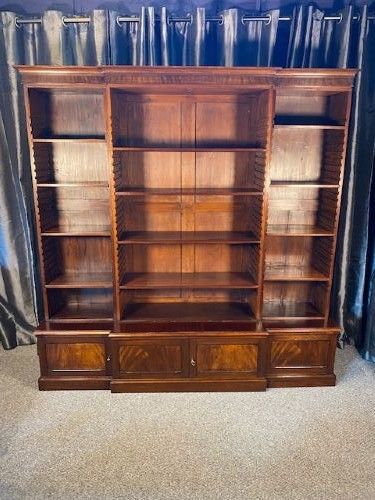
A victorian breakfront display cabinet projects forward in sections, creating a distinct tripartite facade that draws the eye across the timber grain. These pieces emerge chiefly from the nineteenth century, spanning decades from eighteen-fifty to nineteen hundred.
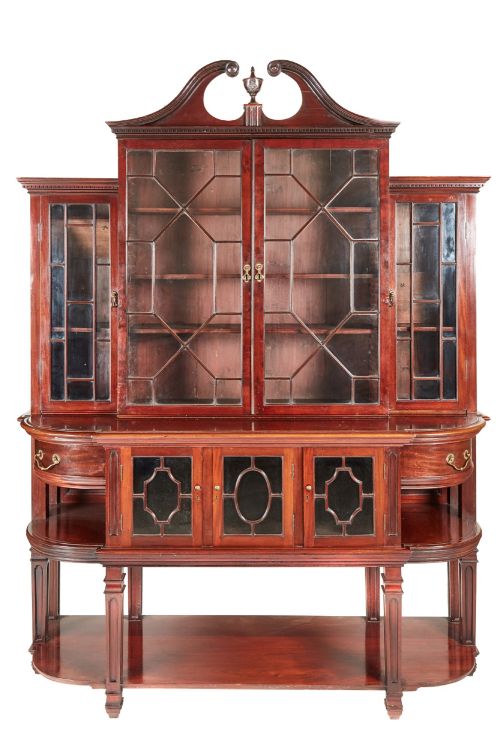
The form unites the practical requirements of a library bookcase with the decorative ambitions of a display cabinet. Mahogany and burr walnut dominate the selection, often arranged with glazed doors flanked by side sections.
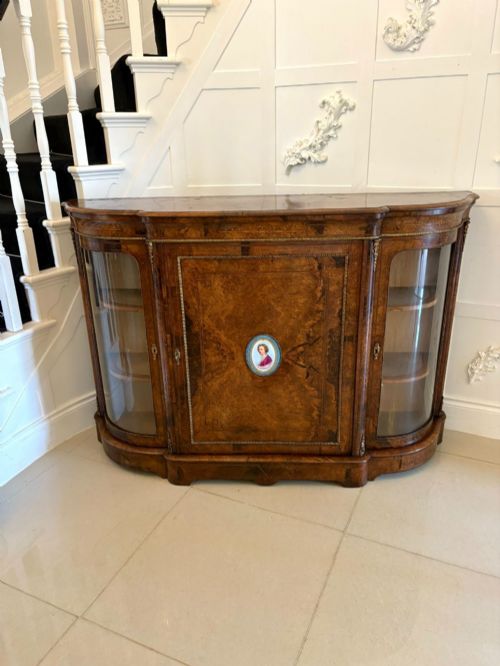
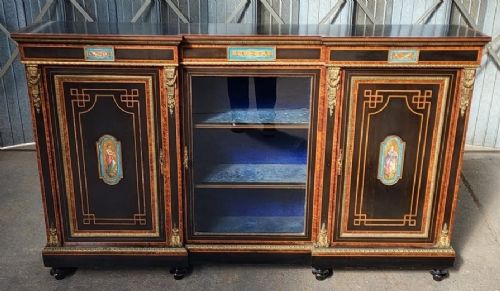
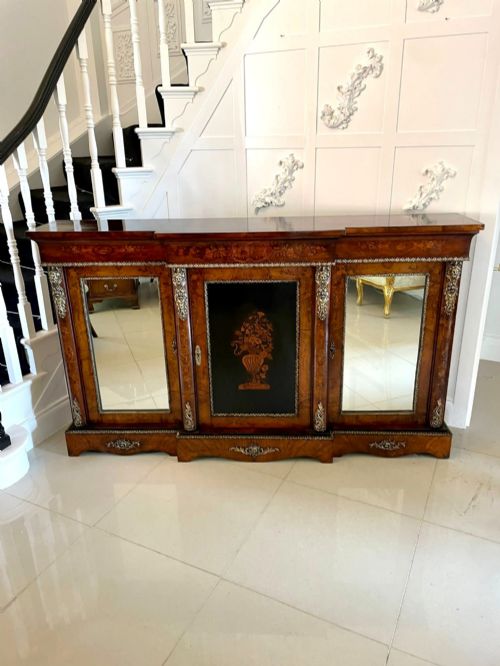
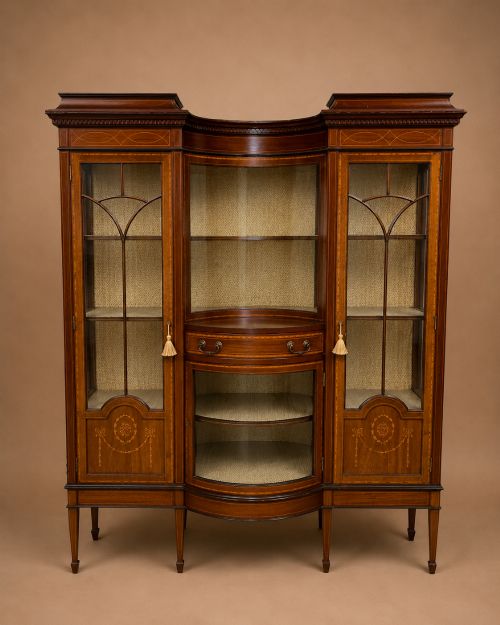
Makers drew on diverse design vocabularies, producing works in the Gothic style, Aesthetic Movement, and Sheraton Revival. Buyers encounter large bookcases with adjustable shelves alongside lower credenza-style cabinets designed to stand against principal walls.
Materials and Construction
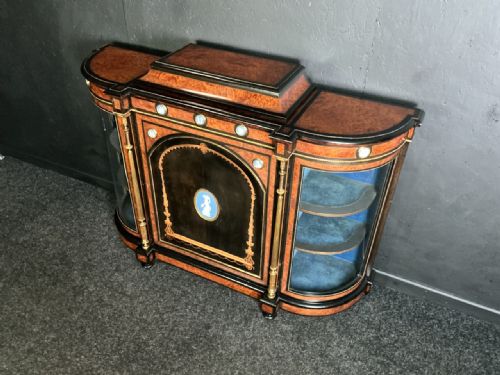
Cabinet makers utilised dense hardwoods such as mahogany and walnut, frequently applying burr veneers to large surfaces to create dynamic, figured patterns. Brass hardware, ormolu mounts, and delicate inlay provide metallic contrast against the dark timber ground.
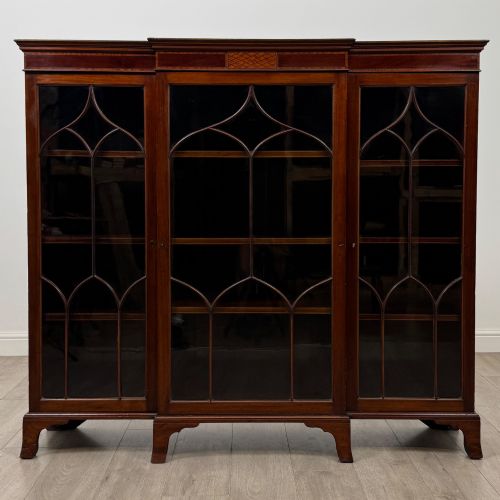
Glazing relies on timber astragal bars arranged in geometric or arched patterns to hold individual panes of glass within the doors. Ebonised wood, porcelain plaques, and marquetry enrichment complete the decorative vocabulary recorded across the period.
Several cabinets bear stamps from historic institutions and Manchester workshops, proving that sturdy library furniture sometimes travelled far from home.
Craft and Proportion
The distinction between standard commercial output and exhibition-grade work lies in the selection of timber veneers and the precision of the marquetry inlay. Finer examples display continuous grain matching across the breakfront sections and deeply figured burr walnut selected with care.
Structural harmony defines superior pieces, where the proportions of the projecting centre section balance the flanking cabinets. The refinement of ormolu mounts and the crispness of carved details further separate workshop production from mass manufacturing.
Jas Shoolbred·Collinson & Lock·Edwards & Roberts·Gillows·Lamb of Manchester
The Victorian Breakfront Display Cabinet Glossary
- Breakfront
- A cabinet facade divided into three sections where the central portion projects forward beyond the flanking wings. This architectural arrangement creates depth and shadow across the front elevation.
- Astragal
- A small timber moulding used to divide glass panes within a cabinet door. These slender bars form structural grids that hold the individual lights.
- Burr Walnut
- Timber taken from the gnarled growths of a walnut tree, yielding highly twisted and decorative grain patterns. Cabinet makers sliced this wood into thin veneers for principal display surfaces.
- Ormolu
- Gilded bronze used for decorative mounts and enrichments applied to furniture. The technique involves treating metal with a mercury and gold amalgam before firing.
- Credenza
- A low cabinet, frequently enclosed by doors and mounted with porcelain or ormolu. Originally a sideboard, it evolved during the nineteenth century into an ornate display piece.
Victorian Breakfront Display Cabinet: Frequently Asked Questions
How are adjustable shelves fitted?
Adjustable shelves rest upon internal timber racks or brass studs set into the cabinet interior walls. This system allowed owners to alter shelf heights for varying book sizes.
Nineteenth-century examples frequently retain their original numbered shelving slots.
Where were these cabinets placed?
These large cabinets stood against principal walls in libraries, drawing rooms, and formal dining spaces. Their expansive glazed doors protected valuable volumes and decorative porcelain.
Lower credenza variants served similar display functions beneath family portraits or mirrors.
How do styles differ across the period?
Early examples often follow classic mahogany proportions with Gothic influences, while later decades introduce ebonised finishes and marquetry inlay. Aesthetic Movement and Sheraton Revival pieces show lighter satinwood and delicate stringing.
Makers adapted historic vocabulary to suit Victorian interiors through varied veneer selections.