



Large Walnut Library Cabinet
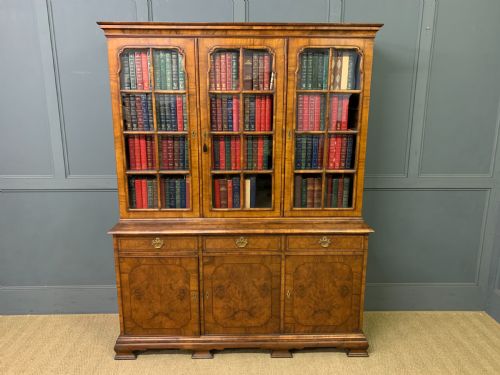
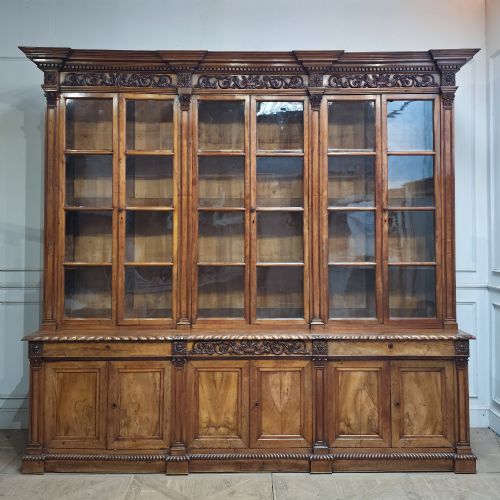
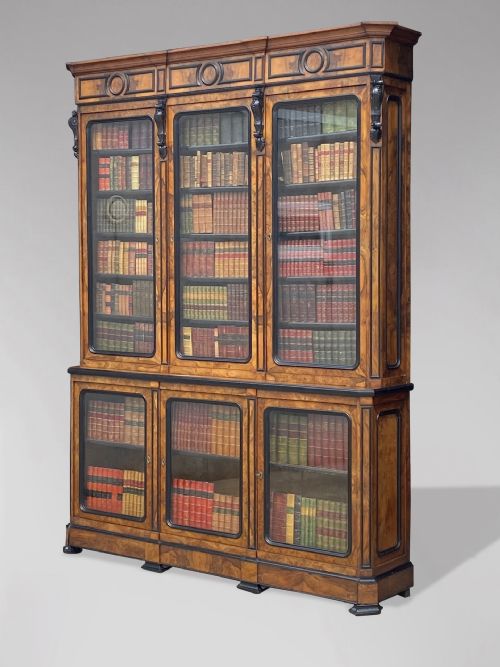
A large walnut library cabinet anchors a room with rich timber grain and imposing scale, offering serious capacity for a growing collection of books.
Large Walnut Library Cabinet
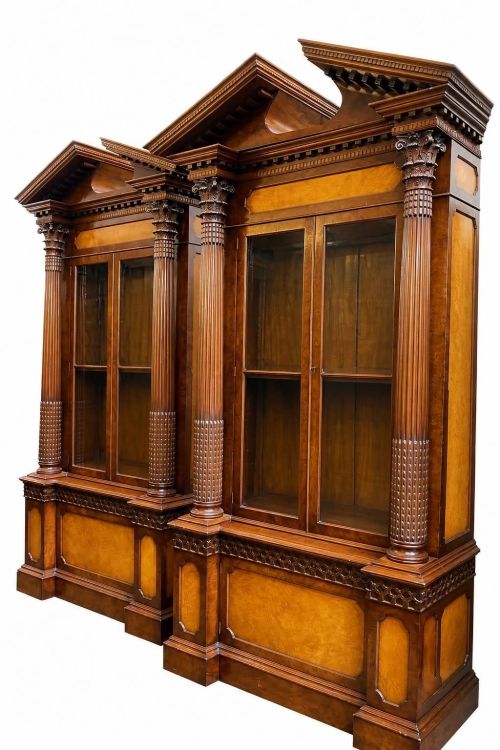
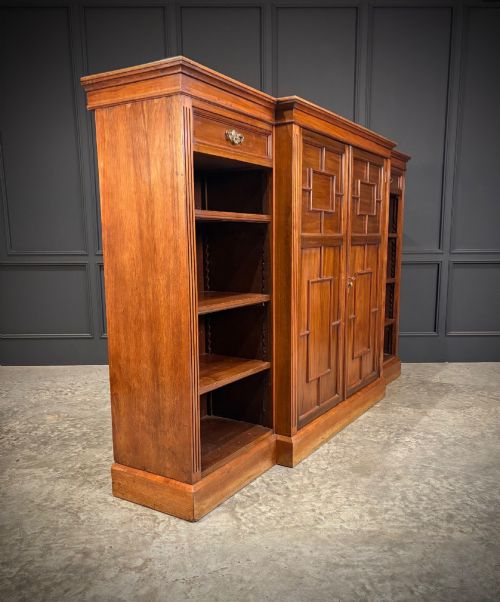
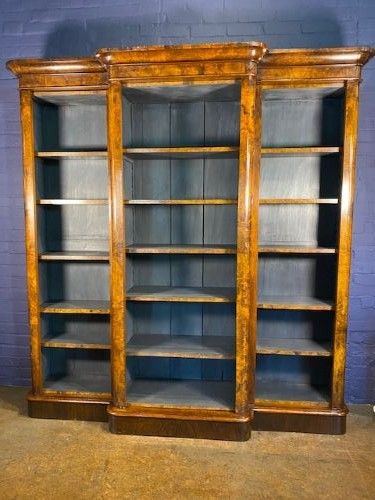
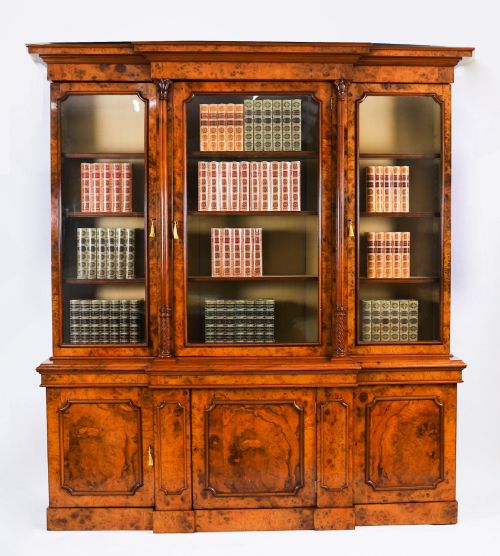
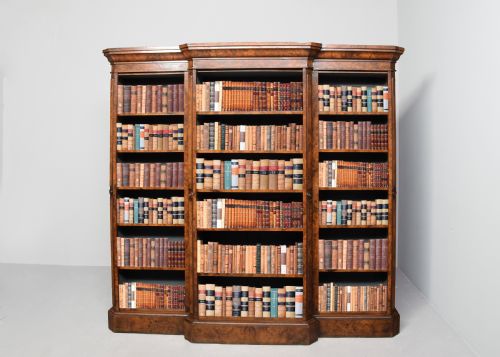
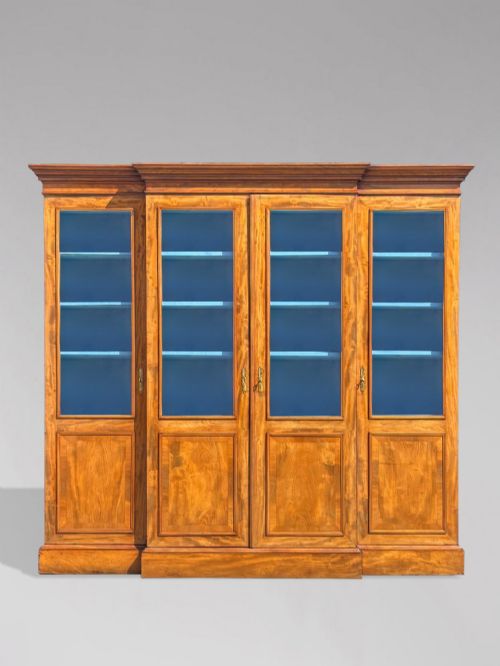
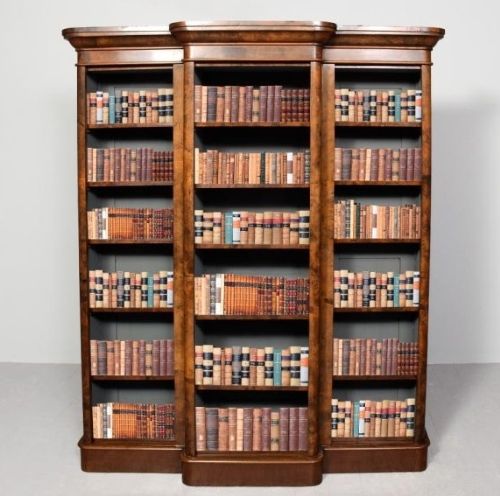
A large walnut library cabinet brings substantial presence to a room, primarily taking the form of breakfront bookcases with multi-section shelving. These pieces date predominantly from the nineteenth century, spanning Victorian and continental European workshops.
Buyers will frequently encounter breakfront designs featuring glazed or open shelving, alongside French Louis Philippe and Edwardian interpretations. The form prioritises both display and storage, often incorporating adjustable shelves to accommodate volumes of varied heights.
How they were made
Cabinet makers utilised solid walnut and decorative burr walnut veneers applied over secondary timbers like oak, often accented with brass hardware and glass panel doors. Construction techniques relied on substantial timber frames to support the heavy weight of extensive book collections.
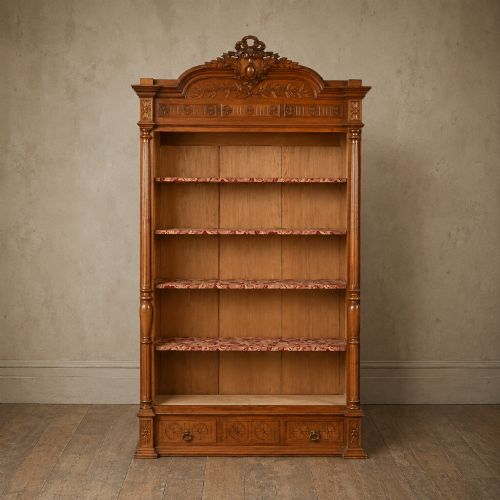
Surface ornamentation involved figuring the wood grain to create rich patterns, supplemented by carved friezes, inlaid details, and barley twist columns. Glazing was fitted into wooden door frames to protect contents from dust while maintaining visibility.
Large Walnut Library Cabinet Retail Price Guide 2026
Typical asking prices for large walnut library cabinet among the pieces listed under this phrase on Sellingantiques today, from the lower quarter to the upper quarter. They describe what is for sale here now, not the wider market.
Several library cabinets include hidden spaces behind barley twist columns, perfect for stashing forgotten reading spectacles.
What varies in quality
Distinction across these pieces rests in the selection of the timber, particularly the vibrancy of the burr walnut veneer and the symmetry of its grain matching. Substantial breakfront proportions and refined architectural carvings elevate the execution of the piece.
The sophistication of internal fittings, such as finely finished adjustable shelving systems and robust brass hardware, separates standard workshop output from exceptional cabinet work.
Waring & Gillow·Maple & Co.·Holland & Sons
The Large Walnut Library Cabinet Glossary
- Breakfront
- A cabinet design where the central section projects forward from the flanking wings. This architectural arrangement creates depth and visual rhythm across the facade.
- Burr Walnut
- Timber taken from a tree growth or wart, yielding complex, swirling grain patterns. Cabinet makers prized this veneer for its highly decorative surface appearance.
- Barley Twist
- A turned column or spindle resembling the helical spiral of barley. This sculptural detail appears on upright supports of nineteenth-century furniture.
Large Walnut Library Cabinet: Frequently Asked Questions
How do I clean the walnut wood?
Dust the timber regularly with a soft, dry cloth to prevent particulate buildup on the carved surfaces and polished veneer. Avoid silicone-based sprays, opting instead for traditional beeswax applied sparingly to nourish the grain.
Keep the cabinet away from direct sunlight and heat sources to prevent the walnut veneer from drying out or splitting over time. Consistent indoor humidity preserves both the timber and the structural joints.
Are the shelves adjustable?
Many examples feature adjustable shelving supported by wooden racks or brass pins, allowing you to customise shelf heights for folio volumes. Fixed shelves also appear in certain regional continental variations.
Checking the internal mechanism confirms whether the configuration can be altered to suit modern storage requirements. Most breakfront library bookcases provide ample depth for large books.
How do I identify Victorian pieces?
Victorian examples frequently display rich burr walnut veneers, breakfront configurations, and detailed elements like carved friezes or barley twist columns. Construction methods from this era often include substantial oak framing and hand-cut dovetails.
Examining the backboards and interior timber yields clues regarding period manufacture and subsequent restoration work. Maker plaques or stamps can sometimes be found on the drawer linings or shelf edges.
How do I arrange a large cabinet?
Position the piece against a substantial wall with adequate clearance to showcase its breakfront proportions and glass doors properly. Balance heavy theological or historical volumes on the lower shelves to maintain visual weight.
Allow sufficient room in front of the cabinet for doors to open fully without obstructing room circulation. Lighting should be considered to highlight the figured grain patterns across the facade.