



Victorian Bronze Shelf Clock
A victorian bronze shelf clock brings substantial weight and intricate foundry work to a mantelpiece, combining mechanical precision with period sculpture.
Victorian Bronze Shelf Clock
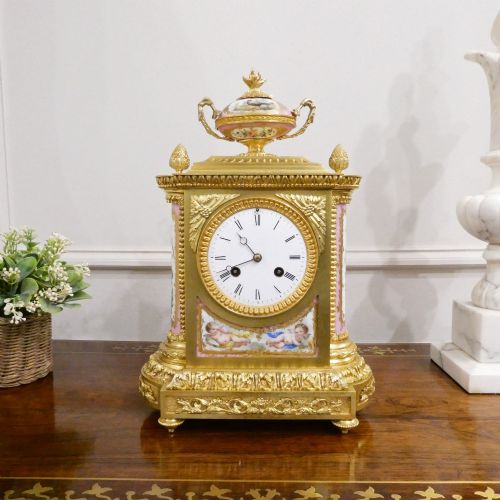
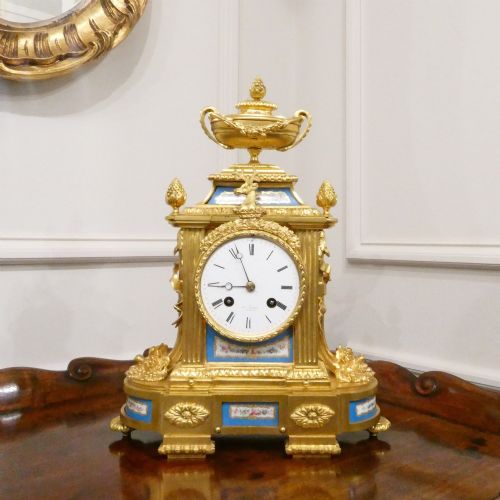
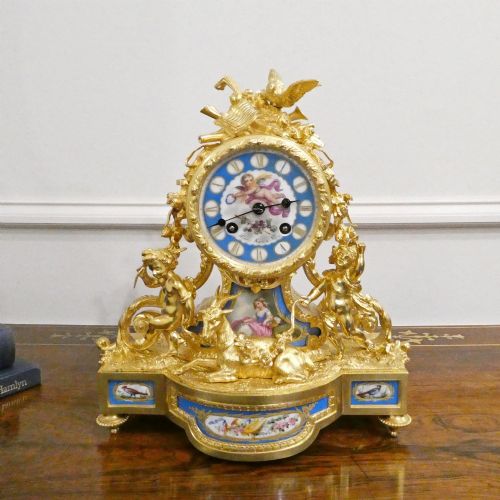
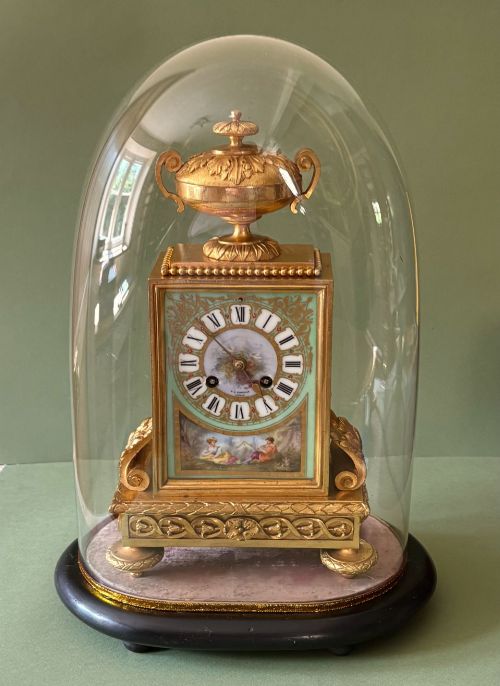
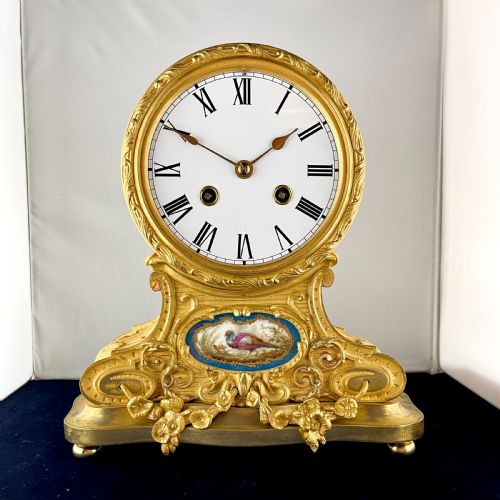
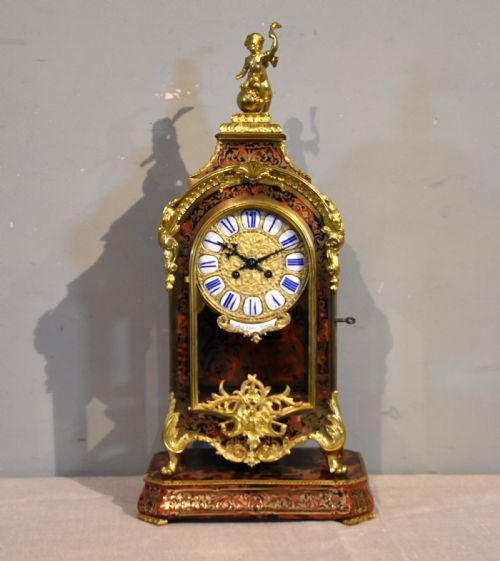
A victorian bronze shelf clock sits upon a mantel or bracket, serving as both a functional timepiece and an ornate sculptural object. The pieces encountered on this page originate predominantly from the nineteenth century, spanning decades from the eighteen-fifties through to nineteen-hundred.
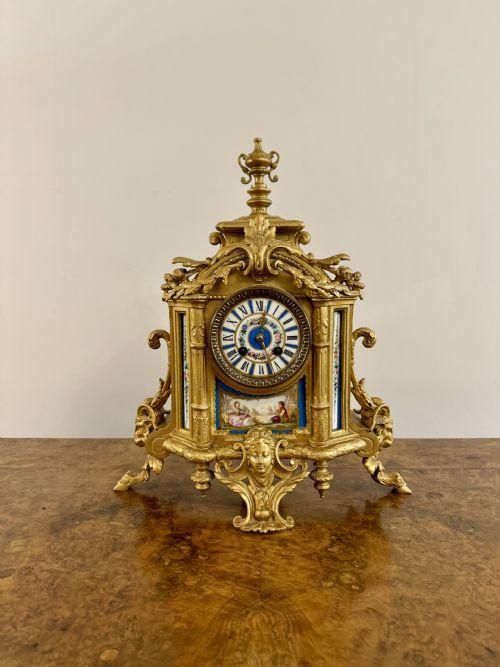
The dominant forms follow continental design revivals, particularly French Rococo, Louis XVI, and Egyptian Revival styles. Buyers routinely find works executed in heavy cast bronze alongside variations incorporating marble, slate, and porcelain panels.
Many examples utilise eight-day mechanical movements that require periodic winding by key. These pieces demonstrate the nineteenth-century passion for combining domestic utility with elaborate historicist decoration.
How They Were Made
Foundries produced these clocks by casting bronze, brass, and ormolu into complex decorative moulds, then finishing the surfaces through chasing and gilding. Metal components frequently pair with turned marble, onyx, or slate plinths that provide structural stability and visual contrast.
Dial faces incorporate painted enamel numerals on metal discs or individual porcelain cartouches. Glazed panels enclose four-glass crystal regulators, allowing a clear view of the brass movement and oscillating pendulum within.
Listings feature nineteen-century clocks incorporating materials such as enamel, ormolu, gilt bronze, brass, glass, porcelain, marble, and bronze.
What Varies in Quality
The sophistication of the cast bronze work dictates the upper tier of the market, where chased details remain crisp and deep rather than soft or cast in shallow relief. Maker attribution also elevates certain pieces, particularly those signed by established Parisian or London horologists and bronze-founders.
Material combination influences overall desirability, with select items uniting heavy rouge or sienna marble with fire-gilt ormolu mounts. The integration of hand-painted porcelain plaques depicting pastoral scenes or floral motifs marks the distinction between standard production and superior execution.
Jean-Baptiste Delettrez·Henry Marc·Philippes Paris·Lenzkirch·D. Munsey of Cambridge·Achille Brocot·Phillipe H. Mourey
The Victorian Bronze Shelf Clock Glossary
- Ormolu
- Gilded bronze produced through a mercury amalgamation process or electroplating. This finish imparts a warm, yellow-gold sheen to cast metal components.
- Champlevé
- An enamelling technique where troughs are dug into a metal surface and filled with vitreous paste before firing. It creates vibrant coloured patterns across clock cases.
- Fusee
- A conical pulley used in clock movements to maintain even tension on the gear train as the mainspring unwinds. It ensures consistent timekeeping accuracy.
- Cartouche
- A small individually painted enamel numeral plaque applied to the clock dial. These porcelain pieces are typical of better-quality nineteenth-century French movements.
- Bracket clock
- A portable timekeeper designed originally to sit on a wall bracket or shelf. Many examples feature glazed side panels allowing light to pass through the mechanism.
Victorian Bronze Shelf Clock: Frequently Asked Questions
How do I wind a mechanical shelf clock?
Most nineteenth-century movements require a specific winding key inserted into holes on the enamel dial. Turning the key clockwise tensions the mainspring barrels.
Care must be taken not to overwind the mechanism, stopping as soon as resistance is felt to protect the internal springs.
How should I clean bronze and ormolu cases?
Dusting with a dry, soft bristle brush removes particles from intricate chased crevices without damaging the surface. Water and chemical polishes should be avoided entirely on fire-gilt metals.
Applying moisture can strip historic gilding from the bronze substrate, permanently altering the appearance of the metalwork.
How do I tell different revival styles apart?
Louis XV and Rococo revival pieces feature asymmetric scrollwork, C-scrolls, and naturalistic floral motifs. Louis XVI and neoclassical designs prefer symmetry, urns, fluted columns, and rigid geometric lines.
Egyptian revival items incorporate distinct pharaonic motifs, sphinxes, and hieroglyphic borders reflecting nineteenth-century archaeological discoveries.
Where should I place a heavy marble clock?
A sturdy surface capable of supporting considerable weight is essential for marble and slate timepieces. The shelf must remain completely level to ensure the pendulum swings evenly.
Placing the clock away from direct sunlight and damp environments protects both the marble polish and the delicate internal steel pivots.