





Bronze Architectural Mantel Clock
A bronze architectural mantel clock brings serious nineteenth-century weight and classical or Gothic structure straight to the mantelpiece.
Bronze Architectural Mantel Clock
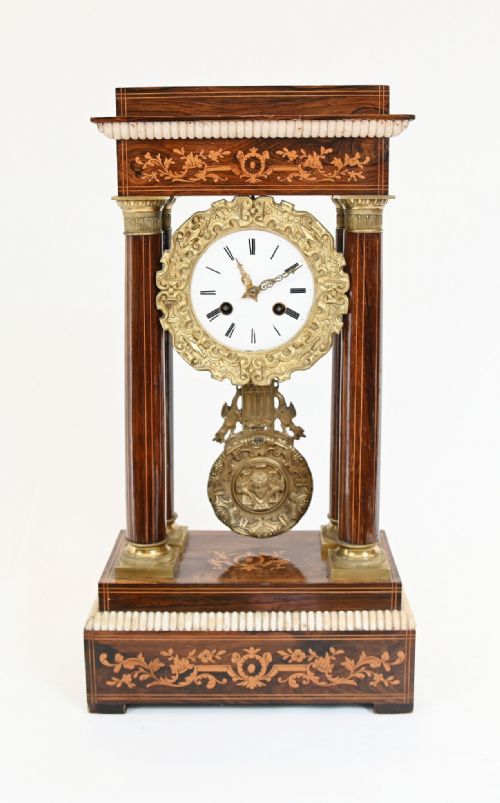
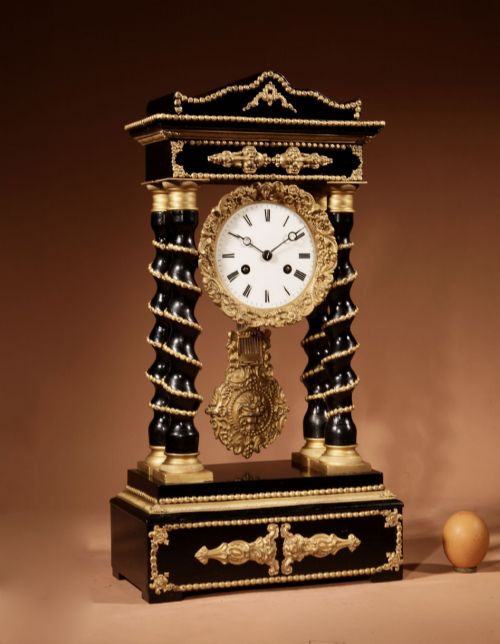
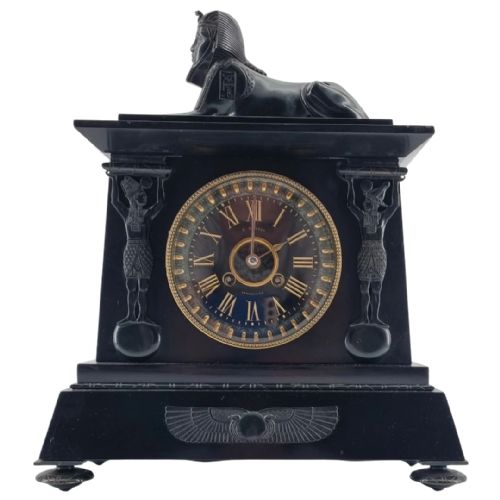
A bronze architectural mantel clock translates monumental building design into a domestic timepiece, taking the form of porticos, columns, and cathedral facades. You will frequently encounter nineteenth-century French portico clocks alongside imposing slate, marble, and Gothic revival models.
Makers drew heavily on historical movements, producing pieces in French Empire, Charles X, Napoleon III, and Egyptian Revival styles. These clocks anchor a room with their substantial vertical proportions and structural presence.
How they were made
Foundries combined cast bronze and heavy brass frameworks with striking ormolu and gilt bronze mounts, often housing the mechanism within marble, slate, alabaster, or ebonised wood bodies. Dial faces typically featured contrasting enamel chapters or silvered metal behind protective glass.
Internal movements relied on precision engineering, utilising mechanical escapements driven by twin double fusee or single fusee gear trains to maintain accurate time across eight-day cycles.
Some nineteenth-century London retailers proudly stamped their names onto French clock dials, happily crossing the Channel for a good mechanism.
What varies in quality
The distinction between standard production and the finest work lies in the crispness of the bronze chasing, the depth of the gilding, and the integration of costly stones such as rouge marble or cut crystal. Superior examples display immaculate hand-finishing on architectural columns and mountings rather than simple cast repetition.
Movement sophistication also dictates value, with signed Parisian or London maker mechanisms and complex fusee setups commanding greater respect than simpler platform escapements.
Philippes Paris·D Munsey of Cambridge·Ferdinand Barbedienne·Benson Ludgate Hill London
The Bronze Architectural Mantel Clock Glossary
- Portico clock
- A clock built with a distinctive architectural frame featuring supporting pillars or columns, usually framing a suspended pendulum. This style gained immense popularity during the French Charles X and nineteenth-century periods.
- Ormolu
- Finely ground high-carat gold mercury-gilded onto a bronze base metal. It provides a rich, warm metallic lustre that endures for centuries without tarnishing.
- Fusee
- A conical pulley used inside better-quality mechanical clocks to ensure even power delivery from the mainspring as it unwinds. This mechanism significantly improves timekeeping accuracy.
- Garniture
- A set comprising a mantel clock flanked by matching ornamental pieces such as urns or vases. These displays were designed to sit harmoniously together on a sideboard or fireplace.
- Double fusee
- A movement incorporating two separate fusee cones, typically dividing the timekeeping train from the striking train. This setup represents a higher standard of clockmaking engineering.
Bronze Architectural Mantel Clock: Frequently Asked Questions
How do I wind a portico clock?
Most mechanical models use a dedicated winding key inserted into small holes on the enamel or silvered dial face. Turn the key gently until you feel resistance, taking care not to over-wind the internal spring.
Ensure you handle the pendulum with care if the clock has been moved, as it may need re-hooking onto its suspension spring behind the glass door before the movement will keep time.
Where should I place a heavy marble clock?
Due to the substantial weight of marble, slate, and bronze constructions, place your clock on a firm, level surface such as a sturdy mantelpiece or a dedicated console table. Uneven surfaces can cause the heavy pendulum to strike the inside of the case.
Keep the clock away from direct sunlight and damp environments to protect both the delicate exterior gilding and the iron internal components from corrosion.
How do I identify a French portico clock?
Look for a distinct architectural silhouette featuring four or more vertical columns supporting an upper entablature, with a pendulum swinging visibly in the central void. Many examples from the nineteenth century feature distinct ormolu mounts and classical proportions.
Examine the dial and internal backplate for maker signatures, often originating from Paris workshops even when retailed through British establishments.
What is a fusee movement?
A fusee is a specialised mechanical cone with a spiral groove that regulates the pull of the mainspring. As the spring loses tension, the chain or cord moves to a wider part of the cone to maintain consistent power.
Clocks featuring this system offer superior timekeeping reliability compared to standard spring-driven alternatives.