
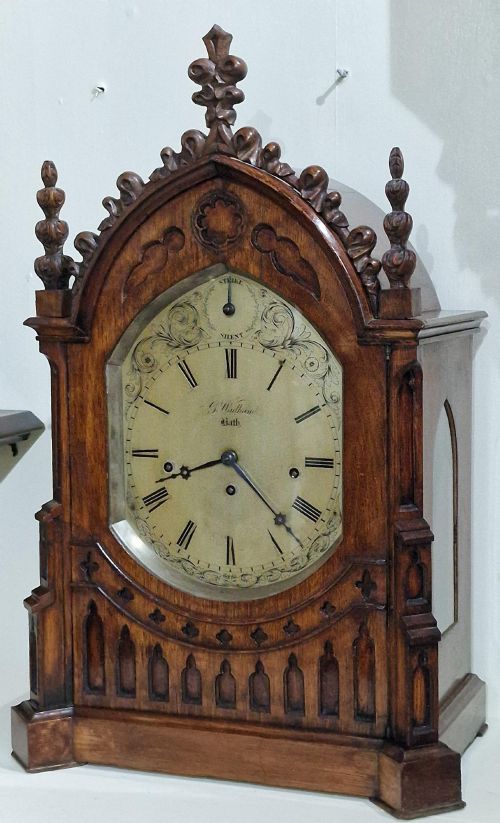
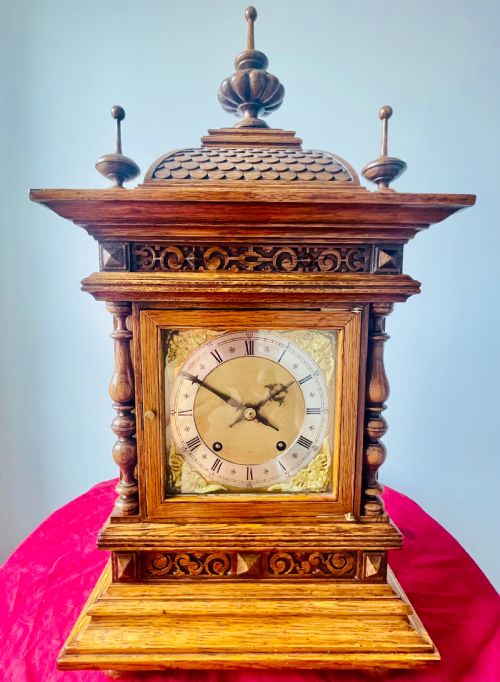
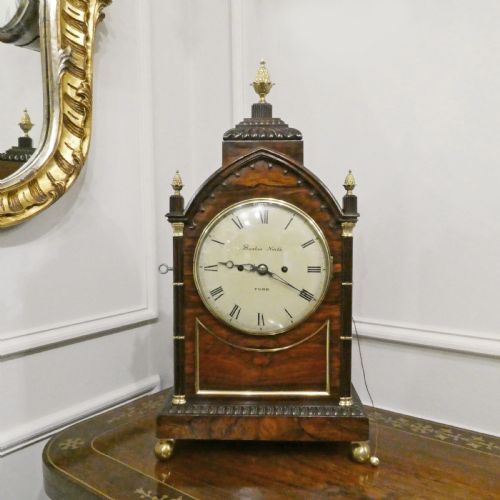

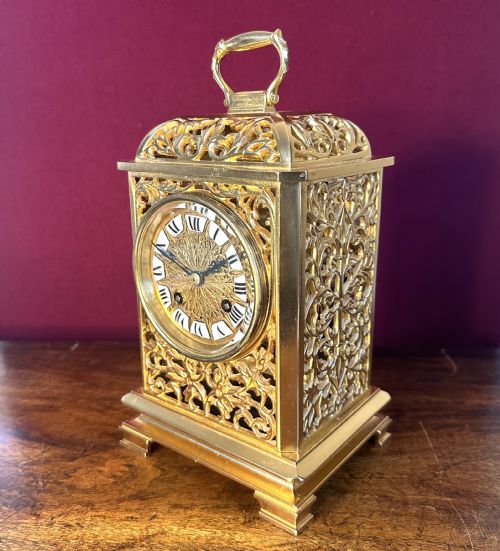


Gothic Revival Bracket Clock
These gothic revival bracket clock pieces bring architectural presence and precise mechanical movement into a room.
Gothic Revival Bracket Clock
A gothic revival bracket clock combines architectural forms like cathedral arches and pointed details with traditional timekeeping mechanisms. You will most frequently encounter Victorian pieces alongside Regency examples on this page.
These items serve as mantel clocks and table clocks constructed from woods such as mahogany, rosewood, oak, and ebonised finishes, often detailed with bronze and brass.
The aesthetic draws on historical gothic motifs adapted for nineteenth-century interiors, ranging from simple library clocks to large boardroom and triple fusee bell models.
How They Were Made
Clockmakers fitted complex mechanical movements inside these housings, including twin and triple fusee setups designed to drive bells, gongs, and quarter-striking trains. Enamel dials were mounted behind glass panels to protect the face while keeping the hands visible.
What Varies in Quality
The complexity of the internal movement separates standard timepieces from superior examples, particularly those featuring triple fusee mechanisms and multiple bells. Heavier quarterly striking systems and elaborate ting-tang configurations indicate higher grade production.
Cabinet work and material selection dictate the visual weight of the piece, with substantial timbers like rosewood and mahogany paired with detailed bronze or brass mounts outranking simpler constructions.
George Wadham·Winterhalder·Barber And North·George Orpwood·Bryson·Edwards Of London·Christie Of Perth·Mitchell And Russell
The Gothic Revival Bracket Clock Glossary
- Fusee
- A conical pulley used in spring-driven clocks to maintain even power as the mainspring unwinds. This mechanism ensures more consistent timekeeping throughout the running period.
- Bracket Clock
- A portable clock originally designed to sit on a wall bracket or table. They frequently feature carrying handles and robust movements.
- Ebonised
- Wood treated to imitate ebony through staining or painting. This finish appears commonly on nineteenth-century aesthetic movement and gothic pieces.
- Ting-Tang
- A striking train that sounds two different notes on quarters before the hour. It uses two hammers and two bells or gongs.
- Regency
- A British design period spanning the early nineteenth century. Pieces from this era often incorporate classical restraint alongside emerging gothic elements.
Gothic Revival Bracket Clock: Frequently Asked Questions
What is a gothic revival bracket clock?
A gothic revival bracket clock is a mechanical timepiece housed in a case featuring architectural elements inspired by medieval design, such as pointed arches and structural buttresses. These pieces date primarily from the nineteenth century.
They function as portable table or mantel clocks, designed to be placed on furniture rather than mounted permanently to a wall.
How do twin and triple fusee movements differ?
A twin fusee movement typically powers the timekeeping train and a striking train for the hours. These are standard in many traditional nineteenth-century clocks.
A triple fusee movement adds a third train to drive a chime mechanism, often operating multiple bells or gongs to play quarter-hour melodies.
Where were these clocks placed historically?
Owners placed these clocks in prominent public and private rooms, including libraries, boardrooms, and main living spaces. Their striking mechanisms ensured the household could track time by sound alone.
Larger models required sturdy tables or dedicated brackets to support their substantial timber and metal weight.
How can I tell a Victorian clock from a Regency one?
Regency pieces often display cleaner classical proportions blended with early gothic revival details, typically utilising timbers like mahogany. Victorian examples tend toward heavier architectural ornamentation and may incorporate ebonised finishes or aesthetic movement styling.
Examining the casework materials and the style of the dial lettering helps distinguish between the earlier and later nineteenth-century periods.