
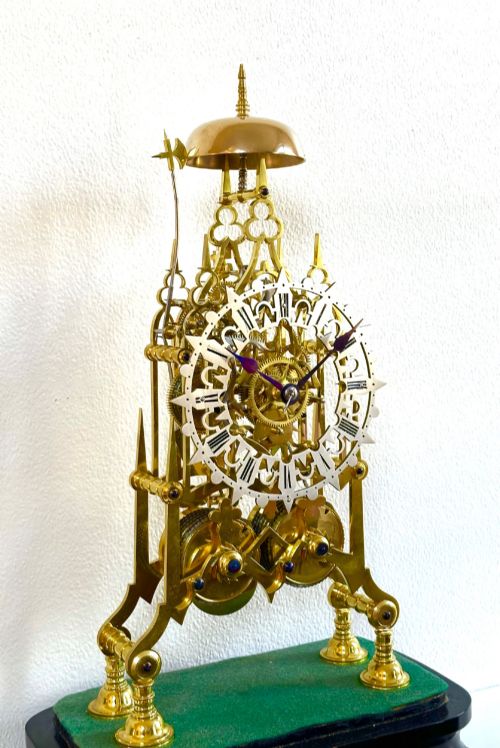


Double Fusee Mantel Clock
A double fusee mantel clock represents the pinnacle of British horological engineering, offering precision timekeeping wrapped in a handsome architectural cabinet.
Double Fusee Mantel Clock
A double fusee mantel clock is a mechanical timepiece driven by a spring-driven movement regulated by a fusee cone and chain, ensuring even tension as the mainspring unwinds. When you examine a double fusee mantel clock on this page, you will encounter substantial bracket and table clocks housed in rich timbers such as mahogany, oak, and walnut, alongside architectural bronze and ebonised cases.
The selections span from the early eighteenth century through the Victorian era into the early twentieth century, incorporating Regency, Gothic Revival, and Edwardian aesthetic movements. Most examples you meet here date from the nineteenth century, reflecting the golden age of British clockmaking when makers combined reliable twin-train movements with striking mechanisms.
Form follows function across these pieces, ranging from traditional wooden bracket clocks with silvered metal dials to exposed skeleton clocks protected beneath glass domes. Certain models feature subsidiary complications like date apertures, pull repeat mechanisms, and engraved backplates that elevate them beyond simple timekeepers.
Markers of quality
Quality in these clocks rests heavily on the crispness of the movement engraving, the finish of the brass components, and the integration of the mechanism within its housing. Maker attribution plays a decisive role, with signed movements by renowned London and provincial workshops commanding greater attention from collectors.
Several clocks include pull repeat strings, allowing owners to check the time audibly in total darkness.
Richard Rooker·James Murray·Winterhalder & Hofmeier·George Blackie·John Grant·Frodsham·Geo. Carter·Budgen·Goldsmiths & Silversmiths·Osborn·Payne·Joseph Barling·P Forrester
The Double Fusee Mantel Clock Glossary
- Fusee
- A conical pulley used on the mainspring of a clock to maintain an even pull as the spring unwinds. This ingenious device compensates for the decreasing power of the spring as it relaxes.
- Ting tang
- A striking mechanism that uses two bells or gongs to sound the quarters or half hours. It produces a distinctive two-note chime before the full hour strike.
- Pinwheel escapement
- A precise form of deadbeat escapement utilising pins instead of traditional pallet teeth. It reduces friction and allows for highly accurate timekeeping in fine clocks.
- Pull repeat
- A mechanical complication operated by pulling a cord or lever on the case side, causing the clock to strike the last hour or quarter on demand.
Double Fusee Mantel Clock: Frequently Asked Questions
What is a double fusee movement?
A double fusee movement has two separate fusee cones and trains: one powers the primary timekeeping mechanism, while the second operates the striking or chiming train. This configuration ensures both functions receive constant, regulated power from their respective springs.
Such dual systems require meticulous adjustment by skilled horologists to maintain synchronisation and reliability across the running period.
How often should I wind my clock?
Most of these clocks are designed to run for eight days on a single winding of the twin chains or cords. Owners typically establish a weekly routine to maintain consistent tension on the mainsprings.
Care must be taken during winding to engage the key properly and avoid over-winding the mechanism.
Where should I place a bracket clock?
Bracket clocks need a stable, level surface away from direct sunlight, central heating vents, and damp exterior walls. Placing them on a sturdy mantelpiece or a dedicated wall bracket ensures the pendulum or balance wheel beats evenly.
Level placement is essential for the escapement to function correctly and keep accurate time.
How do I identify the period of a clock?
Dating relies on stylistic clues in the case architecture, wood selection, dial design, and the signature style of the movement. Eighteenth-century examples often display restrained ebonised or mahogany architectural lines, whereas Victorian pieces frequently embrace Gothic Revival details or heavier proportions.
Engraved backplates and maker signatures provide further documentary evidence for specific decades.